Showing posts with label Coronavirus. Show all posts

Tuesday, January 26, 2021

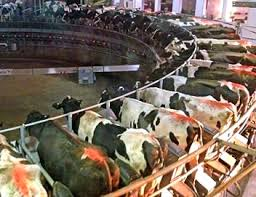
THE NEXT PANDEMIC COULD EASILY COME FROM OUR FACTORY FARMS - As people point fingers at the dangers of “wet markets,” it’s easy to overlook the closer to home problem of factory farms. Our next zoonotic pandemic could easily come from a factory farm. As the new coronavirus escalated into a pandemic, it became important to pinpoint its origin. Headlines circulated at the beginning of the outbreak, pointing to “wet markets” in China as the potential source of the outbreak. While attention turned abroad, a more sinister disease incubator remains right here at home: factory farms. The conditions in China’s wholesale wet markets are very similar to those in factory farms here in the U.S. Factory farms, as the name implies, are essentially animal factories. These facilities cram thousands of animals into tightly packed spaces; these conditions cause elevated stress responses in animals. In the warehouse-like structures animals receive little, if any, sunlight or fresh air. Factory farms have also bred animals that are virtually genetically identical, making mass production possible of all the inputs from feed to barn construction. We raise animals for food on a modern day assembly line. But those conditions make them prime targets for the spread and incubation of disease. And when one animal in a factory farm gets sick, the pathogen can rapidly spread — killing hundreds or thousands of animals and potentially jumping to humans.

........................................................................................................................................................................................................................................................................................................................................................................................

The Next Pandemic Could Easily Come From Our Factory Farms

.
As people point fingers at the dangers of “wet markets,” it’s easy to overlook the closer to home problem of factory farms. Our next zoonotic pandemic could easily come from a factory farm.

By Mackenzie Aime


As the new coronavirus escalated into a pandemic, it became important to pinpoint its origin.

Headlines circulated at the beginning of the outbreak, pointing to “wet markets” in China as the potential source of the outbreak.

While attention turned abroad, a more sinister disease incubator remains right here at home: factory farms. 

The Similarities Between Wet Markets And Factory Farms

The conditions in China’s wholesale wet markets are very similar to those in factory farms here in the U.S.

Factory farms, as the name implies, are essentially animal factories.

These facilities cram thousands of animals into tightly packed spaces; these conditions cause elevated stress responses in animals.

In the warehouse-like structures animals receive little, if any, sunlight or fresh air.

Factory farms have also bred animals that are virtually genetically identical, making mass production possible of all the inputs from feed to barn construction.

We raise animals for food on a modern day assembly line.  But those conditions make them prime targets for the spread and incubation of disease.

And when one animal in a factory farm gets sick, the pathogen can rapidly spread — killing hundreds or thousands of animals and potentially jumping to humans.

This is exactly what it means when a disease is “zoonotic.”

Viral Pandemics Have Sprung From Factory Farms In The Past

This isn’t a “what if” scenario. It’s happened before — several pandemics have been incubated in factory farms.

In the late 1990s, the H1N1 flu virus originated in factory farms in North Carolina.

mutated form of this North Carolina virus later popped up in a factory farm in Mexico where it spread around the world, leading to the 2009 H1N1 flu pandemic.

During its first year of circulation, the 2009 H1N1 flu killed between 151,700 - 575,400 people worldwide.

And, in 2006 an outbreak of bird flu turned into a full-scale pandemic after originating in factory farms in China.

In early April as the coronavirus was raging, a South Carolina poultry factory farm operation was forced to cull tens of thousands of birds after discovering an outbreak of bird flu.

While thankfully contained to this single farm, this outbreak could have had equally dire consequences.

These are just a few examples; there are plenty more. The fact that these previous outbreaks did not force us into home isolation was only a stroke of dumb luck. 

The factory farm industry is acutely aware that it is playing with fire.

Antibiotics, meant for the treatment of bacterial infections, are routinely used on factory farms to prevent the spread of disease.

In fact, 70 percent of the total volume of medically important antibiotics in the US are sold for animal agriculture.

This overuse of antibiotics has led to antibiotic resistance, where infections that were once curable develop a resistance to drugs that had previously been used to treat them — yet another pandemic in the making.

The rise of drug-resistant superbugs, MRSA for example, puts our collective public health at risk and could have dire consequences in future pandemics, especially those that have bacterial complications like pneumonia.

Our public health and ability to treat diseases should not be sold for corporate gain.

Family Farms Would Be A Saving Grace In A Pandemic, But Are Stomped Out By Factory Farms

The current coronavirus pandemic is demonstrating how fragile our highly consolidated food system is and how ill-equipped it is to handle emergency situations.

Every day more and more meatpacking plants become ground zero for new outbreaks of coronavirus, and thousands of people are putting their lives on the line to keep these facilities functioning.

Produce is being plowed under and meat is piling up in cold storage — even as unprecedented lines at food banks demonstrate the massive need for food as unemployment rates skyrocket.

Corporate agriculture has created this broken system, which constantly puts us at risk of another pandemic, and yet corporate agriculture has shown that it is wholly unable to meet our needs during a pandemic.

Where are our public institutions in this time of crisis?

Our food system is being held hostage by a few corporations that control everything — from piglets to politicians.

With this power, the factory farm industry has mercilessly lobbied against measures that would keep us and our food safe.

Demanding faster line speeds at meatpacking plants and unnecessarily increasing risks for slaughterhouse workers, opposing restrictions on antibiotic use, and even refusing to provide workers with necessary protective equipment — this is just a tiny fraction of examples of how Big Ag puts profits before the lives of everyday people. 

Supporting The Farm System Reform Act Will Greatly Reduce Our Risk Of New Zoonotic Pandemics

This crisis has illustrated just how broken our food system truly is.

People are angry that wet markets are already reopening, but we cannot ignore that the way we raise animals in the U.S. also places us at risk for future pandemics.

As the COVID-19 outbreak forces us to significantly alter our daily lives and as the disease continues to spread, will we finally muster the political will to overhaul our food system — including banning factory farms — to decrease the likelihood of the next pandemic?

Our lives depend on it. Ask your legislators to support the Farm System Reform Act today!

Mackenzie Aime is an Iowa Organizer for Food & Water Watch. She works to build support for a moratorium against factory farming so that Iowa has a future for its strong communities, independent family farmers, and environmental resources. Prior to joining Food & Water Watch, Mackenzie served as an Emerson Hunger Fellow striving to eradicate poverty by working on housing policy at RESULTS and by creating a comprehensive food system plan in rural West Virginia with Reconnecting McDowell. She received her Bachelors in Interdisciplinary Studies with a focus on food justice from Emory University.

She can be reached at meaime[at]fwwatch.org.

https://www.foodandwaterwatch.org/news/next-pandemic-could-easily-come-our-factory-farms


You might also like:


Factory Farming

CLICK HERE . . . to view . . . 

https://puricare.blogspot.com/2020/05/factory-farming-factory-farming-is.html

...........................................................................................................................................................................................................................................................................................

Vertical Farming

CLICK HERE . . . to view . . . 

https://puricare.blogspot.com/2020/06/vertical-farming-vertical-farming.html

..........................................................................................................................................................................................................................................................................................

Tunnel ventilation

CLICK HERE . . . to view . . . 

https://puricare.blogspot.com/2016/09/commercial-meat-chicken-farms-are.html

........................................................................................................................................................................................................................................................................................... 

Saturday, January 16, 2021

WATER REMAINS OUR SAVING GRACE RIGHT NOW - The lack of washing facility in many poor and developing countries becomes even more alarming, considering the surge of coronavirus cases. In most cases, the poorest bears the brunt of the burden. In the Philippines, where lack of access to washing facilities and clean water is prevalent among the urban poor, such deficiency has resulted in thousands of deaths annually to water-borne diseases. One can only look at the number of people without proper sanitation and safe water in the Philippines nearly a quarter of the Philippine population— 24 million Filipinos— lack proper sanitation (washing facility), while almost 7 million Filipinos still lack access to clean and safe water. Under normal circumstances, clean water is an extremely important resource that everyone should have access to. Since its discovery in Wuhan, China, in December 2019, the COVID-19 pandemic has affected entire nations across the world, destabilizing economies and threatening human lives on a massive scale. In just six months, the virus has infected more than 10 million people, with deaths mounting to half a million. To prevent the spread of contagion thru direct and indirect transmission, along with other health measures, the Philippine government implemented strict community quarantine in mid-March in Luzon and other parts of the country. Hand-washing and proper hand hygiene is the first line of defense against the coronavirus, the WHO said.

.......................................................................................................................................................................................................................................................................................................................................................................

Water remains our saving grace right now

.

The lack of washing facility in many poor and developing countries becomes even more alarming, considering the surge of coronavirus cases. In most cases, the poorest bears the brunt of the burden. 

.

In the Philippines, where lack of access to washing facilities and clean water is prevalent among the urban poor, such deficiency has resulted in thousands of deaths annually to water-borne diseases. One can only look at the number of people without proper sanitation and safe water in the Philippines nearly a quarter of the Philippine population— 24 million Filipinos— lack proper sanitation (washing facility), while almost 7 million Filipinos still lack access to clean and safe water. Under normal circumstances, clean water is an extremely important resource that everyone should have access to. But in the time of pandemic, it’s more than a necessity or an investment; it’s literally your first line of defense.

By: INQUIRER.net 

@inquirerdotnet


Since its discovery in Wuhan, China, in December 2019, the COVID-19 pandemic has affected entire nations across the world, destabilizing economies and threatening human lives on a massive scale.

In just six months, the virus has infected more than 10 million people, with deaths mounting to half a million, according to the World Health Organization (WHO).

In the Philippines, as of June 2020, the Department of Health (DOH) has documented more than 36,000 confirmed cases and almost 1,300 deaths.

To prevent the spread of contagion thru direct and indirect transmission, along with other health measures, the Philippine government implemented strict community quarantine in mid-March in Luzon and other parts of the country.

Working with the DOH, the WHO also issued guidelines in infection prevention and control, particularly constant handwashing and proper hand hygiene.

“Global hygiene crisis”

Hand-washing and proper hand hygiene is the first line of defense against the coronavirus, the WHO said.

However, this fairly simple precaution is not available to everyone, particularly among the poorest living in slums, who are most vulnerable to COVID-19 and other infectious diseases.

According to a 2019 report from the WHO and United Nations (UN), 40% of the global population— roughly 3 billion people— do not have basic handwashing facilities at home.

Out of that number, 1.6 billion do not have access to soap and water, while 1.4 billion do not have any washing facility (private bathrooms and toilets.)

Citing it as a “global hygiene crisis,” the UN has already included access to washing facility and safe water as part of its sustainable development goals, as the organization aims to ensure everyone has access to “adequate and equitable hygiene” by 2030.

“Without handwashing and adherence to good hygiene practices, the health and socio-economic benefits of improved water supply and sanitation cannot be fully realized and will impede progress towards many of the SDGs,” the UN said.

The lack of washing facility in many poor and developing countries becomes even more alarming, considering the surge of coronavirus cases.

In most cases, the poorest bears the brunt of the burden.

In the Philippines, where lack of access to washing facilities and clean water is prevalent among the urban poor, such deficiency has resulted in thousands of deaths annually to water-borne diseases.

In 2018, more than 22,000 Filipinos died from acute diarrhea and typhoid fever, according to the DOH.

As of now, there’s scant data regarding the effect of lack of washing facility and safe water and its correlation to the COVID-19.

To have a clearer picture, one can only look at the number of people without proper sanitation and safe water in the Philippines to deduce that it poses a greater health risk now more than ever.

Critical importance of clean water and sanitation

“COVID-19 virus primarily spreads through droplet and contact transmission. Contact transmission means by touching infected people and/or contaminated objects or surfaces. Thus, your hands can spread virus to other surfaces and/or to your mouth, nose or eyes if you touch them,” according to “Safe Hands” campaign by the WHO.

Hence, the health organization recommends frequent handwashing and proper hand hygiene to prevent the spread of the virus.

But what if there’s no water? 

According to data from Water.Org, nearly a quarter of the Philippine population— 24 million Filipinos— lack proper sanitation (washing facility), while almost 7 million Filipinos still lack access to clean and safe water.

While alcohol and sanitizers can be used, handwashing remains the preferred choice of the WHO, especially as some alcohol-based surgical hand rubs were already debunked to contain  “residual active ingredients.”

The Centers for Disease Control and Prevention already recommended using alcohol with greater than 60% ethanol or 70% isopropanol in healthcare settings.

“Closing inequality gaps in the accessibility, quality and availability of water, sanitation and hygiene should be at the heart of government funding and planning strategies. To relent on investment plans for universal coverage is to undermine decades worth of progress at the expense of coming generations,” said Kelly Ann Naylor, UNICEF’s Associate Director of Water, Sanitation and Hygiene.

“Investing in water, sanitation and hygiene is cost-effective and good for society in so many ways. It is an essential foundation for good health,” Naylor added.

Under normal circumstances, clean water is an extremely important resource that everyone should have access to.

But in the time of pandemic, it’s more than a necessity or an investment; it’s literally your first line of defense.

And it can save your life and those around you.

https://newsinfo.inquirer.net/1301306/water-remains-our-saving-grace-right-now


You might also like:


The Link Between Clean Water, Climate Change and COVID-19

CLICK HERE . . . to view . . . 

https://puricare.blogspot.com/2020/04/the-link-between-clean-water-climate.html

............................................................................................................................................................................................................................................................................................

Pray to God, and Wash Your Hands

CLICK HERE . . . to view . . . 

https://puricarechronicles.blogspot.com/2020/07/pray-to-god-and-wash-your-hands-pray.html

............................................................................................................................................................................................................................................................................................

Coronavirus disease (COVID-19): Myth busters

CLICK HERE . . . to view . . . 

https://puricare.blogspot.com/2020/04/coronavirus-disease-covid-19-advice-for.html

............................................................................................................................................................................................................................................................................................

Pandemics, Depressions And Disasters

CLICK HERE . . . to view . . . 

https://puricarechronicles.blogspot.com/2020/07/pandemics-depressions-and-disasters.html

............................................................................................................................................................................................................................................................................................

Acts of God

CLICK HERE . . . to view . . . 

https://puricarechronicles.blogspot.com/2020/09/acts-of-god-theres-reason-these-natural.html

............................................................................................................................................................................................................

Three Positives from COVID-19

CLICK HERE . . . to view . . . 

https://puricarechronicles.blogspot.com/2020/12/blog-post_3.html

............................................................................................................................................................................................................................................................................................

Causes and Effects of Mutated Viruses

CLICK HERE . . . to view . . . 

https://puricarechronicles.blogspot.com/2020/08/causes-and-effects-of-mutated-viruses.html

............................................................................................................................................................................................................................................................................................

Pestilence And Disease On A Global Scale

CLICK HERE . . . to view . . . 

https://puricarechronicles.blogspot.com/2020/05/pestilence-and-disease-on-global-scale.html


Wednesday, July 29, 2020

AIR CONDITIONING MAY BE SPREADING COVID - As COVID-19 cases rise rapidly some scientists believe there could be an important, but overlooked factor in the spread of the virus in the region -- air conditioning. Just as chilly winter temps create the perfect conditions for passing colds and flu — driving people indoors and into closer proximity for more hours of the day where it’s easy to swap germs, researchers believe broiling heat in the southern U.S. could be having the same effect, sending people indoors where whirring air conditioners are running full blast. Air conditioning is also risky because of the way air handlers work. When outdoor temperatures are extreme, HVAC systems adjust the mix of fresh air they pull in to save energy. That means the hotter it is outside, the more indoor air recirculates, which means, you’re breathing a higher percentage of the same air that other people are exhaling. If someone in the building is shedding the new coronavirus, it can build up in the recirculated air. And this may seem obvious, but air conditioners have fans that blow the air around. That gives the smallest viral particles — aerosols -- extra lift to stay suspended in the air. The air currents that are produced by air conditioners and also fans and other air moving devices can carry particles further than they might otherwise go. Air conditioners also remove moisture from the air, and we know viruses prefer dry air.

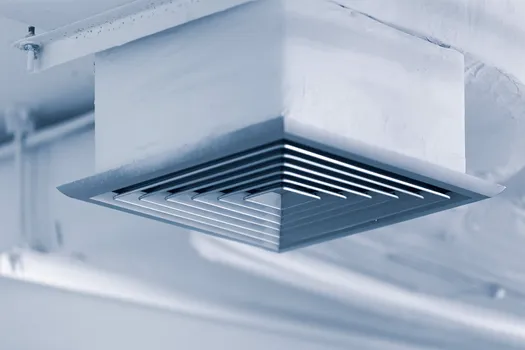
photo of air conditioning vent
..................................................................................................................................................
Air Conditioning May Be Spreading COVID
By Brenda Goodman, MA


As COVID-19 cases rise rapidly throughout the South, some scientists believe there could be an important, but overlooked factor in the spread of the virus in the region -- air conditioning.
Just as chilly winter temps create the perfect conditions for passing colds and flu — driving people indoors and into closer proximity for more hours of the day where it’s easy to swap germs, researchers believe broiling heat in the southern U.S. could be having the same effect, sending people indoors where whirring air conditioners are running full blast.
“You go indoors for the cool, just as in the northeast and other cool places you go in for the warmth in winter, so you’re less socially distanced,” says Edward Nardell, MD, professor of environmental health and immunology and infectious diseases at Harvard’s T.H. Chan School of Public Health.
“You’re more likely to be touching the same surfaces that have been contaminated by people speaking and coughing etc.,” he says.
And that’s not the only problem.
Air conditioning is also risky because of the way air handlers work. When outdoor temperatures are extreme, HVAC systems adjust the mix of fresh air they pull in to save energy.
That means the hotter it is outside, the more indoor air recirculates, which means, “You’re breathing a higher percentage of the same air that other people are exhaling,” Nardell says.
If someone in the building is shedding the new coronavirus, it can build up in the recirculated air.
And this may seem obvious, but air conditioners have fans that blow the air around.
That gives the smallest viral particles — aerosols -- extra lift to say suspended in the air for longer.
“The air currents that are produced by air conditioners and also fans and other air moving devices can carry particles further than they might otherwise go,” he says.
Air conditioners also remove moisture from the air, “and we know viruses prefer dry air,” he says.
In certain situations, that combination of factors may create the perfect conditions for contagion.
Emerging Evidence Points To Airborne Transmission
Studies of air conditioning come as more evidence emerges about airborne spread of COVID-19.
In a commentary published this week in the journal Clinical Infectious Diseases, an international group of 239 scientists have appealed to “national and international bodies” including the World Health Organization, to recognize this potential for airborne spread.
“We’re pushing because we need very clear, consistent messaging to the world,” said Shelly Miller, PhD, a professor of mechanical engineering who studies indoor air quality at the University of Colorado at Boulder.
Miller was one of the chief proponents of the commentary.
This virus is opportunistically airborne, you can get it by inhaling it,” she says.
Miller and others believe that WHO and other public health agencies have a blind spot when it comes to airborne transmission.
“Based on our assessments of outbreaks, air sampling, and animal studies and we have just as much evidence to show that airborne transmission is happening as is surface transmission, so we need clear guidance for how to address this,” Miller says.
In its latest press briefing, WHO experts responded to the communication, and said the agency would be publishing a scientific brief summarizing their view of the science shortly.
“We acknowledge that there is emerging evidence in this field,” said Benedetta Allegranzi, MD, WHO’s technical lead for infection prevention and control.
 “We believe we have to be open to this evidence and understand its implications regarding the modes of transmission and the precautions that need to be taken,” she said.
The Role of Air Conditioning
So far, there are just a few studies pointing to the role of air conditioning in the spread of COVID-19. They indicate more research in the area is needed.
In July, Chinese scientists published a short study detailing the results of their investigation of a cluster of COVID-19 cases linked to the same restaurant.
The 10 diners who fell ill were all sitting at tables on the same side of the room.
The tables were spaced more than 3 feet apart, though, indicating that the virus probably wasn’t being passed through larger droplets, which fall out of the air pretty quickly.
Instead, they think “strong airflow” from a wall mounted air conditioner probably spread aerosols, or “micro-droplets”, from a single infected, but asymptomatic person over the tables, infecting three different families.
In another study, which hasn’t yet been peer reviewed, researchers swabbed three different HVAC units at the Oregon Health and Science University Hospital in Portland.
Then they checked their samples for the presence of genetic material from the SARS-CoV-2 virus. The swabs were positive in 1 out of every 4 samples taken.
“We found it in multiple locations within the air handler,” says study author Kevin Van Den Wymelenberg, PhD, a professor of architecture and director of the Institute for Health in the Built Environment at the University of Oregon in Eugene.
similar study, from the University of Nebraska Medical Center, detected genetic material from the virus in air samples collected from rooms of COVID-19 patients, even air samples collected from more than six feet away.
Van Den Wymelenberg says their study can’t prove that the remnants of the virus they picked up could have actually infected anyone.
To know that, they would have had to try to grow their samples alongside cells in a petri dish and watch to see if those cells were infected.
Those are expensive studies to perform and they require a specialized lab certified to handle highly contagious germs — called a biosafety level 3 lab.
Those are less common, and they’re all currently slammed with projects.
But he says his study does show that genetic material from the virus is making it into the machinery of massive air handlers in hospitals, even ones that are using good filters, and he thinks that should make public health experts closely consider air conditioning as a vehicle for virus spread.
Steps for Safer Indoor Air
Miller says that the easiest thing to keep the virus from building up inside is to bring in more outdoor air.
In homes, that means opening windows and doors regularly to let fresh air in.
That’s harder to do in commercial buildings.
“What we’ve been recommending to minimize risk indoors is to provide 100% outside air, which you can’t do if you’re trying to heat or cool because it just costs way too much money,” she said.
Another strategy to reduce the risk of being indoors is to kill airborne viruses with special wall or ceiling mounted boxes that emit short-range UV radiation.
This kind of UV light doesn’t damage skin the way sunlight does, but still zaps harmful germs.
These so-called upper-room germicidal systems have successfully controlled outbreaks of other airborne pathogens, like tuberculosis, Nardell says.
Finally, you can invest in an air cleaner.
Miller cautions that if you go this route, you need to do a fair amount of homework first, learning about things like a machine’s clean air delivery rate, or CADR.
“I purchased an air cleaner strictly to operate when and if somebody in my household gets sick so we can reduce the viral load in my house air,” she says.
Ionizing cleaners don’t work, she says.
Miller recommends checking the website of the Association of Home Appliance Manufacturers, or AHAM to find a good air cleaner.
“They have a whole website set up to do your research and buy a good air cleaner that will work in your home or office,” she says.

Brenda Goodman, MA, is a staff writer for WebMD.  Her work has appeared in The New York Times, Scientific American, Psychology Today, The Boston Globe, Self, Shape, Parade, U.S. News and World Report, and Atlanta Magazine. She has a master’s degree in science and environmental reporting from New York University.
photo of air conditioning vent