.................................................................................................................................
Fluid Dynamics
Understanding What Fluid Dynamics is
by Andrew Zimmerman
Jones
Fluid dynamics is the study of the movement of fluids, including
their interactions as two fluids come into contact with each other.
In this context, the term "fluid" refers to
either liquid or gases.
It is a macroscopic, statistical approach to analyzing these
interactions at a large scale, viewing the fluids as a continuum of matter and
generally ignoring the fact that the liquid or gas is composed of individual
atoms.
Fluid dynamics is one of the two main branches of fluid mechanics, with the other branch being fluid statics, the study of fluids at rest.
(Perhaps not surprisingly, fluid statics may be thought of as a
bit less exciting most of the time than fluid dynamics.)
Key Concepts of Fluid Dynamics
Every discipline involves concepts that are crucial to
understanding how it operates.
Here are some of the main ones that you'll come across when
trying to understand fluid dynamics.
Basic Fluid Principles
The fluid concepts that apply in fluid statics also come into
play when studying fluid that is in motion.
Pretty much the earliest concept in fluid mechanics is that
of buoyancy,
discovered in ancient Greece
by Archimedes.
As fluids flow, the density and pressure of
the fluids are also crucial to understanding how they will interact.
The viscosity determines
how resistant the liquid is to change, so is also essential in studying the
movement of the liquid. Here are some of the variables that come up in these
analyses:
· Bulk viscosity: μ
· Density: ρ
· Kinematic viscosity: ν = μ / ρ
Flow
Since fluid dynamics involves the study of the motion of fluid,
one of the first concepts that must be understood is how physicists quantify
that movement.
The term that physicists use to describe the physical properties
of the movement of liquid is flow.
Flow describes a wide range of fluid movement, such blowing
through the air, flowing through a pipe, or running along a surface.
The flow of a fluid is classified in a variety of different
ways, based upon the various properties of the flow.
Steady vs. Unsteady Flow
If the movement of fluid does not change over time, it is
considered a steady flow.
This is determined by a situation where all properties of the
flow remain constant with respect to time or alternately can be talked about by
saying that the time-derivatives of the flow field vanish. (Check out calculus
for more about understanding derivatives.)
A steady-state flow is even less
time-dependent because all of the fluid properties (not just the flow
properties) remain constant at every point within the fluid.
So if you had a steady flow, but the properties of the fluid
itself changed at some point (possibly because of a barrier causing
time-dependent ripples in some parts of the fluid), then you would have a
steady flow that is not a
steady-state flow.
All steady-state flows are examples of steady flows,
though. A current flowing at a constant rate through a straight pipe would
be an example of a steady-state flow (and also a steady flow).
If the flow itself has properties that change over time, then it
is called an unsteady flow or a transient flow. Rain flowing into a gutter during a
storm is an example of unsteady flow.
As a general rule, steady flows make for easier problems to deal
with than unsteady flows, which is what one would expect given that the
time-dependent changes to the flow don't have to be taken into account, and
things that change over time are typically going to make things more
complicated.
Laminar Flow vs. Turbulent Flow
A smooth flow of liquid is said to have laminar flow. Flow that contains seemingly chaotic,
non-linear motion is said to have turbulent flow.
By definition, a turbulent flow is a type of unsteady
flow.
Both types of flows may contain eddies, vortices, and various
types of recirculation, though the more of such behaviors that exist the more
likely the flow is to be classified as turbulent.
The distinction between whether a flow is laminar or turbulent
is usually related to the Reynolds number (Re).
The Reynolds number was first calculated in 1951 by physicist
George Gabriel Stokes, but it is named after the 19th-century scientist Osborne
Reynolds.
The Reynolds number is dependent not only on the specifics of
the fluid itself but also on the conditions of its flow, derived as the ratio
of inertial forces to viscous forces in the following way:
Re = Inertial force / Viscous forces
Re = (ρ V dV/dx) / (μ d2V/dx2)
The term dV/dx is the gradient of the velocity (or first
derivative of the velocity), which is proportional to the velocity (V) divided by L, representing a
scale of length, resulting in dV/dx = V/L.
The second derivative is such that d2V/dx2 = V/L2.
Substituting these in for the first and second derivatives
results in:
Re = (ρ V V/L) / (μ V/L2)
Re = (ρ V L) / μ
You can also divide through by the length scale L, resulting in
a Reynolds number per foot, designated as Re f = V / ν.
A low Reynolds number indicates smooth, laminar flow. A high
Reynolds number indicates a flow that is going to demonstrate eddies and
vortices and will generally be more turbulent.
Pipe Flow vs. Open-Channel Flow
Pipe flow represents a flow that is in contact
with rigid boundaries on all sides, such as water moving through a pipe (hence
the name "pipe flow") or air moving through an air duct.
Open-channel flow describes flow in
other situations where there is at least one free surface that is not in
contact with a rigid boundary. (In technical terms, the free surface has 0
parallel sheer stress.)
Cases of open-channel flow include water moving through a river,
floods, water flowing during rain, tidal currents, and irrigation canals.
In these cases, the surface of the flowing water, where the
water is in contact with the air, represents the "free surface" of
the flow.
Flows in a pipe are driven by either pressure or gravity, but
flows in open-channel situations are driven solely by gravity.
City water systems often use water towers to take advantage of
this, so that the elevation difference of the water in the tower (the hydrodynamic head) creates a pressure
differential, which is then adjusted with mechanical pumps to get water to the
locations in the system where they are needed.
Compressible vs. Incompressible
Gases are generally treated as compressible fluids because the
volume that contains them can be reduced.
air duct can be reduced by half the size and still carry the
same amount of gas at the same rate. Even as the gas flows through the air
duct, some regions will have higher densities than other regions.
As a general rule, being incompressible means that the density
of any region of the fluid does not change as a function of time as it moves
through the flow.
Liquids can also be compressed, of course, but there's more of a
limitation on the amount of compression that can be made. For this reason,
liquids are typically modeled as if they were incompressible.
Bernoulli's Principle
Bernoulli's principle is another key
element of fluid dynamics, published in Daniel Bernoulli's 1738 book Hydrodynamica.
Simply put, it relates the increase of speed in a liquid to a
decrease in pressure or potential energy.
For incompressible fluids, this can be described using what is
known as Bernoulli's equation:
(v2/2) + gz + p/ρ = constant
Where g is the
acceleration due to gravity, ρ is the
pressure throughout the liquid, v is the fluid
flow speed at a given point, z is the
elevation at that point, and p is the
pressure at that point.
Because this is constant within a fluid, this means that these
equations can relate any two points, 1 and 2, with the following equation:
(v12/2)
+ gz1 + p1/ρ = (v22/2)
+ gz2 + p2/ρ
The relationship between pressure and potential energy of a
liquid based on elevation is also related through Pascal's Law.
Applications of Fluid Dynamics
Two-thirds of the Earth's surface is water and the planet is
surrounded by layers of atmosphere, so we are literally surrounded at all times
by fluids ... almost always in motion.
Thinking about it for a bit, this makes it pretty obvious that
there would be a lot of interactions of moving fluids for us to study and
understand scientifically.
That's where fluid dynamics comes in, of course, so there's no
shortage of fields that apply concepts from fluid dynamics.
This list is not at all exhaustive, but provides a good overview
of ways in which fluid dynamics show up in the study of physics across a range
of specializations:
· Oceanography, Meteorology, & Climate
Science - Since the atmosphere is modeled as fluids, the study of
atmospheric science and ocean currents,
crucial for understanding and predicting weather patterns and climate trends,
relies heavily on fluid dynamics.
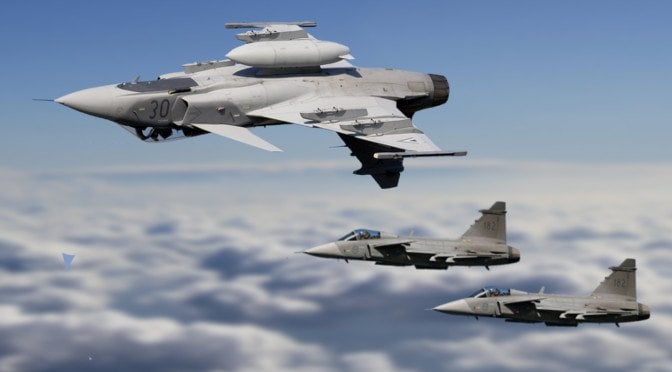
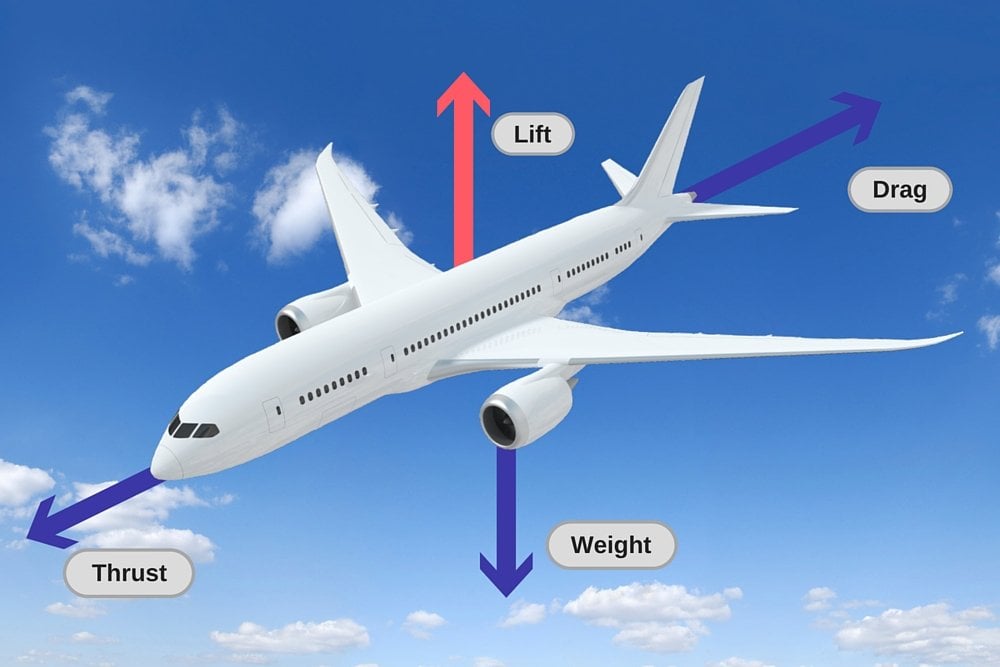
· Aeronautics - The physics of
fluid dynamics involves studying the flow of air to create drag and lift, which
in turn generate the forces that allow heavier-than-air flight.
· Geology & Geophysics - Plate tectonics involves
studying the motion of the heated matter within the liquid core of the Earth.
· Hematology & Hemodynamics - The
biological study of blood includes the study of its circulation through blood
vessels, and the blood circulation can be modeled using the methods of fluid
dynamics.
· Plasma Physics -
Though neither a liquid nor a gas, plasma often
behaves in ways that are similar to fluids, so can also be modeled using fluid
dynamics.
· Astrophysics & Cosmology - The
process of stellar evolution involves the change of stars over time, which can
be understood by studying how the plasma that composes the stars flows and interacts
within the star over time.
· Traffic Analysis -
Perhaps one of the most surprising applications of fluid dynamics is in
understanding the movement of traffic, both vehicular and pedestrian traffic.
In areas where the traffic is sufficiently dense, the whole body of traffic can
be treated as a single entity that behaves in ways that are roughly similar
enough to the flow of a fluid.
Alternative Names of Fluid
Dynamics
Fluid dynamics is also sometimes referred at as hydrodynamics, although this is more of a historical
term.
Throughout the twentieth century, the phrase "fluid
dynamics" became much more commonly used.
Technically, it would be more appropriate to say that
hydrodynamics is when fluid dynamics is applied to liquids in motion and aerodynamics is when fluid dynamics is applied to
gases in motion.
However, in practice, specialized topics such as hydrodynamic stability
and magnetohydrodynamics use the "hydro-" prefix even when they are
applying those concepts to the motion of gases.
Andrew
Zimmerman Jones
Academic
researcher, educator, and writer with 23 years of experience in
physical sciences
Works at
Indiana Department of Education as senior assessment specialist in
mathematics
Experience
Andrew
Zimmerman Jones is a former writer for ThoughtCo who contributed nearly 200
articles for more than 10 years. His topics ranged from the definition
of energy to vector mathematics. Andrew is a dedicated educator;
and he uses his background in the physical sciences, educational
assessment, writing, and communications to advance that mission.
Andrew
is co-author of String Theory For Dummies, which discusses the basic
concepts of this controversial approach. String theory tries
to explain certain phenomena that are not currently explainable under the
standard quantum physics model.
Since
2018, Andrew has worked at the Indiana Department of Education as a senior
assessment specialist in mathematics; prior to which he served as a senior
assessment editor at CTB/McGraw Hill for 10 years. In addition, Andrew was a
researcher at Indiana University's Cyclotron Facility. He is a member
of the National Association of Science Writers.
Education
Andrew
Zimmerman Jones has a Master of Science (M.S.) in Mathematics Education
from Indiana University–Purdue, Indianapolis, Ind.; and a Bachelor of Arts
(B.A.) in Physics from Wabash College, Crawfordsville, Ind.
Awards
and Publications
Graduated magna
cum laude (Wabash College, 1999)
Harold
Q. Fuller Prize in Physics (Wabash College, 1998)
ThoughtCo
and Dotdash
ThoughtCo is a premier
reference site focusing on expert-created education content. We are one of the
top-10 information sites in the world as rated by comScore, a leading Internet
measurement company. Every month, more than 13 million readers seek answers to
their questions on ThoughtCo.
For more
than 20 years, Dotdash brands have been helping people find answers,
solve problems, and get inspired. We are one of the top-20 largest content
publishers on the Internet according to comScore, and reach more than 30% of
the U.S. population monthly. Our brands collectively have won more than 20
industry awards in the last year alone, and recently Dotdash was named
Publisher of the Year by Digiday, a leading industry publication.


 Aircraft Winglets