Showing posts with label Thermals. Show all posts

Wednesday, May 29, 2019

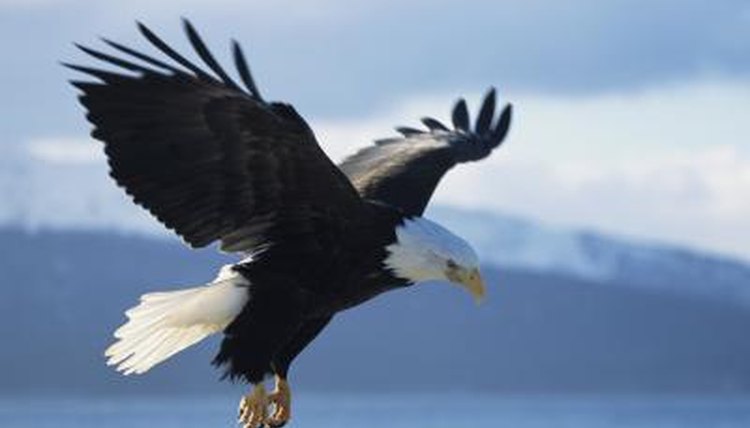
AERODYNAMICS OF THE BALD EAGLE - The bald eagle's body is covered with 7,000 hollow feathers. Interlocking layers of feathers contain insulating air pockets; the bald eagle rearranges his waterproof feathers to space out or draw together the air pockets, regulating body temperature. The bald eagle's wing tips have gaps between the flight feathers. He adjusts his wing slots to sustain his flight pattern and ensure precise movements. During flight he spreads his tail feathers, increasing the surface area; he glides and soars utilizing his tail to increase the effects of updrafts and thermals. The bones' light weight factors into aerodynamics, because weight determines how much lift is necessary to gain altitude relative to volume or displacement -- relative to how much space the bird takes up -- as well as determines maneuverability at speed.


.................................................................................................

AERODYNAMICS OF THE BALD EAGLE
By Karen Mihaylo


The national bird of the United States, the bald eagle is found only in North America.
The aerodynamic bald eagle (Haliaeetus leucocephalus) silently dives from the sky and snatches fish from the water.
He conserves energy by gliding on rising warm air currents called thermals and flies at altitudes up to 10,000 feet.
When you see several eagles riding the thermals as a group, you're viewing a "kettle" of eagles.

The Bald Eagle's Feathers

The bald eagle's body is covered with 7,000 hollow feathers.
Bald eagle feathers are lightweight -- 30 weigh about the same as a penny -- flexible and strong.
Interlocking layers of feathers contain insulating air pockets; the bald eagle rearranges his waterproof feathers to space out or draw together the air pockets, regulating body temperature.
Haliaeetus leucocephalus molts once a year, unlike most birds, who molt several times a year.

The Bald Eagle's Wings

The 8-foot wingspan of an adult bald eagle is a majestic sight.
The bird can reach 35 miles per hour during level flight. Angling his head, wings and tail, he takes maximum advantage of the wind, diving at up to 75 miles per hour with the wind at his back.
The bald eagle's wing tips have gaps between the flight feathers. He adjusts his wing slots to sustain his flight pattern and ensure precise movements.

The Bald Eagle's Tail

The bald eagle moves his tail from side to side, and up and down.
During flight he spreads his tail feathers, increasing the surface area; he glides and soars utilizing his tail to increase the effects of updrafts and thermals.
As the bald eagle dives, swoops or brakes, he steadies himself with his tail.

The Bald Eagle's Skeleton

The bald eagle's bones are hollow and virtually weightless.
An adult eagle weighs between 8 and 16 pounds, the male lighter than the female.
His bones weigh only about a half-pound, or 5 percent to 6 percent of his total body weight.
The eagle's beak, talons and feathers are made of lightweight keratin.
The bones' light weight factors into aerodynamics, because weight determines how much lift is necessary to gain altitude relative to volume or displacement -- relative to how much space the bird takes up -- as well as determines maneuverability at speed.

Flight Training

The juvenile bald eagle reaches adult size when he's 2 months old.
He makes his first flight about a month later but returns to the nest, where his parents will continue to care for him for another four to twelve weeks.
The bald eagle spends the first four to five years of his life in training, learning to hunt, strengthening his flight muscles and perfecting his flying techniques.

Author
Karen Mihaylo has been a writer since 2009. She has been a professional dog groomer since 1982 and is certified in canine massage therapy. Mihaylo holds an associate degree in human services from Delaware Technical and Community College.

Thursday, June 14, 2018

THERMALS - Thermals begin with two ingredients: the sun, and the ground. As the sun warms the ground, the ground warms the air directly above it. And that's where the thermal starts. Spots where there's a lot of surface heating is usually the most common location for thermals. So places like asphalt parking lots, junk yards, and rock outcroppings are great places for thermals to form. As the air above these spots starts to heat, small plumes of warm air begin to rise.

boundary-layer
Thermals
How Thermals Work
By Colin Cutler
If you're flying a glider, you're always sinking. And the only way to stay aloft is to find air that's going up faster than you're going down.
So where is the fast-rising air?

Glider Fuel

There are three types of lift that power gliders: thermals, ridge lift, and mountain wave.
But the most common by far are thermals. And because thermals rise relatively quickly, they're the perfect spot for gliders to hang out.

How Thermals Form

NOAA research scientist Wayne Angevine sums up thermals by saying that "thermals are like fat trees, with small, chaotic roots near the surface and large trunks above. The trees tilt and sway with the wind and change with time, and sometimes they let go of their roots and drift."
So to start, thermals begin with two ingredients: the sun, and the ground. As the sun warms the ground, the ground warms the air directly above it. And that's where the thermal starts.
Spots where there's a lot of surface heating is usually the most common location for thermals. So places like asphalt parking lots, junk yards, and rock outcroppings are great places for thermals to form.
As the air above these spots starts to heat, small plumes of warm air begin to rise.
Think of it like bubbles rising up from the bottom of a champagne glass (cheers!). As the small plumes rise, they spin around randomly, and eventually, they start bumping into each other.
The plumes continue to bump into each other as they rise, turning into larger and larger blobs. Eventually, as they leave the surface layer (100-200 meters AGL, or roughly 300-600 feet), they're a full-blown thermal.
As the thermals rise, they twist and flow with the wind. They typically rise at 1-3 meters per second - which computes to about 200-600 feet per minute.
But they don't keep rising forever. Some thermals only last for a matter of seconds, while others can last up to 10-20 minutes.
As thermals continue to rise, they cool, and eventually, they reach the same (or slightly cooler) temperature as the surrounding air. And this usually happens at a place called the boundary layer.
The boundary layer is the part of the atmosphere that's affected by the earth's surface.
It's typically very shallow at night (100-200 meters), and grows throughout the day (500-2000 meters), as the day progresses and the ground is warmed by the sun.
When a thermal hits the boundary layer, it typically flattens and spread out.
And the boundary layer is usually pretty identifiable, because the dust that the thermals are carrying up with them stop rising, which is why you see the recognizable dust/haze layer from the air.

Not Everything Is Rising

As thermals columns are rising, the air outside the columns is cooler, and more dense, which means it's sinking.
But since the sinking air usually covers more area (and has more mass), it sinks at a slower rate than the rising thermal columns.

The Best Areas To Find Thermals

The best area to find thermals are dark areas that absorb energy from the sun, and rapidly heat the air directly above them.
Dark fields and parking lots are perfect places for thermals to form. Because they heat up quickly, they rapidly heat the air directly above them, creating strong thermals.
But there's another place that's great for creating thermals, especially early in the day. And that's mountain ridges. 
Ridges create strong thermals early in the day, because they have a more direct angle to the sun than the ground does. Boulder, CO, is a perfect example of this. When the sun rises, it shines directly on the Flatirons ridge line, quickly warming it, and creating incredible amounts of lift.

The Worst Areas To Find Thermals

The worst areas to find thermals are typically wet spots.
When there's a lot of moisture on the ground or in the air, a huge amount of energy is absorbed through evaporation. And when energy is absorbed by the 'wet' air, there's little to no energy left to heat the air and make it rise as a thermal.
One of the worst places for thermals is in something called a 'blue hole.' They aren't exactly like black holes in space, sucking up everything in their path, but they're pretty close.
Blue holes exist above lakes and other large bodies of water. Above blue holes, the air is cool, which means it's sinking.
You can easily tell where a blue hole is on a cloudy day, because you'll see a large gap in the clouds. And where there are no clouds, there's no lift.

Putting It All Together

Thermals are created by the sun heating the ground, and the ground warming the air above it. As small plumes of warm air rise, they group together and form thermals, and make the perfect spot for gliders to fly and stay airborne.
So the next time you're flying and you feel a little bump as you cross a dark field or parking lot, just remember that while it might not do much for your powered airplane, if you were in a glider, you could hang out there all day. 


Colin Cutler

Colin is a Boldmethod co-founder, pilot and graphic artist. He's been a flight instructor at the University of North Dakota, an airline pilot on the CRJ-200, and has directed development of numerous commercial and military training systems. You can reach him at colin@boldmethod.com.