Showing posts with label Old injuries. Show all posts

Thursday, June 27, 2019

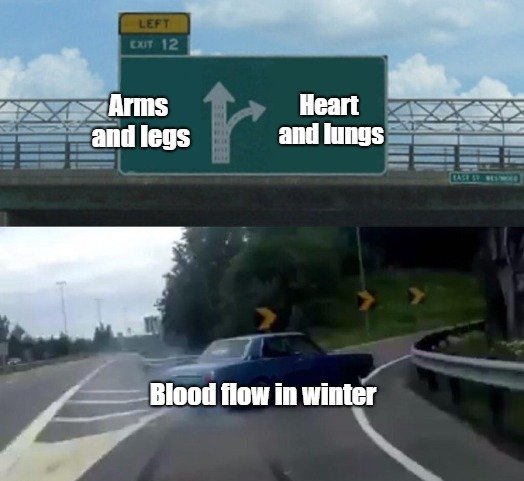
INJURIES HURT MORE IN COLD WEATHER - In colder weather, the body tries to conserve heat by sending more blood to the organs in the center of our body, like the heart and lungs. As a result, the blood vessels in the other parts, like our arms, legs, knee joints and shoulders, will constrict, causing those areas to stiffen due to less blood flow. We also tend to be relatively inactive in winter, which adds to the stiffness, making it difficult for us to make rapid, precise movements, such as those required for texting. The stiffness can also cause discomfort and pain, especially in older people or those who have suffered some injury or who regularly experience joint pain.


.....................................................................................................................................
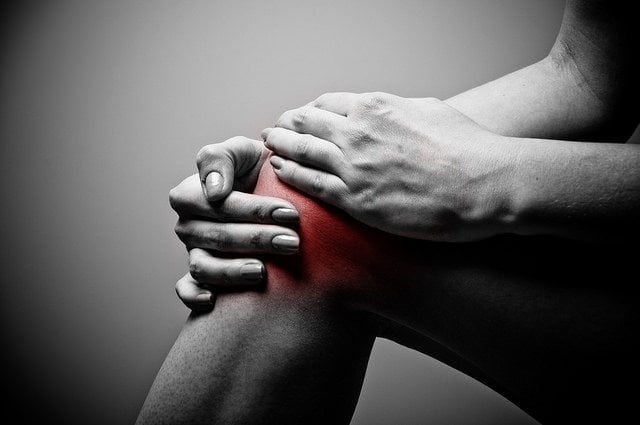
Knee bone painWhy Do Injuries Hurt More In Cold Weather?
Sushmitha Hegde


Getting out of bed on winter mornings can be incredibly difficult, thanks to the laziness and gloominess that seems to hang in the air!
The cold, damp and dark days of winter make us feel particularly lethargic and aware of all the sadness in our lives.
But on top of that, have you noticed that it’s not just your mind that feels more pain during the winter?
Even your body seems to hurt more when it’s cold!
An increase in the magnitude of joint pains, the worsening of old injuries, increased sensitivity of the skin to new injuries… winter can be blamed for a lot of things!
The Nervous System
The nerves send information to our brain when they receive a stimulus that reaches a certain threshold.
However, if the stimulus does not change, the nervous system accommodates or fine-tunes the threshold so that our brain can focus on new stimuli.
That’s why you feel your clothes when you put them on, but eventually stop noticing them as you carry on with your day.
Even though the input has not changed (the fabric, fit, etc. are the same), you stop noticing the sensation.
You only feel it in the presence of another stimulus, say, when the wind makes your clothes flap back and forth against your skin.
Thus, the cumulative input of clothes and wind exceeds the threshold, so you are once again more aware of what your clothes feel like.
The nervous system also displays an ‘all-or-none’ behavior. There is no transmission until the input reaches the threshold potential.
However, once the threshold is reached, there is a full transmission of the input.
Cold, pain and the nervous system
So how is this related to feeling more pain on cold days?
Pain inputs also need to cross a certain threshold before being sent to our brain by the nerves.
Sometimes, when the pain input is not enough to exceed the threshold, or when it has been accommodated or fine-tuned by the nerves, all it needs is a small amount of additional input to cross that threshold.
This additional input is provided by the cold, so our brain suddenly interprets this combined sensation as pain.
The sub-threshold stimulus may be present in the form of an old injury, an arthritic joint, fibromyalgia or any other condition that becomes aggravated in the presence of another stimulus, like cold conditions.
What are the other reasons?
Have you had difficulty texting on cold days? This happens because in colder weather, the body tries to conserve heat by sending more blood to the organs in the center of our body, like the heart and lungs.
As a result, the blood vessels in the other parts, like our arms, legs, knee joints and shoulders, will constrict, causing those areas to stiffen due to less blood flow. 
We also tend to be relatively inactive in winter, which adds to the stiffness, making it difficult for us to make rapid, precise movements, such as those required for texting.
The stiffness can also cause discomfort and pain, especially in older people or those who have suffered some injury or who regularly experience joint pain.
Our skin gets rigid and sensitive due to the reduced blood flow. This makes for a more painful experience when our arms or fingers get hit when they are cold, as compared to when they’re warm, soft and flexible. 
The harsh winds of winter also cause our skin to lose its natural barrier, making it dry and prone to getting scratched more easily than when it is supple and moisturized.
Cold temperatures also cause the barometric pressure to drop.
Many people suffering from arthritis believe that cold weather and low barometric pressure aggravate their symptoms, which include stiffness, pain and swelling of the joints.
Some patients even claim to be able to predict the onset of cold weather and rain through their joint pain.
Although there is not a lot of evidence to back up this belief, certain studies have shown that weather does have an effect on the flexibility of joints.
When the barometric pressure is low, the inflamed tissues swell more, which can stimulate the nerves in those tissues, causing additional pain.
Cold weather, on the other hand, shrinks tissues down, which pulls on the nerves and causes even more discomfort.
How to tackle this?
Keeping our head, hands and feet warm is very important in winter, since the majority of heat from the body is lost from these areas.
Dressing warmly and exercising (despite the temptation of laziness) are two key things that can help you combat the wicked winter.
Take the stairs instead of the elevator, stretch while watching your favorite TV show and constantly keep yourself moving.
In short, exercise, stretch and keep yourself warm!

About the Author:
Sushmitha Hegde is a Commerce graduate from University of Pune. She can say “hello” in 61 different languages, but she is learning Spanish so she can say more. She loves to talk about topics ranging from taxation and finance to history and literature. She is just a regular earthling who laughs at her own jokes, cries while watching movies and is proud of her collection of books!

Sunday, May 28, 2017

OLD INJURIES AND JOINT ACHES - Why Do Old Injuries And Arthritis Joints Ache At The Start Of The Rainy Season? A drop in the barometric pressure before a storm causes the atmosphere to push less against the body, which allows the tissues around the joints to expand. These expanded tissues may then put excess pressure on the joints, resulting in painful sensation or ache in that particular joint.


.
Old Injuries And 
Joint Aches

Why Do Old Injuries And Arthritis Joints Ache At The Start Of The Rainy Season?

Achish  
You have probably heard the adults in your house, especially your grandparents, complain about the pain of old injuries in certain parts of their body in select climate conditions.
Although people may complain of aggravation from old wounds in practically all climatic conditions, it’s most commonly observed before the onset of rainy seasons.
In fact, the grandfather of a friend of mine can predict the imminent arrival of rain when a particular part of his knee begins to ache. Strangely enough, he is often correct in his rain predictions!
Why do fractured bones hurt so much in certain weather conditions? Is there any real connection between joint pain and weather conditions, or is it purely psychological?
Short answer: Yes, there seems to be a direct relation between joint pains and changes in weather conditions, especially prior to the start of the rainy season.
Although there doesn’t exist a concrete, undebatable theory of how it happens, there are a few hypotheses that blame the fluctuations in barometric pressure for the flaring up of joints.

Pain in bone joints and old injuries due to changes in weather

You may have heard arthritis patients complain about how their affected body parts get tensed and flared when the sky turns cloudy or the air becomes too humid.
Arthritis patients often complain about weather-related bone aches. 
Even in your own case, you may have observed that certain old injury spots start to ache in particular kinds of weather.
As mentioned earlier, the correlation between pain in the joints and weather seems to be so strong that people often predict weather conditions … correctly!
It cannot be denied that there is a definite connection here, and justifying that connection is one very popular hypothesis.

Changes in barometric pressure and joint aches

Barometric pressure is the force exerted by the atmosphere at a given point. It is measured by a device
Barometric pressure is commonly known as the 
atmospheric pressure, and its magnitude at a given 
point is measured with the help of a barometer.
 called a barometer.
In simple words, barometric pressure is the weight of the air that surrounds and pushes down on us. Its magnitude varies with humidity and altitude.
A gradual increase in the barometric pressure is usually seen as a sign of improving weather, while a dip in the barometric pressure may reflect imminent inclement weather.
The barometer “falls” (i.e., there is a drop in the barometric pressure) before the onset of rains or in stormy weather conditions.
During times of stormy weather, the 

barometric pressure tends to be lower. 
A drop in the barometric pressure before a storm causes the atmosphere to push less against the body, which allows the tissues around the joints to expand.
These expanded tissues may then put excess pressure on the joints, resulting in painful sensation or ache in that particular joint.
(Note: this is just a hypothesis as to how dipping barometric pressure can cause joint pains and is not experimentally proven as of now.)
Although changes in the barometric pressure are considered to be the key weather-related variable behind joint pain, there are other factors too, like humidity and temperature, that can cause your bone joints to flare up as well.
Notwithstanding the fact that the relation between weather and joint pain has been under scientific scrutiny since the early 20th century, unfortunately, we haven’t been able to find definitive evidence suggesting that there is a consistent effect from weather conditions on one’s health.
There are several reasons behind this: first, the swelling and discomforting sensation associated with changing weather occurs at too small of a scale to be objectively detected and measured by researchers.
Therefore, they have to count on people’s subjective descriptions of their pain, which cannot be relied upon completely to derive 100% accurate conclusions.
What makes things even more difficult is that people respond differently to the same set of environmental conditions.
While many people complain about their bone joints when the barometric pressure drops, there are plenty of folks who experience pain when the pressure rises.
In other words, there are a lot of mixed and even contradictory responses to the same set of weather conditions, which exacerbates the debate further.
Furthermore, it’s not as if barometric pressure is the only variable in question here; we don’t know for sure which combination of weather conditions is the most discomforting.
Overall, we don’t know the exact reason why changing weather causes joint inflammation, but we do know that it’s experienced by many people, especially arthritis patients.
On a lighter note, people seem to predict changes in weather very accurately based on that!
You might also like:
.
.
Water And Arthritis
CLICK HERE . . .
.

Water And Gout
CLICK HERE . . .
Multi-Media Filter, Highly-Activated Carbon Filter,
Zeolite-Process Water Softener With Brine Tank,
Fiberglass Ballast-Type Pressure Tank
(fully automatic backwash & regeneration)
.
PURICARE 
INDUSTRIAL 
ENTERPRISES 
Water 
Treatment 
Systems
.
...
Aganan, Pavia, Iloilo, Philippines
...

CLICK HERE . . . to view company profile . . .
Reverse Osmosis with Steel Tank 
& Cartridge Pre-Filters

Submersible Pumps

Tachmina Solenoid-Driven
Chemical Metering Pump
- ensures regulated dosing
of chlorine into water system
without human intervention