Showing posts with label Tsunamis. Show all posts

Monday, January 4, 2021

TSUNAMI SCIENCE - 10 Years since Sumatra - A tsunami is a series of ocean waves generated by sudden displacements in the sea floor, landslides, or volcanic activity. In the deep ocean, the tsunami wave may only be a few inches high. The tsunami wave may come gently ashore or may increase in height to become a fast moving wall of turbulent water several meters high. Although a tsunami cannot be prevented, the impact of a tsunami can be mitigated through community preparedness, timely warnings, and effective response. December 26, 2004. What began as an undersea earthquake in the Indian Ocean ended as the most deadly tsunami in recorded history, with nearly 240,000 lives lost. This was a devastating wake-up call to coastal communities and tsunami research. Prior to this event, only six of NOAA’s Deep-ocean Assessment and Reporting of Tsunami, or DART, buoys were in place. Scientists could only predict tsunami arrival times, not flood potential. And there was not a global tsunami warning system. Today, ten years later, we can tell a different story. U.S. and international coastlines are far better prepared for such a catastrophe, thanks in large part to research and technology developed at the NOAA Center for Tsunami Research at Pacific Marine Environmental Laboratory. NOAA’s DART array is now complete, with 39 buoys operated by the National Weather Service’s National Data Buoy Center.

..................................................................................................................................................................................................................................................................................................................................................

Tsunami Science

10 Years since Sumatra

.

A tsunami is a series of ocean waves generated by sudden displacements in the sea floor, landslides, or volcanic activity. In the deep ocean, the tsunami wave may only be a few inches high. The tsunami wave may come gently ashore or may increase in height to become a fast moving wall of turbulent water several meters high. Although a tsunami cannot be prevented, the impact of a tsunami can be mitigated through community preparedness, timely warnings, and effective response.

Ocean Today


December 26, 2004.  What began as an undersea earthquake in the Indian Ocean ended as the most deadly tsunami in recorded history, with nearly 240,000 lives lost.

This was a devastating wake-up call to coastal communities and tsunami research. 

Prior to this event, only six of NOAA’s Deep-ocean Assessment and Reporting of Tsunami, or DART, buoys were in place.  

Scientists could only predict tsunami arrival times, not flood potential. And there was not a global tsunami warning system.

Today, ten years later, we can tell a different story. 

U.S. and international coastlines are far better prepared for such a catastrophe, thanks in large part to research and technology developed at the NOAA Center for Tsunami Research at Pacific Marine Environmental Laboratory. 

NOAA’s DART array is now complete, with 39 buoys operated by the National Weather Service’s National Data Buoy Center. 

Along with 21 international buoys, this array can measure a tsunami wave as small as one centimeter in the open ocean and provide these data in real-time to forecast when a tsunami may hit the coast and how much flooding there will be. 

NOAA scientists and engineers are currently testing the fourth generation DART buoy that will be able to measure local tsunamis as well as distant ones.

Flooding forecast models incorporate local topography and historical tsunami data in order to more accurately predict exactly how a tsunami might behave when it reaches shore. 

NOAA has 75 site-specific models that can provide high-resolution flooding forecasts for effective response and mitigation during a tsunami event.

NOAA has gathered data from every tsunami since 2004 to improve its forecast models. 

Today, it operates the world’s only real-time tsunami flooding forecast system, using DART data to accurately compute flooding forecasts.

The NOAA Tsunami Warning Centers make tsunami data available on the internet, and issue advisories, watches and warnings through the Emergency Alert System and via NOAA Weather Radios.

While it is impossible to prevent a tsunami, we are now much better prepared to detect them and predict their paths and impacts, so those in coastal communities can take the steps necessary to safely protect themselves.

Fast Facts

A tsunami is a series of ocean waves generated by sudden displacements in the sea floor, landslides, or volcanic activity.

In the deep ocean, the tsunami wave may only be a few inches high. 

The tsunami wave may come gently ashore or may increase in height to become a fast moving wall of turbulent water several meters high.

Although a tsunami cannot be prevented, the impact of a tsunami can be mitigated through community preparedness, timely warnings, and effective response.

Ocean Today is an exciting, multimedia kiosk that features videos on all aspects of the ocean realm -- exploration and discoveries, marine life and science. It was originally designed for the Sant Ocean Hall in the Smithsonian Institution’s National Museum of Natural History which opened in September 2008. Due to the popularity of the videos, Ocean Today kiosks are now located in dozens of aquariums, museums, and learning centers throughout the world. Check out our map to find a location near you to visit or watch the videos here. This website serves as online archive for those who are unable to experience it in person

https://oceantoday.noaa.gov/indianoceantsunami/


You might also like:


Natural Disasters Caused by Earthquakes

CLICK HERE . . . to view . . . 

https://puricare.blogspot.com/2020/11/natural-disasters-caused-by-earthquakes.html

..........................................................................................................................................................................................................................................................................................

Earthquakes

When Nature Strikes 

CLICK HERE . . . to view . . . 

https://puricare.blogspot.com/2020/08/earthquakes-when-nature-strikes-most.html

Ocean Waves 

Energy, Movement, and the Coast 

CLICK HERE . . . to view . . . 

https://puricare.blogspot.com/2020/04/ocean-waves-energy-movement-and-coast.html

.............................................................................................................................................................................................................................................................................................pie

Extinction Level Events

CLICK HERE . . . to view . . . 

https://puricare.blogspot.com/2020/01/extinction-level-events-that-could-end.html

All the Fountains of the Deep

CLICK HERE . . . to view . . . 

https://puricarechronicles.blogspot.com/2020/11/all-fountains-of-deep-deep-in-scripture.html


The Great Cascadia

Earthquake of 2xxx

CLICK HERE . . . to view . . . 

https://puricare.blogspot.com/2019/07/the-great-cascadia-earthquake-of-2xxx.html

.............................................................................................................................................................................................................................................................................................pie

The Tokai Earthquake

CLICK HERE . . . to view . . . 

https://puricare.blogspot.com/2019/05/the-tokai-earthquake-all-of-japan-is.html

Saturday, August 8, 2020

EARTHQUAKES - When Nature Strikes - Most people know that earthquakes occur along the San Andreas Fault of California, but few realize that there is an ever greater danger lurking under the Pacific Northwest. A tectonic plate, known as the Juan de Fuca Plate, is expected to move underneath the Pacific Northwest edge of the North American continent, creating a magnitude 9 earthquake. Like the megathrust earthquake that struck Japan in 2011, the expected earthquake could topple buildings, cause the soil to behave like a liquid, and could generate a deadly tsunami. Luckily, megathrust earthquakes are infrequent. However, no one knows when the next one will strike. At plate boundaries, such as the boundary between the Juan de Fuca Plate and the North American Plate, plates are locked together by friction. Tectonic forces act upon the plates, adding stress that will eventually overcome the friction. As a result, the plates will finally move, releasing energy in the form of earthquake waves. By studying the tectonic forces, the history of faults and the kinds of rocks involved, scientists are searching for a way to predict when earthquakes will occur and to issue warnings. John Vidale and his team at the Pacific Northwest Seismic Network is carefully monitoring ground motion and is helping the states of Washington and Oregon to protect citizens from the effects of a devastating magnitude 9 earthquake.

Convergent Plate Boundaries—Subduction Zones - Geology (U.S. ...
..............................................................................................................................................................
When Nature Strikes
THE BIG ONE: UNDERSTANDING WHY THE BIG EARTHQUAKE IS PREDICTED FOR ...
Earthquakes
.
.
Fear of Juan de Fuca megathrust earthquakeLike the megathrust earthquake that struck Japan in 2011, the expected magnitude 9 earthquake could topple buildings, cause the soil to behave like a liquid, and could generate a deadly tsunami. Tectonic forces act upon the plates, adding stress that will eventually overcome the friction. As a result, the plates will finally move, releasing energy in the form of earthquake waves - no one knows when the next one will strike
Windows to the Universe 


Most people know that earthquakes occur along the San Andreas Fault of California, but few realize that there is an ever greater danger lurking under the Pacific Northwest.
A tectonic plate, known as the Juan de Fuca Plate, is expected to move underneath the Pacific Northwest edge of the North American continent, creating a magnitude 9 earthquake.
Like the megathrust earthquake that struck Japan in 2011, the expected earthquake could topple buildings, cause the soil to behave like a liquid, and could generate a deadly tsunami.
Juan de Fuca plate is making moves | Sequim GazetteLuckily, megathrust earthquakes are infrequent. However, no one knows when the next one will strike.
At plate boundaries, such as the boundary between the Juan de Fuca Plate and the North American Plate, plates are locked together by friction.
Tectonic forces act upon the plates, adding stress that will eventually overcome the friction.
As a result, the plates will finally move, releasing energy in the form of earthquake waves.
By studying the tectonic forces, the history of faults and the kinds of rocks involved, scientists are searching for a way to predict when earthquakes will occur and to issue warnings.
John Vidale and his team at the Pacific Northwest Seismic Network is carefully monitoring ground motion and is helping the states of Washington and Oregon to protect citizens from the effects of a devastating magnitude 9 earthquake.

"When Nature Strikes" is produced by NBC Learn in partnership with the National Science Foundation.
The Windows to the Universe website is a richly interlinked ecosystem for learning about the Earth and Space sciences for use by the general public, students, and teachers. Windows to the Universe has been in development since 1995. The project started, with support from NASA for a proposal submitted by Dr. Roberta Johnson, Director of Windows to the Universe, to NASA while she was on the Research Faculty at the University of Michigan's Department of Atmospheric, Oceanic, and Space Sciences. In 2000, Dr. Johnson moved with the project to the University Corporation for Atmospheric Research (UCAR), where she continued development on the project with the Windows to the Universe team on numerous grants and contracts over the past decade. In 2010, website management and ownership moved to the National Earth Science Teachers Association, where we will be expanding opportunities to collaborate with the project - with the hope that it becomes a platform for Earth and space science education globally.
Tomography reveals buoyant asthenosphere accumulating beneath the ...

Friday, January 24, 2020

EXTINCTION LEVEL EVENTS THAT COULD END LIFE ON EARTH - You know about some of the threats that could end life as we know it. The Sun could do something nasty. A meteor could strike. We could nuke ourselves out of existence. These are only a few well-known extinction level events. There are so many more ways to die! An extinction level event or ELE is a catastrophe resulting in the extinction of the majority of species on the planet. It's not the normal extinction of species that occurs every day. It isn't necessarily the sterilization of all living organisms. If a strong solar flare hit the Earth, the results could be devastating. Scientists estimate a big meteor needs to be about 100 kilometers (60 miles) across to wipe out all life on earth. Most extinction level events have been caused by volcanoes. Volcanoes kill by releasing dust, sulfur oxides, and carbon dioxide that collapse food chains by inhibiting photosynthesis, poison the land and sea with acid rain, and produce global warming.

A big meteor impact could be an extinction level event.
................................................................................................................................................................
Historically, most extinction level events have been caused by volcanoes.
Extinction Level Events
7 Extinction Level Events That Could End Life as We Know It
by Anne Marie Helmenstine, Ph.D.


If you've watched the movies "2012" or "Armageddon" or read "On the Beach," you know about some of the threats that could end life as we know it.
The Sun could do something nasty. A meteor could strike. We could nuke ourselves out of existence. These are only a few well-known extinction level events. There are so many more ways to die!
But first, what exactly is an extinction event?
An extinction level event or ELE is a catastrophe resulting in the extinction of the majority of species on the planet.
It's not the normal extinction of species that occurs every day. It isn't necessarily the sterilization of all living organisms.
We can identify major extinction events by examining the deposition and chemical composition of rocks, the fossil record, and evidence of major events on moons and other planets.
There are dozens of phenomena capable of causing widespread extinctions, but they can be grouped into a few categories:
The Sun Will Kill Us
If a strong solar flare hit the Earth, the results could be devastating.
Life as we know it wouldn't exist without the Sun, but let's be honest. The Sun has it out for planet Earth.
Even if none of the other catastrophes on this list ever happen, the Sun will end us. Stars like the Sun burn brighter over time as they fuse hydrogen into helium.
In another billion years, it will be about 10 percent brighter. While this might not seem significant, it will cause more water to evaporate.
Water is a greenhouse gas, so it traps heat in the atmosphere, leading to more evaporation. Sunlight will break water into hydrogen and oxygen, so it can bleed away into space.
Should any life survive, it will meet a fiery fate when the Sun enters its red giant phase, expanding out to the orbit of Mars. It's not likely any life will survive inside the Sun.
But the Sun can kill us any old day it wants via a coronal mass ejection (CME). As you can guess from the name, this is when our favorite star expels charged particles outward from its corona.
Since a CME can sent matter any direction, it doesn't usually shoot directly toward Earth. Sometimes only a tiny fraction of particles reach us, granting us an aurora or a solar storm. However, it's possible for a CME to barbecue the planet.
The Sun has pals (and they hate Earth too). A nearby (within 6000 light years) supernova, nova, or gamma ray burst could irradiate organisms and destroy the ozone layer, leaving life at the mercy of the Sun's ultraviolet radiation.
Scientists think a gamma burst or supernova might have led to the End-Ordovician extinction.
Geomagnetic Reversals May Kill Us
Scientists believe magnetic pole reversals were involved in some past mass extinctions.
The Earth is a giant magnet that has a love-hate relationship with life. The magnetic field protects us from the worst the Sun throws at us.
Every so often, the positions of the north and south magnetic poles flip. How often the reversals occur and how long it takes the magnetic field to get settled is highly variable.
Scientists aren't completely sure what will happen when the poles flip. Maybe nothing. Or maybe the weakened magnetic field will expose the Earth to the solar wind, letting the Sun steal a lot of our oxygen.
You know, that gas humans breathe. Scientists say magnetic field reversals aren't always extinction level events. Just sometimes.
The Big Bad Meteor
A big meteor impact could be an extinction level event.
You may be surprised to learn the impact of an asteroid or meteor has only been connected with certainty to one mass extinction, the Cretaceous-Paleogene extinction event.
Other impacts have been contributing factors to extinctions, but not the primary cause.
The good news is that NASA claims about 95 percent of comets and asteroids bigger than 1 kilometer in diameter have been identified.
The other good news is that scientists estimate an object needs to be about 100 kilometers (60 miles) across to wipe out all life.
The bad news is there are another 5 percent out there and not much we can do about a significant threat with our present technology (no, Bruce Willis cannot detonate a nuke and save us).
Obviously, living things at ground zero for a meteor strike will die. Many more will die from the shock wave, earthquakes, tsunamis, and firestorms.
Those that survive the initial impact would have a hard time finding food, as the debris thrown into the atmosphere would change the climate, leading to mass extinctions. You're probably better off at ground zero for this one.
The Sea
A tsunami is dangerous, but the sea has more lethal tricks.
A day at the beach might seem idyllic, until you realize the blue part of the marble we call Earth is deadlier than all of the sharks in its depths. The ocean has various ways of causing ELEs.
Methane clathrates (molecules made of water and methane) sometimes break from the continental shelves, producing a methane eruption called a clathrate gun.
The "gun" shoots immense amounts of the greenhouse gas methane into the atmosphere. Such events are linked to the end-Permian extinction and Paleocene-Eocene Thermal Maximum.
Prolonged sea level rise or fall also leads to extinctions. Falling sea levels are more insidious, as exposing the continental shelf kills off innumerable marine species. This, in turn, upsets the terrestrial ecosystem, leading to an ELE.
Chemical imbalances in the sea also cause extinction events. When the middle or upper layers of the ocean become anoxic, a chain reaction of death occurs. The Ordovician-Silurian, late Devonian, Permian-Triassic, and Triassic-Jurassic extinctions all included anoxic events.
Sometimes the levels of essential trace elements (e.g., selenium) fall, leading to mass extinctions.
Sometimes the sulfate-reducing bacteria in thermal vents get out of control, releasing an excess of hydrogen sulfide that weakens the ozone layer, exposing life to lethal UV.
The ocean also undergoes a periodic overturn in which the high-salinity surface water sinks to the depths. Anoxic deep water rises, killing surface organisms. The late-Devonian and Permian-Triassic extinctions are associated oceanic overturn.
The beach doesn't look so nice now, does it?
And the "Winner" Is... Volcanoes
Historically, most extinction level events have been caused by volcanoes.
While falling sea level has been associated with 12 extinction events, only seven involved a significant loss of species.
On the other hand, volcanoes have led to 11 ELEs, all of them significant. The End-Permian, End-Triassic, and End-Cretaceous extinctions are associated with volcanic eruptions called flood basalt events.
Volcanoes kill by releasing dust, sulfur oxides, and carbon dioxide that collapse food chains by inhibiting photosynthesis, poison the land and sea with acid rain, and produce global warming.
The next time you vacation at Yellowstone, take a moment to stop and ponder the implications when the volcano erupts. At least the volcanoes in Hawaii aren't planet killers.
Global Warming and Cooling
Runaway global warming could make Earth more like Venus.
In the end, the ultimate cause of mass extinctions is global warming or global cooling, usually caused by one of the other events. Global cooling and glaciation are believed to have contributed to the End-Ordovician, Permian-Triassic, and Late Devonian extinctions.
While the temperature drop killed some species, the sea level fall as water turned to ice had a much greater effect.
Global warming is a much more efficient killer. But, the extreme heating of a solar storm or red giant isn't required.
Sustained heating is associated with the Paleocene-Eocene Thermal Maximum, the Triassic-Jurassic extinction, and the Permian-Triassic extinction.
Mostly the problem seems to be the way higher temperatures release water, adding the greenhouse effect to the equation and causing anoxic events in the ocean.
On Earth, these events have always balanced out over time, yet some scientists believe there is potential for Earth to go the way of Venus. In such a scenario, global warming would sterilize the entire planet.
Our Own Worst Enemy
Global nuclear war would irradiate the planet and likely lead to either nuclear summer or nuclear winter.
Humanity has plenty of options at its disposal, should we decide it's taking too long for the meteor to strike or the volcano to erupt.
We're capable of causing an ELE via a global nuclear war, climate change caused by our activities, or by killing enough other species to cause a collapse of the ecosystem.
The insidious thing about extinction events is that they tend to be gradual, often leading to a domino effect in which one event stresses one or more species, leading to another event that destroys many more.
Thus, any cascade of death typically involves multiple killers on this list.
Key Points
Extinction level events or ELEs are calamities that result in the annihilation of most species on the planet.
Scientists can predict some ELEs, but most are neither predictable nor preventable.
Even if some organisms survive all other extinction events, eventually the Sun will eradicate life on Earth.

Anne Marie Helmenstine, Ph.D.
Chemistry Expert
Education
Ph.D., Biomedical Sciences, University of Tennessee at Knoxville
B.A., Physics and Mathematics, Hastings College
Introduction
Ph.D. in biomedical sciences from the University of Tennessee at Knoxville - Oak Ridge National Laboratory.
Science educator with experience teaching chemistry, biology, astronomy, and physics at the high school, college, and graduate levels.
ThoughtCo and About Education chemistry expert since 2001.
Widely-published graphic artist, responsible for printable periodic tables and other illustrations used in science.
Experience
Anne Helmenstine, Ph.D. has covered chemistry for ThoughtCo and About Education since 2001, and other sciences since 2013. She taught chemistry, biology, astronomy, and physics at the high school, college, and graduate levels. She has worked as a research scientist and also abstracting and indexing diverse scientific literature for the Department of Energy.
In addition to her work as a science writer, Dr. Helmenstine currently serves as a scientific consultant, specializing in problems requiring an interdisciplinary approach. Previously, she worked as a research scientist and college professor.
Education
Dr. Helmenstine holds a Ph.D. in biomedical sciences from the University of Tennessee at Knoxville and a B.A. in physics and mathematics with a minor in chemistry from Hastings College. In her doctoral work, Dr. Helmenstine developed ultra-sensitive chemical detection and medical diagnostic tests.
ThoughtCo and Dotdash
ThoughtCo is a premier reference site focusing on expert-created education content. We are one of the top-10 information sites in the world as rated by comScore, a leading Internet measurement company. Every month, more than 13 million readers seek answers to their questions on ThoughtCo.
For more than 20 years, Dotdash brands have been helping people find answers, solve problems, and get inspired. We are one of the top-20 largest content publishers on the Internet according to comScore, and reach more than 30% of the U.S. population monthly. Our brands collectively have won more than 20 industry awards in the last year alone, and recently Dotdash was named Publisher of the Year by Digiday, a leading industry publication.
https://www.thoughtco.com/extinction-level-events-4158931


You might also like:


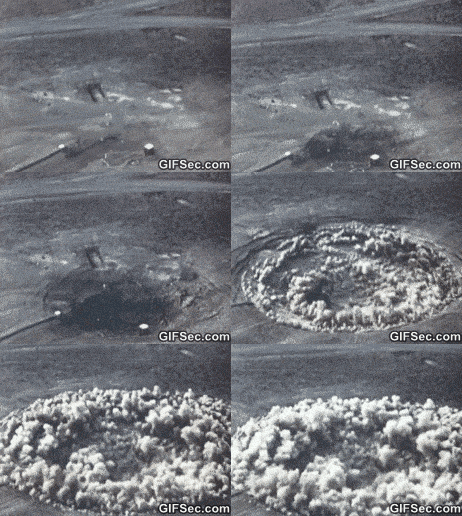
Explosion GIF
Nuclear Bomb Tests And Earthquakes
CLICK HERE . . . to view . . . 
https://puricare.blogspot.com/2019/07/nuclear-bomb-tests-and-earthquakes.html
............................................................................................................
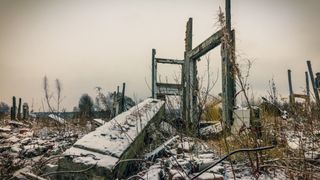
In the foreground, overgrown ruins of buildings, covered in a dusting of snow under a grey sky.
Nuclear Winter Disaster
CLICK HERE . . . to view . . . 
https://puricare.blogspot.com/2019/10/nuclear-winter-disaster-nuclear-winter.html
............................................................................................................

Image result for images nuclear proliferationMutual Assured Destruction
CLICK HERE . . . to view . . . 
https://puricare.blogspot.com/2019/01/mutual-assured-destruction-because-us.html
............................................................................................................
Truckee Nuclear Explosion
The Fireball and Thermal Pulse
............................................................................................................
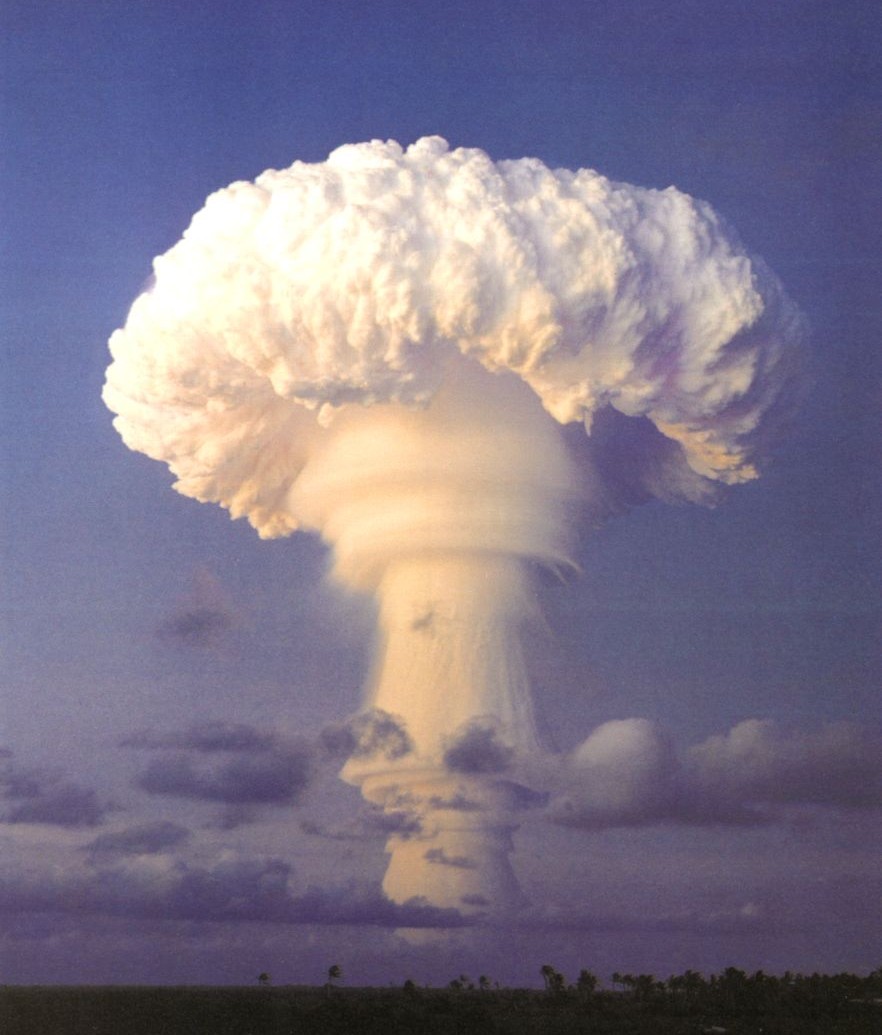
Image result for images The Mushroom CloudThe Mushroom Cloud

 Global nuclear war would irradiate the planet and likely lead to either nuclear summer or nuclear winter.

65 million years ago a meteor struck the Mexican Yucatan peninsula, throwing tons of dust in the air and contributing to mass extinctions.
65 million years ago a meteor struck the Mexican Yucatan peninsula,
throwing tons of dust in the air and contributing to mass extinctions.
If a strong solar flare hit the Earth, the results could be devastating.
Scientists believe magnetic pole reversals were involved in some past mass extinctions.
Scientists believe magnetic pole reversals were involved in some past mass extinctions. 

A big meteor impact could be an extinction level event.
A big meteor impact could be an extinction level event. 

A tsunami is dangerous, but the sea has more lethal tricks.

Historically, most extinction level events have been caused by volcanoes.
Historically, most extinction level events have been caused by volcanoes. 

Runaway global warming could make Earth more like Venus.
Runaway global warming could make Earth more like Venus. 

Global nuclear war would irradiate the planet and likely lead to either nuclear summer or nuclear winter.