Showing posts with label Air density. Show all posts

Friday, February 28, 2020

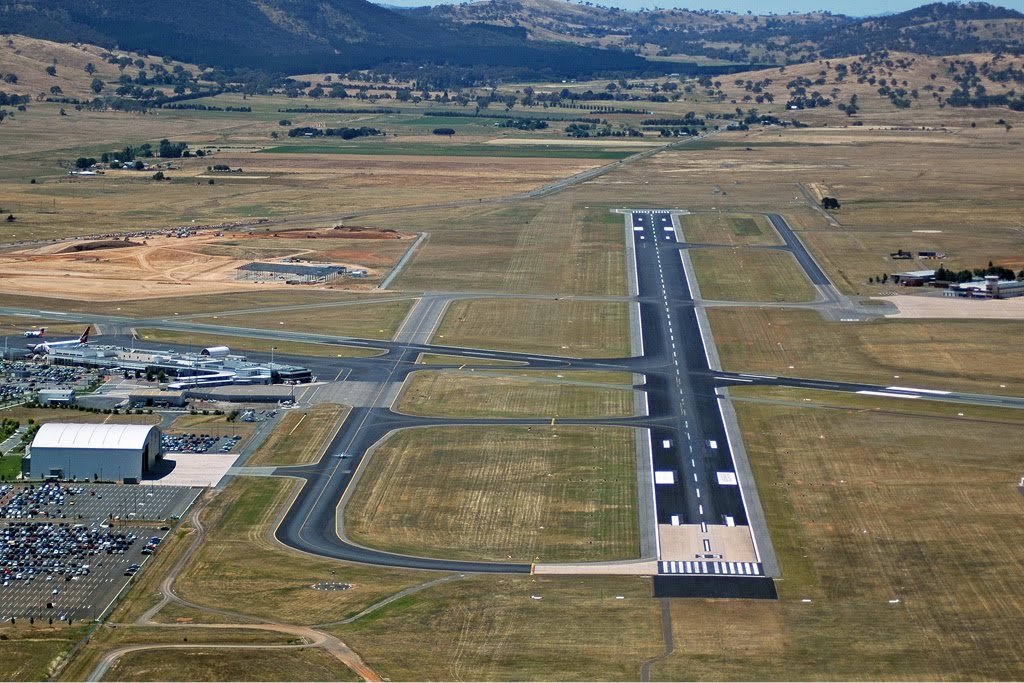
HOT AND HIGH AIRPORTS - Some Airports Have Unusually Long Runways - Operating at an airport that has been identified as one of these ‘hot and high’ airports or has such atmospheric conditions at the time of taking off or landing, can be a difficult task for pilots. It has to do with air density, which decreases with an increase in temperature and altitude. At an airport with such conditions, taking off becomes difficult, as lower air density translates to less lift being generated by the wings or the rotors of the airplane. Lower air density also hampers the performance of aircraft engines, potentially jeopardizing the flight’s safety. Light aircraft and older helicopters often end up stalling in ‘hot and high’ conditions in a bid to maintain level flight, as their service ceilings are pretty low. There are some other grave risks involved too; sometimes, the airplane cannot climb rapidly enough to clear the surrounding terrain; things gets worse if the airport is in a mountainous region or is surrounded by mountains, buildings and other tall structures.

canberra airport runway
.............................................................................................................................................................
pilot memeHot And High Airports
Why Do Some Airports Have Unusually Long Runways?
Ashish 


doesnt sound good memeAfter our airplane touched down on the runway the other day, I had a rather unusual feeling; I felt as if the airplane was running for too long on the runway.
At first, I discarded the thought, but later on, I came to know that the runway was unusually longer than regular runways!
Upon further investigation, I realized that the particular airport I took off from was ‘hot and high’.
After brushing aside the literal meaning of the phrase, I stumbled upon what is probably one of the smartest tweaks that humans have made to the aviation industry.
What is ‘hot and high’ in the aviation industry?
 ‘Hot and high’ is a phrase often used in the aviation industry, and it’s used to refer to the condition of high ambient temperature, as well as high elevation of the airport.
Such conditions impact the flight of airplanes, and hence become a serious cause of concern, as they significantly influence the safety of the airplanes flying in such regions.
Let’s break down the term ‘hot and high’.
‘Hot’ is pretty intuitive; it is representative of a high ambient temperature of the region.
Since temperature is a variable physical quantity (i.e., its value changes continuously), the severity of the ‘hot and high’ condition also changes.
On other hand, ‘high’ refers to the elevation of the airport in question.
If it’s built on land that has more elevation than the standard terrestrial height, it’s said to be a ‘high’ airport.
There are several prominent ‘hot and high’ airports, including Albuquerque (New Mexico), Brasília (Brazil), Canberra (Australia), Denver (Colorado) and Siachen Glacier (India).
The fact that ambient temperature tends to be lower at high altitudes mitigates the ‘hot and high’ effect to some extent.
What’s the challenge with a ‘hot and high’ airport?
Operating at an airport that has been identified as one of these ‘hot and high’ airports or has such atmospheric conditions at the time of taking off or landing, can a difficult task for the airline pilots.
Why is that?
It has everything to do with air density, which is known to decrease with an increase in ambient temperature and altitude.
Therefore, at an airport with such conditions, taking off becomes particularly difficult, as lower air density translates to less lift being generated by the wings or the rotors of the airplane.
Not only that, lower air density also hampers the performance of aircraft engines, potentially jeopardizing the flight’s safety.
Light aircraft and older helicopters often end up stalling in ‘hot and high’ conditions in a bid to maintain level flight, as their service ceilings (maximum usable altitude of an aircraft) are pretty low.
There are some other grave risks involved too; sometimes, the airplane cannot climb rapidly enough to clear the surrounding terrain; things gets worse if the airport is in a mountainous region or is surrounded by mountains, buildings and other tall structures.
How do they tackle this problem?
Since both the atmospheric conditions involved here, namely the hotness and elevation of a region, are artificially unalterable, you need artificially controllable alternatives that can help overcome this challenge.
The most commonly used technique at airports with such natural conditions is making particularly long (longer than usual) runways.
This increases aircraft take-off run distance, hence providing more energy for the subsequent climb into the sky.
Reducing the total weight of the aircraft can also help; this is often achieved by using up excess fuel or removing not-so-vital equipment from the aircraft.
Airplanes often circle over the destination a few times to consume excess oil so that they are left with only enough oil to make a successful landing.
Structural changes in aircraft, such as more powerful engines and bigger wings, can also help guarantee a smooth take-off or landing.
Other techniques, such as additional high-lift devices, the injection of distilled water, and assisted take-offs can also compensate for ‘hot and high’ conditions.
So, next time your airplane is running on a runway that just never seems to end, you’ll know that the airport likely has weather conditions that are a bit out of the ordinary.
In other words, it’s a good thing someone was thinking ahead!

Ashish is a Science graduate (Bachelor of Science) from Punjabi University (India). He spends a lot of time watching movies, and an awful lot more time discussing them. He likes Harry Potter and the Avengers, and obsesses over how thoroughly Science dictates every aspect of life… in this universe, at least.
runway meme

Tuesday, July 23, 2019

ADVANTAGES OF AIRCRAFTS FLYING AT HIGH ALTITUDE - When aircrafts fly at very high altitude they require less fuel to operate than that at lower altitude. As the aircraft reaches higher altitude the air friction on the aircraft decreases hence, enhancing the overall fuel economy of the aircraft. Aircrafts also fly high as a safety precaution as the chances of hitting an obstacle are minimal. The aircraft frame is actually very sensitive to hits at high speeds that even a bird hitting an aircraft can be disastrous. Flying high also takes care of running into extreme weather situations. Most aircrafts are sophisticated pieces of equipment and they have the fail-safe mechanism for most of the issues that can crop up in flight, provided the pilot has time in his hand to rectify the situation.


......................................................................................................................................
airplane, fly, highAdvantages Of Aircrafts Flying At High Altitude
Why Do Airplanes Need To Fly So High?
Avinash Shrivastava


Now, this is a question that comes to everyone’s mind.
Sane scientific mind at least, that why does an airplane fly at such high altitude. I mean having an obstacle-free path is good enough.
An airplane can fly at that altitude, can’t they? Well, the answer is yes, but then there would be some unviable issues with it which we will be discussing in the current article.
In order to reach high altitude, the airplane has to use a lot of engine power. We know that an airplane engine is a power machine and consumes lots of fuel for its operations.
The aircraft has to maintain a minimum forward velocity while climbing, this also makes it enter into a thinner atmosphere.
Additional engine resources are required for pressurizing the cabin so that passengers can have a safe and healthy flight.
Air Density plays a pivotal role in the complete aircraft operation.
When aircrafts fly at very high altitude they require less fuel to operate than that at lower altitudes.
Now here we have to take this into consideration that most of the commercial jetliners are running on jet engines.
Jet engines in order to operate require a mix of the fuel-air mixture known as stoichiometric ratio.
What this means broadly is that the ratio of fuel to air molecules have to be precise in order to reach maximum operational efficiency.
As the altitude increases the air becomes thin.
Or in other words, the density of air would decrease resulting in a lower number of air molecules entering into the system.
As a consequence, the number of fuel molecules entering the engine will also have to be lowered to match the number of air molecules.
Ultimately this results in a lower amount of fuel be burned to be operationally effective.
Hence it can be concluded that at higher altitude the aircraft becomes more fuel efficient hence more economical too.
Now, this is one reason, secondly, as the aircraft reaches the higher altitude the air friction on the aircraft also decreases hence enhancing the overall fuel economy of the aircraft.
Aircrafts apart from the above-mentioned reason, also fly high in the sky as a safety precaution.
You see when you fly too high then the chances of hitting an obstacle are minimal.
The aircraft frame is actually very sensitive to hits at high speeds that even a bird hitting an aircraft can be disastrous. Hence, flying high reduces such risks.
Also, at high altitude, the exposure to the weather-related phenomenon is pretty less.
Imagine a thunderstorm brewing up. No aircraft pilot would want to risk his plane getting stuck in such a weather.
It is hazardous for the airplane, hence flying high also takes care of running into extreme weather situations.
The element of safety is also applicable to flying at high altitudes.
Most of the modern aircrafts are sophisticated pieces of equipment and they have the fail-safe mechanism for most of the issues that can crop up in flight, provided the pilot has time in his hand to rectify the situation.
He can only have ample time in his hand when he is flying at high altitude and there is a window period between taking corrective measure and hitting the ground.