.................................................................................................................................................................
 |
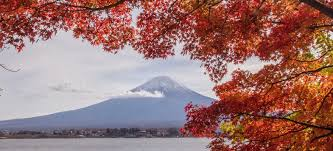
| The colorful foliage of autumn. This scenic route showcases the pumpkin-orange hues of fall foliage. |
Autumn: The Cooling-Off Season
By Nola Taylor Redd
Sandwiched between blazing summer and chilly
winter, autumn is the "cooling off" season.
Nighttime arrives earlier, temperatures begin
to drop and most vegetative growth decreases.
Animals begin to prepare for the dearth of
food that generally comes during the winter, gathering supplies or traveling to
warmer climates.
In 2015, autumn in the Northern Hemisphere
begins at 4:21 a.m. EDT (8:21 a.m. UTC) on Sept. 23, according to the National
Oceanic and Atmospheric Administration. It ends at 11:48 p.m. EST on Dec. 21
(4:45 a.m. UTC on Dec. 22).
Seasons explained
The cycle of seasons is caused by Earth's
tilt on its axis and the planet's orbit around the sun.
When the axis points toward the sun, that
hemisphere experiences summer.
The hemisphere tilted away from the sun
experiences winter.
After Earth travels a quarter of the way
around the sun, the axis is pointed along the planet's path, parallel to the
star.
From our perspective here on Earth, the sun
travels along an imaginary line called the ecliptic, which marks the plane in
which the planets orbit the sun.
Another imaginary line is the celestial
equator, which a projection of Earth's equator into space.
For half the year, during summer in the
Northern Hemisphere, the sun appears to move along the ecliptic north of the celestial
equator.
During the other half of the year, it appears
to be south of the celestial equator.
The exact moment when the sun appears to
arrive at the intersection of the ecliptic and the celestial equator is when
autumn begins.
At Earth's equator, the sun is directly
overhead at noon.
These moments in time are called equinoxes,
and the length of daylight and nighttime are approximately the same, according
to the National Maritime Museum.
The word "equinox is derived from two
Latin words: aequus (equal) and nox (night).
Day and night are not exactly 12 hours each.
Because of the way the sun's light refracts
in Earth's atmosphere, we can actually see the sun for a few minutes before its
disk rises and for a few minutes after it has truly set.
Thus, daylight on any given day lasts roughly
six or seven minutes longer than it seemingly should.
Different definitions of autumn
The autumnal equinox is the beginning of
"astronomical autumn," which ends with the start of winter.
In the Northern Hemisphere, that is from
around September 22 to about December 22, though it varies from year to year,
according to the NOAA. In the Southern Hemisphere, the season runs from about
March 20 to June 21.
Weather forecasters and some countries define
the season as "meteorological autumn" by the three months in which
the weather changes.
In the Northern Hemisphere, this is
September, October, and November.
In the Southern Hemisphere, meteorological
autumn occurs in March, April, and May.
Falling temperatures
Autumn brings a nip in the air. How much of a
change is felt depends on the location of the area on Earth.
Regions near the equator experience fairly
constant temperatures throughout the year, while those farther north or south
experience greater variations.
This is because the equator gets a consistent
amount of sun.
Far northern and southern regions get less
sun due to the curvature of the sun, according to the Atmospheric Radiation
Measurement (ARM) program.
For the continental United States,
temperatures during autumn (September through November) average 53.5 degrees
Fahrenheit (11.9 Celsius), according to the NOAA — an 18-degree (10 degrees C)
drop from average summer temperatures.
Average autumn temperatures range from a high
of 72.7 F (22.6 C) in Florida to a low of 26.7 F (minus 2.9 C) in Alaska.
What's in a name?
Autumn, of course, is also known as fall,
primarily in the United States.
Ambivalence over the name of the third season
of the year reflects its status as a relatively new concept, according to
Natalie Wolchover in a 2012 article for Live Science.
Many cultures only recognized two seasons,
such winter and summer or winter and spring.
The period of transition between summer and
winter came to be known as "harvest."
"Autumn," a Latin word, first
appeared in English in the late 14th century, and gradually gained on "harvest."
In the 17th century, "fall" came
into use, almost certainly as a poetic complement to "spring,"
according to "Folk Taxonomies in Early English" (Fairleigh Dickinson
University Press, 2003) by Earl R. Anderson.
Why do leaves change color?
 |
| Fall leaves. |
Because chlorophyll is sensitive to the cold,
certain weather conditions like early frosts will turn off production more
quickly.
Meanwhile, orange and yellow pigments called
carotenoids — also found in orange carrots — shine through the leaves' washed
out green.
The red color in some leaves comes from
anthocyanins, which unlike carotenoids, are only produced in the fall,
according to the State University of New York College of Environment.
They also give color to strawberries, red
apples, and plums.
But red leaves are also signal of distress.
If you see leaves of a tree turning red
early, in late August, the tree is most likely suffering from a fungus or
perhaps a ding from a reckless driver.
Autumn in different cultures
Autumn is generally regarded as the end of
the growing season. Also known as the harvest season, autumn ushers in a time
of celebration for many farming cultures when they gathered in their crops.
"Autumn, or
fall, is rich with different festivals which mainly celebrate the return of
light, harvest, and, like spring, rebirth through death," Cristina De Rossi,
an anthropologist at Barnet and Southgate College in London, told Live Science.
For example, the harvest festival in the
United Kingdom is a time when people give thanks for the fruits of the land and
collect food to donate to those in need.
"Harvest
celebrations tend to combine giving thanks with prayers for future abundance,
to propitiate the god(s) and ensure successful crops," said De Rossi.
Another example of this would be
Thanksgiving, which is celebrated in the United States.
 |
| The foliage of Hocking Hills is so breathtaking the fall time that it’s known as Southeastern Ohio’s Scenic Wonderland. |
De Rossi also points out these celebrations
as further examples of fall's ties with giving thanks and rebirth:
o The Jewish festival
of Sukkot, which commemorates the time spent in exile by giving thanks.
o Halloween (All Hallows
Eve) celebrations on Oct. 31 remind people of the connection with death, the
spirits of those who have left this earth, and thus rebirth.
o On the following day,
Christians, especially Catholics, celebrate All Hallows Day, or All Saints'
Day, when people visit their departed and bring flower to their graves.
o In Mexico, the living
celebrate their ancestors during the Day of the Dead on Nov. 2.
Autumn quotes
The season is often regarded as a melancholy
time and has inspired many writers and poets. Here are some quotes about
autumn:
"Autumn is a
second spring when every leaf is a flower." — Albert Camus
Delicious autumn! My
very soul is wedded to it, and if I were a bird I would fly about the earth
seeking successive autumns." — George Eliot
"Autumn … the
year's last, loveliest smile." — William Cullen Bryant
"Every leaf
speaks bliss to me, fluttering from the autumn tree." — Emily Bronte
"Now Autumn's
fire burns slowly along the woods and day by day the dead leaves fall and
melt."
— William Allingham
"Autumn in New
York, why does it seem so inviting?" — Vernon Duke
"Summer ends,
and autumn comes, and he who would have it otherwise would have high tide
always and a full moon every night." — Hal Borland
"I saw old
Autumn in the misty morn stand shadowless like silence, listening to
silence."
— Thomas Hood
"Autumn is the
mellower season, and what we lose in flowers we more than gain in fruits." — Samuel Butler
"Autumn is as
joyful and sweet as an untimely end." — Remy de Gourmont
Additional reporting by Alina Bradford, Live
Science Contributor, and Tim Sharp, Reference Editor.
Nola
Taylor Redd
Live
Science Contributor
Nola
Taylor Redd is a contributing writer for Live Science and Space.com. She
combines her degrees in English and Astrophysics to write about science, with
an emphasis on all things space-related.
https://www.livescience.com/24476-autumn.html
You might also like:
The 4 Seasons of Life You Should Know
CLICK HERE . . . to view . . .