Showing posts with label Winglets. Show all posts

Tuesday, November 26, 2019

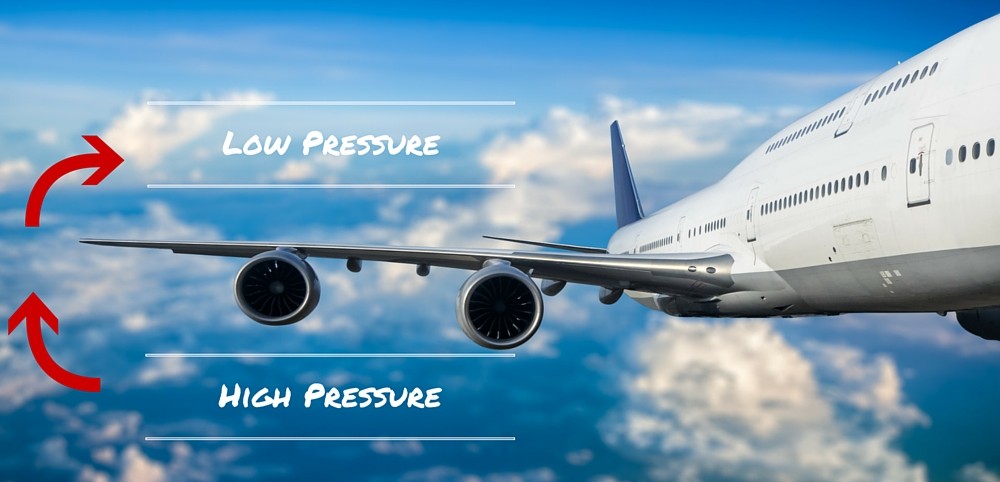
AIRCRAFT WINGLETS - A significant source of drag is caused by the high pressure under the wing, which causes air to flow up and over the wingtip before spinning off in a vortex. Wingtip vortices hamper performance, cut into fuel mileage, range, and the speed of the aircraft. To avoid the formation of the vortices, two solutions were explored as being possible. One was to manufacture an infinitely long wing. There would be total separation of the airflow from the lower and upper surface, therefore preventing any vortices from being formed. The other solution was to create a separation between the two differential pressure regions by introducing a structural component. This was to be called a ‘winglet’. Winglets are a proven way to reduce drag, save fuel, cut carbon dioxide and nitrogen oxide emissions, and reduce community noise. This helps the operating airlines save money by decreasing the amount of fuel consumed, as well as landing charges at airports.

Pressure Difference in wings
..........................................................................................................................................................
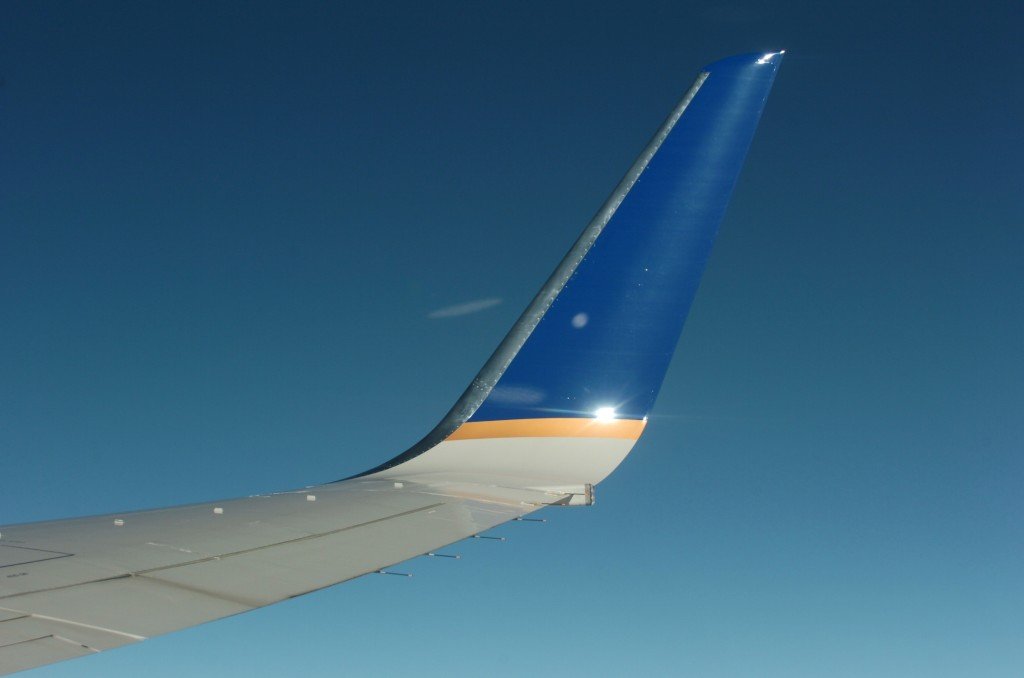
WingletsAircraft Winglets
Why Are Aircraft Wings Curved At The End?
Team ScienceABC


If you’re a frequent flyer, you may have seen something odd about the aircraft’s wings.
You will likely have noticed that the wings have an additional component at the ends. It makes it look rather stylish, doesn’t it?
In some ways, it looks like the fins or the tail of a fish. Some ends are bent upwards, while some others are oval in shape!
These sections of an aircraft wing are called winglets.
“A winglet is an additional structural component of a wing structure with the primary function of reducing wingtip vortex, which is produced due to the pressure difference between the upper and lower surface of a wing while an aircraft is moving.”
That’s the kind of definition that would make your professor’s knees weak in admiration, but let’s work through this definition in small steps.
To understand the winglet, let’s first understand why an aircraft needs it.
What are Vortices?
A wing works as a result of Bernoulli’s principle, which essentially states, ‘the pressure of a fluid is inversely proportional to the velocity of the same in space’.
When an aircraft is in motion, the airflow is split at the leading edge (front) of the wing.
Due to the angle at which the wing is fixed to the aircraft fuselage, higher air pressure is experienced on the lower surface of the wing than on the upper surface. 
This creates a pressure difference between the top and bottom sections of the wing, which generates lift (upward movement of the aircraft).
The property of fluids is that they flow from a region of higher pressure to a region of lower pressure.
Following this principle, the air tends to move from the high pressure below the wing to the low pressure above the wing around the wingtips, thus forming and leaving behind vortices (mini-tornadoes) as the aircraft moves.
Why is This a Concern for Aircrafts?
A significant source of drag (air resistance) is actually caused by the high pressure under the wing, which causes air to flow up and over the wingtip before spinning off in a vortex.
Wingtip vortices hamper performance, cut into fuel mileage, range, and the speed of the aircraft.
It may look beautiful in the sky, but it actually may cause an aircraft that flies through the same region to lose stability and even result in an emergency situation.
Environmental factors also factor into the need for a solution.
Due to the drag caused by the vortices, a larger consumption of fuel is required, which results in higher emissions of CO2, other artificial particulates and noise.
The Solution – Winglets:
To avoid the formation of the vortices, two solutions were explored as being possible. One was to manufacture an infinitely long wing.
There would be total separation of the airflow from the lower and upper surface, therefore preventing any vortices from being formed. Sound rather outrageous? Obviously, there were some major issues with this.
The other solution was to create a separation between the two differential pressure regions by introducing a structural component. This was to be called a ‘winglet’, a term that was first coined by Richard Whitcomb.
Since the 1980’s, winglets have been a major part of future aircraft designs. For some old aircrafts, winglets were fitted after the plane’s introduction into the market.
Winglets are a proven way to reduce drag, save fuel, cut carbon dioxide and nitrogen oxide emissions, and reduce community noise.
This helps the operating airlines save money by decreasing the amount of fuel consumed, as well as landing charges at airports.
In other words, if you ever make a paper plane, be sure to bend the ends of the wing upwards just a little, and it will fly a bit further. It’s not cheating, it’s just science!
Fun Fact:
In 1897, British engineer Frederick W. Lanchester conceptualized wing end-plates to reduce the impact of wingtip vortices six years before the first powered flight was operated by the Wright Brothers (1903). Talk about being ahead of your times!
Team ScienceABC is the handle of a team of engineers and science graduates who come up with brilliant ideas every now and then, but are too lazy to sit at one spot to complete an article, and dread the idea of being considered ‘regular writers’.
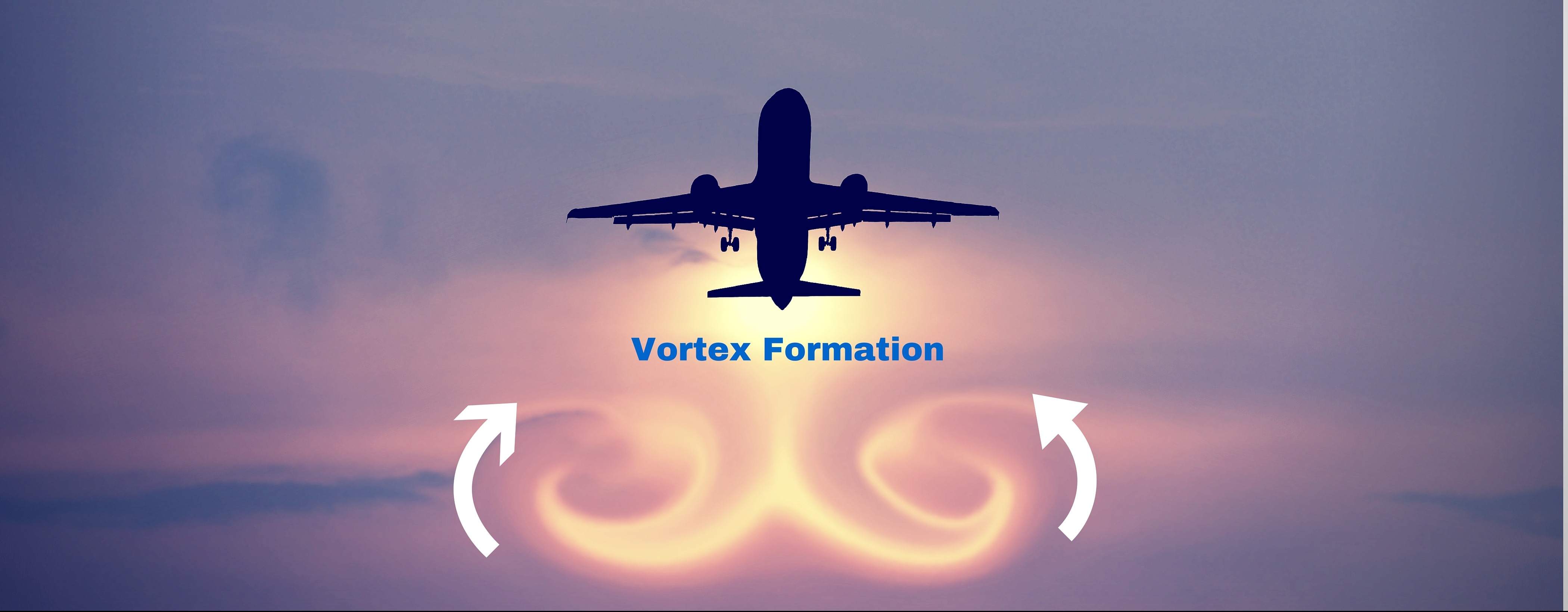
Vortex formation
veqo9vepk4

Wednesday, January 2, 2019

BOEING 737 WINGLETS - These are wing tip extensions which reduce lift induced drag and provide some extra lift. Winglets have the potential to give the following benefits: Improved climb gradient; reduced climb thrust. A winglet equipped aircraft can typically take a 3% derate over the non-winglet equivalent aircraft; environmentally friendly; reduced cruise thrust. Winglets iImprove cruise performance, allow aircraft to reach higher levels sooner. Good looks. Winglets bring a modern look and feel to aircraft, and improve customers' perceptions of the airline.

...............................................
Boeing 737 Winglets


Winglets

The most noticeable feature to appear on 737’s since 2000 are winglets.

These are wing tip extensions which reduce lift induced drag and provide some extra lift.
They have been credited to Dr. Louis Gratzer formerly Chief of Aerodynamics at Boeing and now with Aviation Partners Boeing (APB) but the original winglet design was by NASA Langley aeronautical engineer Richard Whitcomb during the 1973 oil crisis.
They were first flown on a 737-800 in June 1998 as a testbed for use on the BBJ.
They are now available as a standard production line option for all NG’s with the exception of the -600 series.
They are also available as a retrofit from APB. They are 8ft 2in tall and about 4 feet wide at the base, narrowing to approximately two feet at the tip and add almost 5 feet to the total wingspan.
The winglet for the Classic is slightly shorter at 7ft tall. Most 737NG’s now have winglets and all MAX's will be built with winglets.
There are 4 different types of winglets available for the 737 as follows:
·       737-200 Mini-Winglets
·       737 Classic/NG Blended Winglets
·       737 NG Split Scimitar Winglets
·       737 MAX Advanced Technology Winglets
The latest APB development, was split-scimitar winglets introduced in early 2014 for the 737 NG.
.
Boeing has now developed, built* and are installing their own winglets for the 737 MAX family.
The "Advanced Technology" winglet combines rake tip technology with a dual feather winglet concept into one advanced treatment for the wings of the 737 MAX.".
They are split-tipped, straight-edged winglets for the 737 MAX.
Winglets are also available for Classics. The first winglet equipped 737-300 flew in Nov 2002 and gained its FAA supplemental type certificate (STC) on 30 May 2003.
Winglet equipped Classics are known as Special Performance (SP)
Winglets have the potential to give the following benefits:
·       Improved climb gradient. This will enable a higher RTOW from climb limited airports (hot, high or noise abatement) or obstacle limited runways.
·       Reduced climb thrust. A winglet equipped aircraft can typically take a 3% derate over the non-winglet equivalent aircraft. This can extend engine life and reduce maintenance costs.
·       Environmentally friendly. The derate, if taken, will reduce the noise footprint by 6.5% and NOx emissions by 5%. This could give savings on airport noise quotas or fines.
·       Reduced cruise thrust. Cruise fuel flow is reduced by up to 6% giving savings in fuel costs and increasing range.
·       Improved cruise performance. Winglets can allow aircraft to reach higher levels sooner. Air Berlin notes, “Previously, we'd step-climb from 35,000 to 41,000 feet. With Blended Winglets, we can now climb direct to 41,000 feet where traffic congestion is much less and we can take advantage of direct routings and shortcuts which we could not otherwise consider.”
·       Good looks. Winglets bring a modern look and feel to aircraft, and improve customers' perceptions of the airline.
If winglets are so good, you may wonder why all 737’s don’t have them.
In fact 85% of all new 737’s are now built with winglets, particularly the 800 and 900 series and of course all BBJ’s. It comes down to cost versus benefits.
Winglets cost about $725,000 USD and take about 1 week to install which costs an extra $25-80,000 USD. 
Once fitted, they add 170-235kg (375-518 lbs) to the weight of the aircraft, depending upon whether they were installed at production or a retrofit.
The fuel cost of carrying this extra weight will take some flying time each sector to recover, although this is offset by the need to carry less fuel because of the increased range.
In simple terms, if your average sector length is short (less than one hour) you wont get much the benefit from winglets - unless you need any of the other benefits such as reduced noise or you regularly operate from obstacle limited runways.
There is a small difference in rotation rate for aircraft with winglets installed and, as a result, the crew needs to be cautious of pitch rate.
There is approximately a ½ unit take-off trim change between non-winglet and winglet aircraft so the green band is slightly different for winglet aircraft.
Finally, the dry “maximum demonstrated” crosswind limit is slightly reduced with winglets to 34kts.
According to APB this is because “the FAA will only let us document the max winds experienced during flight test... so if we had been able to find more crosswind, then the 33kts might have been more.
There appears to be no weather cocking effect due to winglets