Showing posts with label Sewer systems. Show all posts

Saturday, November 14, 2020

VIRUSES IN DRINKING WATER - Viruses are the cause of 50% of groundwater-related diseases worldwide. Contact with fecal matter from humans, livestock or wildlife can contribute viruses to water. This can come from sources such as leaky sewer lines or improperly functioning septic systems, or where manure or unsterilized sewage sludge is present in agricultural areas. Municipal sewer systems are often bypassed during high-rainfall - this can result in raw sewage entering streams, which in turn can affect water supplies downstream. Well water should be checked for coliform bacteria to see if it is at risk for contamination by sewage or fecal matter, which may contain viruses that can infect humans. Water-borne diseases are a common problem throughout the world, especially where disinfection of drinking water is not used. Many people have heard of “traveler’s diarrhea,” where a traveler gets sick from drinking the local water. This is usually caused by a virus in the water. Viruses are very small parasites (ranging in size from 0.000010 to 0.000025 millimeters or between 0.1 and 0.004 micron) that can take over individual cells in their host and use them to reproduce themselves. Viruses are the cause of 50% of groundwater-related diseases worldwide. Even in the U.S., it is common for well water to be contaminated with viruses. Contact with fecal matter from humans, livestock or wildlife can contribute viruses to water.

..........................................................................................................................................................................................................................................................................................................................................................................................................................................

Viruses in Drinking Water

.....

Viruses are the cause of 50% of groundwater-related diseases worldwide. Contact with fecal matter from humans, livestock or wildlife can contribute viruses to water. This can come from sources such as leaky sewer lines or improperly functioning septic systems, or where manure or unsterilized sewage sludge is present in agricultural areas. Municipal sewer systems are often bypassed during high-rainfall - this can result in raw sewage entering streams, which in turn can affect water supplies downstream. Well water should be checked for coliform bacteria to see if it is at risk for contamination by sewage or fecal matter, which may contain viruses that can infect humans. 

filterwater.com


Water-borne diseases are a common problem throughout the world, especially where disinfection of drinking water is not used.

Many people have heard of “traveler’s diarrhea,” where a traveler gets sick from drinking the local water.

This is usually caused by a virus in the water. Viruses are very small parasites (ranging in size from 0.000010 to 0.000025 millimeters or between 0.1 and 0.004 micron) that can take over individual cells in their host and use them to reproduce themselves.

Viruses are the cause of 50% of groundwater-related diseases worldwide. Even in the U.S., it is common for well water to be contaminated with viruses.

Contact with fecal matter from humans, livestock or wildlife can contribute viruses to water.

This can come from sources such as leaky sewer lines or improperly functioning septic systems, or where manure or unsterilized sewage sludge is present in agricultural areas.

Such areas can include feedlots or barnyards, manure storage areas, pastures or rangelands, and places where manure or sewage sludge is applied to the ground.

Municipal sewer systems are often bypassed during high-rainfall events when the flow of sewage is greater than the ability of treatment systems to handle it.

This can result in raw sewage entering streams, which in turn can affect water supplies downstream.

Well water should be checked for coliform bacteria to see if it is at risk for contamination by sewage or fecal matter, which may contain viruses that can infect humans. 

If your water supply is contaminated with coliform bacteria, it may also be contaminated with other harmful organisms such as protozoa or worms, which can cause health problems such dysentery, vomiting and chronic diarrhea.

Viruses can be killed or deactivated by chlorination or boiling of water.

In most private well water systems and even some municipal water supplies, the water is not disinfected. Viruses can persist in non-disinfected water and infect humans.

Health Effects Associated with Viruses in Drinking Water

Enteric viruses are a type of virus that infects the gastrointestinal tracts of humans and animals and are excreted in their feces.

One common type of virus that infects humans through drinking water is rotaviruses.

These viruses cause stomach flu (gastroenteritis), especially in children.

In fact, rotaviruses are the main cause of stomach flu in children and “traveler’s diarrhea” in adults.

 “Rotaviruses are the main cause of stomach flu in children and ‘traveler’s diarrhea’ in adults.”

Another common enteric virus that is spread through infected drinking water is Hepatitis A.

During the most contagious stage of this illness, the victim usually shows no sign of infection, making it difficult to prevent spreading the germs.

The virus is excreted from the infected person, then it is carried by water.

Hepatitis A causes inflammation of the liver, low energy, weakness, nausea, fever or jaundice.

Mild cases of Hepatitis A require rest for one or two weeks, and severe cases may cause liver damage or death.

Other common viruses that infect drinking water are noroviruses, which cause gastroenteritis, and enteroviruses, which cause polio and non-polio related diseases.

Most people with polio either do not get sick or experience minor symptoms, but permanent damage to muscle function in the legs or arms occurs in rare cases (the U.S. has been polio-free since 1979, but it still exists in some other parts of the world).

Non-polio enteroviruses are one of the largest sources of viral infections in humans.

Most infections do not result in symptoms, but people that do become ill from these viruses usually develop cold or flu-like symptoms.

Interesting fact: There are about one million virus particles in one milliliter of seawater.

For drinking water, the U.S. Environmental Protection Agency (USEPA) has set a maximum contaminant level goal (MCLG) for viruses of zero virus particles per 100 milliliter sample of municipal water.

The MCLG is the level at which no adverse health risks are likely to occur, with an adequate margin of safety, meaning that no virus particles should be present in the water.

How to Treat Drinking Water for Viruses

Problems with infected well water can often be fixed by taking measures to prevent surface water from contaminating the water supply, such as sealing a spring box or using a sanitary well cap.

Properly maintaining a septic system or controlling sources of animal waste near a well or spring may also help with the problem.

Boiling water at a rolling boil for one minute will safely kill all viruses and other infectious organisms, but this is not a good long-term solution because it is energy and labor intensive and only produces a small amount of water.

If the source of infection to the water supply cannot be controlled, drinking water contaminated with viruses and infectious organisms can be treated continuously by ultraviolet (UV) light, ozonation, or chlorination.

Ultraviolet disinfection works by killing viruses and other infectious organisms by exposing them to ultraviolet (UV) light. In this type of system, UV light kills viruses and other organisms by irradiating the water as it flows over a glass sleeve that contains the light source.

This method of disinfection consumes a small but significant amount of electricity.

It is important that the water be very clear so that the UV light can reach the viruses, so anything that would make the water less than perfectly clear (such as sediment or organic matter) must be filtered out before the water enters the light chamber.

Likewise, the glass sleeve enclosing the light source must also be kept clear of scale or other deposits that would block the light.

In contrast with UV, a chlorination system kills viruses and other microorganisms chemically.

This type of system continuously adds chlorine (in liquid or solid form) to the water through a feed system. Because sediment in the water could interfere with disinfection, a filter should be placed before the chlorine injector.

Chlorine is consumed as it kills viruses and other organisms in the water and also as it reacts with other impurities (such as iron or organic matter).

To ensure adequate disinfection, enough chlorine needs to be added so that there is a small amount left over after it is consumed.

However, this residual chlorine can affect the taste of the water, so it may be desirable to remove it before drinking.

Chlorination also requires a certain amount of contact time for it to kill microorganisms (usually 30 minutes).

This is why water is often stored in a large holding tank or run through a series of coiled pipes after being chlorinated.

Chlorine systems must be maintained to ensure that they function properly, and the chlorine supply must be replenished periodically.

Ozonation is similar to chlorination in that ozone is injected into the water and kills viruses and other organisms.

Ozone is an oxidizing gas that is produced using electricity and then injected into the water.

Ozonation systems are more costly than UV or chlorination systems, but they can treat water for multiple contaminants, such as viruses, bacteria, iron and manganese.

Our company was created with the goal to provide clean drinking water along with best overall customer experience, and promote healthy lifestyle and clean water supply. We are happy to offer our customers best water testing and water purification products on the market at a guaranteed low price.

We are proud to be partnered with an ISO-9001 certified manufacturer where we have an ability to custom-build residential and commercial Water Filter Systems for most water problems. https://www.filterwater.com/t-viruses.aspx


You might also like:

.

An Ocean of Viruses

CLICK HERE . . . to view . . . 

https://puricarechronicles.blogspot.com/2020/05/an-ocean-of-viruses-virus-is-very-tiny.html

 ....................................................................................................................................................................................................................................................................................................................................................................................................................................

Pestilence And Disease On A Global Scale

CLICK HERE . . . to view . . . 

https://puricarechronicles.blogspot.com/2020/05/pestilence-and-disease-on-global-scale.html

Thursday, August 13, 2020

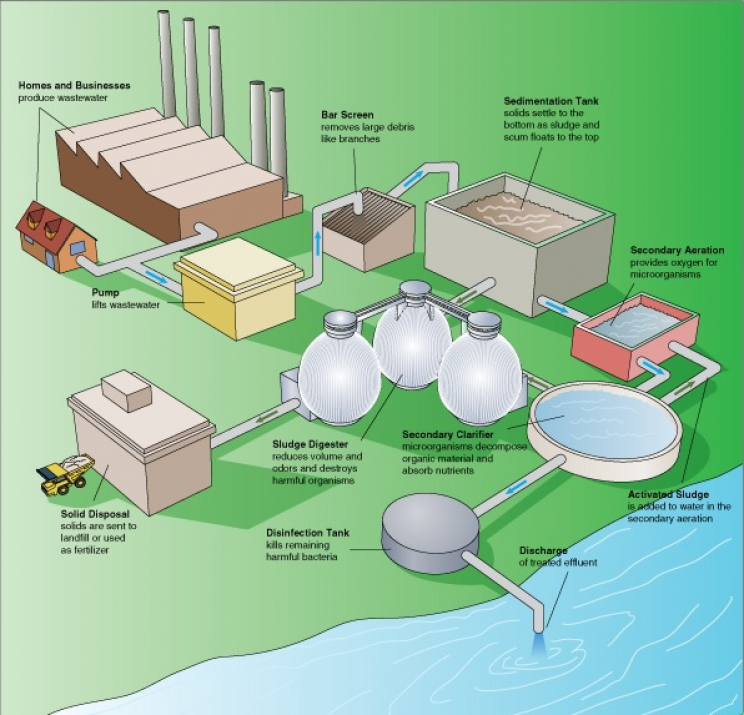
HOW MODERN WASTEWATER TREATMENT CHANGED OUR WORLD - Without wastewater treatment, diseases and infections would ravage our society. Wastewater treatment is often an overlooked necessity of civilization. Without proper sewer systems, wastewater treatment plants, and overall regulation, our cities would be ripe with disease and human waste everywhere. When you flush a toilet, your waste flows through the sewers to a wastewater treatment plant that treats it. Sewer systems are a topic all their own, so we'll mainly focus on how your wastewater goes from one of the dirtiest substances on the planet back into water that's safe for the environment. Some wastewater plants known as full-cycle reuse plants will even take wastewater and treat it all the way back to drinking water, which will then be pumped to city inhabitants. Today's level of engineering and chemistry allow full-cycle reuse plants to output drinking water chemically identical to what's in your tap right now. When wastewater arrives at a treatment facility, it first gets all the large chunks filtered out through a screen, a rather large one. These screens are generally called bar screens, and their main job is to make the sewage more homogenous so it can flow through pumps and pipes in the plant. The waste removed from bar screens is sent off to the landfill, and the slightly less chunky sewage heads to the next step, the grit chamber.

How Modern Wastewater Treatment Changed our World
...............................................................................................................................................................
How Modern Wastewater Treatment Changed our World
How Modern Wastewater Treatment Changed our WorldWithout wastewater treatment, diseases and infections would ravage our society
By Trevor English


Wastewater treatment is often an overlooked necessity of civilization.
Without proper sewer systems, wastewater treatment plants, and overall regulation, our cities would be ripe with disease and human waste everywhere.
Believe it or not, much of the modern wastewater management technology we consider standard in any 21st century home, things like toilets and sewer pipes, are actually relatively new in the grand scheme of history.
The history of wastewater treatment
That's not to say that sewer systems haven't been around for ages.
After all, the ancient Romans had a complex system of sewers at the peak of their empire.
How Modern Wastewater Treatment Changed our World
Roman sewer in Cologne
Rather, the knowledge of how poorly managed wastewater can drastically impact the health of society is relatively new.
The Romans had a centralized sewage management system, although it was fairly rudimentary by today's standards.
Open and closed ditches and pipes would carry away excrement and trash, primarily using rainwater runoff.
The contaminated water would then flow into large concrete tanks that let the sewage settle out before the water was allowed to flow into the nearby rivers.
There was indoor plumbing, and public latrines were also built over the sewers.
In medieval Europe, closed sewers, stone conduits, or ditches were used to drain sewage away from residential areas, often in conjunction with septic tanks, but chamber pots were often dumped directly onto the streets.
Between 1858 and 1859 the Thames in London was chock full of untreated wastewater, which combined with very hot weather to cause what became known as "the Great Stink".
The 17th and 18th centuries saw a rapid expansion in waterworks and pumping systems, but the Industrial Revolution led to even more rapid growth of cities and pollution, which acted as a constant source for the outbreak of deadly diseases like cholera and typhoid.
As cities grew in the 19th century, increasing public health concerns led to the development of municipal sanitation programs and the construction of sewer systems in many cities.
These systems often discharged sewage directly into rivers without treatment, but by the late 19th century, chemical treatments and sedimentation systems were in use in many cities.
The construction of centralized sewage treatment plants began between the late 19th and early 20th centuries.
These systems passed sewage through a combination of physical, biological, and chemical processes to remove pollutants.
Also beginning in the 1900s, new sewage-collection systems were designed to separate storm-water from domestic wastewater, to prevent treatment plants from becoming overloaded during heavy rains.
In the 1910s and 20s, engineers developed more sophisticated systems to treat drinking water before it was supplied to residents in cities.
Stepping back for a moment and examining the timeline here, we can begin to understand just how recent effective wastewater treatment on a grand scale appeared.
Roughly 150 years ago was the first few centralized instances of water treatment for cities. It would take decades for more rigid practices to emerge.
In 1972, the Clean Water Act was passed in the United States. Up until this point, sewage treatment for some cities still relied on chemical treatment and filtration, and the treated sewage was often dumped into rivers and streams.
There was little in the way of pretreatment of industrial wastewater to prevent toxic chemicals from interfering with the biological processes used at sewage treatment plants.
After the passage of the Clean Water Act, cities started a process known as secondary treatment, which removes all the pollutant organic materials from the effluent.
Wastewater with high concentrations of organic materials and nutrients being dumped into rivers was causing algal blooms and the bacteria growth, which created dead zones in rivers.
The secondary treatment essentially eradicates the effluent of microorganisms and organics so that when it's discharged, it has little effect on the surrounding environment.
To think, just 50 years ago many communities in the world were dumping mostly untreated sewage into rivers.
Wastewater treatment processes have really experienced their most rapid growth in the last 30 or so years, now with every planned municipality in the world having some form of a centralized wastewater management system.
It's all at a hefty cost too - on the scale of billions and billions of dollars.
Now, however, we can flush our toilets and shower without really having to worry about what's happening to all that dirty water.
It gets handled by trusty wastewater treatment plant operators before being discharged into local rivers and lakes.
"Oh, and what happens to all the solids from wastewater?" you might wonder.
Well in some cases, wastewater treatment plants will let it dry, package it up and sell it as fertilizer to help supplement the hefty costs of running a treatment plant.
In other cases, some plants will use the sludge to produce methane, which they will then burn for power or sell.
Wastewater treatment today uses science and engineering, though it is still a little bit smelly. We suppose it comes with the territory.
Now that we understand just how recently our knowledge of sanitation when it comes to human waste has emerged, let's take a closer look at exactly how wastewater treatment plants work. 
How modern wastewater treatment works
When you flush a toilet, your waste flows through the sewers to a wastewater treatment plant that treats it.
Sewer systems are a topic all their own, so we'll mainly focus on how your wastewater goes from one of the dirtiest substances on the planet back into water that's safe for the environment, and in theory, safe enough to drink.
Some wastewater plants known as full-cycle reuse plants will even take wastewater and treat it all the way back to drinking water, which will then be pumped to city inhabitants.
This may sound gross, but today's level of engineering and chemistry allow full-cycle reuse plants to output drinking water chemically identical to what's in your tap right now.
Before we dive into the specific process of wastewater treatment, let's put things into a scale.
New York City has an array of 14 wastewater treatment plants that handle 1.3 billion gallons of wastewater per day (4.9 billion liters).
That is enough wastewater to fill the dead sea with sewage in 8 years, just from one large city.
So, society produces a lot of waste. Let's see what happens first when it arrives at a wastewater treatment plant.
How Modern Wastewater Treatment Changed our World
Pre & Primary Treatment
How Modern Wastewater Treatment Changed our WorldWhen wastewater arrives at a treatment facility, it first gets all the large chunks filtered out through a screen, a rather large one.
These screens are generally called bar screens, and their main job is to make the sewage more homogenous so it can flow through pumps and pipes in the plant.
The waste removed from bar screens is sent off to the landfill, and the slightly less chunky sewage heads to the next step, the grit chamber.
Grit chambers are essentially just big pools that you definitely don't want to swim in, they allow the larger particles in the sewage to settle out to the bottom.
These larger particles, things like dirt, sand, and large food particles, are called grit. Again, this process aids in making the sewage more homogenous than when it came in. The grit is also trucked off to landfills.
After the sewage gets pretty homogenized in these first few processes, it moves onto the primary clarifiers.
Primary clarifiers function as giant settling basins that allow particles larger than 10 μm (0.01 mm), referred to as suspended solids, to settle out to the bottom of the basin.
A giant skimming arm also scrapes away fat and grease that rise along the surface of the water.
These primary clarifiers are based on a principle called settling velocity, essentially just the speed at which particles settle.
Engineers make sure that the inflow of the water to the primary clarifier isn't more than the settling velocity of the particles, which ensures that particles still settle out and the sewage keeps on flowing.
Upon leaving the primary clarifiers, the sewage is free of solids bigger than 10 μm and at this point, is mostly contaminated with organic matter.
The sewage then moves on to aeration basins, beginning the secondary treatment processes.
Secondary wastewater treatment
Aeration basins are essentially bubbly hot tubs for sewage.
They bubble up air through the bottom of the sewage, which invigorates the sewage with dissolved oxygen.
How Modern Wastewater Treatment Changed our World
A view of 3 clarifiers
Engineers also pump in activated sludge into aeration basins, which is essentially bacteria and waste from the next round of clarifiers.
This activated sludge raises the oxygen content of the water and the bacteria go on a feeding frenzy, eating up all of the organic matter.
After the aeration basins, the sewage is going to look a lot clearer and it will head onto the secondary clarifiers.
This is the final filtering process, where all the remaining particles settle out.
The stuff that settles out is that activated sludge just mentioned, and a part of it is reused to make the aeration basins run smoothly.
What isn't used is left to dry out before it's disposed of or used as fertilizer.
How Modern Wastewater Treatment Changed our World
By the time the sewage leaves the secondary clarifiers, 85 percent of all organic matter has been removed and it will look fairly clear.
It might also be safe to drink too, but you're probably not going to want to. The final process before discharge is disinfection.
This process kills off all the bacteria still left in the water and makes sure there aren't any diseases being discharged into rivers.
This is typically done through chlorine, ozone, or ultraviolet disinfection (or a combination of these).
Ozone disinfection involves discharging electricity into the water to cause oxygen gas molecules to turn into ozone molecules, which oxidizes the bacteria, causing their cell walls to break, and kills them.
Chlorine treatment kills the bacteria in a similar manner but is a liquid chemical added to the water, and the treatment plant operators will generally remove the chlorine before releasing the effluent so the chlorine doesn't damage the environment.
Lastly, engineers can also use ultraviolet light to scramble the DNA of the bacteria, making it impossible for them to reproduce.
All three of these processes have different pros and cons and are used fairly interchangeably across the world.
In most cases, after disinfection, the water is released into rivers and streams.
In regions where water is scarce, sometimes the treated wastewater will head back for another round of treatment to be made into drinking water.
Chemically, this is very safe and could probably be used in many more places around the world if it wasn't for the stigma surrounding the closed-loop process of turning wastewater back into drinking water.
The entire process takes around 24 to 36 hours for a molecule of water to make it through the treatment plant.
And that's the magic of wastewater treatment. It's an essential process that allows us to live our lives without having to think about our own waste.
Be sure to thank all the wastewater treatment plant operators around you, because they have to deal with what you don't want to, 24/7.

Trevor English
Author
Trevor is a civil engineer (B.S.) by trade and an accomplished writer with a passion for inspiring everyone with new and exciting technologies. He is also a published children’s book author and the producer for the YouTube channel Concerning Reality.

Founded on the core mission of connecting likeminded engineers around the globe, Interesting Engineering is now a leading community with more than 15 million+ minds. Every day we share a new idea, a new thought, an upcoming technology OR an engineering breakthrough that will change the way you think about technology and engineering in today’s world and in the near future. Whether it’s a device that can charge your mobile in seconds or it’s the latest model of Boeing that has launched moments ago, we will bring everything up on your screen to view, to share and to grant you the power to comment. We believe that sharing information is the only way that can enrich and empower humans on this earth and we follow this as our core mission and responsibility. If you have got something that could entice the world, then Interesting Engineering is a perfect platform to show off your work to the outside world.
How Modern Wastewater Treatment Changed our World