Showing posts with label Bleach. Show all posts

Tuesday, July 7, 2020

DISINFECTION OF GROUNDWATER AND WASTEWATER - Disinfection is an effective treatment process that can safely remove a variety of waterborne pathogens from a water supply. There are many types of pathogens that can get into a water supply. Each cause different problems, but there are several effective methods for their removal. Pathogens are anything that can cause disease. Water pathogens are usually either bacterial or viral. According to the Centers for Disease Control and Prevention (CDC), dangerous bacteria that are sometimes found in the water supply include E. coli, shigella and salmonella. Hepatitis A and the norovirus are two types of viruses that can contaminate municipal water systems. Most of the bacteria and viruses that are found in the water supply are not life-threatening for otherwise healthy individuals. Many can, however, cause temporary illnesses, as well as chronic health conditions. Short-term illness caused by bacteria and viruses is often characterized by nausea, diarrhea, vomiting and fever. A few gastrointestinal illnesses can be fatal, especially for very young children, the elderly and those with compromised immune systems. Neurological disorders and reproductive problems can also result from pathogens found in the water supply. There are several water treatment disinfection methods that can be used to remove pathogens from groundwater, wastewater and surface water.

about AOS water treatment
.................................................................................................................................................
Water Treatment & DisinfectionDisinfection of Groundwater and Wastewater
AOS Treatment Solutions


Disinfection is an effective treatment process that can safely remove a variety of waterborne pathogens from a water supply.
There are many types of pathogens that can get into a water supply. Each cause different problems, but there are several effective methods for their removal.
TYPES OF PATHOGENS
Pathogens are anything that can cause disease.
Water pathogens are usually either bacterial or viral.
According to the Centers for Disease Control and Prevention (CDC), dangerous bacteria that are sometimes found in the water supply include E. coli, shigella and salmonella.
Hepatitis A and the norovirus are two types of viruses that can contaminate municipal water systems.
PROBLEMS PATHOGENS CAUSE
Most of the bacteria and viruses that are found in the water supply are not life-threatening for otherwise healthy individuals.
Many can, however, cause temporary illnesses, as well as chronic health conditions.
Short-term illness caused by bacteria and viruses is often characterized by nausea, diarrhea, vomiting and fever.
A few gastrointestinal illnesses can be fatal, especially for very young children, the elderly and those with compromised immune systems.
Neurological disorders and reproductive problems can also result from pathogens found in the water supply.
GROUNDWATER DISINFECTION SOLUTIONS
There are several water treatment disinfection methods that can be used to remove pathogens from groundwater, wastewater and surface water.
The following are a few of the groundwater disinfection solutions offered by AOS Treatment Solutions:
·      Chlorine Dioxide Control and Assistance — According to the Environmental Protection Agency (EPA), chlorine is the disinfectant most often used to inactivate waterborne pathogens. Chlorine dioxide is a specific type of gas that can also be used to treat municipal water supplies.
·      Sodium Hypochlorite (Bleach) — This is a disinfectant that has proven to be effective in purifying groundwater and eliminating odors. It is often used because microorganisms can’t build up a resistance to it.
·      Liquid Ammonium Sulfate (LAS) — Chem Trade states that liquid ammonium sulfate is a non-toxic, stable liquid that can be used effectively for the treatment of drinking water.
AOS offers several disinfection wastewater treatment solutions that can be used to purify and maintain water at high standards.
We offer a range of groundwater treatment services and solutions to municipalities, including independent water analysis, chemical program design, start-up and training, and system-wide or single-point performance tracking.

Contact AOS Treatment Solutions for any questions regarding groundwater disinfection solutions.
AOS TREATMENT SOLUTIONS
Since 1999, AOS Treatment Solutions has provided specialized treatment of water and wastewater to the industrial and municipal markets. Over the years, we have become a leading water/wastewater treatment company utilizing an analytical and scientific approach to developing optimum treatment programs. Through our meticulous testing methodology, we find cost effective solutions to meet the needs of all our customers.
At AOS, our goal is to provide clients with a single-point source for all their water and wastewater treatment needs. We use the latest testing equipment and analyzers to deliver practical solutions that enhance operational reliability.
All chemicals for municipal drinking water are NSF certified.
about AOS water treatment

Saturday, March 21, 2020

USING BLEACH TO DISINFECT, CLEAN AND PREVENT ILLNESS - In outbreaks, pandemics, and other times of illness, it helps to know you can create a bleach solution to protect yourself and your family from germs - When used properly, bleach can kill coronavirus, flu, cold, and even norovirus. The World Health Organization (WHO) specifically recommends using bleach to disinfect in pandemic situations and during the outbreak of illnesses like influenza or coronavirus. Only use chlorine bleach for disinfecting; non-chlorine bleach is not effective. How you prepare the bleach solution is extremely important. Your bleach solution must have a proper concentration of bleach for it to kill germs. Too little bleach means it will be ineffective, while too much can harm people and damage surfaces. Bleach doesn't work immediately, and it's not ideal for all surfaces. Keep these guidelines in mind when you use a bleach cleaner. Always clean before disinfecting. The WHO reports that organic materials such as food, bodily fluids, and dirt can quickly deactivate bleach and render it totally ineffective as a disinfectant.

Image result for images Bleach to Clean
..............................................................................................................................................................
Woman disinfecting counter with bleach solutionUsing Bleach to Disinfect, Clean and Prevent Illness
Image result for images Bleach to CleanIn outbreaks, pandemics, and other times of illness, it helps to know you can create a bleach solution to protect yourself and your family from germs
By Kate Miller-Wilson


You probably already have one of the best household disinfectants in your laundry cabinet.
Using bleach to disinfect, clean, and prevent illness is all about understanding how much to use and where and when to use it.
When used properly, bleach can kill coronavirus, flu, cold, and even norovirus.
Disinfecting With a Bleach Cleaner
Image result for images Bleach to Clean
The World Health Organization (WHO) specifically recommends using bleach to disinfect in pandemic situations and during the outbreak of illnesses like influenza or coronavirus.
Only use chlorine bleach for disinfecting; non-chlorine bleach is not effective.
Additionally, the WHO notes that how you prepare the bleach solution is extremely important.
Your bleach solution must have a proper concentration of bleach for it to kill germs. Too little bleach means it will be ineffective, while too much can harm people and damage surfaces.
Supplies for Bleach Disinfectant
Gather the following supplies to make a bleach disinfectant recommended by the WHO:
·        Rubber gloves
·        Apron
·        Goggles
·        Bucket or container that holds at least 12.5 cups
·         Spoon or stirring rod
·         Cold water
·         Bleach (strength 5% sodium hypochlorite)
·         Cup measure
·         Tablespoon
How to Make a Bleach Solution
1.    Put on the apron, gloves, and safety goggle to protect your skin and clothing. Work in a well-ventilated place, such as a garage or near an open window.
2.    Measure out 12.25 cups of cold water and pour it into the container. Use only cold water because hot water decomposes the active ingredient in the bleach and makes it ineffective as a disinfectant.
3.    Carefully add two tablespoons of bleach to the cold water. Stir gently to mix.
Bleach Cleaners You Can Purchase
According to the WHO, any bleach cleaner needs to have at least 0.05% available chlorine to work as a disinfectant.
Many products will include the amount of chlorine on the label. Clorox Clean Up Cleaner + Bleach and Lysol Power White & Shine Multipurpose Cleaner With Bleach.
How to Use Bleach to Disinfect
Bleach doesn't work immediately, and it's not ideal for all surfaces. Keep these guidelines in mind when you use a bleach cleaner.
Clean Before Disinfecting With Bleach
Always clean before disinfecting. The WHO reports that organic materials such as food, bodily fluids, and dirt can quickly deactivate bleach and render it totally ineffective as a disinfectant.
Wipe down hard surfaces first. Rinse off organic material on fabrics or other items.
Keep Bleach on the Surface Long Enough
Many people assume bleach works instantly to disinfect against germs and kill mold, but this is not true. So how long does bleach take to disinfect? This depends on the type of surface:
·      Smooth, non-porous surfaces - For smooth items like countertops, floors, bathtubs, and sinks, you need to leave the bleach solution on the surface for at least 10 minutes.
·      Porous surfaces - Leave a bleach solution on porous surfaces like concrete or fabric for at least 30 minutes.
·      Small objects - If you are soaking small objects like toys or eating utensils, leave them in the bleach solution for at least 30 minutes.
Keep Bleach Safety in Mind
Bleach is a highly corrosive material that can damage people and surfaces if not used properly. These tips can help:
·      Never mix bleach with other cleaning products. This can weaken the disinfecting ability of bleach and create a toxic gas.
·      Don't expose concentrated bleach to sunlight. It will react with the sunlight and create a toxic gas.
·      Do not use bleach on skin or hair, since it can cause burns.
·      Never get bleach in the eyes. Flush with water and call poison control if an accident occurs.
·      Keep bleach cleaners out of the reach of children and pets.
·      Bleach can weaken and discolor fabrics and corrode metals, so be aware of this when using it.
Storing Bleach and Bleach Solutions
The WHO stresses the importance of proper storage of bleach and bleach cleaners:
·      Once you've mixed up a bleach cleaning solution, it is good for only 24 hours. After this time, discard it and make a new one.
·      Never store concentrated bleach in direct sunlight. It reacts with the sun and loses potency, as well as creating a dangerous gas.
·      Keep diluted bleach out of sunlight as well, since it can quickly lose effectiveness as a disinfectant when exposed to the sun.
·      Do not store concentrated bleach for long periods of time, as it will lose effectiveness. Only buy what you need.
You Can Kill Germs
In outbreaks, pandemics, and other times of illness, it helps to know you can create a bleach solution to protect yourself and your family from germs.
You can use bleach in the dirtiest places in your home, as well as in areas that just need to be disinfected.
Knowing how and when to use bleach can mean a reduction in illness and infection in your home.

Kate Miller-Wilson is a freelance writer specializing in a range of subjects, including photography, cars, crafts, autism, pregnancy, antiques, genealogy, and more. Kate has written and edited for LoveToKnow since 2009 and loves the great variety of articles and slideshows on the various channels of LoveToKnow.
Experienced Freelance Writer
Kate has a B.A. in English from Western Michigan University and has written hundreds of articles for publication in online and print media. She's also adept at self-publishing, having successfully crowd-funded a book on Kickstarter than will be released in the coming months. Before becoming a freelance writer, Kate worked for several years as a technical writer and software test script writer for the pharmaceutical and medical device industries.
Image result for images Bleach to Clean

Saturday, January 11, 2020

BLEACH AND CHLORINE - Chlorine is a chemical element present in many bleach compounds. Common bleach is a solution of sodium hypochlorite in water, with other kinds also widely available. Heavier than air, chlorine is a pure chemical element, a greenish-yellow gas that readily combines with most other elements. It is toxic in small concentrations, especially with longer exposure times. Chlorine gas reacts with moisture in the respiratory system to create hypochlorous and hydrochloric acids on tissues, along with oxidants and enzymes that break down proteins. Common household laundry bleach is sodium hypochlorite, NaOCl, diluted in water to a 3 - 6 percent solution. It's an eye and skin irritant, which is why swimming pool water can make your eyes burn. When mixed with ammonia, bleach releases chloramine gas, which is extremely toxic. (If you ever accidentally mix ammonia and bleach, leave the room immediately and call 911 or at least poison control.) When mixed with acids, it releases elemental chlorine gas.


..............................................................................................................................................................
Bleach and Chlorine
What Are the Differences Between Bleach and Chlorine?
By Alex Silbajoris


Bleach refers to many products with applications ranging from whitening laundry to killing germs to making paper.
Bleaches work by altering chemical compounds, either adding oxygen by the process called oxidation, or by removing oxygen by the process called reduction.
Chlorine is a component of some kinds of bleaches, though not all of them.
TL; DR (Too Long; Didn't Read)
Chlorine is a chemical element present in many bleach compounds. Common bleach is a solution of sodium hypochlorite in water, with other kinds also widely available.
Properties of Elemental Chlorine
Heavier than air, chlorine is a pure chemical element, a greenish-yellow gas that readily combines with most other elements.
It is toxic in small concentrations, especially with longer exposure times.
Chlorine gas reacts with moisture in the respiratory system to create hypochlorous and hydrochloric acids on tissues, along with oxidants and enzymes that break down proteins.
When a chlorine atom gains an electron, it becomes chloride, a stable ion that exists in ionic bonds with positive ions such as sodium, potassium and calcium.
Properties of Chlorine in Bleach Products
Common household laundry bleach is sodium hypochlorite, NaOCl, diluted in water to a 3 - 6 percent solution.
Other solutions of sodium hypochlorite find applications from bleaching paper to sanitizing medical and food preparation equipment to water treatment.
It's an eye and skin irritant, which is why swimming pool water can make your eyes burn.
When mixed with ammonia, bleach releases chloramine gas, which is extremely toxic. (If you ever accidentally mix ammonia and bleach, leave the room immediately and call 911 or at least poison control.)
When mixed with acids, it releases elemental chlorine gas.
Bleaches Work Through Oxidation or Reduction
As whiteners, bleaches break down chromophores, which are groups of atoms that absorb some wavelengths of light and reflect others.
Those reflected wavelengths are the colors we see in pigments.
Bleach breaks down these compounds through oxidation, a chemical reaction that involves taking away electrons from neighboring molecules.
These processes also kill germs by breaking down cell proteins and destroying internal cellular structures.
Other Bleaches Without Chlorine
There are many compounds that can be used as bleaching agents that do not use chlorine.
Other oxidizers include hydrogen peroxide, sodium perborate, sulfur dioxide and sodium bisulfite.
Even light can be an oxidizing agent, which is why many colors fade after long exposure to sunlight.
Reducers include sodium and zinc dithionite, sulfites, and sodium borohydride. Some of these reducing bleaches serve to remove oxides such as rust, which is iron oxide.
An ecological blogger, technical writer and trainer, Alex Silbajoris also leads a nonprofit watershed group. He is an avid gardener and cook. He holds a bachelor's degree in English and a master's degree in journalism, from The Ohio State University. Other studies include geology and biological sciences

Wednesday, January 8, 2020

WELL DISINFECTION - Keep children and animals away from the well area while disinfecting. No one should use water from the water system until the disinfection procedures are done. Use extreme caution when working with electricity and water. Together, water and electricity can be deadly. Always follow the manufacturer’s use and safety directions. Avoid eye and skin contact. Wear protective goggles or a face shield and rubber gloves when working with bleach. Do not mix bleach with other chemicals as they may form harmful gases. Do not leave bleach or the bleach solution unattended. Disinfection can create harmful gases. The area around the well must be well ventilated. Harmful gases can accumulate in well pits and create a lack of oxygen. Total coliform may regrow in the water system. For this reason, it is important to retest your water between two to four weeks after disinfection.

Person pouring bleach solution through funnel into well casing.
...........................................................................................................................................................
Well Disinfection
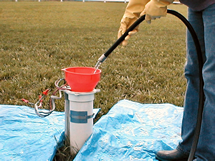
Image showing garden hose in funnel. Disinfection can create harmful gases. The area around the well must be well ventilated. Harmful gases can accumulate in well pits and create a lack of oxygen.

Minnesota Department of Health
Well Management Program


This handout provides instructions for disinfecting your water system, which includes both the well that has a submersible pump and the associated water distribution system.
These instructions can be used for a single family home or businesses such as resorts and campgrounds.
Disinfection can eliminate or reduce harmful bacteria, viruses, or other microorganisms that may be found in your drinking water.
You can disinfect your well by following these instructions, or you can hire a licensed well contractor.
Safety Concerns
Be sure to do the following to ensure your safety and that of your family, pets, and livestock.
Read this entire brochure before starting to disinfect your water system.
Keep children and animals away from the well area while disinfecting.
No one should use water from the water system until the disinfection procedures are done.
Electrical
Use extreme caution when working with electricity and water. Together, water and electricity can be deadly.
Chemical
Always follow the manufacturer’s use and safety directions.
Avoid eye and skin contact. Wear protective goggles or a face shield and rubber gloves when working with bleach.
Do not mix bleach with other chemicals as they may form harmful gases.
Do not leave bleach or the bleach solution unattended.
Respiratory
Disinfection can create harmful gases. The area around the well must be well ventilated.
Harmful gases can accumulate in well pits and create a lack of oxygen.
Procedure for Water System Disinfection
You will need the following to disinfect your water system:
A garden hose that is long enough to reach from your water faucet to the well. This hose also needs to reach an area that is away from your well, septic system, landscaping, and bodies of water.
Clean 5-gallon bucket.
Funnel.
Plastic tarp.
Protective goggles/face shield and rubber gloves.
Five gallons of commercially bottled water.
Chlorine test papers.
Unopened, unscented household bleach with no additives that is less than six months old.
STEP 1 - Isolate critical areas
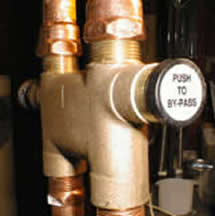
Turn or push the bypass valves to the “bypass” or “out of service” position for all water treatment devices (water softeners, reverse osmosis systems, etc.) and appliances that cannot tolerate bleach.
These may harbor organisms and need to be disinfected separately. Follow manufacturer’s instructions for disinfection procedures.
Remove all filters from devices and appliances. Bait tanks and livestock watering troughs may require special attention.
STEP 2 - Electrical safety
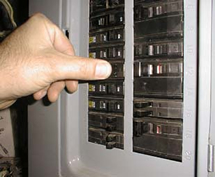
Turn OFF the electrical power to the pump. If the circuit breaker box has a lockout hasp, use it to prevent the breaker from being accidentally turned ON.   
STEP 3 - Open the well
Open the well by:
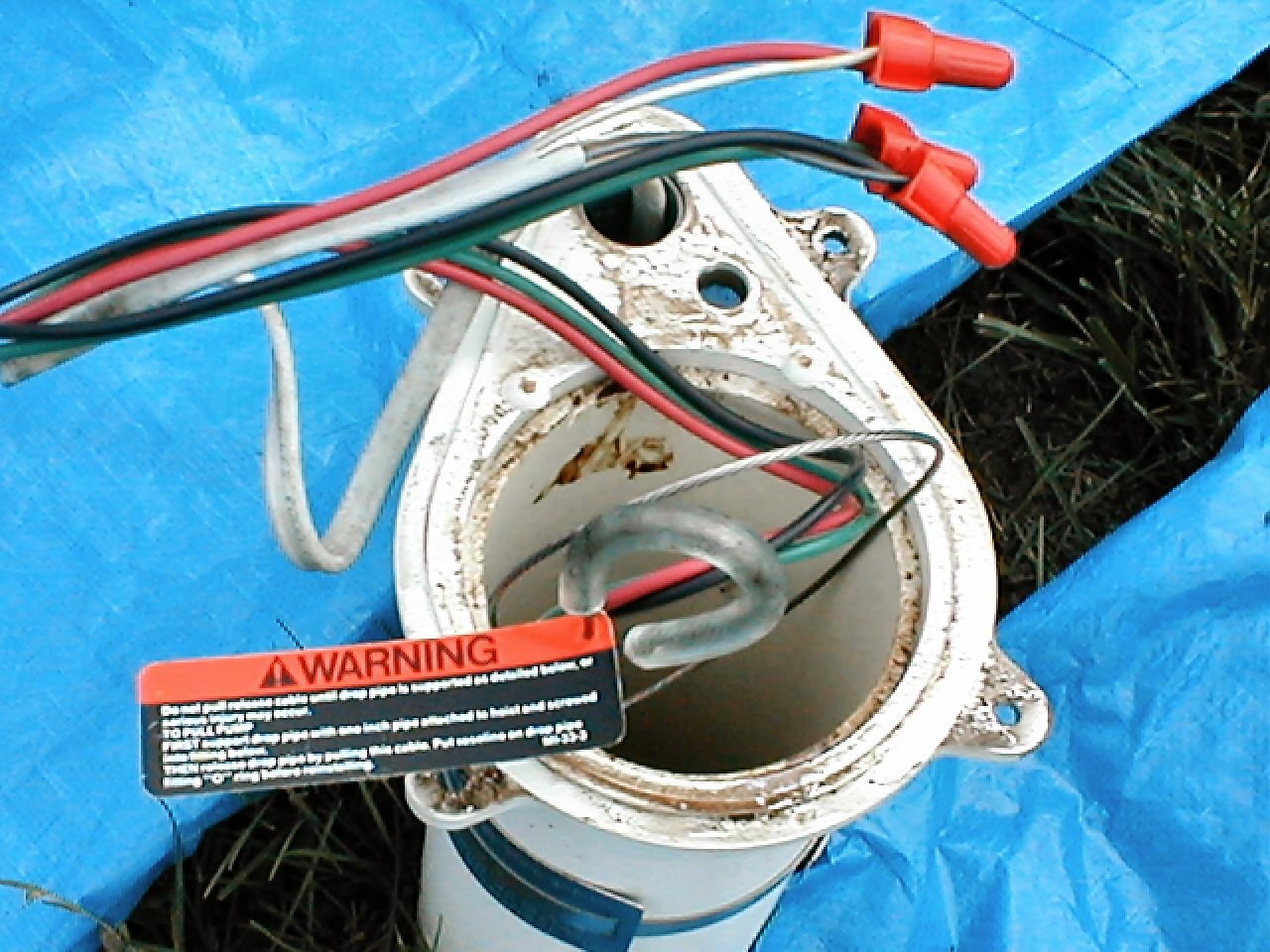
Removing the well cap and moving the wires with the connector caps to the outside of the casing to avoid getting them wet when doing Steps 6 and 7 (see Figure 1); or
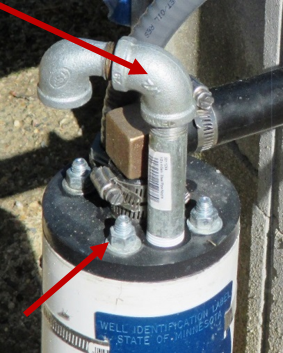
Removing the vent (see Figure 2-top arrow). Do not remove the compression bolts from the compression fit well seal (see Figure 2-bottom arrow).
Note:  If the well is different from those described, contact Minnesota Department of Health (MDH) or an MDH licensed well contractor. You will find MDH contact information on the last page of this document.
STEP 4 - Inspection
Inspect all well components by examining:
Wire insulation for cracking, peeling, or missing wire nuts.
Well casings for cracking.
Loose well caps.
It is important that any plumbing or well defects are fixed so that surface water or other contaminants cannot enter the well.
STEP 5 - Mixing a bleach solution
Water chemistry and water system sizes vary. These differences will determine the amount of bleach solution that will be needed to properly disinfect your water system. You want between 50-200 parts per million (ppm) of bleach in the recirculating water (Step 7) for disinfecting your water system. Do not mix bleach solution that is greater than 200 ppm. A bleach solution with greater than 200 ppm of bleach will reduce the disinfection effectiveness.
It is recommended to start with:
Pouring water from the water system into a clean 5 gallon pail so the pail is about three-fourths full, then
Add the amount of bleach as indicated in the table.
It is recommended to start with:
1.    Pouring water from the water system into a clean 5 gallon pail so the pail is about three-fourths full, then
2.    Add the amount of bleach as indicated in the table.
Amount of water
in well (feet)
Well Casing Diameter (inches)

2
4
6
10
2 cups
2 cups
2 cups
50
2 cups
2 cups
3 cups
100
2 cups
3 cups
4 cups
300
3 cups
4 cups
10 cups
The amount of water in a well is the total depth of the well minus the static water level.
If the amount of water in the well is unknown, go to Minnesota Well Index or contact MDH. If unable to determine the amount of water in the well, use the total depth of the well instead.
This table’s bleach solution is good for disinfecting a well and the water system in an average home, including water pipes, water tanks, and water heater.
Reduce the amount of bleach by 1 cup if only the well needs to be disinfected. You may need to increase the amount of bleach solution if:
The water system contains more buildings,
Has large amounts of pipes or storage, or
If you’re disinfecting because your well was flooded, has nuisance bacteria, or is a dug well.
STEP 6 - Adding bleach solution to the well
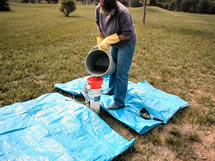
Use a funnel when pouring the bleach solution into the well.
Avoid getting any bleach solution on the well cap components and wires. It will cause corrosion.
Person pouring bleach solution through funnel into well casing.

STEP 7 - Recirculate chlorinated water
Turn the circuit breaker to the pump ON. Be careful, the wires in the well casing are “live and hot.”
Connect a garden hose to the most convenient threaded hose connection.
Run the water out of the hose for about 10 minutes in an area away from the well, septic system, landscaping, and bodies of water. The water may be discolored. Continue monitoring and running the water until it runs clear. If flow significantly decreases, shut off power to the pump and contact a licensed well contractor.
Turn the water OFF.
Put the funnel into the well.
Place the garden hose into the funnel.
Turn the water ON.
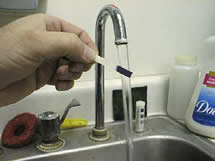
Recirculate water. Continue to recirculate for about 30 minutes after you first smell bleach from the garden hose. Use chlorine test papers as a visual indicator to determine if the water from the hose is at least 50 ppm of bleach. If below 50 ppm, go to STEP 5 and add more bleach solution and repeat STEPS 6 and 7.
Turn the circuit breaker to the pump OFF.
Rinse well components with commercially bottled water. Rinsing washes off bleach solution to prevent corrosion.
Replace wires and well cap.
Turn the circuit breaker to the pump ON.
STEP 8 - Bring bleach solution to faucets
Cold and hot water faucets.
Toilets, shower, and bath fixtures.
Outside faucets or yard hydrants.
Select your first faucet or fixture.
Remove faucet aerator, if present. This will prevent them from getting clogged from loosened scale.
Run water until chlorine test papers indicate a minimum of 50 ppm. If below 50 ppm, go to STEP 5 and add more bleach solution and repeat STEPS 6, 7, and 8.
Test Paper being rinsed with tap water.
Turn OFF the faucet and repeat for the remaining faucets and fixtures.
Turn the circuit breaker to the pump OFF.
Rinse well components with commercially bottled water. Rinsing washes off bleach solution to prevent corrosion.
Replace well components including vents, wires, and well cap.
Turn the circuit breaker to the pump ON.
STEP 9 - Disinfection time
Turn the circuit breaker to the pump OFF.
Put signs or disable faucets and fixtures to prevent anyone from using the water.
Let the bleach solution sit in the water system for a minimum of two hours, preferably six hours, or overnight.
STEP 10 – Remove the chlorinated water
Turn the circuit breaker to the pump ON.
Attach a garden hose from an outside faucet or yard hydrant. Do not put the end of the hose in or near your septic system, landscaping, or any bodies of water, since bleach solution will harm them.
Run the water to flush the bleach solution out of the well. Monitor the process, it can take 30 minutes to 24 hours or more to flush all of the bleach solution from the well.
Use chlorine test papers to verify that the water coming from the outside faucet or yard hydrant is clear of any bleach solution.
Flush the chlorinated water from water heaters.
Run the water from all interior and exterior water faucets and fixtures to flush the bleach solution from the rest of the water system. Use a chlorine test paper that reads to 0 ppm of chlorine to verify that no bleach solution is present.
STEP 11 - Disinfecting water treatment systems and appliances
To disinfect water treatment systems and appliances, follow the manufacturer’s instructions for each water treatment device or appliance. If disinfection information is unavailable, contact your water treatment or appliance service provider. Bleach solutions may damage or improperly disinfect filters that are a part of a water treatment system or appliance.
STEP 12 - Reconnect appliances, water softeners, and other treatment devices
Return bypass valves to ON position after following the manufacturer’s directions for disinfecting appliances and water treatment devices.
STEP 13 – Test the water
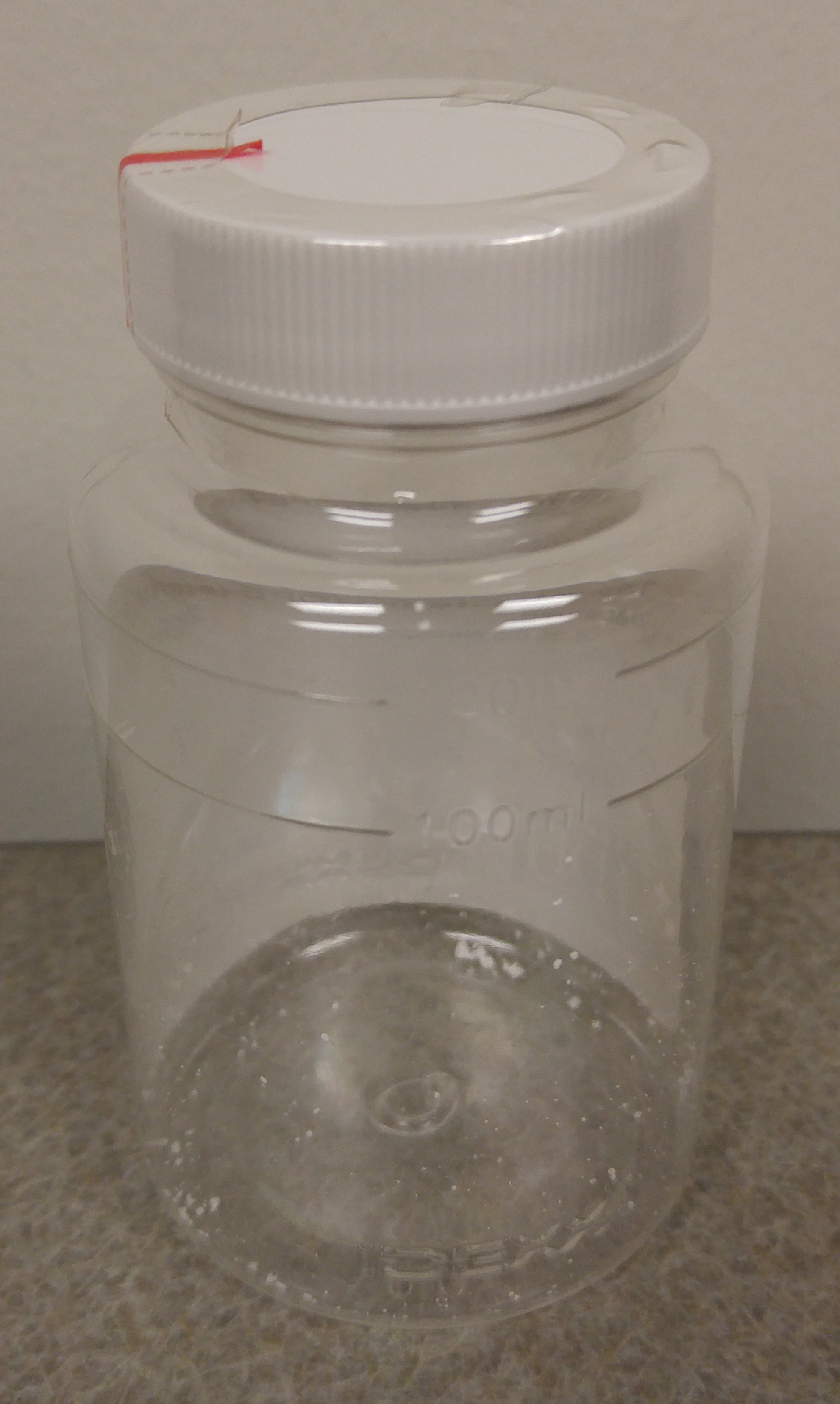
After the bleach solution is removed from the water system, it is recommended that you take a water sample to make sure that the well water tests negative for total coliform before you use it for drinking or cooking. MDH recommends using an accredited laboratory to test your water. Contact an accredited laboratory to get sample containers and instructions, or ask your county environmental or public health services if they provide well water testing services.
Replace filters on all devices and appliances when MDH or an MDH certified laboratory confirms your water system is total coliform free. 
Follow-up
Total coliform may regrow in the water system. For this reason, it is important to retest your water between two to four weeks after disinfection.
If total coliform is detected, repeat the disinfection procedure.
It is not unusual to disinfect a water system multiple times to eliminate total coliform if it has been growing in the system for a period of time.
If disinfection attempts are unsuccessful, the well may need to be cleaned as well as disinfected. Contact a MDH licensed well contractor for further assistance.
About Us
Well Management Program
Approximately 70 percent of all Minnesotans rely on groundwater as their primary source of drinking water, and one million Minnesotans rely on private wells. Wells and borings used for drinking water, irrigation, industry, groundwater monitoring, heat pumps, hydraulic elevators, and other purposes must be properly constructed, maintained, and sealed (filled with an impervious material) when removed from service, to protect both public health and our invaluable groundwater resources.


stop sign alerting safety concerns.Plumbing By PassElectric Panel


Wires with connector caps showing outside well casing.Vent and compression bolts.Person pouring bleach solution through funnel into well casing.


Image showing garden hose in funnel. Test Paper being rinsed with tap water.Sample bottle.