Showing posts with label Algae. Show all posts

Sunday, January 24, 2021

HYPOXIA - Low or depleted oxygen in a water body often leads to 'dead zones '— regions where life cannot be sustained. The amount of oxygen in any water body varies naturally, both seasonally and over time. This occurs due to a balance between oxygen input from the atmosphere and certain biological and chemical processes, some of which produce oxygen while others consume it. Stratification in the water column, which occurs when less dense freshwater from an estuary mixes with heavier seawater, is one natural cause of hypoxia. Hypoxia occurs most often as a consequence of human-induced factors, especially nutrient pollution (also known as eutrophication). In ocean and freshwater environments, the term "hypoxia" refers to low or depleted oxygen in a water body. Hypoxia is often associated with the overgrowth of certain species of algae, which can lead to oxygen depletion when they die, sink to the bottom, and decompose. Hypoxia Causes 'Dead Zones'. In some cases, vast stretches of open water become hypoxic. Unable to sustain life, these areas, called dead zones, may cause die-offs of fish, shellfish, corals, and aquatic plants. Since 1985, NOAA-sponsored research has monitored the largest dead zone in the United States, which forms every spring in the northern Gulf of Mexico. In 2019, it grew to cover more than 6,900 square miles of the sea floor. The amount of oxygen in any water body varies naturally, both seasonally and over time.

..................................................................................................................................................................................................................................................................................................................................................................................

Hypoxia

Low or depleted oxygen in a water body often leads to 'dead zones '— regions where life cannot be sustained.

.

The amount of oxygen in any water body varies naturally, both seasonally and over time. This occurs due to a balance between oxygen input from the atmosphere and certain biological and chemical processes, some of which produce oxygen while others consume it. Stratification in the water column, which occurs when less dense freshwater from an estuary mixes with heavier seawater, is one natural cause of hypoxia. Hypoxia occurs most often as a consequence of human-induced factors, especially nutrient pollution (also known as eutrophication).

The National Ocean Service


At 2,116 square miles, the 2020 hypoxic zone in the Gulf of Mexico is the 3rd smallest ever measured in the 34-year record, measured from July 25 to August 1. Red area denotes 2 milligrams per liter of oxygen or lower, the level which is considered hypoxic, at the bottom of the seafloor. (Bottom panel) Long-term measured size of the hypoxic zone (green bars) measured during the ship surveys since 1985, including the target goal established by the Mississippi River/Gulf of Mexico Watershed Nutrient Task Force and the 5-year average measured size (black dashed lines). In 2020, Hurricane Hanna passed through the central and western Gulf days prior to the research cruise and mixed the water column, disrupting the hypoxic zone which forms in the coastal ocean west of the Mississippi River delta. While the size of the hypoxic zone fluctuates naturally throughout the summer, it usually forms again within days or weeks after the passage of storms. Due to the close proximity of the storm to the survey cruise, the hypoxia area was only able to partially reform before the end of the monitoring cruise, resulting in a patchy distribution across the Gulf. Graphic credit: Louisiana Universities Marine Consortium

In ocean and freshwater environments, the term "hypoxia" refers to low or depleted oxygen in a water body.

Hypoxia is often associated with the overgrowth of certain species of algae, which can lead to oxygen depletion when they die, sink to the bottom, and decompose.

Hypoxia Causes 'Dead Zones'

In some cases, vast stretches of open water become hypoxic.

Unable to sustain life, these areas, called dead zones, may cause die-offs of fish, shellfish, corals, and aquatic plants.

Since 1985, NOAA-sponsored research has monitored the largest dead zone in the United States, which forms every spring in the northern Gulf of Mexico.

In 2019, it grew to cover more than 6,900 square miles of the sea floor.

How Does Hypoxia Happen?

The amount of oxygen in any water body varies naturally, both seasonally and over time.

This occurs due to a balance between oxygen input from the atmosphere and certain biological and chemical processes, some of which produce oxygen while others consume it.

Stratification in the water column, which occurs when less dense freshwater from an estuary mixes with heavier seawater, is one natural cause of hypoxia.

Limited vertical mixing between the water "layers" restricts the supply of oxygen from surface waters to more saline bottom waters, leading to hypoxic conditions in bottom habitats.

Hypoxia occurs most often, however, as a consequence of human-induced factors, especially nutrient pollution (also known as eutrophication).

The causes of nutrient pollution, specifically of nitrogen and phosphorus nutrients, include agricultural runoff, fossil-fuel burning, and wastewater treatment effluent.

Hypoxia and Climate Change

Changes in both global and regional climates have the potential to make coastal and marine ecosystems even more vulnerable to hypoxic conditions.

NOAA's National Centers for Coastal Ocean Science (NCCOS) carries out interdisciplinary research to advance understanding of the relationship between ecosystem function and climate change.

This type of research will ultimately assist decision makers and resource managers as they address the challenges of protecting ecosystems in a changing climate.

NOAA's Efforts to Combat Hypoxia

NOAA studies and funds research on the causes and impacts of hypoxia.

NOAA also collaborates with local, state, and federal agencies, regional task forces, universities, conservation organizations, and industry partners to develop management strategies to reduce nutrient inputs into coastal waters.

Much of NOAA's hypoxia work is managed through NCCOS, which studies and monitors the effects of hypoxia and other sources of pollution nationwide.

NCCOS has funded the development of hypoxia forecasts in the Gulf of Mexico since 1990 and in the Chesapeake Bay since 2005.

In the Gulf of Mexico, this research helped the Mississippi River/Gulf of Mexico Watershed Nutrient Task Force set goals and prioritize actions to reduce the size of the annual Gulf of Mexico Dead Zone.

In Chesapeake Bay, the research is providing important information to interagency management bodies like the Chesapeake Bay Program.

The Gulf of Mexico Hypoxia Watch evolved as a cooperative project among NOAA's National Marine Fisheries Service - NMFS, NCEI at Stennis, and the CoastWatch - Caribbean/Gulf of Mexico - Regional Node.

Hypoxia Watch provides near-real-time data and map products using shipboard measurements of bottom-dissolved oxygen.

These products help scientists prep for the yearly monitoring cruise by informing them of the potential extent of hypoxia in the Gulf of Mexico.

NOAA also plays a major role in the U.S. Integrated Ocean Observing System (IOOS®).

With its Coastal and Ocean Modeling Testbed, IOOS is evaluating a suite of hypoxia forecast models in the Gulf of Mexico and Chesapeake Bay.

In addition, NOAA's Ecological Forecasting Roadmap initiative is developing a national framework for hypoxia and other ecological forecasts (e.g., harmful algal blooms, pathogens) so that their benefits to the public can be sustained and improved over time.

NOAA-sponsored hypoxia studies are ongoing in Lake Erie, Green Bay, and Narragansett Bay.

The National Ocean Service provides data, tools, and services that support coastal economies and their contribution to the national economy

https://oceanservice.noaa.gov/hazards/hypoxia/


You might also like:


Eutrophication and Water Pollution

CLICK HERE . . . to view . . . 

https://puricare.blogspot.com/2019/11/eutrophication-and-water-pollution.html

.........................................................................................................................................................................................................................................................................................

Worsening Algal Blooms

CLICK HERE . . . to view . . . 

https://puricare.blogspot.com/2020/05/worsening-algal-blooms-toxic-algae.html

.........................................................................................................................................................................................................................................................................................

Biological Oxygen Demand

CLICK HERE . . . to view . . . 

https://puricare.blogspot.com/2016/09/biological-oxygen-demand-measure-of.html

.........................................................................................................................................................................................................................................................................................

Scripture And Climate Change

CLICK HERE . . . to view . . . 

https://puricarechronicles.blogspot.com/2020/06/scripture-and-climate-change-scriptures.html

.........................................................................................................................................................................................................................................................................................

Biological Oxygen Demand and Chemical Oxygen Demand

CLICK HERE . . . to view . . . 

https://puricare.blogspot.com/2017/05/biological-oxygen-demand-and-chemical.html

.........................................................................................................................................................................................................................................................................................

A Realistic Look at Global Warming

CLICK HERE . . . to view . . . 

https://puricarechronicles.blogspot.com/2021/01/a-realistic-look-at-global-warming-much.html

Tuesday, July 21, 2020

SCHISTOSOMIASIS AND PESTICIDES - Pesticides speed the spread of deadly waterborne pathogens - Widespread use of pesticides and other agrochemicals can speed the transmission of the debilitating disease schistosomiasis, while also upsetting the ecological balances in aquatic environments that prevent infections, finds a new study led by researchers at the University of California, Berkeley. Schistosomiasis, also known as snail fever, is caused by parasitic worms that develop and multiply inside freshwater snails and is transmitted through contact with contaminated water. The infection, which can trigger lifelong liver and kidney damage, affects hundreds of millions of people every year and is second only to malaria among parasitic diseases, in terms of its global impact on human health. The study, published in the journal Lancet Planetary Health, found that agrochemicals can increase the transmission of the schistosome worm in myriad ways: by directly affecting the survival of the waterborne parasite itself, by decimating aquatic predators that feed on the snails that carry the parasite and by altering the composition of algae in the water, which is a major food source for snails. The findings come as the connections between environment and infectious disease have been laid bare by the COVID-19 pandemic, which is caused by an emerging pathogen thought to be linked to wildlife.

Snail genome provides clues to controlling devastating disease ...
.................................................................................................................................................
Schistosomiasis And Pesticides
What is schistosomiasis? - Outbreak News TodayPesticides speed the spread of deadly waterborne pathogens
by University of California - Berkeley


Pesticides speed the spread of deadly waterborne pathogens
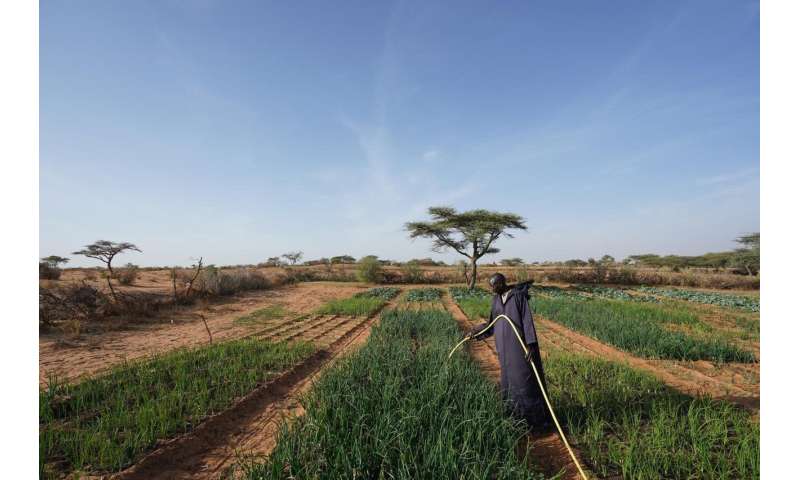
A man waters his crops near Lampsar, a community about 12 miles  from the city of Saint Louis
 in the lower Senegal River Basin in West Africa. A new study led by researchers at the
University of California, Berkeley finds that use of some agricultural pesticides can speed
 the transmission of the debilitating disease schistosomiasis, while also upsetting the
ecological balances in aquatic environments that prevent infections.
Widespread use of pesticides and other agrochemicals can speed the transmission of the debilitating disease schistosomiasis, while also upsetting the ecological balances in aquatic environments that prevent infections, finds a new study led by researchers at the University of California, Berkeley.
Schistosomiasis, also known as snail fever, is caused by parasitic worms that develop and multiply inside freshwater snails and is transmitted through contact with contaminated water.
The infection, which can trigger lifelong liver and kidney damage, affects hundreds of millions of people every year and is second only to malaria among parasitic diseases, in terms of its global impact on human health.
The study, published in the journal Lancet Planetary Health, found that agrochemicals can increase the transmission of the schistosome worm in myriad ways: by directly affecting the survival of the waterborne parasite itself, by decimating aquatic predators that feed on the snails that carry the parasite and by altering the composition of algae in the water, which provides a major food source for snails.
Agrochemicals increase the transmission of Schistosomiasis | Earth ..."We know that dam construction and irrigation expansion increase schistosomiasis transmission in low-income settings by disrupting freshwater ecosystems," said UC Berkeley's Christopher Hoover, a doctoral student in environmental health sciences and lead author of the study.
"We were shocked by the strength of evidence we found also linking agrochemical pollution to the amplification of schistosomiasis transmission."
The findings come as the connections between environment and infectious disease have been laid bare by the COVID-19 pandemic, which is caused by an emerging pathogen thought to be linked to wildlife.
"Environmental pollutants can increase our exposure and susceptibility to infectious diseases," said Justin Remais, chair of the Division of Environmental Health Sciences at the UC Berkeley School of Public Health and senior author of the study.
"From dioxins decreasing resistance to influenza virus, to air pollutants increasing COVID-19 mortality, to arsenic impacting lower respiratory tract and enteric infections — research has shown that reducing pollution is an important way to protect populations from infectious diseases."
After combing through nearly 1,000 studies gathered in a systematic literature review, the research team identified 144 experiments that provided data connecting agrochemical concentrations to components of the schistosome life cycle.
They then incorporated these data into a mathematical model that captures the transmission dynamics of the parasite.
The model simulates concentrations of common agrochemicals following their application to agricultural fields and estimates the resulting impacts on infections in the nearby human population.
The researchers found that even low concentrations of common pesticides — including atrazine, glyphosate and chlorpyrifos — can increase rates of transmission and interfere with efforts to control schistosomiasis.
Pesticides Increase Transmission of Snail Fever - Sustainable PulseAgrochemical amplification of parasite transmission was not inconsequential.
In the study communities in the Senegal River Basin in West Africa, the excess burden of disease attributable to agrochemical pollution was on par with disease caused by lead exposure, high sodium diets and low physical activity.
"We need to develop policies that protect public health by limiting the amplification of schistosomiasis transmission by agrochemical pollution," Hoover said.
"More than 90% of schistosomiasis cases occur in areas of sub-Saharan Africa, where agrochemical use is expanding. If we can devise ways to maintain the agricultural benefits of these chemicals, while limiting their overuse in schistosomiasis-endemic areas, we could prevent additional harm to public health within communities that already experience a high and unacceptable burden of disease."

The University of California at Berkeley (UC-Berkeley) is the flagship of the University of California system. Berkeley was established in 1868 as the first of the public universities of the eventual 10 campuses. UC Berkeley has an acclaimed physics department. It is the manager of the Los Alamos National Laboratory, the Lawrence Livermore National Laboratory. Nearly 25,000 undergraduate and graduate students undertake UC Berkeley's 200 programs and individual post graduate degree programs. UC Berkeley has a solid $2 billion endowment with the ability to attract grants from the National Science Foundation and other foundations. UC Berkeley has numerous Nobel Laureates with ties to its university and Medal of Science recipients.world.https://medicalxpress.com/news/2020-07-pesticides-deadly-waterborne-pathogens.html
Overview - SENTINEL - Linking Freshwater Pollution and the Risk of ...

Monday, October 7, 2019

COMMON IMPURITIES IN WATER - Water is not exempt from certain impurities that can severely affect clean consumption. These impurities include dust, fine sand, clay, dirt, and biological contaminants. Pure water is tasteless, colorless and odorless, but water from rainfall, streams and wells is known to harbor harsh chemicals and elements, including acid and metallic rust elements. Many drinking water systems also contain chlorine, as well as high levels of calcium. Dirty or unsafe water consists of elements called Total Suspended Solids that include dust, sand, clay and rust. These remain suspended in water and cause it to become muddy or cloudy. These also lack the two essentials of pure water: hydrogen and oxygen. Hydrogen and oxygen enable drinking water to become pure and basically dissolve most anything it comes into contact with. If consumed, suspended impurities in water if consumed can result in a range of medical ailments and illnesses. Biological impurities in water are caused by the presence of living organisms. Colloidal impurities in water include organic waste products and amino acids. This problem occurs due to contact with suspended matter and elements like sand, rocks and organic matter flowing in rivers, streams and lakes that renders water undrinkable or non-pure. Microorganisms can contaminate water by taking the form of calcium and magnesium salts.

what are impurities in water
..................................................................................................................................................
Common Impurities in Water
Written by AOS Treatment Solutions


Water is the world’s most precious resource.
However, it is not exempt from certain impurities that can severely affect clean consumption.
These impurities include dust, fine sand, clay, dirt, and biological contaminants.
Pure water is tasteless, colorless and odorless, but water from rainfall, streams and wells is known to harbor harsh chemicals and elements, including acid and metallic rust elements.
Similarly, many drinking water systems also contain chlorine, as well as high levels of calcium.
With this in mind, let’s look at some of the common impurities in water and learn why they are not safe for human or animal consumption.
WHAT ARE IMPURITIES IN WATER?
In the United States, dirty or unsafe water consists of elements called Total Suspended Solids (TSS) that are not designed to dissolve.
These solids include dust, sand, clay and rust.
They remain suspended in water and cause it to become muddy or cloudy. They also lack the two essentials of pure water: hydrogen and oxygen.
Hydrogen and oxygen enable drinking water to become pure and basically dissolve most anything it comes into contact with.
If consumed, suspended impurities in water if consumed can result in a range of medical ailments and illnesses.
These include, but are not limited to:
·           Cholera
·          Guinea worm disease
·          Typhoid
·          Legionella
·          Dysentery
·          Malaria – most commonly associated with mosquitoes and germs in contaminated water
Waterborne diseases stemming from drinking contaminated water result in a staggering 3.4 million deaths each year.
The problem is so significant that the Center for Disease Control and Prevention (CDC) even has a special department that deals with contaminated water in the United States.
They also network with the World Health Organization (WHO) to provide pure water and treatment solutions for developing nations.
TYPES OF IMPURITIES IN WATER
There are several types of impurities in water drinking systems and reserves.
BIOLOGICAL IMPURITIES IN WATER
Biological impurities in water are caused by the presence of living organisms.
These include algae, protozoa, pathogens, bacteria, viruses, microbes, and parasites along with their cysts (eggs) in contaminated water.
The latter are simply called germs, microorganisms that can reproduce at alarming rates.
Contaminated water is also one of the main causes of gastroenteritis for people of all ages across the United States.
COLLOIDAL IMPURITIES IN WATER
Colloidal impurities in water include organic waste products and amino acids.
This problem occurs due to contact with suspended matter and elements like sand, rocks and organic matter flowing in rivers, streams and lakes that renders water undrinkable or non-pure.
Sources of chemical impurities in water include:
·          Gases that are picked up from the atmosphere by rainwater and torrential downpours
·         Decomposing animals and plants found near streams, rivers and lakes
·         Industrial sewage and wastewater
·         High levels of calcium, iron, magnesium, sodium, and chlorides in river water
·         Organic compounds stemming from agricultural and domestic industrial waste. These are known as anthropogenic contaminants, which are found in natural and drinking water.
·         Inorganic compounds stemming from medical wastewater and equipment systems
As mentioned above, microorganisms can contaminate water by taking the form of calcium and magnesium salts.
However, these germs can also include silicates, along with ferrous and non-ferrous ion-based compounds.
IMPURE WATER SOLUTIONS
With so many impurities in natural and drinking water, one of the best solutions for communities is to have the right municipal water treatment system in place.
Water treatment systems help to eliminate aluminum, chlorides and other hidden chemical and elements from drinking water systems.
AOS Treatment Solutions is a reputable water treatment company with years of extensive industry experience in groundwater treatment, wastewater treatment, and surface water treatment for municipalities and industrial plants.
AOS has the tools and expertise to purify all types of water.
From pathogen removal to corrosion control, AOS is committed to excellence in securing fresh, clean and germ-free water for all communities and businesses.
Contact us online today for more information on how we can help keep your water safe.

AOS TREATMENT SOLUTIONS
Since 1999, AOS Treatment Solutions has provided specialized treatment of water and wastewater to the industrial and municipal markets. Over the years, we have become a leading water/wastewater treatment company utilizing an analytical and scientific approach to developing optimum treatment programs. Through our meticulous testing methodology, we find cost effective solutions to meet the needs of all our customers.
At AOS, our goal is to provide clients with a single-point source for all their water and wastewater treatment needs. We use the latest testing equipment and analyzers to deliver practical solutions that enhance operational reliability.
what are impurities in water

Thursday, September 19, 2019

TYPES OF ALGAE - Like plants, algae are eukaryotic organisms that contain chloroplasts and are capable of photosynthesis. Like animals, some algae possess flagella, centrioles, and are capable of feeding on organic material in their habitat. Algae range in size from a single cell to very large multicellular species, and they can live in various environments including salt water, freshwater, wet soil, or on moist rocks. The large algae are generally referred to as simple aquatic plants. As primary producers, algae are the foundation of the food chain in aquatic environments. They are a food source for many marine organisms including brine shrimp and krill, which in turn serve as the nutrition basis for other marine animals.

Algae in a Lake
.......................................................................................................................................
Types of Algae
Diatoms
Euglena gracilis / Algaen
7 Major Types of Algae
by Regina Bailey 


Pond scum, seaweed, and giant kelp are all examples of algae. 
Algae are protists with plant-like characteristics, that are typically found in aquatic environments.
Like plants, algae are eukaryotic organisms that contain chloroplasts and are capable of photosynthesis.
Like animals, some algae possess flagella, centrioles, and are capable of feeding on organic material in their habitat.
Algae range in size from a single cell to very large multicellular species, and they can live in various environments including salt water, freshwater, wet soil, or on moist rocks.
The large algae are generally referred to as simple aquatic plants.
Unlike angiosperms and higher plants, algae lack vascular tissue and do not possess roots, stems, leaves, or flowers.
As primary producers, algae are the foundation of the food chain in aquatic environments.
They are a food source for many marine organisms including brine shrimp and krill, which in turn serve as the nutrition basis for other marine animals. 
Algae can reproduce sexually, asexually or by a combination of both processes through alternation of generations.
The types which reproduce asexually divide naturally (in the case of single-celled organisms) or release spores which may be motile or non-motile.
Algae that reproduce sexually are generally induced to produce gametes when certain environmental stimuli – including temperature, salinity, and nutrients – become unfavorable.
These algae species will produce a fertilized egg or zygote to create a new organism or a dormant zygospore that activates with favorable environmental stimuli.
Algae can be categorized into seven major types, each with distinct sizes, functions, and color. The different divisions include:
·               Euglenophyta (Euglenoids)
·               Chrysophyta (Golden-brown algae and Diatoms)
·               Pyrrophyta (Fire algae)
·               Chlorophyta (Green algae)
·               Rhodophyta (Red algae)
·               Paeophyta (Brown algae)
·               Xanthophyta (Yellow-green algae)
Euglenophyta
Euglena are fresh and salt water protists. Like plant cells, some euglenoids are autotrophic.
They contain chloroplasts and are capable of photosynthesis. They lack a cell wall, but instead are covered by a protein-rich layer called the pellicle.
Like animal cells, other euglenoids are heterotrophic and feed on carbon-rich material found in the water and other unicellular organisms. Some euglenoids can survive for some time in darkness with suitable organic material.
Characteristics of photosynthetic euglenoids include an eyespot, flagella, and organelles (nucleus, chloroplasts, and vacuole).
Due to their photosynthetic capabilities, Euglena were classified along with algae in the phylum Euglenophyta.
Scientists now believe that these organisms have acquired this ability due to endosymbiotic relationships with photosynthetic green algae.
As such, some scientists contend that Euglena should not be classified as algae and be classified in the phylum Euglenozoa.
Chrysophyta
Golden-brown algae and diatoms are the most abundant types of unicellular algae, accounting for around 100,000 different species.
Both are found in fresh and salt water environments.
Diatoms are much more common than golden-brown algae and consist of many types of plankton found in the ocean.
Instead of a cell wall, diatoms are encased by a silica shell, known as a frustule, that varies in shape and structure depending on the species.
Golden-brown algae, though fewer in number, rival the productivity of diatoms in the ocean.
They are usually known as nanoplankton, with cells only 50 micrometers in diameter.
Pyrrophyta (Fire Algae)
Fire algae are unicellular algae commonly found in oceans and in some fresh water sources that use flagella for motion.
They are separated into two classes: dinoflagellates and cryptomonads. 
Dinoflagellates can cause a phenomenon known as a red tide, in which the ocean appears red due to their large abundance.
Like some fungi, some species of Pyrrophyta are bioluminescent. During the night, they cause the ocean to appear to be aflame.
Dinoflagellates are also poisonous in that they produce a neurotoxin that can disrupt proper muscle function in humans and other organisms.
Cryptomonads are similar to dinoflagellates and may also produce harmful algal blooms, which cause the water to have a red or dark brown appearance.
Chlorophyta (Green Algae)
Green algae mostly abide in freshwater environments, although a few species can be found in the ocean.
Like fire algae, green algae also have cell walls made of cellulose, and some species have one or two flagella.
Green algae contain chloroplasts and undergo photosynthesis. There are thousands of unicellular and multicellular species of these algae.
Multicellular species usually group in colonies ranging in size from four cells to several thousand cells.
For reproduction, some species produce non-motile aplanospores that rely on water currents for transport, while others produce zoospores with one flagellum for swimming to a more favorable environment.
Types of green algae include sea lettuce, horsehair algae, and dead man's fingers.
Rhodophyta (Red Algae)
Red algae are commonly found in tropical marine locations. Unlike other algae, these eukaryotic cells lack flagella and centrioles.
Red algae grow on solid surfaces including tropical reefs or attached to other algae. Their cell walls consist of cellulose and many different types of carbohydrates.
These algae reproduce asexually by monospores (walled, spherical cells without flagella) that are carried by water currents until germination.
Red algae also reproduce sexually and undergo alternation of generations. Red algae form a number of different seaweed types.
Paeophyta (Brown Algae)
Brown algae are among the largest species of algae, consisting of varieties of seaweed and kelp found in marine environments.
These species have differentiated tissues, including an anchoring organ, air pockets for buoyancy, a stalk, photosynthetic organs, and reproductive tissues that produce spores and gametes.
The life cycle of these protists involves alternation of generations. Some examples of brown algae include sargassum weed, rockweed, and giant kelp, which can reach up to 100 meters in length.
Xanthophyta (Yellow-Green Algae)
Yellow-green algae are the least prolific species of algae, with only 450 to 650 species.
They are unicellular organisms with cell walls made of cellulose and silica, and they contain one or two flagella for motion.
Their chloroplasts lacks a certain pigment, which causes them to appear lighter in color.
They usually form in small colonies of only a few cells. Yellow-green algae typically live in freshwater, but can be found in salt water and wet soil environments.
Key Takeaways
·          Algae are protists with characteristics that resemble those of plants. They are most commonly found in aquatic environments. 
·          There are seven major types of algae, each with distinct characteristics. 
·         Euglenophyta (Euglenoids) are fresh and salt water protists. Some euglenoids are autotrophic while others are heterotrophic.
·         Chrysophyta (Golden-brown algae and Diatoms) are the most abundant types of single-celled algae (approximately 100,000 different species).
·          Pyrrophyta (Fire algae) are single-celled algae. They are found in both the oceans and in fresh water. They use flagella to move around.
·         Chlorophyta (Green algae) typically live in freshwater. Green algae have cell walls made of cellulose and are photosynthetic.
·          Rhodophyta (Red algae) are mostly found in tropical marine environments. These eukaryotic cells do not have flagella and centrioles, unlike other types of algae.
·         Paeophyta (Brown algae) are among the largest species. Examples include both seaweed and kelp.
·         Xanthophyta (Yellow-green algae) are the least common species of algae. They are single-celled and both cellulose and silica make up their cell walls.

Regina Bailey
Biology expert for ThoughtCo (formerly About Education) since 1997
Author of the forward to The Complete Idiot's Guide to Understanding Cloning
Experience
Regina is the owner of a content development firm specializing in the development of biology and science-related content. She has written about biology for ThoughtCo (formerly About Education) since 1997.
Regina's expertise has been featured and/or referenced in Kaplan AP Biology 2016, The Internet for Cellular and Molecular Biologists, and The Seven Disciplines of Wellness: The Spiritual Connection to Good Health.
Regina also wrote the forward to The Complete Idiot's Guide to Understanding Cloning.
Education
Regina holds a B.A. in biology from Emory University. 
ThoughtCo and DotdashThoughtCo is a premier reference site focusing on expert-created education content. We are one of the top-10 information sites in the world as rated by comScore, a leading Internet measurement company. Every month, more than 13 million readers seek answers to their questions on ThoughtCo.
For more than 20 years, Dotdash brands have been helping people find answers, solve problems, and get inspired. We are one of the top-20 largest content publishers on the Internet according to comScore, and reach more than 30% of the U.S. population monthly. Our brands collectively have won more than 20 industry awards in the last year alone, and recently Dotdash was named Publisher of the Year by Digiday, a leading industry publication.
Euglena


Dinoflagellates
Dinoflagellates pyrocystis (Fire algae). 
Green Algae
These are Netrium desmid, an order of unicellular green algae that grow in long, filamentous colonies. They are mostly found in freshwater, but they can also grow in saltwater and even snow. They have a characteristically symmetrical structure, and a homogeneous cell wall. 
Red Algae
This is a light micrograph of part of the finely branched thallus of the red algae Plumaria elegans. So-called for its elegant appearance, here individual cells in the filamentous branches of this algae are visible. 
Giant Kelp
Giant kelp (Macrocystis pyrifera) is a type of brown algae that can be found in underwater kelp forests.
Yellow-green Algae
This is a light micrograph of Ophiocytium sp., a freshwater yellow-green alga.

Diatoms
Euglena gracilis / Algaen
Algae in a Lake
This image shows algae in a lake. Like plants and bacteria, algae are autotrophs. They are capable of self nourishing or generating their own food, typically from sunlight. 


Euglena
Euglena gracilis / Algae