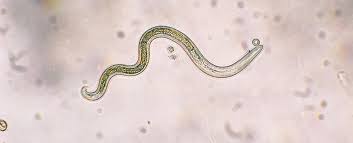
 ............................................................................................................................................

What to know about parasites
Written
by Yvette Brazier
Medically
reviewed by Alana Biggers, M.D., MPH
A parasite is an organism that lives in another
organism, called the host, and often harms it. It depends on its host for
survival.
Without a host, a parasite cannot live, grow and
multiply. For this reason, it rarely kills the host, but it can spread diseases,
and some of these can be fatal.
Parasites, unlike predators, are usually much smaller
than their host and they reproduce at a faster rate.
Fast facts on parasites
Parasites live on or in other organisms and thrive to
the detriment of their host.
Many different parasites can affect humans, and they
can pass on diseases such as malaria and trichomoniasis.
Ensuring that food is fully cooked, using insect
repellant, and following good hand hygiene rules can reduce the risk of getting
parasites.
What is a parasite?
Parasites range from microscopic in size to over 30
meters in length.
A parasite is an organism that lives within or on a
host. The host is another organism.
The parasite uses the host’s resources to fuel its
life cycle. It uses the host’s resources to maintain itself.
Parasites vary widely. Around 70 percent are not
visible to the human eye, such as the malarial parasite, but some worm
parasites can reach over 30 meters in length.
Parasites are not a disease, but they can spread
diseases. Different parasites have different effects.
Endoparasite
These live inside the host. They include heartworm,
tapeworm, and flatworms. An intercellular parasite lives in the spaces within
the host’s body, within the host’s cells. They include bacteria and viruses.
Endoparasites rely on a third organism, known as the
vector, or carrier. The vector transmits the endoparasite to the host.
The mosquito is a vector for many parasites, including
the protozoan known as Plasmodium, which causes malaria.
Epiparasite
These feed on other parasites in a relationship known
as hyperparasitism. A flea lives on a dog, but the flea may have a protozoan in
its digestive tract. The protozoan is the hyperparasite.
Types - There
are three main types of parasites.
Protozoa:
Examples include the single-celled organism known as Plasmodium. A protozoa can
only multiply, or divide, within the host.
Helminths:
These are worm parasites. Schistosomiasis is caused by a helminth. Other
examples include roundworm, pinworm, trichina spiralis, tapeworm, and fluke.
Ectoparasites:
These live on, rather than in their hosts. They include lice and fleas.
Symptoms
 There are many types of parasite, and symptoms can
vary widely.
Sometimes these may resemble the symptoms of other
conditions, such as a hormone deficiency, pneumonia, or food poisoning.
Some parasite-related problems, such as giardiasis and
amebic dysentery, can cause abdominal pain.
Symptoms that might occur include:
o skin bumps or rashes
o weight loss, increased appetite, or both
o abdominal pain, diarrhea, and vomiting
o sleeping problems
o anemia
o aches and pains
o allergies
o weakness and general feeling unwell
o fever
However, parasites can pass on a wide variety of
conditions, so symptoms are hard to predict.
Often there are no symptoms, or symptoms appear long
after infection, but the parasite can still be transmitted to another person,
who may develop symptoms.
Human parasites
Many types of parasites can affect humans. Here are
some examples of parasites and the diseases they can cause.
o Acanthamoebiasis - This
tiny ameba can affect the eye, the skin, and the brain. It exists all over the
world in water and soil. Individuals can become infected if they clean contact
lenses with tap water.
o Babesiosis - This
disease that comes from parasites that are spread by ticks. It affects the red
blood cells. The risk is highest in summer in the Northeast and upper Midwest
of the United States.
o Balantidiasis - This
is passed on by Balatidium coli, a single-cell parasite that usually infects
pigs but can, in rare cases, cause intestinal infection in humans. It can be
spread through direct contact with pigs or by drinking contaminated water,
usually in tropical regions.
o Blastocystosis - This
affects the intestines. The blastocystis enters humans through the fecal-oral
route. A person can get it by eating food or drink contaminated with human or
animal feces where the parasite is present.
o Coccidiosis - This
affects the intestines. Coccidia is passed on through the fecal-oral route. It
is found around the world. It can also affect dogs and cats, but these are
different kinds. Dogs, cats, and humans cannot normally infect each other.
o Amoebiasis - This
is caused by the parasite Entamoeba histolytica. It affects the intestines. It
is more likely in tropical regions and in areas with high population density
and poor sanitation. It is transmitted through the fecal-oral route.
o Giardiasis - Giardia,
or “beaver fever” affects the lumen of the small intestine. If humans ingest
food or water contaminated with feces, dormant cysts may infect the body.
o Isosporiasis or cystosporiasis - This disease is caused by the Cystoisospora belli,
previously known as Isospora belli. It affects the epithelial cells of the
small intestine. It exists worldwide and is both treatable and preventable. It
is passed on through the fecal-oral route.
o Leishmaniasis - This
is a disease that is passed on by parasites of the Leishmania family. It can
affect the skin, the viscera, or the mucous membranes of the nose, mouth, and
throat. It can be fatal. The parasite is transmitted by types of sandflies.
o Primary amoebic meningoencephalitis (PAM) - This is passed on through a free-living ameba known as
Naegleria fowleri. It affects the brain and the nervous system, and it is
nearly always fatal within 1 to 18 days. It is transmitted through breathing in
contaminated soil, swimming pools, and contaminated water, but not from drinking
water.
o Malaria - Different
types of plasmodium affect the red blood cells. It exists in tropical regions
and is transmitted by the Anopheles mosquito.
o Rhinosporidiosis - This
is caused by Rhinosporidium seeberi. It mainly affects the mucous of the nose,
conjunctiva, and urethra. It is more common in India and Sri Lanka but can
occur elsewhere. Polyps result in nasal masses that need to be removed through
surgery. Bathing in common ponds can expose the nasal mucous to the parasite.
o Toxoplasmosis - This
is a parasitic pneumonia caused by the parasite Toxoplasma gondii. It affects
the liver, heart, eyes and brain. It occurs worldwide. People can become
infected after ingesting raw or undercooked pork, lamb, goat, or milk, or
though contact with food or soil that is contaminated with cat feces.
o A person with a healthy immune system will not usually
have symptoms, but it can pose a risk during pregnancy and for those with a
weakened immune system.
o Trichomoniasis - Also
known as “trich” this is a sexually transmitted infection (STI) caused by the
parasite Trichomonas vaginalis. It affects the female urogenital tract. It can
exist in males, but usually without symptoms.
o Trypanomiasis (Sleeping
sickness) - This is passed on when the tetse fly transmits a parasite of the Trypanosoma
family. It affects the central nervous system, blood, and lymph. It leads to
changes in sleep behavior, among other symptoms, and it is considered fatal
without treatment. It can cross the placenta and infect a fetus during
pregnancy.
o Chagas disease - This
affects the blood, muscle, nerves, heart, esophagus and colon. It is
transmitted through an insect bite. Over 300,000 people in the U.S. have the
parasite that can lead to this disease.
Worms
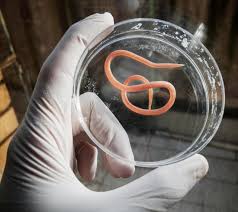 Worms, or helminth organisms, can affect humans and
animals.
o Anisakiasis:
This is caused by worms that can invade the intestines or the stomach wall. The
worms are passed on through contaminated fresh or undercooked fish and squid.
o Roundworms
can be passed on by raccoons.
Roundworm: Ascariasis, or a roundworm infection,
does not usually cause symptoms, but the worm may be visible in feces. It
enters the body through consuming contaminated food or drink.
o Raccoon roundworm:
Baylisascaris is passed on through raccoon stools. It can affect the brain,
lungs, liver, and intestines. It occurs in North America. People are advised
not to keep raccoons as pets for this reason.
o Clonorchiasis:
Also known as Chinese liver fluke disease, this affects the gall bladder.
Humans can become infected after ingesting raw or poorly processed or preserved
freshwater fish.
o Dioctophyme renalis infection: The giant kidney worm can move through the wall of
the stomach to the liver and eventually the kidney. Humans can become infected
after eating the eggs of the parasite in raw or undercooked freshwater fish.
o Diphyllobothriasis tapeworm: This affects the intestines and blood. Humans can
become infected after eating raw fish that live wholly or partly in fresh
water. Prevalence has increased in some parts of the developed world, possibly due
to the growing popularity of sushi, salted fillets, ceviche, and other raw-fish
dishes.
o Guinea worm:
This affects subcutaneous tissues and muscle and causes blisters and ulcers.
The worm may be visible in the blister. As the worms are shed or removed, they
enter the soil or water, and are passed on from there.
o Hookworms
can cause intestinal disease.Hookworm: These can cause intestinal
disease. They lay their eggs in soil and the larvae can penetrate the skin of
humans. Early symptoms include itching and a rash. They are most common in damp
places with poor sanitation.
o Hymenolepiasis:
Humans can become infected by ingesting material contaminated by rodents,
cockroaches, mealworms, and flour beetles.
o Echinococcosis tapeworm: Cystic echinococcosis can lead to cysts in the liver
and lungs, and alveolar echinococcosis can cause a tumor in the liver. Humans
can be infected after eating foods contaminated by the feces of an infected
animal, or from direct contact with an animal.
o Enterobiasis pinworm:
A pinworm, or threadworm, Enterobius vermicularis can live in the colon and
rectum of humans. The worm lays eggs around the anus while a person sleeps,
leading to itching. It spreads through the oral-fecal route.
o Fasciolosis liver fluke: This affects the gall bladder and liver. It is
common in countries where cattle or sheep are reared, but rare in the U.S. It
can affect the liver and the bile ducts and it causes gastrointestinal
symptoms. It passes from one mammal to another through snails. A person may get
it from eating watercress, for example.
o Fasciolopsiasis intestinal fluke: This affects the intestines. It can also transmitted
when consuming contaminated water plants or water.
o Gnathostomiasis:
This causes swellings under the skin, and occasionally affects the liver, the
eyes, and the nervous system. It is rare, but it can be fatal. It occurs in
Southeast Asia. It is transmitted by eating freshwater fish, pigs, snails,
frogs, and chicken.
o Loa loa filariasis:
Also known as loaisis, this is caused by the Loa loa worm, or African eye worm.
It causes itchy swellings on the body. It occurs mainly in Central and West
Africa and is transmitted through deerfly bites.
o Mansonellosis:
This is passed on through the bites of midges or blackflies. It affects the
layers under the surface of the skin, but it can enter the blood. It can lead
to angioedema, swellings, skin rash, fever, and joint problems. It is present
in Africa and Cental America.
o River blindness:
Caused by a worm known as Onchocerca volvulus, this affects the eyes, skin, and
other body tissues. It is found near fast flowing water. It is transmitted
through the bite of a blackfly. It occurs in South America, but 90 percent of
cases are in Africa.
o Lung fluke:
Also known as paragonimiasis, this affects the lungs, causing symptoms similar
to those of tuberculosis (TB). However, it can reach the central nervous
system, leading to meningitis. It is transmitted when eating undercooked or raw
freshwater crabs, crayfishes, and other crustaceans. It is most common in parts
of Asia.
o Schistosomiasis, bilharzia, or snail fever: There are different types of
schistosomiasis. They can affect the skin and internal organs. It results from
exposure to fresh water that has snails in it that are infected with the blood
fluke, or trematode worm. The worms are not found in the U.S. but they are
common worldwide.
o Sparganosis:
Humans can become infected if they eat foods tainted with dog or cat feces that
contains the larvae of a tapeworm of the Spirometra family. It can lead to a
migrating abscess under the skin. It is rare.
o Strongyloidiasis:
This can lead to severe and possibly fatal immunodeficiency. The parasite
penetrates through the skin and affects the lungs, skin, and intestines. It is
passed on through direct contact with contaminated soil. It most occurs in
tropical and subtropical regions.
 o Different types of tapeworm can affect the intestines, the liver, or the lungs.
o Beef and pork tapeworms: Taeniasis is caused by tapeworms of the taenia
family. They affect the intestines. They are passed on by eating undercooked
beef or pork.
o Toxocariasis:
A roundworm transmits this infection from animals to humans. It affects the
eyes, brain, and liver. It is caused by accidentally swallowing the eggs of the
parasite, for example, when young children play with soil. Nearly 14 percent of
people in the U.S. have antibodies, suggesting that millions have been exposed.
Most never have symptoms.
o Trichinosis:
This is caused by the roundworm of the Trichinella family. Infection can lead
to intestinal symptoms, fever, and muscle aches. It is passed on by eating
undercooked meat.
o Whipworm:
Also known as trichuriasis, whipworms live in the large intestine. Eggs are
passed in feces. It is common all over the world. Humans can become infected
when ingesting the eggs, for example on unwashed fruit or vegetables.
o Elephantiasis lymphatic filariasis: This is transmitted through mosquito bites. The
adult worms live in the lymph system. Infection can lead to lyphedema and
elephantiasis, in which swelling can cause disfigurement and disability. In the
Americas, it is passed on by the Culex quinquefasciatus mosquito.
o Ringworm
is sometimes mistaken for a worm, but it is not a worm. It is a fungal
infection.
Ectoparasites
 These are parasites that live on the outside of the
body, such as fleas.
Bed bugs are ectoparasites: They live on the outside of the body.
Bedbug:
These can affect the skin and vision. They are found all over the world.
Sharing clothing and bedding can spread infection. They may be present in newly
rented accommodation and hotel rooms.
Body lice:
These are common worldwide. Infection can spread through sexual activity,
skin-to-skin contact, and sharing bedding or clothing.
Crab lice:
These affect the pubic area and eyelashes. They are common all over the world
and spread through sexual activity, skin-to-skin contact, and sharing bedding
or clothing.
Demodex:
These affect the eyebrow and eyelashes. They are common all over the world and
can spread through prolonged skin contact.
Scabies:
This affects the skin. It is common all over the world and can spread through sexual
activity, skin-to-skin contact, and sharing bedding or clothing.
Screwworm:
This is transmitted by a fly, and it affects skin and wounds. It is found in
Central America and North Africa.
Head lice:
These live on the scalp and affect the hair follicles. They are common all over
the world and spread through head-to-head contact. A reaction to their saliva
causes itching.
Parasites come in many shapes and sizes and can lead
to a wide variety of symptoms and health issues. Some parasites are treatable
and others are not.
Prevention
To increase your chance of avoiding parasites:
find out which kind are prevalent in your area or in
locations you may travel
o take precautions, for example, using insect repellant
in places where mosquitoes are common
o be careful to eat only well-cooked fish and meat
o when traveling, drink only water from bottles with a
sealed top
o take care when bathing in fresh-water lakes or rivers
If you have any symptoms, see a doctor.
In the United States
According to the Centers for Disease Control and
Prevention (CDC), the following parasitic infections are common in the U.S.:
o neurocysticercosis
o Chagas disease
o toxocariasis
o toxoplasmosis
o trichomoniasis, or trich
The CDC is working to increase awareness of these
diseases and to improve diagnostic testing.
Yvette Brazier is an Editor for Medical News Today’s Updates team,
which focuses on maintaining the quality and accuracy of our clinical content.
Before joining the team in 2015, Yvette studied languages and linguistics,
qualified as a teacher, and went on to teach English, mostly on government
sponsored projects across the globe. Her main specialty areas were health
communications, writing teaching texts and manuals, and creating online
courses. Her hobbies include cycling and scuba diving, and she loves to be outdoors.
Alana Biggers
MD
Internal Medicine
Dr. Alana Biggers is an
internal medicine physician. She graduated from the University of Illinois at
Chicago. She is an assistant professor at the University of Illinois at Chicago
College of Medicine, where she specializes in internal medicine. She also has a
master's of public health in chronic disease epidemiology. In her spare time,
Dr. Biggers likes to share healthy living tips with followers on Twitter
through @Doc_prevention.


 Viruses are the cause of 50% of
groundwater-related diseases worldwide. Contact with fecal matter from humans,
livestock or wildlife can contribute viruses to water. This can come from
sources such as leaky sewer lines or improperly functioning septic systems, or
where manure or unsterilized sewage sludge is present in agricultural areas. Municipal
sewer systems are often bypassed during high-rainfall - this can result in raw
sewage entering streams, which in turn can affect water supplies downstream. Well
water should be checked for coliform bacteria to see if it is at risk for
contamination by sewage or fecal matter, which may contain viruses that can
infect humans.


 Pestilence And Disease
On A Global Scale


