Showing posts with label Respiratory conditions. Show all posts

Friday, August 7, 2020

CHLORINE RASH - Chlorine is an element that pool owners use to disinfect water, making it safer to swim in it or to get in a hot tub. Thanks to its capabilities as a powerful disinfectant, it’s also added to cleaning solutions. While chlorine has a lot of benefits, frequent exposure to it can have some negative effects. The element can be drying to skin and lead to irritation, even if you’ve previously been swimming in chlorine and haven’t had skin problems. If you get a chlorine rash after swimming, you aren’t necessarily allergic to chlorine, just sensitive to it. Chlorine rash can cause the skin to itch after swimming. Your eyes may also be irritated from chlorine exposure. Chlorine can also be irritating to the respiratory tract. You may notice you frequently cough and sneeze when you’re exposed to chlorine. Not all people who swim experience a chlorine rash. People often experience chlorine rash related to repeated exposure to chlorine. The immune system may identify the chlorine as a “foreign invader” like a bacteria or virus and become inflamed and irritated. The chlorine can also remove the natural oils on the skin, causing it to become dry. Even if you bathe or rinse off after exposure, some element of the chlorine remains on your skin. The continued exposure can cause prolonged irritation. Sometimes a pool’s caretakers may add too much chlorine to the pool. An excess of exposure to chlorine can be irritating.

Swimming pools and hot tubs treated with chlorine are primary causes of chlorine rash/.
................................................................................................................................................................

Using too much chlorine in a swimming pool may cause eye irritation and skin rashes.
Chlorine Rash

What Is a Chlorine Rash
Written by Rachel Nall, RN, BSN, CCRN 
Medically reviewed by Alana Biggers, MD


What is a chlorine rash?
Chlorine is an element that pool owners use to disinfect water, making it safer to swim in it or to get in a hot tub.
Thanks to its capabilities as a powerful disinfectant, it’s also added to cleaning solutions.
While chlorine has a lot of benefits, if you love to swim, frequent exposure to it can have some negative effects.
The element can be drying to skin and lead to irritation, even if you’ve previously been swimming in chlorine and haven’t had skin problems.
If you get a chlorine rash after swimming, you aren’t necessarily allergic to chlorine, just sensitive to it.
Fortunately, there are ways to treat chlorine rash without having to avoid swimming entirely.
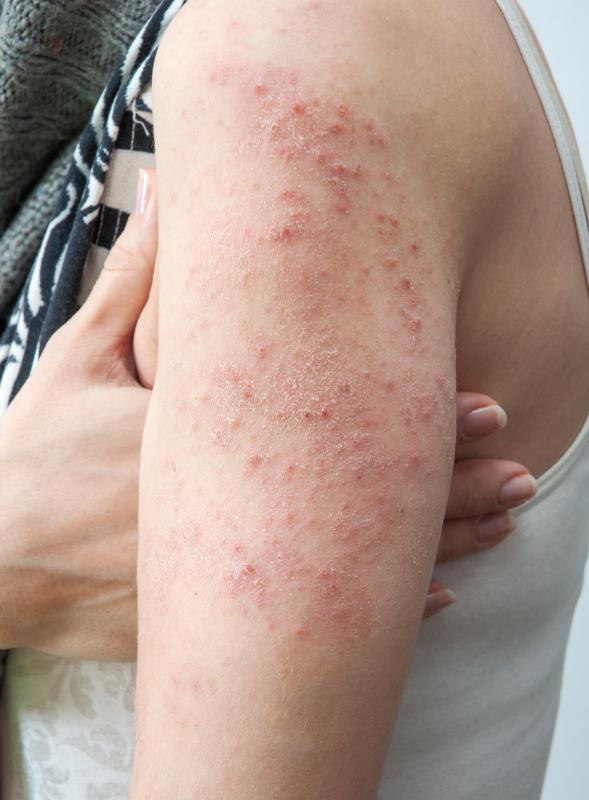
Most cases of chlorine rashes will clear up within a few days.Chlorine rash can cause the skin to itch after swimming. Other symptoms can include:
·               itchy, red rash
·               scaling or crusting
·               small bumps or hives
·               swollen or tender skin
Your eyes may also be irritated from chlorine exposure.
Sometimes chlorine can also be irritating to the respiratory tract. You may notice you frequently cough and sneeze when you’re exposed to chlorine.
Both a chlorine rash and swimmer’s itch are swimming-related rashes.
However, a chlorine rash is a reaction to chlorine exposure while swimmer’s itch is caused by microscopic parasites that live in fresh water.
These parasites are released from snails into the water.
When a swimmer comes in contact with them, the parasites can burrow into the skin. The result is a rash that can cause pimple-like responses or small pimples.
The medical name for this condition is “cercarial dermatitis.”
Identifying the difference between a chlorine rash and swimmer’s itch often depends on where you’ve been swimming.
Pools have chlorine added to them, while fresh water doesn’t.
If a pool is well-maintained and uses the appropriate amount of chlorine, it shouldn’t have these parasites.
You’re more likely to experience swimmer’s itch when swimming in fresh water or salt water, especially the shallow water by a shoreline.
Not all people who swim experience a chlorine rash. People often experience chlorine rash related to repeated exposure to chlorine.
The immune system may identify the chlorine as a “foreign invader” like a bacteria or virus and become inflamed and irritated.
The chlorine can also remove the natural oils on the skin, causing it to become dry.
Even if you bathe or rinse off after exposure, some element of the chlorine remains on your skin. The continued exposure can cause prolonged irritation.
This means those at risk for reactions include:
·               lifeguards
·               professional cleaners
·               swimmers
Sometimes a pool’s caretakers may add too much chlorine to the pool. An excess of exposure to chlorine can be irritating.
Have medical questions? Connect with a board-certified, experienced doctor online or by phone. Pediatricians and other specialists available 24/7.
chlorine rash pictures and remediesYou can usually treat a chlorine rash with over-the-counter (OTC) products. This includes corticosteroid creams, such as hydrocortisone.
However, most doctors don’t recommend putting hydrocortisone cream on the face as it can thin the skin or get in the mouth and eyes.
If you experience hives, you can apply a diphenhydramine cream or take a medication that contains diphenhydramine, such as Benadryl.
You can also purchase body washes or lotions that remove chlorine and are designed to soothe the skin. Examples include:
Avoid lotions that are highly perfumed, as they can add to the potential irritation from chlorine.
Ideally, these topical applications will help to reduce the incidence of chlorine rash and keep you swimming and cleaning more comfortably.
If you have a severe allergic reaction, such as hives that won’t go away or difficulty breathing, you should seek emergency medical treatment.
A medical specialist — an allergist — can help to diagnose and treat further problems related to chlorine rash.
This is true for those who experience a chlorine rash but plan to continue their exposure, such as swimmers.
If your chlorine rash does not respond to OTC treatments, you should see an allergist. The allergist can prescribe stronger treatments such as prescription corticosteroid creams.
Some of the ways to prevent a chlorine rash include:
·          Taking a bath or shower before and after you’re exposed to chlorine. If you apply lotions to skin that has chlorine present, it’s only likely to irritate it more.
·          Applying petroleum jelly, such as Vaseline, to areas that are irritated before going into a pool or doing cleaning. This provides a protective barrier between your skin and the water.
·          Another option is to take a break from a pool or cleaning solution that contains chlorine for a while and allow the skin to heal.
Repeated exposure when you have a chlorine rash will likely only irritate the skin further.

Alana Biggers
MD
Internal Medicine
Dr. Alana Biggers is an internal medicine physician. She graduated from the University of Illinois at Chicago. She is an assistant professor at the University of Illinois at Chicago College of Medicine, where she specializes in internal medicine. She also has a master’s of public health in chronic disease epidemiology. In her spare time, Dr. Biggers likes to share healthy living tips with followers on Twitter through @Doc_prevention.
Healthline’s Medical Affairs team focuses on ensuring Healthline’s content, products, and services uphold the highest standards of medical integrity. Our dedicated team also manages our extensive clinician network, which provides medical review for all clinical content. Covering the full spectrum of medicine, Healthline’s physicians, nurses, public health experts, and patient advocates help ensure that the information you receive is accurate, evidence based, current, and trustworthy.
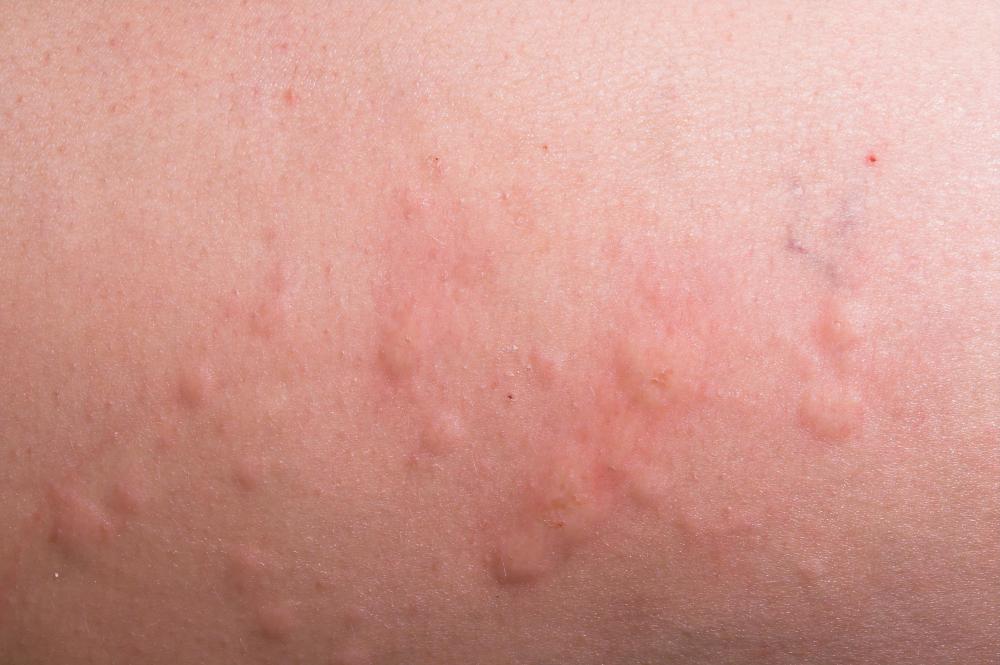
Chlorine rash appears as small, clustered bumps.

Monday, January 20, 2020

ALUMINUM POISONING - Aluminum toxicity is commonly found in patients with renal impairment. Long-term hemodialysis is also linked to increased odds of aluminum poisoning. The heavy metal is found practically everywhere: food, water, air and even soil. This makes aluminum exposure unavoidable for most people. Aluminum is the most abundant metal in the planet, and is widely known for its many uses in various industries such as metalworking, construction, and health care. The heavy metal is often combined with other elements. Aluminum is used in the production of various common commodities such as beverage cans, pots and pans, airplanes, siding and roofing, and foil. Aluminum is also used in water treatment and abrasives, as well as medications and personal care products including antacids, astringents, buffered aspirin, food additives, and antiperspirants. Excessive aluminum exposure is tied to adverse musculoskeletal, neurological, and respiratory conditions.


...................................................................................................................................................................
Aluminum Poisoning
Top symptoms of aluminum poisoning and toxicity
By Earl Garcia


Exposure to high levels of aluminum may lead to potentially harmful toxicity.
Old age and reduced kidney function are two most common risk factors associated with aluminum poisoning.
According to an article published in Medscape.com, aluminum toxicity is commonly found in patients with renal impairment. 
.
Long-term hemodialysis is also linked to increased odds of aluminum poisoning, as the treatment may lead to the accumulation of the heavy metal in the body.
Symptoms of aluminum toxicity may include the following:
Anemia
Impaired iron absorption
Muscle weakness
Seizures
Impaired immunity
Aluminum toxicity is also found to trigger:
Bone pain
Non-healing fractures
Spinal deformities
Premature osteoporosis
Other more prominent symptoms of aluminum toxicity include:
Delayed growth in children
Altered mental status
Dementia
The heavy metal is found practically everywhere: food, water, air and even soil. This makes aluminum exposure unavoidable for most people.
Some sources of excessive aluminum exposure include:
Foods containing high levels of aluminum
Dusty environments
Workplace air contaminated with aluminum dust
Living in areas where aluminum mining and processing take place
Living near harmful waste sites
Living in areas where aluminum levels are naturally high
Receiving vaccines with aluminum
Aluminum is the most abundant metal in the planet, and is widely known for its many uses in various industries such as metalworking, construction, and health care.
The heavy metal is often combined with other elements including oxygen, silicon, and fluorine.
Aluminum is used in the production of various common commodities such as beverage cans, pots and pans, airplanes, siding and roofing, and foil.
According to the Center for Disease Control and Prevention (CDC)’s Agency for Toxic Substances & Disease Registry (ATSDR), the heavy metal is also used in water treatment and abrasives, as well as medications and personal care products including antacids, astringents, buffered aspirin, food additives, and antiperspirants.
The ATSDR cautioned that excessive aluminum exposure is tied to adverse musculoskeletal, neurological, and respiratory conditions.
Certain activities involving aluminum use are also found to spur adverse effects on both human health and the environment.
”Coal burning by … electric utilities, produces heavy ash that settles out, as well as fly ash that formally went up the smokestack into the atmosphere, but is now captured and stored because of its well-known adverse human health effects and damage to the environment…
“Such clandestine geoengineering activities exposed humanity and Earth’s biota to highly mobilized aluminum, a toxic substance not generally found in the natural environment and one for which no natural immunity had evolved.
“During the period of coal fly ash utilization for clandestine geoengineering, aluminum-implicated neurological diseases experienced explosive growth profiles, including autism, Alzheimer’s, Parkinson’s, ADHD, and others, as well as manifold destruction of plant and animal life,” the researchers wrote in GeoEngineeringWatch.org.

Chemicals.News is a fact-based public education website published by Chemicals News Features, LLC.