Showing posts with label Infectious Diseases. Show all posts

Tuesday, July 21, 2020

SCHISTOSOMIASIS AND PESTICIDES - Pesticides speed the spread of deadly waterborne pathogens - Widespread use of pesticides and other agrochemicals can speed the transmission of the debilitating disease schistosomiasis, while also upsetting the ecological balances in aquatic environments that prevent infections, finds a new study led by researchers at the University of California, Berkeley. Schistosomiasis, also known as snail fever, is caused by parasitic worms that develop and multiply inside freshwater snails and is transmitted through contact with contaminated water. The infection, which can trigger lifelong liver and kidney damage, affects hundreds of millions of people every year and is second only to malaria among parasitic diseases, in terms of its global impact on human health. The study, published in the journal Lancet Planetary Health, found that agrochemicals can increase the transmission of the schistosome worm in myriad ways: by directly affecting the survival of the waterborne parasite itself, by decimating aquatic predators that feed on the snails that carry the parasite and by altering the composition of algae in the water, which is a major food source for snails. The findings come as the connections between environment and infectious disease have been laid bare by the COVID-19 pandemic, which is caused by an emerging pathogen thought to be linked to wildlife.

Snail genome provides clues to controlling devastating disease ...
.................................................................................................................................................
Schistosomiasis And Pesticides
What is schistosomiasis? - Outbreak News TodayPesticides speed the spread of deadly waterborne pathogens
by University of California - Berkeley


Pesticides speed the spread of deadly waterborne pathogens
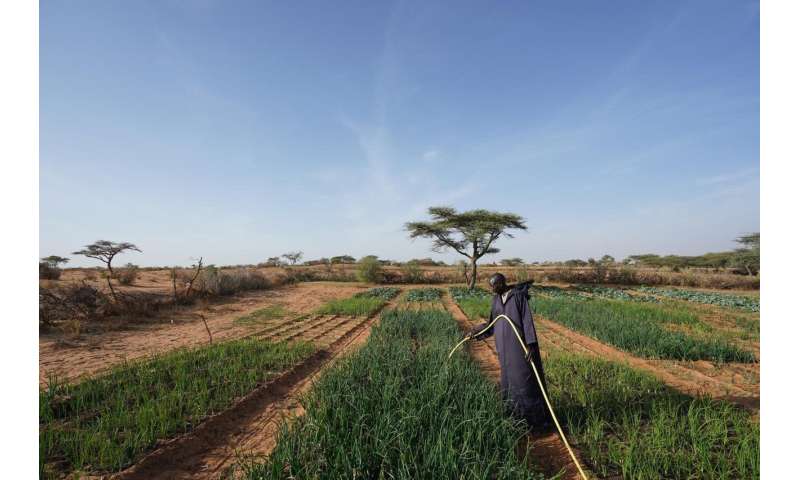
A man waters his crops near Lampsar, a community about 12 miles  from the city of Saint Louis
 in the lower Senegal River Basin in West Africa. A new study led by researchers at the
University of California, Berkeley finds that use of some agricultural pesticides can speed
 the transmission of the debilitating disease schistosomiasis, while also upsetting the
ecological balances in aquatic environments that prevent infections.
Widespread use of pesticides and other agrochemicals can speed the transmission of the debilitating disease schistosomiasis, while also upsetting the ecological balances in aquatic environments that prevent infections, finds a new study led by researchers at the University of California, Berkeley.
Schistosomiasis, also known as snail fever, is caused by parasitic worms that develop and multiply inside freshwater snails and is transmitted through contact with contaminated water.
The infection, which can trigger lifelong liver and kidney damage, affects hundreds of millions of people every year and is second only to malaria among parasitic diseases, in terms of its global impact on human health.
The study, published in the journal Lancet Planetary Health, found that agrochemicals can increase the transmission of the schistosome worm in myriad ways: by directly affecting the survival of the waterborne parasite itself, by decimating aquatic predators that feed on the snails that carry the parasite and by altering the composition of algae in the water, which provides a major food source for snails.
Agrochemicals increase the transmission of Schistosomiasis | Earth ..."We know that dam construction and irrigation expansion increase schistosomiasis transmission in low-income settings by disrupting freshwater ecosystems," said UC Berkeley's Christopher Hoover, a doctoral student in environmental health sciences and lead author of the study.
"We were shocked by the strength of evidence we found also linking agrochemical pollution to the amplification of schistosomiasis transmission."
The findings come as the connections between environment and infectious disease have been laid bare by the COVID-19 pandemic, which is caused by an emerging pathogen thought to be linked to wildlife.
"Environmental pollutants can increase our exposure and susceptibility to infectious diseases," said Justin Remais, chair of the Division of Environmental Health Sciences at the UC Berkeley School of Public Health and senior author of the study.
"From dioxins decreasing resistance to influenza virus, to air pollutants increasing COVID-19 mortality, to arsenic impacting lower respiratory tract and enteric infections — research has shown that reducing pollution is an important way to protect populations from infectious diseases."
After combing through nearly 1,000 studies gathered in a systematic literature review, the research team identified 144 experiments that provided data connecting agrochemical concentrations to components of the schistosome life cycle.
They then incorporated these data into a mathematical model that captures the transmission dynamics of the parasite.
The model simulates concentrations of common agrochemicals following their application to agricultural fields and estimates the resulting impacts on infections in the nearby human population.
The researchers found that even low concentrations of common pesticides — including atrazine, glyphosate and chlorpyrifos — can increase rates of transmission and interfere with efforts to control schistosomiasis.
Pesticides Increase Transmission of Snail Fever - Sustainable PulseAgrochemical amplification of parasite transmission was not inconsequential.
In the study communities in the Senegal River Basin in West Africa, the excess burden of disease attributable to agrochemical pollution was on par with disease caused by lead exposure, high sodium diets and low physical activity.
"We need to develop policies that protect public health by limiting the amplification of schistosomiasis transmission by agrochemical pollution," Hoover said.
"More than 90% of schistosomiasis cases occur in areas of sub-Saharan Africa, where agrochemical use is expanding. If we can devise ways to maintain the agricultural benefits of these chemicals, while limiting their overuse in schistosomiasis-endemic areas, we could prevent additional harm to public health within communities that already experience a high and unacceptable burden of disease."

The University of California at Berkeley (UC-Berkeley) is the flagship of the University of California system. Berkeley was established in 1868 as the first of the public universities of the eventual 10 campuses. UC Berkeley has an acclaimed physics department. It is the manager of the Los Alamos National Laboratory, the Lawrence Livermore National Laboratory. Nearly 25,000 undergraduate and graduate students undertake UC Berkeley's 200 programs and individual post graduate degree programs. UC Berkeley has a solid $2 billion endowment with the ability to attract grants from the National Science Foundation and other foundations. UC Berkeley has numerous Nobel Laureates with ties to its university and Medal of Science recipients.world.https://medicalxpress.com/news/2020-07-pesticides-deadly-waterborne-pathogens.html
Overview - SENTINEL - Linking Freshwater Pollution and the Risk of ...

Monday, November 25, 2019

DENGUE - Dengue fever is a severe, flu-like illness that affects infants, young children and adults but rarely causes death. The symptoms, following an incubation period of five to eight days, are fever, chills, and severe headache, pain in the joints, sweating, and prostration. Dengue hemorrhagic is a potentially lethal complication and is today a leading cause of childhood death in several Asian countries. It is characterized by high fever, haemorrhage, often enlargement of the liver, and in the most severe cases circulatory failure. Today, dengue is found in tropical and subtropical regions around the world, predominately in urban and per urban areas, where Aedes mosquitoes are prevalent. Globally there are an estimated 50-100 million cases of dengue fever each year.


..........................................................................................................................................................
Dengue
Lenntech


Dengue is an acute infectious disease caused by a virus and transmitted by the bite of the Aedes mosquito, also known as break bone fever and bone-crusher disease.
Dengue fever is a severe, flu-like illness that affects infants, young children and adults but rarely causes death.
The symptoms, following an incubation period of five to eight days, are fever, chills, and severe headache, pain in the joints, sweating, and prostration.
The clinical features vary according to the age of the patient.
Infants and young children may have a feverish illness with rash.
Older children and adults may have either a mild feverish illness, or the classical incapacitating disease with abrupt onset and high fever, severe headache, pain behind the eyes, muscle and joint pains and rash.
Dengue hemorrhagic is a potentially lethal complication and is today a leading cause of childhood death in several Asian countries.
It is characterized by high fever, haemorrhage, often enlargement of the liver, and in the most severe cases circulatory failure.
Today, dengue is found in tropical and subtropical regions around the world, predominately in urban and per urban areas, where Aedes mosquitoes are prevalent.
Globally there are an estimated 50-100 million cases of dengue fever each year.

Lenntech provides water treatment solutions for all type of applications, from domestic equipment to industrial turnkey plants up to 5000 m3/day.
Our wide range of technologies and extended know-how in all water-related sectors will guarantee you a cost-efficient solution meeting your water quality requirements.
Lenntech deals daily with clients from various origin: municipalities, water bottlers, hotels and resort requiring safe drinking water for their visitors, farmers needing specific irrigation water for their plants, but also industries like power plants, oil and gas, chemical factories, requiring specific process water for their equipment.

Friday, April 28, 2017

INFECTIOUS DISEASES AND WATER - Changing environments linked to such trends as intensified water resources development and urbanization, and the accompanying demographic changes, have created conditions where vector-borne diseases can gain new strongholds. International travel has contributed to the spread of pathogens to areas where the vector was already present but so far innocuous.

Water and 
Infectious Diseases
EMERGING ISSUES OF WATER AND INFECTIOUS DISEASES


Water treatment issues of infectious disease starts primarily with the concerns of emerging pathogens.
What is an emerging pathogen?
Emerging pathogens are those that have appeared in a human population for the first time, or have occurred previously but are increasing in incidence or expanding into areas where they have not previously been reported, usually over the last 20 years (WHO, 1997).
Re-emerging pathogens are those whose incidence is increasing as a result of long-term changes in their underlying epidemiology (Woolhouse,2002).
By these criteria, 175 species of infectious agent from 96 different genera are classified as emerging pathogens. Of this group, 75% are zoonotic species.
Improved methods of surveillance, epidemiological studies and the continuous development of more advanced methods of diagnosis have allowed us to detect new pathogenic species of micro-organism or to associate a known micro-organism with a new or atypical set of disease symptoms.
Furthermore, the agents of several diseases that were thought to have been controlled are re-emerging as a result of adaptive changes in the pathogen, changes to the immunological status of the population normally affected.
Developments in our understanding of the relationships between water and human health have been characterized by the periodic recognition of previously unknown pathogens or of the water-related significance of recognized pathogens.
Several studies have confirmed that water-related diseases not only remain a leading cause of morbidity and mortality worldwide, but that the spectrum of disease is expanding and the incidence of many water-related microbial diseases is increasing.
Since 1970, several species of micro-organism from human and animal faeces and from environmental sources, including water, have been confirmed as pathogens.
Examples include Cryptosporidium, Legionella, Escherichia coli O157 (E. coli O157), rotavirus, hepatitis E virus and norovirus (formerly Norwalk virus).
Furthermore, the importance of water in the transmission of recognized pathogens is being continually assessed as new tools become available through advances in science, technology and epidemiology.
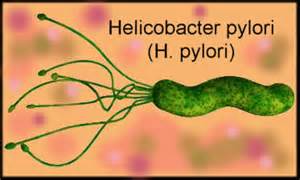
Helicobacter pylori (H. pylori) is an example of a recently emerged pathogen that may be transmitted through water.
 Similarly, water-related vector-borne pathogens have been (re-) emerging over the past 20 years.
To a large extent this has been caused by the emergence and spread of drug-resistant parasites (for example, the Plasmodium species causing malaria).
There is a strong link between H. pylori infection and gastric cancer in many countries, but there are large inter-country variations in incidence of gastric cancer and H. pylori seroprevalence seen among many Asian countries.
For example, the prevalence of H. pylori infection is high in India and Bangladesh, but low gastric cancer rates have been reported.
Factors that may influence the etiology of gastric cancer include the genetic diversity of the infecting H. pylori strains and differences in the host genetic background in various ethnic groups.
These factors, in addition to environmental factors, such as personal hygiene and dietary habits, reflect the multifactorial etiology of gastric cancer (Miwa, Sakaki & Sugiyama, 2002).
A number of studies have demonstrated that H. pylori survives in water although isolation of H. pylori from water systems has been shown to be difficult.
Changing environments linked to such trends as intensified water resources development and urbanization, and the accompanying demographic changes, have created conditions where vector-borne diseases can gain new strongholds.
International travel has contributed to the spread of pathogens to areas where the vector was already present but so far innocuous (for example, West Nile virus in North America).
Major etiological agents of infectious diseases identified since 1972:
1972
Small round structured viruses Diarrhoea

1989
Hepatitis C virus Parenterally transmitted non-A, non-B hepatitis
1973
Rotaviruses Infantile diarrhoea

1990
Human herpesvirus-7 Exanthema subitum
1975
Astroviruses Diarrhoea

1990
Hepatitis E virus Enterically transmitted non-A, non-B hepatitis
1975
Parvovirus B19 Aplastic crisis in chronic haemolytic anaemia

1991
Hepatitis F virus Severe non-A, non-B hepatitis 1992 Vibrio cholerae O139:H7 New strain associated with epidemic cholera
1976
Cryptosporidium parvum Acute enterocolitis

1992
Bartonella henselae CAT-scratch disease, bacillary angiomatosis
1977
Ebola virus Ebola haemorrhagic fever

1993
Sin nombre virus Hantavirus pulmonary syndrome
1977
Legionella pneumophila Legionnaires' disease

1993
Hepatitis G virus Non A-C hepatitis
1977
Hantaan virus Haemorrhagic fever with renal syndrome

1994
Sabia virus Brazilian haemorrhagic fever
1977
Campylobacter spp. Diarrhoea

1994
Human herpesvirus-8 Kaposi's sarcoma
1980
Human T-cell lymphotropic virus-1(HTLV-1) Adult T-cell leukaemia/ HTLV-1 associated myelopathy

1995
Hendravirus Castleman's disease
1982
HTLV-2 Hairy T-cell leukaemia

1996
Prion (BSE) Meningitis, encephalitis
1982
Borrelia burgdorferi Lyme disease

1997
Influenza A virus New variant Creutzfeldt-Jakob disease
1983
HIV-1, HIV-2 Acquired immunodeficiency syndrome

1997
Transfusion-transmitted virus 1997 Enterovirus 71 Epidemic encephalitis
1983
Escherichia coli O157:H7 Haemorrhagic colitis; haemolytic uremic syndrome

1998
Nipah virus Meningitis, encephalitis
1983
Helicobacter pylori Gastritis, gastric ulcers, increased risk of gastric cancer 1988 Human herpesvirus-6 Exanthema subitum

1999
Influenza A virus Influenza (Hong Kong)
1989
Ehrlichia spp. Human ehrlichiosis

1999
West Nile-like virus Encephalitis (New York) (Desselberg, 2000)
An outbreak of arboviral encephalitis was first recognized in New York City in 1999.
The cause of the outbreak was confirmed as a West Nile-like virus. Before and concurrent with this outbreak, local health officials observed increased fatalities among New York City birds, especially crows.
Tissue specimens from these birds with pathologic evidence of encephalitis were reported as positive for West Nile-like virus sequence by genomic analysis, implying these as the vectors.
Four human deaths occurred among elderly persons. One case-patient with onset in late August reported a history of travel to Africa completed in June 1999.
Vector control measures were initiated to control the host-seeking adult Culex pipiens mosquito population (MMWR, 1999).
RELATED POSTS:
.
Water-Borne 

Infections
CLICK HERE . . .
Protozoa and Amoeba in Drinking Water
CLICK HERE . . .
Water And Bronchitis 
And 
Pneumonia
CLICK HERE . . .
.

.
PURICARE 
INDUSTRIAL 
ENTERPRISES 
Water 
Treatment 
Systems


CLICK HERE . . . to view company profile

Tachmina Laminated
Sand Filter


Reverse Osmosis with Cartridge Pre-Filters
Ultraviolet Bactericidal System
with Cartridge Pre-Filters


https://www.freedrinkingwater.com/water_quality/quality1/1-emerging-issues-infectious-disease-in-water.htm