Showing posts with label Aircrafts. Show all posts

Wednesday, October 30, 2019

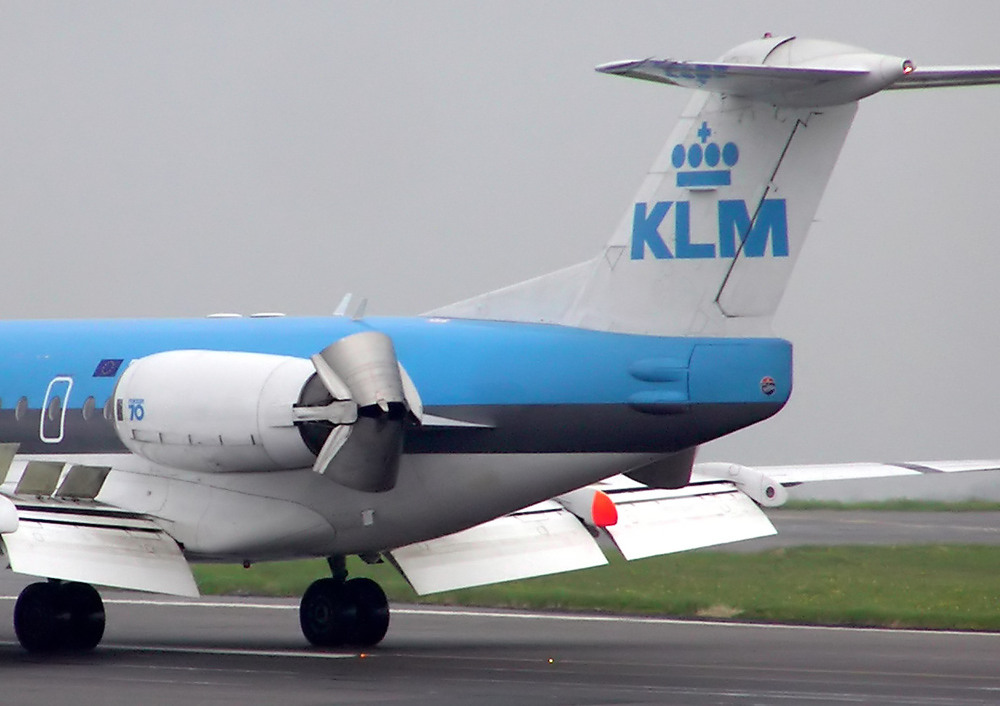
PROPELLERS - The blades of the propeller are an aerofoil, which generates an aerodynamic force as they spin, the same as any other aerofoil that is moving through the air. The blades of a propeller are slightly angled. As the blade rotates, air accelerates over the front surface, causing a reduced static pressure ahead of the blade. This results in a forward thrust, which pulls the aircraft along. As the aircraft moves forward in flight, the propeller produces both rotational and forward velocity.

propeller
.....................................................................................................................................
Propellers
How Propeller Works & Functions Of Propeller
engineeringinsider


A propeller works in a similar way that a screw works.
The blades of the propeller are an aerofoil, which generates an aerodynamic force as they spin, the same as any other aerofoil that is moving through the air.
The blades of a propeller are slightly angled. As the blade rotates, air accelerates over the front surface, causing a reduced static pressure ahead of the blade.
This results in a forward thrust, which pulls the aircraft along.
When the aircraft is stationary, the spinning propeller blades cause purely rotational velocity.
As the aircraft moves forward in flight, the propeller produces both rotational and forward velocity.
The combined vector of these forces is called the pitch, the angle of advance.
As a result of this combined rotational and forward velocity, each propeller blade section follows a ‘corkscrew’ path through the air.
Different points along the blade will have an optimal angle to the relative airflow to operate efficiently at a given airspeed.
Propellers are designed to have the most efficient angle of attack along the entire length.
To achieve this, blades are designed with a twist, which reduces the blade angle from the centre to the tip.
Fixed-pitch propellers have only one forward velocity (airspeed) for a given rpm at which they will operate efficiently.
Some propellers are designed with the ability for pilots to adjust the pitch in flight, allowing the propeller to operate most efficiently over a wider range of airspeeds. 
Engineering Insider
propeller

Saturday, August 3, 2019

AUTOPILOT - A pilot has the assistance of a sophisticated computer and sensors driven system in every stage of his work. Autopilots are only designed to assist pilots in performing their duties and in no sense can replace completely any part of work that goes into flying an aircraft. Sophisticated computer software and systems are installed onboard an aircraft which can be aware of its current position, altitude, bearing and velocity and even more information that might be required for a safe flight. Modern autopilots can also control the thrusts of the aircraft to optimize the speed of the aircraft as required for a safe journey.

autopilot
......................................................................................................................
Autopilot
autopilotHow do they work?
Is Autopilot Reliable?


Autopilot! You would have heard about them a lot in the movies and in aviation documentaries.
What are they in the real sense? Baffles many.
Autopilots, as the name suggests, is basically a system which automates certain critical and time-consuming process that otherwise a pilot has to pay due attention to in real time.
Autopilots were made to ease the stress of long flights by pilots.
In the earlier air crafts, the airplanes had limited range and were required to fly for short distances only.
With the growth and development of aeronautics industry new and more sophisticated air crafts with the capability to fly for long distances and times were created.
This required the pilots to pay additional attention to flight systems for a longer period of time hence adding a huge professional toll on the stress levels of the pilots.
A system was required that would take some stress off the pilot’s shoulders and make them operationally more efficient. Hence the birth of autopilot was marked.
Earlier autopilots were simple systems which would maintain a fixed level and altitude for the aircraft so that the pilot could pay attention to other flight systems.
Single axis autopilot
This type of autopilot can only automate the roll axis of the aircraft. They keep the level of the wing constant hence stabilizing the altitude and direction of the aircraft. They keep the aircraft in a single line of motion and cannot handle a complex flight path.
Two Axis Autopilot:
A two-axis autopilot is somewhat more utilitarian when compared to a single axis autopilot as it can control both the pitch and roll of the aircraft. It can also be connected to an onboard radio guidance system and can efficiently fly the aircraft shortly after and before landing. They cannot aid a pilot in landing and take.
Three-axis autopilot
A three-axis autopilot system can control the pitch, roll, and yaw of the aircraft in real time and is used for long-haul aircraft which fly complex routes and have a greater flight time.
In a modern aircraft chances of having a three-axis autopilot are great.
Three-axis autopilot system can control most of the stages of a flight and is an integral part of overall flight management system.
This can also be termed as the modern autopilot system as its function is divided into many stages.
A three-stage autopilot system has its functionality divided into many stages, the stages are taxi stage, take off stage, climb stage, cruise stage, descent stage, and landing stage.
A pilot has the assistance of a sophisticated computer and sensors driven system in every stage of his work.
It must be noted that autopilots are only designed to assist pilots in performing their duties and in no sense can replace completely any part of work that goes into flying an aircraft.
Sophisticated computer software and systems are installed onboard an aircraft which can be aware of its current position, altitude, bearing and velocity and even more information that might be required for a safe flight.
Modern autopilots can also control the thrusts of the aircraft to optimize the speed of the aircraft as required for a safe journey.
The autopilot can also be guided by ground-based instrumental landing systems for an instrumental landing in case of harsh weather conditions.
Modern autopilots and completely guide an aircraft from takeoff to landing at the destination a lot of stress away from pilots shoulders.
Working
Modern autopilot systems are very complex pieces of machinery. Their working is a bit complex.
The onboard computer of an aircraft is laden with sensors which continuously feed the autopilot system with information on engine rpm, altitude, bearing, heading and even climatic conditions along with distance to be traveled and available fuel.
Modern autopilots are then using a complex algorithm compute the best way for the flight.
In case of poor weather conditions with extremely low or no visibility a specialized system in the autopilot called instrumental landing system or auto-land is used.
Auto-land system relies heavily on radar altimeter as there could be zero error in calculating the distance to land from the aircraft.
A radio-altimeter coupled with airstrip ILS beacon has to be in perfect synergy in order to achieve an error-free ILS guided landing.
The land beacon of ILS bounces off signals to the aircraft system verifying that the approach taken by the aircraft’s onboard system is correct.
Once this is achieved the onboard system calculates rest of the perimeters and lands the aircraft.
However, this system does not eliminate the pilots' role completely as its response rate to other conditions like wind speed and wind shear is limited and would require pilots attention for a safe landing.

autopilot

Tuesday, July 23, 2019

ADVANTAGES OF AIRCRAFTS FLYING AT HIGH ALTITUDE - When aircrafts fly at very high altitude they require less fuel to operate than that at lower altitude. As the aircraft reaches higher altitude the air friction on the aircraft decreases hence, enhancing the overall fuel economy of the aircraft. Aircrafts also fly high as a safety precaution as the chances of hitting an obstacle are minimal. The aircraft frame is actually very sensitive to hits at high speeds that even a bird hitting an aircraft can be disastrous. Flying high also takes care of running into extreme weather situations. Most aircrafts are sophisticated pieces of equipment and they have the fail-safe mechanism for most of the issues that can crop up in flight, provided the pilot has time in his hand to rectify the situation.


......................................................................................................................................
airplane, fly, highAdvantages Of Aircrafts Flying At High Altitude
Why Do Airplanes Need To Fly So High?
Avinash Shrivastava


Now, this is a question that comes to everyone’s mind.
Sane scientific mind at least, that why does an airplane fly at such high altitude. I mean having an obstacle-free path is good enough.
An airplane can fly at that altitude, can’t they? Well, the answer is yes, but then there would be some unviable issues with it which we will be discussing in the current article.
In order to reach high altitude, the airplane has to use a lot of engine power. We know that an airplane engine is a power machine and consumes lots of fuel for its operations.
The aircraft has to maintain a minimum forward velocity while climbing, this also makes it enter into a thinner atmosphere.
Additional engine resources are required for pressurizing the cabin so that passengers can have a safe and healthy flight.
Air Density plays a pivotal role in the complete aircraft operation.
When aircrafts fly at very high altitude they require less fuel to operate than that at lower altitudes.
Now here we have to take this into consideration that most of the commercial jetliners are running on jet engines.
Jet engines in order to operate require a mix of the fuel-air mixture known as stoichiometric ratio.
What this means broadly is that the ratio of fuel to air molecules have to be precise in order to reach maximum operational efficiency.
As the altitude increases the air becomes thin.
Or in other words, the density of air would decrease resulting in a lower number of air molecules entering into the system.
As a consequence, the number of fuel molecules entering the engine will also have to be lowered to match the number of air molecules.
Ultimately this results in a lower amount of fuel be burned to be operationally effective.
Hence it can be concluded that at higher altitude the aircraft becomes more fuel efficient hence more economical too.
Now, this is one reason, secondly, as the aircraft reaches the higher altitude the air friction on the aircraft also decreases hence enhancing the overall fuel economy of the aircraft.
Aircrafts apart from the above-mentioned reason, also fly high in the sky as a safety precaution.
You see when you fly too high then the chances of hitting an obstacle are minimal.
The aircraft frame is actually very sensitive to hits at high speeds that even a bird hitting an aircraft can be disastrous. Hence, flying high reduces such risks.
Also, at high altitude, the exposure to the weather-related phenomenon is pretty less.
Imagine a thunderstorm brewing up. No aircraft pilot would want to risk his plane getting stuck in such a weather.
It is hazardous for the airplane, hence flying high also takes care of running into extreme weather situations.
The element of safety is also applicable to flying at high altitudes.
Most of the modern aircrafts are sophisticated pieces of equipment and they have the fail-safe mechanism for most of the issues that can crop up in flight, provided the pilot has time in his hand to rectify the situation.
He can only have ample time in his hand when he is flying at high altitude and there is a window period between taking corrective measure and hitting the ground.

Sunday, February 10, 2019

UNDERNEATH THE AIRLINER'S CABIN FLOOR - Computers and electronic equipment is housed in the avionics bays located just below the cockpit. Aft of that is the wheel well that holds the retracted nose landing gear inflight, and then the cabin pressurization equipment. Multiple air-conditioning “packs” are ahead packed in large bins on wide-body aircraft. In the center of the lower fuselage is the wing spar carry-through, sometimes with a center fuel tank. Behind the wing box are the main landing gear wells, and then the aft baggage bays. The APU or Auxiliary Power Unit is mounted in the tail.


...............................
Underneath The Airliner’s Cabin Floor

WHAT IS UNDERNEATH THE CABIN FLOOR?

By Airline Ratings


While passengers sit comfortably in an airliner’s cabin enjoying their inflight entertainment systems and meals served onboard (at least on international flights), myriad other activities are going on below the floor under their feet.


Starting at the nose of the aircraft, a maze of computers and electronic equipment is housed in the avionics bays located just below the cockpit.
Immediately aft of that is the wheel well that holds the retracted nose landing gear inflight, and then the cabin pressurization equipment.
Multiple air-conditioning “packs” are ahead of the forward baggage bay filled with luggage and cargo which is packed in large bins on wide-body aircraft.
In the center of the lower fuselage is the wing spar carry-through, sometimes fitted with a center fuel tank on long-range aircraft.
Behind the wing box are the main landing gear wells, and then the aft baggage bays.
Lavatory service equipment is located in both the forward and aft lower fuselage, and finally the APU or Auxiliary Power Unit is mounted in the tail.

Thursday, October 25, 2018

THRUST REVERSERS - Jet engines on early jet airliners channel their thrust in the opposite direction for high-speed braking action with “thrust reversers” that redirect exhaust gasses forward using clamshell doors. Today’s powerful and efficient turbofan engines use an aft-sliding ring on the back of the fan section to reverse thrust, with internal doors redirecting fan airflow forward. The ultra-high-bypass turbofan engines used on the Airbus A380 have reversers on the inboard nacelles.


...........................
Thrust Reversers
HOW DO THRUST REVERSERS WORK?
By Airline Ratings 


Although reversing propeller pitch was effective for stopping piston-powered airliners, new methods were needed to bring faster and heavier jet airliners to a safe stop on landing.
Wheel brakes reduce speed from 60 knots down to taxi, but more braking action was needed to slow the airplane from its 120-knot touchdown speed.
While military jets use drag-inducing parachutes deployed on landing, these have to be jettisoned, retrieved, and repacked after every use which would be impractical at a commercial airport.
Jet engines on early jet airliners could channel their thrust in the opposite direction for high-speed braking action with “thrust reversers” that redirected exhaust gasses forward using clamshell doors to block engine exhaust.
Today’s powerful and efficient turbofan engines use an aft-sliding ring on the back of the fan section to reverse thrust, with internal doors redirecting fan airflow forward.
The ultra-high-bypass turbofan engines used on the Airbus A380 have reversers on the inboard nacelles only to avoid causing severe adverse yaw on wet or icy runways.

Monday, September 24, 2018

AIR PRESSURE INSIDE AIRPLANE CABINS - A plane flies at about 30,000 feet. The air pressure at 30,000 feet is significantly lower than at sea level (4.3 psi versus 14.7 psi). High-pressure air is used to "pump up" the cabin in much the same way that a tire is pumped up. The high-pressure air on most planes comes from the compression stage of the jet engines.

Image result for images pressurized airplane cabins
. 
Air Pressure Inside Airplane Cabins
Image result for images pressurized airplane cabinsCan you explain pressurized airplane cabins?
.

The article How Tire Pressure Gauges Work explains air pressure.
The atmosphere is about 50 miles "deep," and at sea level it exerts 14.7 pounds per square inch (psi).
Our bodies think 14.7 psi is completely normal.
When you blow up a tire on a car or a bike, you use a pump to increase the pressure inside a closed space.
A car tire typically runs at 30 psi, and a bike tire might run at 60 psi. There is no magic here -- the pump simply stuffs more air into a constant volume so the pressure rises.
A plane flies at about 30,000 feet.
The air pressure at 30,000 feet is significantly lower than at sea level (4.3 psi versus 14.7 psi).
High-pressure air is used to "pump up" the cabin in much the same way that a tire is pumped up.
The high-pressure air on most planes comes from the compression stage of the jet engines.

Image result for images pressurized airplane cabins

Image result for images pressurized airplane cabinsImage result for images pressurized airplane cabinsImage result for images pressurized airplane cabins

Friday, July 20, 2018

AIRLINE PILOTS AND TURBULENCE - If you've ever been on an airline flight, you've most likely heard the public-address system give off that little ding, followed by a flight attendant informing you that the captain is asking passengers to get back in their seats and put on their safety belts. They have multiple sources of information that they can rely on in predicting turbulence, and in many cases, they're able to minimize its effects or even avoid a turbulent area of the sky completely.

What tools do airline pilots use to predict upcoming bumpy air? 


Airline Pilots And Turbulence

Pilots have onboard equipment to track weather,  but they 
also rely on reports from air traffic control and other pilots in the region.

How Do Airline Pilots Know Turbulence Is Coming Up? 

BY PATRICK J. KIGER


Hopefully, you'll never be on a plane that's caught in an unexpected stretch of severe turbulence, such as a recent ill-fated Aeroflot flight from Moscow to Bangkok, in which at least 27 passengers reportedly suffered injuries that included broken bones.
Most turbulence incidents aren't anywhere near that severe or dangerous.
The Federal Aviation Administration recently reported 44 injuries due to turbulence in 2016.
That's not a lot, when you consider that 932 million passengers flew on domestic airline flights that year.
According to a USA Today analysis of the data, aside from a passenger who suffered a fractured vertebra on one flight, most serious injuries were sustained by flight attendants who were thrown around while they were standing.
One reason why there are relatively few turbulence injuries, undoubtedly, is that airline pilots are pretty good at figuring out in advance that turbulence is coming up, and then warning passengers ahead of time.
If you've ever been on an airline flight, you've most likely heard the public-address system give off that little ding, followed by a flight attendant informing you that the captain is asking passengers to get back in their seats and put on their safety belts.
So how do pilots predict that the air is about to get bumpy?
They have multiple sources of information that they can rely on in predicting turbulence, and in many cases, they're able to minimize its effects or even avoid a turbulent area of the sky completely, according to Ron Carr.
He's a veteran U.S. Air Force pilot who went on to fly for American Airlines for 16 years, and now is an associate professor in the department of aeronautical science at Embry-Riddle Aeronautical University.
Carr explains that there actually are three types of bumpy air that airliners encounter.
The first is convective turbulence, the sort that occurs when a thunderstorm generates powerful up and down drafts of air.
There's also mountain wave turbulence, which is caused when air flows over the tops of mountains and creates waves, the way that waves in the ocean will break due to an underwater reef.
Finally, there's something called clear air turbulence, which is created when a mass of warm air collides with a cold-air mass.
Carr says that measures to avoid a rough ride actually start on the ground before takeoff, where dispatchers and meteorologists work together to come up with the smoothest, safest route for a flight based on what they know is going on in the atmosphere at the time, and what's predicted to happen.
Once a plane is in the air, the flight crew has a weather radar display in the cockpit to provide the latest info on conditions ahead. "Thunderstorms are going to generate turbulence - no doubt about that," Carr says. "They can pretty well predict those."
The image on the screen is displayed in three colors that show the amount of precipitation, a good indicator of convective turbulence.
Green indicates light to moderate turbulence, yellow shows an area where it's likely to be rougher, and red signifies areas that should be avoided.
Normally, pilots will deal with thunderstorms by simply altering their route to avoid them, but sometimes, when multiple storms are lined up in a row and a course deviation would require too much fuel, a pilot may pick the weakest storm area to fly through.
In those instances, the passengers are going to be advised to return to their seats and buckle up.
It's possible to anticipate mountain wave turbulence as well.
There are charts and maps that predict it, and when flying near a mountain range such as the Rockies, a pilot also can look out the window and study the cloud formations — the presence of lens-shaped lenticular clouds at the plane's altitude, for example, is a tipoff that a bouncy ride could be ahead.
Clear air turbulence — the sort that apparently banged the Aeroflot plane around — is more difficult to predict.
Weather charts can show where air masses of different temperatures might collide, but as Carr says, "it's not an exact science."
That's why flight crews also rely on warnings from other pilots who've recently flown in an area.
In some cases, they actually may hear warning over the radio from a plane that's ahead of them.
More often, they rely upon pilot reports — PIREPS, in aviation lingo — that are made to air traffic control, which then relays the information to whomever is flying into an area with turbulence.
According to Carr, pilots may get turbulence warnings anywhere from five to 10 minutes in advance if they're listening to a plane ahead of them, and up to 20 minutes in advance if the notifications are coming from air traffic controllers.
That often gives pilots a chance to request permission to make a maneuver to avoid the worst of the turbulence, such as deviating from course to the left or right, or ascending or descending in altitude.
Afterward, they can request permission to return to their original track.
But even with those maneuvers, a plane may still encounter some bumpiness.
And that's why passengers hear that instruction to buckle up. "If we're expecting any turbulence at all, or even the slightest chance, we're going to get the flight attendants seated and the passengers belted," Carr says.
And it's important to follow those instructions.
Turbulence isn't necessarily a danger to the aircraft, since modern planes are designed for resilience, and pilots can slow down to reduce the effect of the forces to which they're subjected.
But it can be a danger to passengers who aren't strapped in, Carr says.
"Most injuries in turbulent conditions are because people are caught without seatbelts," he says.
"Just leave it on. It would save a lot of injuries if people did that. If you're not strapped in, you're going to take some real quick flying lessons. And then when gravity takes over, that's going to hurt."
NOW, THAT'S INTERESTING
According to a 2016 study by Paul D. Williams, an associate professor in the meteorology department at the University of Reading, clear air turbulence could increase significantly in the future because of climate change.

Patrick J. Kiger has written for HowStuffWorks since 2008 covering a wide array of topics, from history and politics to pop culture and technology. He worked as a newspaper reporter for the Pittsburgh Press, and the Orange County Register in California, where he covered one of the biggest serial murder cases in U.S. history, and also as a staff writer at Baltimore Magazine. As a freelancer, Patrick has written for print publications such as GQ, Mother Jones and the Los Angeles Times, and on the web for National Geographic Channel, Discovery News, Science Channel and Fast Company, among others. In recent years, he's become increasingly interested in how technological advances are altering urban life and the design of cities, and has written extensively on that subject for Urban Land magazine. In his spare time, Patrick is a longtime martial arts student and a fan of crime fiction, punk rock and classic Hollywood films.
The most reliable strategy for safety during turbulence may be the simplest: buckle up!