Showing posts with label Water Quality. Show all posts

Monday, January 18, 2021

PRECIPITATION - Precipitation is needed to replenish water to the earth. Without precipitation, this planet would be an enormous desert. The amount and duration of precipitation events affect both water level and water quality within an estuary. Precipitation supplies freshwater to estuaries, which is an important source of dissolved oxygen and nutrients.- Precipitation is any form of water that falls to the earth’s surface. This includes snow, rain, sleet, freezing rain, and hail. Precipitation is generated in clouds. When water vapor droplets in clouds become so large that updrafts within the clouds can no longer support them, the water will fall to the earth under the force of gravity. Why is Precipitation Important? Precipitation is needed to replenish water to the earth. Without precipitation, this planet would be an enormous desert. The amount and duration of precipitation events affect both water level and water quality within an estuary. Precipitation supplies freshwater to estuaries, which is an important source of dissolved oxygen and nutrients. Droughts lower the freshwater input to estuaries and the water levels of inland lakes. Lake levels influence water drainage and circulation patterns in freshwater estuaries. How is Precipitation measured? Precipitation is typically reported in millimeters or inches of liquid precipitation. This amount is typically added over a certain period of time, such as inches per day.

..............................................................................................................................................................................................................................................................................................................................................................

Precipitation

Precipitation is needed to replenish water to the earth. Without precipitation, this planet would be an enormous desert. 

.

The amount and duration of precipitation events affect both water level and water quality within an estuary. Precipitation supplies freshwater to estuaries, which is an important source of dissolved oxygen and nutrients.

By Fondriest Staff 


Precipitation is any form of water that falls to the earth’s surface. This includes snow, rain, sleet, freezing rain, and hail.

Precipitation is generated in clouds.

When water vapor droplets in clouds become so large that updrafts within the clouds can no longer support them, the water will fall to the earth under the force of gravity.

Why is Precipitation Important?

Precipitation is needed to replenish water to the earth.

Without precipitation, this planet would be an enormous desert.

The amount and duration of precipitation events affect both water level and water quality within an estuary.

Precipitation supplies freshwater to estuaries, which is an important source of dissolved oxygen and nutrients.

Droughts lower the freshwater input to estuaries and the water levels of inland lakes.

Lake levels influence water drainage and circulation patterns in freshwater estuaries.

How is Precipitation measured?

Precipitation is typically reported in millimeters or inches of liquid precipitation.

This amount is typically added over a certain period of time, such as inches per day.

Precipitation Technology

Precipitation can be measured in a numerous ways.

One precipitation measuring instrument is known as a “tipping-bucket rain gauge.”

A tipping bucket rain gauge uses a small cup that fills with precipitation.

When the cup is full, it will tip and empty.

A counter tracks how many times the cup tips, and after a certain time interval, this number is converted to a precipitation measurement in millimeters.

Heated tipping bucket rain gauges allow the measurement of snow and sleet.

Located in the Lower Great Lakes and Ohio River Valley region, Fondriest Environmental is a leading distributor and integrator of equipment for natural resource professionals and outdoor enthusiasts. Our team of specialists can help customers understand the products they are buying and make the correct decisions out in the field. We seek to understand project needs, devise a comprehensive solution, provide the equipment and know-how to implement it, and then offer long-term project support for whatever needs arise.

https://www.fondriest.com/news/precipitation.htm


You might also like:


Precipitation Types

CLICK HERE . . . to view . . . 

https://puricare.blogspot.com/2018/11/precipitation-types-precipitation-or.html

...........................................................................................................................................................................................................................................................................................

Severe Weather And Clouds

CLICK HERE . . . to view . . . 

https://puricare.blogspot.com/2018/01/severe-weather-and-clouds-clouds-that.html

...........................................................................................................................................................................................................................................................................................

Rain Clouds

CLICK HERE . . . to view . . . 

https://puricarechronicles.blogspot.com/2020/11/rain-clouds-science-in-bible-clouds-are.html

...........................................................................................................................................................................................................................................................................................

Chance of Rain

CLICK HERE . . . to view . . . 

https://puricare.blogspot.com/2018/08/chance-of-rain-making-sense-of.html

...........................................................................................................................................................................................................................................................................................

Water Cycle

CLICK HERE . . . to view . . . 

https://puricarechronicles.blogspot.com/2020/12/science-in-bible-water-cycle-water-from.html

...........................................................................................................................................................................................................................................................................................

Flawless Design of Water Makes Life Possible

CLICK HERE . . . to view . . . 

https://puricarechronicles.blogspot.com/2020/11/gods-flawless-design-of-water-makes.html

...........................................................................................................................................................................................................................................................................................

All the Fountains of the Deep

CLICK HERE . . . to view . . . 

https://puricarechronicles.blogspot.com/2020/11/all-fountains-of-deep-deep-in-scripture.html

...........................................................................................................................................................................................................................................................................................

Ask for rain. Ask for more rain

CLICK HERE . . . to view . . . 

https://puricarechronicles.blogspot.com/2019/05/ask-for-rain-ask-for-more-rain-why.html

Tuesday, June 2, 2020

WHAT IS TURBIDITY - Turbidity, a measure of cloudiness in liquids, has been recognized as a simple and basic indicator of water quality. It has been used for monitoring drinking water, including that produced by filtration for decades. Turbidity measurement involves the use of a light beam, with defined characteristics, to determine the semi-quantitative presence of particulate material present in the water or other fluid sample. The light beam is referred to as the incident light beam. Material present in the water causes the incident light beam to scatter and this scattered light is detected and quantified relative to a traceable calibration standard. The higher the quantity of the particulate material contained in a sample, the greater the scattering of the incident light beam and the higher the resulting turbidity. Any particle within a sample that passes through a defined incident light source can contribute to the overall turbidity in the sample. When filtration systems are performing properly and monitored with a turbidimeter, turbidity of the effluent will be characterized by a low and stable measurement. Some turbidimeters become less effective on super-clean waters, where particle sizes and particle count levels are very low. For those turbidimeters that lack sensitivity at these low levels, turbidity changes that result from a filter breach can be so small that it becomes indistinguishable from the turbidity baseline noise of the instrument.

Turbidity can be measured by the cloudiness in liquids.
.............................................................................................................................................
WW-diagram-secondary-panel-Collections-Systems.jpgWhat is Turbidity
hach.com


Turbidity, a measure of cloudiness in liquids, has been recognized as a simple and basic indicator of water quality.
It has been used for monitoring drinking water, including that produced by filtration for decades.
Turbidity measurement involves the use of a light beam, with defined characteristics, to determine the semi-quantitative presence of particulate material present in the water or other fluid sample.
The light beam is referred to as the incident light beam.
Material present in the water causes the incident light beam to scatter and this scattered light is detected and quantified relative to a traceable calibration standard.
The higher the quantity of the particulate material contained in a sample, the greater the scattering of the incident light beam and the higher the resulting turbidity.
Any particle within a sample that passes through a defined incident light source (often an incandescent lamp, light emitting diode (LED) or laser diode), can contribute to the overall turbidity in the sample.
The goal of filtration is to eliminate particles from any given sample.
When filtration systems are performing properly and monitored with a turbidimeter, turbidity of the effluent will be characterized by a low and stable measurement.
Some turbidimeters become less effective on super-clean waters, where particle sizes and particle count levels are very low.
For those turbidimeters that lack sensitivity at these low levels, turbidity changes that result from a filter breach can be so small that it becomes indistinguishable from the turbidity baseline noise of the instrument.
This baseline noise has several sources including the inherent instrument noise (electronic noise), instrument stray light, sample noise, and noise in the light source itself.
These interferences are additive and they become the primary source of false positive turbidity responses and can adversely impact the instrument detection limit.

Hach’s broad line of instrumentation and chemistries have been carefully crafted for more than 80 years to make water analysis better – faster, simpler, greener and more informative – so you get it right the first time, every time. Our experts understand your applications and we’re committed to helping you discover optimal solutions for your specific needs.
Since our founding in 1933, we've led the industry in developing innovative solutions to help you manage your water more efficiently and accurately. Today, Hach products can be found across the entire globe and serve industries ranging from municipal drinking and wastewater to food, beverage and power, and every other category that touches water. As a wholly owned subsidiary of Danaher Corporation (NYSE: DHR), Hach is equipped with the support and resources to provide you with the breakthrough products and expert guidance you’ve come to expect.
Turbidity can be measured by the cloudiness in liquids.

Monday, September 30, 2019

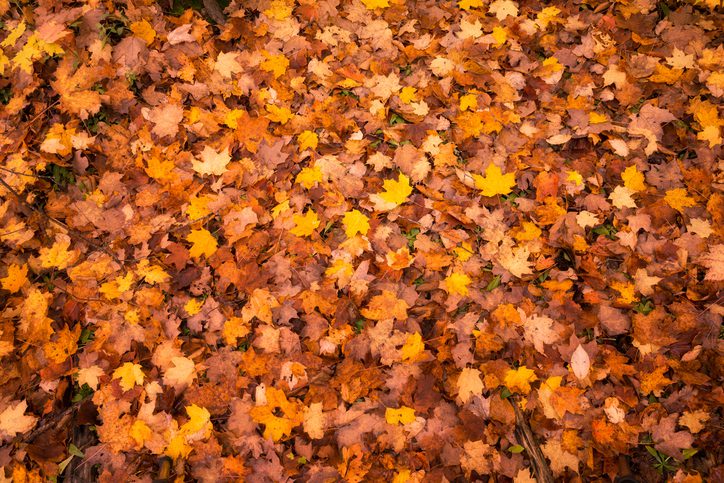
FALL LEAVES AND WATER QUALITY - Fall leaves are beautiful to look at but they can cause problems. They can clog up your gutters, and can also affect your water quality. While leaves are naturally biodegradable, fallen leaves can also transfer phosphorus, nitrogen, and other substances into the ground – and what goes into the ground winds up in your well water. Leaf debris can even create a harmful algae blooms in your water supply.

How Fall Leaves Affect Your Water Quality
....................................................................................................................................
Fall Leaves And Water Quality
How Fall Leaves Affect Your Water Quality
Pinckney Well Drilling and Geothermal


Beautiful fall colors are making their way to the South Carolina Lowcountry.
While the leaves are beautiful to look at, they can cause problems.
You know they can clog up your gutters, but did you know they can also affect your water quality?
Here are some interesting facts from Pinckney Well Drilling on this problem and the benefits of water filtration.
·          Leaf debris contains more than you think. While leaves are naturally biodegradable, fallen leaves can also transfer phosphorus, nitrogen, and other substances into the ground – and what goes into the ground winds up in your well water.
Leaf debris can even create a harmful algae blooms in your water supply.
·         How can you protect your well? The most important thing you can do is to clean up leaves on your property.
When you dispose of them, move them to an area that’s far away from your well.
If you live in a neighborhood, encourage those around you to join in this practice, too. That way everyone’s well water will be purer.
·         Water filtration systems are a great solution. Investing in a whole house water filtration system is another great way to protect your water quality.
One of the many benefits of water filtration is that it acts as a first line of safety for your water supply.
The system you choose will ensure that only the purest water comes out of the tap for drinking, cooking, showering, and other household uses.
If you suspect any type of impurities may be in your water, call Pinckney Well Drilling for a free water analysis.
You can rely on our well drilling company in South Carolina to help you get the best water possible for your family.
Contact us today for service in Charleston, Bluffton, Beaufort, Hilton Head, Kiawah, and surrounding areas of South Carolina, North Carolina, and Georgia.

Pinckney Well Drilling and Geothermal provides water well drilling, geothermal wells, irrigation wells, and water filtration services for the Lowcountry. Contact us for service in the Beaufort and Bluffton, SC area.
How Fall Leaves Affect Your Water Quality

Friday, October 28, 2016

WATER TREATMENT HISTORY - The Romans built dams in rivers, causing lakes to form. The lake water was aerated and then supplied. For water transport, the aqueducts were built. Through these aqueducts water was transported for tens of miles. Plumbing in the city was made of concrete, rock, bronze, silver, wood or lead.

a Roman aquaduct
History of drinking water treatment
.


Humans have been storing and distributing water for centuries. Before, when people lived as hunters/collectors, river water was applied for drinking water purposes.
When people permanently stayed in one place for a long period of time, this was usually near a river or lake. When there were no rivers or lakes in an area, people used groundwater for drinking water purposes. This was pumped up through wells.
When the human population started growing extensively, the water supply was no longer sufficient. Drinking water needed to be extracted from a different source.
About 7000 years ago, Jericho (Israël, figure 1) stored water in wells that were used as sources. People also started to develop drinking water transport systems. The transport took place through simple channels, dug in the sand or in rocks.
Later on one also started using hollow tubes. Egypt used hollow palm trees and China and Japan used bamboo trunks.
Eventually one started using clay, wood and even metal.
In Persia people searched for underground rivers and lakes. The water went through holes in rocks into the wells on the plains.
Around 3000 B.C., the city of Mohenjo-Daro (Pakistan) used a very extensive water supply. In this city there were public bathing facilities with water boiler installations and bathrooms.
In ancient Greece spring water, well water, and rainwater were used very early on. Because of a fast increase in urban population, Greece was forced to store water in wells and transport it to the people through a distribution network.
The water that was used was carried away through sewers, along with the rainwater. When valleys were reached, the water was led through hills under pressure.
The Greek were among the first to gain an interest in water quality. They used aeration basins for water purification.
The Romans were the greatest architects and constructors of water distribution networks in history. They used river, spring or groundwater for provisioning.
The Romans built dams in rivers, causing lakes to form. The lake water was aerated and then supplied. Mountain water was the most popular type of water, because of its quality.
For water transport, the aqueducts were built. Through these aqueducts water was transported for tens of miles. Plumbing in the city was made of concrete, rock, bronze, silver, wood or lead. Water winnings were protected from foreign pollutants.
After the fall of the Roman empire, the aqueducts were no longer used. From 500 to 1500 A.D. there was little development in the water treatment area.
In the Middle Ages countless cities were manifested. In these cities wooden plumbing was used. The water was extracted from rivers or wells, or from outside the city.
bathing residence in Mohenjo-Daro, Pakistan
Soon, circumstances became highly unhygienic, because waste and excrements were discharged into the water. People that drank this water fell ill and often died.
To solve the problem people started drinking water from outside the city, where rivers were unpolluted. This water was carried to the city by so-called water-bearers.
The first drinking water supply that supplied an entire city was built in Paisley, Scotland in 1804 by John Gibb, in order to supply his bleachery and the entire city with water.
Within three years, filtered water was transported to Glasgow.
In 1806 Paris operated a large water treatment plant. The water settled for 12 hours, before it was filtered. Filters consisted of sand and charcoal and were replaced every six hours.
In 1827, the Englishman James Simpson built a sand filter for drinking water purification. Today, we still call this the number one tribute to public health. 

http://www.lenntech.com/processes/disinfection/history/history-drinking-water-treatment.htm.
You might also like:
How Do Hydrologists 
Locate 
Groundwater?
.
Springs - The Water Cycle
Multi-Media Filter, Highly-Activated Carbon Filter,
Zeolite-Process Water Softener With Brine Tank,
Fiberglass Ballast-Type Pressure Tank
(fully automatic backwash & regeneration)
PURICARE 
INDUSTRIAL 
ENTERPRISES 
Water 
Treatment 
Systems
.
.
...
Aganan, Pavia, Iloilo, Philippines