Showing posts with label Advertising. Show all posts

Saturday, November 14, 2020

MNEMONICS - Types of Mnemonics for Better Memory - Mnemonics are memory devices that help learners recall larger pieces of information, especially in the form of lists like characteristics, steps, stages, parts, phases, etc. We knew back in 1967 from a study by Gerald R. Miller that mnemonics increased recall. He found that students who regularly used mnemonic devices increased test scores up to 77%! Many types of mnemonics exist and which type works best is limited only by the imagination of each individual learner. The 9 basic types of mnemonics presented in this handout include Music, Name, Expression/Word, Model, Ode/Rhyme, Note Organization, Image, Connection, and Spelling Mnemonics. The same method you used to recall song lyrics also can work just as well in academics. Music can used to help students recall important details to main ideas and many learners have made songs out of information when a list of items must be learned. Advertising on radio and TV uses music to help potential customers remember their products when shopping. With sufficient repetition of commercials, advertisers have discovered that when shoppers see their product in the stores that often the shopper will start reciting an oft repeated phrases from the commercial or start singing the lyrics to the promotion melody. The results have been increased sales of the product. You can make a song or jingle using any type of music you choose for any list of items.

..........................................................................................................................................................................................................................................................................................................

Mnemonics

9 Types of Mnemonics for Better Memory

By Dennis Congos

University of Central Florida


Mnemonics are memory devices that help learners recall larger pieces of information, especially in the form of lists like characteristics, steps, stages, parts, phases, etc.

We knew back in 1967 from a study by Gerald R. Miller that mnemonics increased recall.

He found that students who regularly used mnemonic devices increased test scores up to 77%!

Many types of mnemonics exist and which type works best is limited only by the imagination of each individual learner.

The 9 basic types of mnemonics presented in this handout include Music, Name, Expression/Word, Model, Ode/Rhyme, Note Organization, Image, Connection, and Spelling Mnemonics.

1. Music Mnemonics 

How many lyrics to songs do you remember? How did you come to remember them?

The same method you used to recall song lyrics also can work just as well in academics.

Music can used to help students recall important details to main ideas and many learners have made songs out of information when a list of items must be learned.

Advertising on radio and TV uses music to help potential customers remember their products when shopping.

With sufficient repetition of commercials, advertisers have discovered that when shoppers see their product in the stores that often the shopper will start reciting an oft repeated phrases from the commercial or start singing the lyrics to the promotion melody.

The results have been increased sales of the product.

You can make a song or jingle using any type of music you choose for any list of items.

Music Mnemonics work best with long lists. For example, some children learn the ABC's by singing the "ABC" song.

Other children learn all the states in alphabetical order using the "50 Nifty United States" song.

2. Name Mnemonics 

In a Name Mnemonic, the 1st letter of each word in a list of items is used to make a name of a person or thing.

Sometimes, the items can be rearranged to form a more recollectable name mnemonic.

Examples:

ROY G. BIV = colors of the spectrum (Red, Orange, Yellow, Green, Blue, Indigo, Violet.)

Pvt. Tim Hall = Essential amino acids (Phenylanine, Valine, Threonine, Tryptophan, Isolucine, Histidine, Arginine, Leucine, Lysine.

3. Expression or Word Mnemonic

This is by far the most popularly used mnemonic.

To make an Expression or Word mnemonic, the first letter of each item in a list is arranged to form a phrase or word. Examples:

For physical laws dealing with gasses, try these:

Charles' Law: For a constant volume, pressure is directly proportional to temperature.

   The simple way to remember Chuck is if the tank's too hot, you're blown into muck.

Henry's Law: The solubility of a gas increases with pressure.

   To remember good old Hank, remember the bubbles in the shaken Coke you drank.

Boyles' Law: At constant temperature, pressure is inversely proportional to volume.

   Boyle's law is best of all because it presses gasses awfully small.

In English, the 7 coordinating conjunctions are For, And, Nor, But, Or, Yet, So = FANBOYS.

The order of operations for math is Parentheses, Exponents, Multiply, Divide, Add, and Subtract = Please Excuse My Dear Aunt Sally.

The categories in the classification of life are Kingdom, Phylum, Class, Order, Family, Genus, Species, Variety = Kings Play Cards On Fairly Good Soft Velvet.

For those who have to remember the order of color coding on electronic resistors: Black, Blue, Red, Orange, Yellow, Green, Brown, Violet, Gray, White, Silver, Gold.

   Bad Boys Rile Our Young Girls, But Violet Gives Welts (to) Silly Guys

or

Bad Beer Rots Our Young Guts But Vodka Goes Well (in) Silver Goblets.

Almost every anatomy class has to remember the eight small bones in the wrist: Navicular, Lunate, Triquetrum, Pisiform, Multongular (Greater), Multongular (Lesser), Capitate, Hamate.

   Never Lick Tilly's Popsicle, Mother Might Come Home.

Create an Expression Mnemonic for remembering the order of the planets from the sun outward: Mercury, Venus, Earth, Mars, Jupiter, Saturn, Uranus, Neptune, and Pluto.

4. Model Mnemonics

In a Model Mnemonic, some type of representation is constructed to help with understanding and recalling important information.


Examples include a circular sequence model, a pyramid model of stages, a pie chart, and a 5-box sequence. Models should be used in addition to words and lists because they make recall at test time much easier.


With a large model such as the Krebs Cycle, it is easier to learn and remember if it is divided into quarters and learned one quarter at a time; hence, the cross hairs.


5. Ode or Rhyme Mnemonics

An Ode or Rhyme Mnemonic puts information in the form of a poem. Examples include:

A commonly used Rhyme Mnemonic for the number of days in each month is:

30 days hath September, April, June, and November.

All the rest have 31

Except February my dear son.

It has 28 and that is fine

But in Leap Year it has 29.

You'd probably prefer your doctor to know the difference between cyanate and cyanide: Cyanate "I ate" and Cyanide "I died." Cyanide is a little fatal.

Remember this one? In 1492, Columbus sailed the ocean blue.

How is your spelling?

I before e except after c

or when sounding like a

in neighbor and weigh

Here is an easy way to remember the nerves: olfactory, optic, oculomotor, trochlear, trigeminal, abducens, facial, acoustic, glassopharyngeal, vagus, spinal accessory and hypoglossal.

On Old Olympus' Towering Tops, A Finn And German Viewed Some Hops

6. Note Organization Mnemonics

The way textbook and lecture notes are organized can inhibit learning and recall or promote it. In the sense that the organization of notes can promote recall, it is a memory device.

Three examples of organizing note formats that promote recall are as follows:

Notecards

Notecards are an easy way to organize main ideas and relevant details to be recalled. If main ideas are formatted into possible test questions, notecards can give learners practice in seeing questions and recalling answers as they must do on exams. 


Front


Back


Outlines 

Outlines clearly separate main ideas from details. This helps organize the information in the mind making it easier to remember.

I. PIAGET'S THEORY

 A. Four Stages

   1. Sensorimotor

   2. Preoperational

   3. Concrete Operations

   4. Formal Operations

 B. Definition of each stage

   1. Sensorimotor means ........ etc.

Cornell System 

The Cornell System is another way to use a Note Organization Mnemonic to promote recall.

A vertical line is drawn 3 inches from the left margin of notebook paper. Main ideas or questions from them are placed to the left of the line and details or answers placed to the right.

Questions      Answers


The topic used here is from How To Study In College (3rd edition) by Walter Pauk, pages 292 300.

7. Image Mnemonics

The information in an Image Mnemonic is constructed in the form of a picture that promotes recall of information when you need it.

The sillier the Image Mnemonic is, the easier it is to recall the related information.

These images may be mental or sketched into text and lecture notes. Don't worry about your artistic ability.

As long as you know what your sketch means, Image Mnemonics will help you learn and remember. Examples:

You can use an Image Mnemonic to remember BAT (the depressant drugs mentioned above - Barbiturates, Alcohol, and Tranquilizers).

   Visualize or sketch in your notes a limp, depressed bat that took Barbiturates, Alcohol, and Tranquilizers.

Picture meeting someone new at a party named John Horsley.

Use an Image Mnemonic to help you remember his name. Visualize a horse sitting on a john: not pretty but effective in recall. No example provided on this one.

What is a numismatist? Visualize a new mist rolling onto a beach from the ocean and beach is made of coins.

   Silly? Of course, but sillyography makes it is easier to remember that a numismatist is a coin collector.

How about using a bad joke to help you remember? Picture two numismatists having a drink for "old dime's sake."

Corny? Yes, but cornography often makes things easier to remember.

8. Connection Mnemonics

In this type of mnemonic, the information to be remembered is connected to something already known.

Examples include:

Remembering the direction of longitude and latitude is easier to do when you realize that lines on a globe that run North and South are long and that coincides with LONGitude.

Another Connection Mnemonic points out that there is an N in LONGitude and an N in North. Latitude lines must run east to west, then because there is no N in latitude.

Another Connection Mnemonic is related to sound. The 1st part of the word latitude sounds like flat and flat runs horizontal or East and West.

9. Spelling Mnemonics

Here is an example of a spelling mnemonic: A principal at a school is your pal, and a principle you believe or follow is a rule.

Another commonly used Spelling Mnemonic is combined with an Ode/Rhyme Mnemonic.

I before e except after c

or when sounding like a

in neighbor and weigh

A third example deals with the problems some learners have remembering that there is an "a" in the middle of separate and not an "e."

   A Spelling Mnemonic combined with an Image Mnemonic may be used to spell the word separate using an exaggerated "a."

To spell Mississippi, many learners combine a Rhythm Mnemonic with a Spelling mnemonic: M-iss-iss-ipp-i.

Here are some more examples of spelling mnemonics:

Geography: George Edwards's Old Grandma Rode A Pig Home Yesterday.

Arithmetic: A Rat In The House May Eat The Ice Cream.

Saskatchewan: Ask At Chew An with an S in front of it.

Dennis Congos

Dennis is currently a learning skills specialist and academic advisor at the University of Central Florida. He has also served as a Supplemental Instruction (SI) Coordinator for 18 years and is a Nationally Certified SI Trainer. He has trained staff from over 100 institutions in setting up and running SI programs. Dennis has consulted on learning skills and SI in England and in Jordan. He has also published 24 articles in professional journals on college level learning skills and SI. He has been director of a counseling center, learning center and career development center and has presented at many conferences on learning skills and SI.

https://www.learningassistance.com/2006/january/mnemonics.html

Monday, September 2, 2019

COCA-COLA - The soft drink was first sold to the public at the soda fountain in Jacob's Pharmacy in Atlanta on May 8, 1886. By the late 1890s, Coca-Cola was one of America's most popular fountain drinks. While the Coca-Cola Company denies this claim, historical evidence shows that it is likely that, until 1905, the soft drink, which was marketed as a tonic, contained extracts of cocaine as well as the caffeine-rich kola nut. Advertising was an important factor in the successful sales of Coca-Cola, and by the turn of the century, the drink was sold across the United States and Canada. Around the same time, the company began selling syrup to independent bottling companies licensed to sell the drink. Even today, the U.S. soft drink industry is organized on this principle.

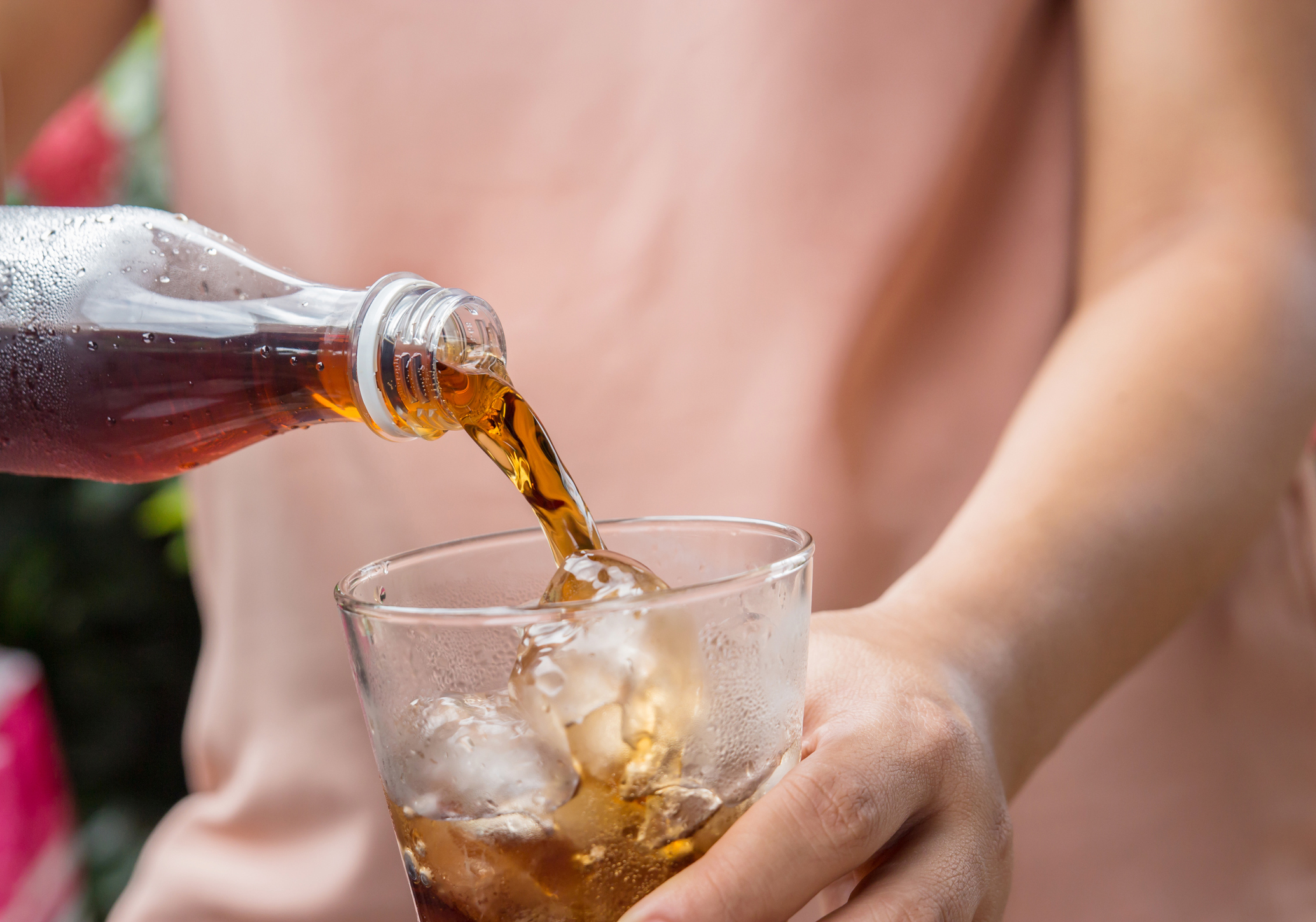
Bottles of Coca Cola
..................................................................................................................
Coca-Cola
The History of Coca-Cola
John Pemberton was the inventor of Coca-Cola
by Mary Bellis 


In May 1886, Coca-Cola was invented by Doctor John Pemberton, a pharmacist from Atlanta, Georgia.
According to the Coca-Cola Company, Pemberton developed the syrup for the famed beverage, which was sampled at the local Jacob's Pharmacy and deemed to be "excellent."
The syrup was combined with carbonated water to create a new "Delicious and Refreshing" drink.
Pemberton concocted the famed Coca-Cola formula in a three-legged brass kettle in his backyard. 
Birth of Coca-Cola
The name of Coca-Cola was a suggestion given by Pemberton's bookkeeper Frank Robinson.
As the recipe for the syrup called for coca leaf extract and caffeine from the kola nut, the name Coca Kola was easy to come up with.
However, Robinson, who was known for having excellent penmanship, thought that using two Cs in the name would look striking in advertising.
As such kola became cola, and the brand name was born.
Robinson can also be credited with creating the first scripted "Coca-Cola" using the flowing letters that serve as the famous logo of today.
The soft drink was first sold to the public at the soda fountain in Jacob's Pharmacy in Atlanta on May 8, 1886.
About nine servings of the soft drink were sold each day.
Sales for that first year added up to a total of about $50.
The first year of business wasn't much of a success, though, as it cost Pemberton over $70 in expenses to create the drink, resulting in a loss.
Asa Candler
In 1887, another Atlanta pharmacist and businessman, Asa Candler, bought the formula for Coca-Cola from Pemberton for $2,300.
Unfortunately, Pemberton died just a few years later.
By the late 1890s, Coca-Cola was one of America's most popular fountain drinks, largely due to Candler's aggressive marketing of the product.
With Candler now at the helm, the Coca-Cola Company increased syrup sales by over 4,000 percent between 1890 and 1900.
While the Coca-Cola Company denies this claim, historical evidence shows that it is likely that, until 1905, the soft drink, which was marketed as a tonic, contained extracts of cocaine as well as the caffeine-rich kola nut.
While cocaine wasn't considered illegal until 1914, according to Live Science, Candler began removing cocaine from the recipe in the early 1900s, and traces of cocaine may have been present in the famous beverage until 1929 when scientists were able to perfect the removal of all psychoactive elements from the coca-leaf extract.
Advertising was an important factor in the successful sales of Coca-Cola, and by the turn of the century, the drink was sold across the United States and Canada.
Around the same time, the company began selling syrup to independent bottling companies licensed to sell the drink.
Even today, the U.S. soft drink industry is organized on this principle.
Death of the Soda Fountain; Rise of the Bottling Industry
Until the 1960s, both small-town and big-city dwellers enjoyed carbonated beverages at the local soda fountain or ice cream saloon.
Often housed in the drugstore, the soda fountain counter served as a meeting place for people of all ages.
Often combined with lunch counters, the soda fountain declined in popularity as commercial ice cream, bottled soft drinks, and fast-food restaurants became popular.
The Birth and Death of New Coke
On April 23, 1985, the trade secret "New Coke" formula was launched in response to declining sales thanks to an increasingly competitive cola market. 
However, the new recipe was considered a failure.
Coca-Cola fans had a negative, some say hostile, reaction to the new recipe, and within three months, the original cola that captured the hearts and tastebuds of the public returned.
The return of the original cola taste came with new branding of Coca-Cola Classic.
New Coke remained on the shelves, and in 1992 was rebranded Coke II, before finally being discontinued in 2002.
As of 2017, Coca-Cola is a publicly-traded Fortune 500 company with more than $41.3 billion in annual revenue.
The company has a workforce of 146,200 employees, and its products are consumed at a rate of more than one billion drinks per day.
Advertising Efforts: "I'd Like to Buy the World a Coke"
In 1969, The Coca-Cola Company and its advertising agency, McCann-Erickson, ended their popular "Things Go Better With Coke" campaign, replacing it with a campaign that centered on the slogan "It's the Real Thing."
Beginning with a hit song, the new campaign featured what proved to be one of the most popular ads ever created.
The song "I'd Like to Buy the World a Coke" was the brainchild of Bill Backer, the creative director on the Coca-Cola As he explained to songwriters Billy Davis and Roger Cook, "I could see and hear a song that treated the whole world as if it were a person — a person the singer would like to help and get to know. I'm not sure how the lyric should start, but I know the last line."
With that he pulled out the paper napkin on which he had scribbled the line, "I'd like to buy the world a Coke and keep it company."
On February 12, 1971, "I'd Like to Buy the World a Coke" was shipped to radio stations throughout the United States.
It promptly flopped. The Coca-Cola bottlers hated the ad and most refused to buy airtime for it.
The few times the ad was played, the public paid no attention.
Backer persuaded McCann to convince Coca-Cola executives that the ad was still viable but needed a visual dimension.
The company eventually approved more than $250,000 for filming, at the time one of the largest budgets ever devoted to a television commercial.
A Commercial Success
The television ad "I'd Like to Buy the World a Coke" was released in the United States in July 1971 and the response was immediate and dramatic.
By November of that year, Coca-Cola and its bottlers had received more than 100,000 letters about the ad.
Demand for the song was so great, many people called radio stations and asked deejays to play the commercial.
"I'd Like to Buy the World a Coke" made a lasting connection with the viewing public.
Advertising surveys consistently identify it as one of the best commercials of all time, and the sheet music continues to sell more than 30 years after the song was written.
A tribute to the success of the campaign, the commercial resurfaced over 40 years after it first launched, making an appearance in the finale of the hit TV show "Mad Men" in 2015.  

Mary Bellis
New York-based film producer and director
Singled out by Forbes magazine for her writing on inventors. 
Known in art and independent film circles by the name CalmX
Creator of computer-generated art
Experience
Mary Bellis was a former writer for ThoughtCo, where she covered inventors for 18 years. She was a freelance writer, film producer, and director.  In addition, Forbes Best of the Web credited her for creating the number one online destination for information about inventors and inventions. Her writing has been reprinted and referenced in numerous educational books and articles. She was known for her short independent  films and documentaries, including one on Alexander Graham Bell. She specialized in making and exhibiting computer-generated art, while working as an animator, journalist and an independent video game developer. She died on March 28, 2015.  
Education
Mary Bellis held a Master of Fine Arts in film and animation from the San Francisco Art Institute.
ThoughtCo and Dotdash
ThoughtCo is a premier reference site focusing on expert-created education content. We are one of the top-10 information sites in the world as rated by comScore, a leading Internet measurement company. Every month, more than 13 million readers seek answers to their questions on ThoughtCo.
For more than 20 years, Dotdash brands have been helping people find answers, solve problems, and get inspired. We are one of the top-20 largest content publishers on the Internet according to comScore, and reach more than 30% of the U.S. population monthly. Our brands collectively have won more than 20 industry awards in the last year alone, and recently Dotdash was named Publisher of the Year by Digiday, a leading industry publication.
https://www.thoughtco.com/history-of-coca-cola-1991477


You might also like:

Pepsi Cola
Image result for images Pepsi TodayThe History of Pepsi Cola
CLICK HERE . . . to view. . . 
............................................................................................. 
Energy Drinks
High amounts of sugar and caffeine can aggravate underlying heart issues, causing fatal arrhythmias
CLICK HERE . . . to view. . .  
........................................................................................................
Coca-Cola And Pot
Is Coca-Cola really putting pot in its beverages?
CLICK HERE . . . to view. . . 
........................................................................................................ 
High Fructose Corn Syrup and the Obesity EpidemicHigh Fructose Corn Syrup and the Obesity Epidemic
CLICK HERE . . . to view. . . 
................................................................................................ 
Santa 
Claus 
and Coca-Cola
CLICK HERE . . . to view. . .  
........................................................................................ 
Santa Claus
The Claus That  
Refreshes 
CLICK HERE . . . to view. . .  


Bottles of Coca Cola