
.................................................................................................................................................................
Asparagus
Health Benefits, Risks
(Stinky Pee) & Nutrition Facts
.
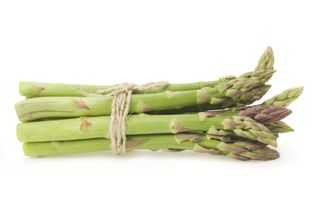 Asparagus can act as
a natural diuretic - this can help rid the body of excess salt and fluid,
making it especially good for people suffering from edema and high blood
pressure. It also helps flush out toxins in kidneys and prevent kidney stones. Asparagus
is known to help stabilize digestion due to the high amount of fiber and
protein that it contains - both help move food through the gut and provide
relief from discomfort during digestion. Asparagus contains inulin, a unique
dietary fiber associated with improved digestion. Inulin is a prebiotic; it
does not get broken down and digested until it reaches the large intestine. There,
it nurtures bacteria known to improve nutrient absorption, decrease allergies
and reduce the risk of colon cancer.
Asparagus can act as
a natural diuretic - this can help rid the body of excess salt and fluid,
making it especially good for people suffering from edema and high blood
pressure. It also helps flush out toxins in kidneys and prevent kidney stones. Asparagus
is known to help stabilize digestion due to the high amount of fiber and
protein that it contains - both help move food through the gut and provide
relief from discomfort during digestion. Asparagus contains inulin, a unique
dietary fiber associated with improved digestion. Inulin is a prebiotic; it
does not get broken down and digested until it reaches the large intestine. There,
it nurtures bacteria known to improve nutrient absorption, decrease allergies
and reduce the risk of colon cancer.
.
Asparagus can act as
a natural diuretic - this can help rid the body of excess salt and fluid,
making it especially good for people suffering from edema and high blood
pressure. It also helps flush out toxins in kidneys and prevent kidney stones. Asparagus
is known to help stabilize digestion due to the high amount of fiber and
protein that it contains - both help move food through the gut and provide
relief from discomfort during digestion. Asparagus contains inulin, a unique
dietary fiber associated with improved digestion. Inulin is a prebiotic; it
does not get broken down and digested until it reaches the large intestine. There,
it nurtures bacteria known to improve nutrient absorption, decrease allergies
and reduce the risk of colon cancer.
By
Jessie Szalay - Live Science Contributor
In ancient times, asparagus was renowned as
an aphrodisiac, and maybe for good reason.
High in vitamin K and folate (vitamin B9),
asparagus is extremely well balanced, even among nutrient-rich vegetables.
"Asparagus is
high in anti-inflammatory nutrients," said San Diego-based nutritionist
Laura Flores.
It also "provides
a wide variety of antioxidant nutrients, including vitamin C, beta-carotene,
vitamin E, and the minerals zinc, manganese and selenium."
Furthermore, the vegetable contains the amino
acid asparagine, which is important in the development and function of the
brain, according to a study published in 2013 in the journal Neuron.
It also contains chromium, a trace mineral
that helps insulin do its job transporting glucose.
It's also especially rich in glutathione, a
detoxifying compound that can help destroy carcinogens.
For this reason, asparagus may help fight or
protect against certain cancers, including bone, breast, lung and colon
cancers.
It can be eaten raw or cooked; however,
cooking times affect health benefits.
A 2011 study published in Food Chemistry
examined blanching (cooking asparagus briefly in boiling water) and saw a
marked difference in the asparagus depending on how long the vegetable was
submerged.
In general, the longer the asparagus was
blanched, the more nutrients it lost, though cooking it for too short a time
resulted in hard stalks.
Furthermore, the tip, middle and bottom
sections of the spears had different sensitivities to blanching times, with the
tip being the most likely to lose nutrients quickly.
The authors of the study therefore recommend
blanching different segments of asparagus for different lengths of time.
Health benefits
Heart health
Asparagus is good for
your ticker in a variety of ways. Flores noted, "Asparagus is extremely
high in vitamin K, which helps blood clot."
Asparagus also has more than 1 gram of
soluble fiber per cup, which lowers the risk of heart disease, and the amino
acid asparagine helps flush your body of excess salt.
Lastly, asparagus has excellent
anti-inflammatory effects and high levels of antioxidants, both of which may
help reduce the risk of heart disease.
Regulating blood sugar
However, those with healthy levels can
benefit from asparagus's ability to regulate it.
Lowering the risk of type 2 diabetes
As with heart disease, risk of type 2
diabetes increases with excessive inflammation and oxidative stress.
Therefore, asparagus' impressive
anti-inflammatory properties and high levels of antioxidants make it a good
preventive food.
A 2011 study published in the British Journal
of Nutrition also suggested that asparagus' ability to improve insulin
secretion and improve beta-cell function also helps lower the risk of type 2
diabetes.
Beta cells are unique cells in the pancreas
that produce, store and release insulin.
Anti-aging benefits
And the folate that asparagus provides works
with B12 to prevent cognitive decline.
A Tufts University study found that older
adults with healthy levels of folate and B12 performed better during a test of
response speed and mental flexibility than those with lower levels of folate
and B12.
Skin
Yet another amazing thing about the antioxidant
glutathione: it helps protect the skin from sun damage and pollution.
A small 2014 study published in Clinical,
Cosmetic, and Investigational Dermatology studied healthy adult women ages
30-50 who applied a glutathione lotion to half their faces and a placebo lotion
to the other half for 10 weeks.
The glutathione side saw increased moisture,
suppressed wrinkle formation and smoother skin. It is unknown if eating
glutathione-rich foods like asparagus would produce a similar effect.
Keeping you cleansed and preventing kidney
stones
Asparagus can act as a natural diuretic,
according to a 2010 study published in the West Indian Medical Journal.
It also helps flush out toxins in kidneys and
prevent kidney stones.
On the other hand, the National Institutes of
Health recommends that people who are suffering from uric acid kidney stones
should avoid asparagus.
Pregnancy health
Flores noted
asparagus' significant amount of folate, which she said "is important
for women of childbearing age to consume daily."
Folate can decrease the risk of neural-tube
defects in fetuses, so it is essential that mothers-to-be get enough of it.
Digestive health
"Asparagus is
known to help stabilize digestion due to the high amount of fiber and protein
that it contains," said Flores.
"Both help move
food through the gut and provide relief from discomfort during digestion."
According to The Ohio State University,
asparagus contains inulin, a unique dietary fiber associated with improved
digestion.
Inulin is a prebiotic; it does not get broken
down and digested until it reaches the large intestine.
There, it nurtures bacteria known to improve
nutrient absorption, decrease allergies and reduce the risk of colon cancer.
Immune system health and cancer risk
Antioxidants and anti-inflammatories, which
are found in great quantities in asparagus, are typically associated with
decreased risk of cancers.
A 2016 review in the journal Nutrients stated
that polysaccharides (carbohydrate molecules) found in asparagus helped inhibit
dangerous liver cancer cell proliferation in animal studies.
When injected with
anti-cancer drugs directly into the tumor, scientists saw "markedly
suppressed liver tumor growth as well as prolonged survival time … with little
toxicity."
A group of phytonutrients called saponins are
found in high qualities in asparagus.
They have both fat-soluble and water-soluble
components, meaning they can affect the body in more ways than some other
phytonutrients can.
They are known for their effects on cell
membranes and immune response.
Today, several animal studies have been done
to learn more about how saponins can inhibit production inflammatory molecules
and promote white blood cell activity.
One such study, published in Biomedicine and
Pharmacology in 2017, proposes that saponins from asparagus might be a helpful
component in preventing secondary tumor formation.
The study looked at the effect of saponins
from asparagus being injected into mice for 56 days and saw an improvement in cellular
immunity without the high allergic reactions typical in drugs used to prevent
secondary tumors.
Risks of eating asparagus
"There are no
life-threatening side effects of eating too much asparagus," said Flores, "but
there may be some uncomfortable side effects such as gas, and a noticeable
smell to the urine."
It is also possible to have an asparagus
allergy, in which case you should not eat it, she said.
People who are allergic to other members of
the lily family, such as onions, garlic, and chives, are more likely to be
allergic to asparagus.
Symptoms include a runny nose, hives, trouble
breathing, and puffiness or swelling around the mouth and lips.
Why does asparagus make urine smell?
According to Smithsonian magazine, asparagus
is the only food to contain the chemical asparagusic acid.
When this aptly named chemical is digested,
it breaks down into sulfur-containing compounds, which have a strong,
unpleasant scent.
They are also volatile, which means that they
can vaporize and enter the air and your nose.
Asparaguisic acid is not volatile, so
asparagus itself doesn't smell.
Scientists aren't entirely sure why this is.
Most evidence seems to suggest that not everyone can smell the odor, though
some scientists think that not everyone produces it.
In 2016, The BMJ medical journal published a
study in which researchers examined data from The Nurses' Health Study, a
large-scale study involving nearly 7,000 participants of European descent, to
help determine if there is a genetic basis for smelling asparagusic acid.
More than half of the participants could not
smell it and researchers found that genetic variations near olfactory receptor
genes was associated with the ability to detect the smell.
The researchers suggested treatments could
potentially be created to turn smellers into non-smellers and thereby increase
the potential for eating healthy asparagus.
Whether you can smell it or not, there are no
harmful effects to producing, or smelling, the odor in urine.
Asparagus facts
According to the Michigan Asparagus Advisory
Board:
Asparagus comes in three varieties: American
and British, which is green; French, which is purple; and Spanish and Dutch,
which is white.
Asparagus was first cultivated about 2,500
years ago in Greece.
"Asparagus" is a Greek word,
meaning stalk or shoot.
The Greeks believed asparagus was an herbal
medicine that would cure toothaches and prevent bee stings, among other things.
Galen, a second-century physician, described
asparagus as "cleansing and healing." Claims for medicinal benefits
of asparagus persist to this day.
The Romans became great lovers of asparagus,
and grew it in high-walled courtyards. In their conquests, they spread it to
the Gauls, Germans, Britons and from there, the rest of the world.
The top asparagus-producing states are
California, Washington and Michigan.
Asparagus spears grow from a crown that is
planted about a foot deep in sandy soils.
Each crown will send spears up for about 6-7
weeks during the spring and early summer.
The outdoor temperature determines how much
time will be between each picking.
Early in the season, there may be four or
five days between pickings and as the days and nights get warmer, a particular
field may have to be picked every 24 hours.
After harvesting is done, the spears grow
into ferns, which produce red berries and the food and nutrients necessary for
a healthy and productive crop the next season.
An asparagus planting is usually not
harvested for the first three years after the crowns are planted, allowing the
crown to develop a strong fibrous root system.
A well-cared-for asparagus planting will
generally produce for about 15 years without being replanted.
The larger the diameter, the better the
quality!
Jessie
Szalay
is a contributing writer for LiveScience and nonfiction editor
of So to Speak Journal. Her work has appeared in The Jewish Daily
Forward, Waccamaw Literary Journal, and National Geographic
Traveler--Personal Explorer, among other places. She lives in Washington, DC and
is working on a book of personal narrative and social inquiry regarding
interfaith issues and non-LDS identity within Utah.

:max_bytes(150000):strip_icc():format(webp)/GettyImages-88829838-5bb3ab474cedfd00268d4966.jpg)