Showing posts with label Hydrogen Sulfide. Show all posts

Friday, July 17, 2020

SCIENCE OF SCENT - How Perfumes Work - Scents are basically made up of specific molecules that we sense through receptors in our nose. These molecules are composed of atoms bonded together by elastic bonds. These molecules, along with their bonds, have the capacity to vibrate at specific frequencies. In order for our olfactory receptors in our noses to sense the specific scent, they must be able to somehow translate this vibration into electrical signals that can be sent to the brain. Our sense of smell is probably the one sense as humans that we so quickly overlook or ignore. This underrated sense shapes our lives in more ways than one and has a far greater influence on our behavior than we realize. Relying on our keen sense of smell, and playing a vital role in cultures all over the world, is scent. Scents are used in perfumes and deodorants, and the various scents tantalizingly play with our complex sense of smell (our “olfactory” sense) to elicit a variety of emotions. Recent research is now shedding light on the precise science behind our perception of different scents. Scents are basically made up of specific molecules that we sense through receptors in our nose. These molecules are composed of atoms bonded together by elastic bonds. These molecules, along with their bonds, have the capacity to vibrate at specific frequencies. The vibration theory attempts to explain how the molecules involved in scents are physically sensed by our noses.

The Science of Scent Marketing • Simple MLM Sponsoring
..............................................................................................................................................
Smelling Flowers
Science Of Scent

How Do Perfumes Work?
.
Science And Research | Scent Marketing | ScentAirScents are basically made up of specific molecules that we sense through receptors in our nose. These molecules are composed of atoms bonded together by elastic bonds. These molecules, along with their bonds, have the capacity to vibrate at specific frequencies. In order for our olfactory receptors in our noses to sense the specific scent, they must be able to somehow translate this vibration into electrical signals that can be sent to the brain.
By Brendan D'mello


Our sense of smell is probably the one sense as humans that we so quickly overlook or ignore.
This underrated sense shapes our lives in more ways than one and has a far greater influence on our behavior than we realize.
Relying on our keen sense of smell, and playing a vital role in cultures all over the world, is scent.
Scents are used in perfumes and deodorants, and the various scents tantalizingly play with our complex sense of smell (our “olfactory” sense) to elicit a variety of emotions.
Recent research is now shedding light on the precise science behind our perception of different scents.
The Vibration Theory
Scents are basically made up of specific molecules that we sense through receptors in our nose.
These molecules are composed of atoms bonded together by elastic bonds. These molecules, along with their bonds, have the capacity to vibrate at specific frequencies.
How do these vibrations result in us sensing the scent?
In order for our noses (more specifically, the olfactory receptors in our noses) to sense the specific scent, they must be able to somehow translate this vibration into electrical signals that can be sent to the brain.
How to remove odors, instead of just hiding them behind nicer ...Basically, the vibrating molecules act as a bridge to help the electrons pass an energy gap.
Therefore, the specific vibrational energies of the different molecules are necessary to activate olfactory pathways that are specific to that scent.
Now, if this vibration theory is correct, molecules that vibrate at similar frequencies should smell the same, right?
This theory was put to the test by biophysicist Luca Turin.
The specific molecule that gives rotten eggs their characteristically awful smell is hydrogen sulfide (sulfur + hydrogen).
It was found that there was one other molecule that vibrated at a similar frequency, which was Borane (boron + hydrogen).
Does this mean that Borane also smells like rotten eggs? The answer is:

Wwe Yes GIF
This sensational discovery gave some serious credibility to the vibration theory, and sent Luca Turin into the commercial world, where a company was created around his theory.
Making Life Easier
The main purpose of research into finding molecules that gave off desired scents was to make an entire set of related molecules and then test them to see how they smelled.
Obviously, this is a very time-consuming way of testing scents, so Luca Turin decided to try his own method.
Since this new method depended on testing the vibrational frequencies of various molecules, the job could easily be done by a computer, which could test thousands of molecules in a relatively short amount of time.
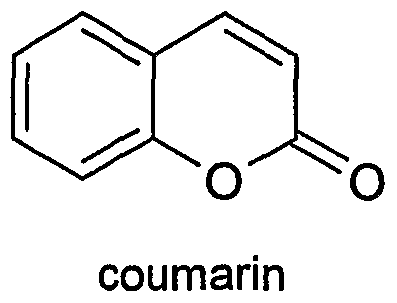
coumarinWhen he was told to come up with an alternative to the molecule coumarin (which gives off a highly desired scent used in men’s perfumes, but which also happens to be carcinogenic), he went in search of other molecules that fit within the same vibrational bracket as coumarin.
What a colleague of Turin found was a molecule that is closely related to coumarin, but which had an additional carbon ring.
Another theory trying to solve the science of scent stated that the scent given off by a particular molecule depends on the shape of that molecule.
If this theory had been correct, it would have meant that the new molecule found by Turin had no chance of smelling the same as coumarin.

luca turin
Luca Turin
Thankfully, Turin was once again correct in his assumptions, and the new molecule, called Tonkene, turned out to smell exactly like coumarin.
That is the main gist of the fascinating vibration theory, which attempts to explain how the molecules involved in scents are physically sensed by our noses.
As you can see, the theory has developed some credibility in the scientific world and the subsequent research done by Turin and his colleagues lends further support to this theory.
That being said, as is so common in the scientific community, there has also been research working against this theory, and the debate on “shape vs. vibration” still rages on.
It will be very interesting to see which one comes out on top.

Brendan has a Bachelors of Science degree in Biotechnology from Mumbai University (India). He likes superheroes, and swears loyalty to members of the Justice League. He likes to take part in discussions regarding the human body, and when he is not doing that, he is generally reading superhero trivia.
https://www.scienceabc.com/innovation/fascinating-theory-explaining-science-scent.html


You might also like:


Rotten Egg Odor In Water
CLICK HERE . . . to view . . . 
https://puricare.blogspot.com/2019/12/rotten-egg-odor-in-water-hydrogen.html
............................................................................................................................................... 

Sweet Scent
Spiritual Aroma
.
CLICK HERE . . . to view . . . 
https://puricarechronicles.blogspot.com/2018/06/sweet-scent-spiritual-aroma-of-christ.html
....................................................................................................................

a sweet-smelling fragrance
CLICK HERE . . . to view . . . 
............................................................................................................................................... 

Fragrance Follows Brokenness
CLICK HERE . . . to view . . . 
....................................................................................................................
 Smelling the Fragrance of God
CLICK HERE . . . to view . . . 
Secret to rose scent surprises scientists | Science News for Students

Saturday, May 16, 2020

PHYSICAL CHARACTERISTICS OF SEWAGE - The normal temperature of sewage is commonly higher than water supply due to domestic and industrial activities. Depending on geographical location, the mean annual temperature of sewage is in the range of 10 to 21°C. Temperature of sewage is an important parameter because of its effect on chemical reaction rates and aquatic life. Increase temperature can cause a change in fish species that are present in water bodies. Similarly, oxygen is less soluble in warm water, while some species of aquatic life population increases with temperature causing more demand of oxygen and result in depletion of dissolved oxygen in summer. Sudden change of temperature cause mortality of species. Fresh sewage is light brownish grey colour. At a temperature of above 20 °C, sewage will change from fresh to old in 2 - 6 hours. The old sewage is converted to dark grey and black color due to anaerobic activities, known as stale or septic color. Some industrial sewage also add color to domestic wastewater. The grey, dark grey and black color is due to formation of sulfide produced under anaerobic conditions reacts with the metals present in wastewater. Fresh domestic sewage has a slightly soapy or oil odour. Stale sewage has a pronounced odour of Hydrogen Sulphide (H2S). The odor at low concentration has no effect, but high concentration causes poor appetite for food, lower water consumption, impaired respiration, vomiting etc.

wastewater treatment | History, Methods, Systems, & Technologies ...
.........................................................................................................................................................
Physical Characteristics of Sewage
By: Haseeb Jamal


Sewage Characteristics
Sewerage characteristics can be divided into three broad categories:
1.    Physical (Temperature, colour, smell, solids)
2.    Chemical (BOD, COD, Nutrients and dissolved solids; and
3.    Biological
Physical Characteristics of Sewage
Following are the detailed physical characteristics of Sewage:
Temperature:
Sewage - Wikipedia
·      The normal temperature of sewage is commonly higher than water supply due to domestic and industrial activities.
Depending on geographical location, the mean annual temperature of sewage is in the range of 10 to 21°C.
Temperature of sewage is an important parameter because of its effect on chemical reaction rates and aquatic life.
·      Increase temperature can cause a change in fish species that are present in water bodies.
·      Similarly, oxygen is less soluble in warm water, while some species of aquatic life population increases with temperature causing more demand of oxygen and result in depletion of dissolved oxygen in summer.
·      Similarly, sudden change of temperature cause mortality of species.
Colour:
·      Fresh sewage is light brownish grey colour.
·      At a temperature of above 20 °C, sewage will change from fresh to old in 2 - 6 hours.
·      The old sewage is converted to dark grey and black color due to anaerobic activities, known as stale or septic color.
·      Some industrial sewage also add color to domestic wastewater.
·      The grey, dark grey and black color is due to formation of sulfide produced under anaerobic conditions reacts with the metals present in wastewater.
Odor:
·      Fresh domestic sewage has a slightly soapy or oil odour.
·      Stale sewage has a pronounced odour of Hydrogen Sulphide (H2S).
·     The odor at low concentration has no effect, but high concentration causes poor appetite for food, lower water consumption, impaired respiration, vomiting etc.
Solids:
·      Solids comprise matter suspended or dissolved in water and wastewater.
·      Solids are divided into several different fractions and their concentration provide useful information for characterization of wastewater and control of treatment processes.
Total solids:
·     Total solids (TS) are the sum of total suspended solids and total dissolved solids (TDS). Each of these groups can further be divided into volatile and fixed fractions.
·      Total solids (TS) is the material left in the evaporation dish after it has dried at 103-105 °C.
·      Total solids can be expressed in mg/L.
Total suspended solids:
·      Total suspended solids (TSS) are referred to as non-filterable residue.
·      It is determined by filtering a well mixed sample through 0.45μm to 2 μm pore sized membrane. The residue retained on the filter is dried in an oven at a temperature of 103-105 °C for at least 1 hour.
·      TSS is expressed in the unit mg/L.
Fixed and Volatile Solids:
·      The residue for total solids, total suspended solids or total dissolved solids tests is ignited to constant weight at 500 oC ± 50.
·      The weight lost on ignition is called volatile solids, whereas the remaining solids represent the fixed total suspended or dissolved solids.
·    The determination of volatile portion of solids is useful in controlling wastewater treatment plant operations because it gives a rough estimation of the amount of organic matter present in the solid fraction of waster water, activated sludge and industrial waste.
Absorption
·      Measure of amount of light, of specified wavelength, absorbed by constituents in solution;
·      Absorbance measured with spectrophotometer using specified wavelength (254 nm)
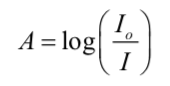
·      Absorbance, measured using spectrophotometer and fixed path length (usually 1 cm) is given by:
absorption RelationshipAbsorbance


where A = absorbance, absorbance units (au)/cm
Io = initial detector reading for blank (distilled water) after passing through solution of known depth I = final detector reading after passing through solution containing constituents of interest
Turbidity
Wastewater quality indicators - Wikipedia·     Measure of light‐transmitting properties of water, used to indicate quality of waste discharges and natural waters with respect to colloidal and residential suspended matter
·      Measurement based on comparison of intensity of light scattered by a sample to the light scattered by reference suspension under same conditions. Formazin suspensions are used as primary reference standard
·      Results of turbidity reported as nephelometric turbidity units (NTU)
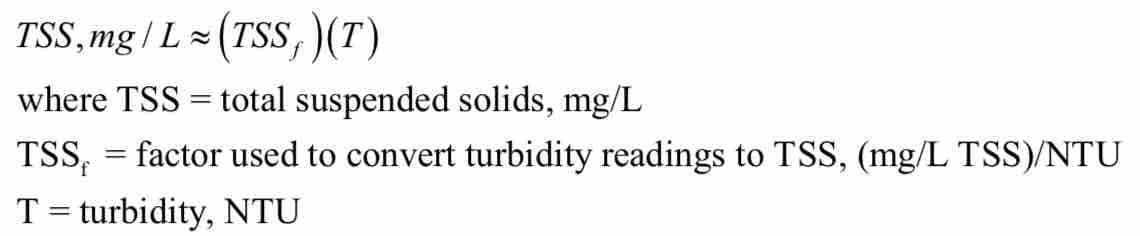
·      Relationship between turbidity and TSS for settled and filtered secondary effluent from activated sludge process:
Relationship between turbidity and TSS for settled and filtered secondary effluent from activated sludge process
·      TSSf vary for each treatment plant; TSSf for settled secondary effluent and for secondary effluent filtered with granular medium depth filter vary from 2.3 to 2.4 and 1.3 to 1.6, respectively
Conductivity
·      Electrical conductivity (EC) is measure of ability of solution to conduct electrical current
·      Electrical current is transported by ions in solution, conductivity increases as concentration of ions increases;
·      EC value is used to substitute measure of TDS concentration; EC of water important parameter to determine its suitability for irrigation;
·      Salinity of treated wastewater to be used for irrigation is estimated by its EC;
·      SI units: millisiemens per meter (mS/m);
·      Estimation of TDS of water sample based on measured EC value:
TDS (mg / L) ≅ EC (dS / m)×(0.55 − 0.70)
Density and Specific Gravity
Physical Characteristics of Sewage also include aspects like density and specific gravity of the sewage.
Density: Mass per unit volume expressed as g/L or kg/m3; density of domestic wastewater is the same as that of water at same temperature;
Specific Gravity: sw =ρw/ρo
where ρw = density of wastewater
ρo = density of water
Both density and specific gravity are temperature dependent and will vary with concentration of TSS in wastewater

Haseeb Jamal. I am a Civil Engineer, graduated from University of Engineering and Technology, Peshawar, Pakistan in 2010. I also have a PG-Diploma in Disaster Management and MS in Urban Infrastructure Engineering (In Progress). My expertise include civil related softwares like AutoCAD, SAP2000, MS Project, Primavera, MS Office and GIS. My technical skills include project management, monitoring and evaluation, structural assessment, disaster risk management, Quantity survey, land survey, material testing, site management and technical writing. I am trained in writing project progress reports as well as proposals and concept papers. I have also received advanced training on surveying, proposal writing, Monitoring and Evaluation of projects as well as organizations.
I have worked as Project Engineer at National Research and Development Foundation, Peshawar and CENCON Associates. I also worked with Spectra Engineering Solutions as Senior Civil Engineer in monitoring of World Bank and UNDP funded projects all over Khyber Pakhtunkhwa and FATA. Currently, I am working as Deputy Manager Development at NayaTel, Peshawar.
3 Characteristics of Sewage - Physical, Chemical and Biological ...

Saturday, December 14, 2019

ROTTEN EGG ODOR IN WATER - Hydrogen Sulfide and Sulfur Bacteria in Well Water - Bacterial slime may be white, grey, black, or reddish brown if associated with iron bacteria (signs of sulfur bacteria). The slime can clog wells, plumbing, and irrigation systems. While sulfur bacteria are not harmful, hydrogen sulfide gas in the air can be harmful at high levels. Black stains on silverware and plumbing fixtures (signs of hydrogen sulfide gas). Hydrogen sulfide gas (H2S) can give water a “rotten egg” taste or odor. Sulfur bacteria produce a slime and can help other bacteria grow, such as iron bacteria. It is important to remove the gas from the water, or vent the gas to the atmosphere. Corrosion on pipes and metal components of the water distribution system (signs of hydrogen sulfide gas). In most cases, the rotten egg smell does not relate to the sanitary quality of the water. In rare instances, the gas may be from sewage or other pollution. To be safe, test your well water for coliform bacteria and nitrate.


.........................................................................................................................................................
Rotten Egg Odor In Water
Why Does My Water Smell Like Rotten Eggs?
Hydrogen Sulfide and Sulfur Bacteria in Well Water
Well Management Program
Minnesota Department of Health


Hydrogen sulfide gas (H2S) can give water a “rotten egg” taste or odor. This gas can occur in wells anywhere and be:
-  Naturally occurring - a result of decay and chemical reactions with soil and rocks.
-  Produced by certain “sulfur bacteria” in the groundwater, well, or plumbing system.
-  Produced by sulfur bacteria or chemical reactions inside of water heaters.
-  From pollution (this is rare).
May Help Other Bacteria Grow
Sulfur bacteria produce a slime and can help other bacteria grow, such as iron bacteria. The slime can clog wells, plumbing, and irrigation systems.
Gas May be Harmful
While sulfur bacteria are not harmful, hydrogen sulfide gas in the air can be harmful at high levels.
It is important to remove the gas from the water, or vent the gas to the atmosphere.
Venting prevents the gas from collecting in low-lying spaces (such as well pits and basements) or enclosed spaces (such as well houses).
Only well professionals should enter a well pit or other enclosed space where hydrogen sulfide gas may be present.
How to Detect
Bacterial slime may be white, grey, black, or reddish brown if associated with iron bacteria (signs of sulfur bacteria).
Black stains on silverware and plumbing fixtures (signs of hydrogen sulfide gas).
Corrosion on pipes and metal components of the water distribution system (signs of hydrogen sulfide gas).
Have your water tested at a laboratory.
Consider Testing Your Water
Image result for images iron bacteria in well waterIn most cases, the rotten egg smell does not relate to the sanitary quality of the water.
In rare instances, the gas may be from sewage or other pollution. To be safe, test your well water for coliform bacteria and nitrate.
What You Can Do
The first step is to find out what the source of the issue is; that will let you know what treatment option is best.
How to Find the Source
After you have been away from your home for a few hours, smell the water coming out of the hot and cold water faucets. Determine which faucets have the “rotten egg” odor.
Flow chart decision tree. Is there a smell from the cold water faucet? If no, the problem is likely in the water heater.
If yes, is there a smell from faucets not connected to the water softener? If no, the problem is likely sulfur bacteria in the water softener.
If yes, is the smell less noticeable after the water runs for a few minutes? If no, the problem is likely hydrogen sulfide gas in the groundwater. If yes, the problem is likely sulfur bacteria in the well or plumbing system.
If the Problem is in the Water Heater
Unless you are very familiar with water heater operation and maintenance, have a plumber or water system professional to do the work.
Replace or remove the magnesium anode. Many water heaters have a magnesium anode, which is attached to a plug located on top of the water heater.
It can be removed by turning off the water, releasing the pressure from the water heater, and unscrewing the plug.
Be sure to plug the hole. Removal of the anode, however, may significantly decrease the life of the water heater.
You may wish to consult with a water heater dealer to determine if a replacement anode made of a different material, such as aluminum, can be installed.
A replacement anode may provide corrosion protection without contributing to the production of hydrogen sulfide gas.
Disinfect and flush the water heater with a chlorine bleach solution. Chlorination can kill sulfur bacteria.
If all bacteria are not destroyed by chlorination, the problem may return within a few weeks.
Increase the water heater temperature to 160 degrees Fahrenheit (71 degrees Celsius) for several hours.
This will destroy the sulfur bacteria. Flushing to remove the dead bacteria after treatment should control the odor problem.
CAUTION: Increasing the water heater temperature can be dangerous. Consult with the manufacturer or dealer regarding an operable pressure relief valve, and for other recommendations. Be sure to lower the thermostat setting and make certain the water temperature is reduced following treatment to prevent injury from scalding hot water and to avoid high energy costs.
How Hydrogen Sulfide Gas is Produced in a Water Heater
A water heater can provide an ideal environment for the conversion of sulfate to hydrogen sulfide gas.
The water heater can produce hydrogen sulfide gas in two ways - creating a warm environment where sulfur bacteria can live, and sustaining a reaction between sulfate in the water and the water heater anode.
A water heater usually contains a metal rod called an "anode," which is installed to reduce corrosion of the water heater tank.
The anode is usually made of magnesium metal, which can supply electrons that aid in the conversion of sulfate to hydrogen sulfide gas.
The anode is 1/2 to 3/4 inches in diameter and 30 to 40 inches long.
If the Problem is in the Well, Plumbing System, or Water Softener
Disinfect the well and plumbing system with a strong chlorine solution. You can hire a licensed well contractor to do this or refer to the Well Disinfection webpage for instructions.
Sulfur bacteria can be difficult to remove once established in a well.
Pre-work (such as scrubbing the well casing, using special treatment chemicals, and agitating the water before disinfection) may be necessary — especially if there are also iron bacteria.
Contact a licensed well contractor to do this pre-work.
If the bacteria are in the water softener or other treatment devices, contact the installer, manufacturer, or Minnesota Department of Health for disinfection instructions.
If the Problem is in Groundwater
Installing home water treatment or drilling a new well in a different formation are both options.
Below are types of home water treatment effective at removing hydrogen sulfide gas. Learn more at the Home Water Treatment webpage.
·   Activated carbon filters are effective for hydrogen sulfide levels less than 1 milligram per liter (mg/L). The gas is trapped by the carbon until the filter is saturated. Since the carbon filter can remove substances in addition to hydrogen sulfide gas, it is difficult to predict its service life. Some large carbon filters have been known to last for years, while some small filters may last for only weeks or even days.
·  The following are options are effective for levels both below and above 1 mg/L.
o Oxidizing media filtration (such as a manganese greensand filter) are effective for hydrogen sulfide levels up to about 6 mg/L. This type of treatment is often used to treat iron problems in water. The device consists of manganese greensand media, which is sand coated with manganese dioxide. The hydrogen sulfide gas in the water is changed to tiny particles of sulfur as it passes through the filter. The filter must be periodically regenerated, using potassium permanganate, before the capacity of the greensand is exhausted.
o  Aeration and filtration.
o  Continuous chlorination and filtration.
o  Ozonation and filtration.

Well Management Program
Approximately 70 percent of all Minnesotans rely on groundwater as their primary source of drinking water, and one million Minnesotans rely on private wells. Wells and borings used for drinking water, irrigation, industry, groundwater monitoring, heat pumps, hydraulic elevators, and other purposes must be properly constructed, maintained, and sealed (filled with an impervious material) when removed from service, to protect both public health and our invaluable groundwater resources.
Image result for images iron bacteria in well waterImage result for images iron bacteria in well water