Showing posts with label Chemistry. Show all posts

Thursday, December 31, 2020

CHEMISTRY BEHIND SPARKLERS - Not all fireworks are created equal. For example, there is a difference between a firecracker and a sparkler: The goal of a firecracker is to create a controlled explosion; a sparkler, on the other hand, burns over a long period of time (up to a minute) and produces a brilliant shower of sparks. A sparkler consists of several substances:An oxidizer - A fuel - Iron, steel, aluminum, or other metal powder - A combustible binder - In addition to these components, colorants, and compounds also may be added to moderate the chemical reaction. Often, charcoal and sulfur are firework fuel, or sparklers may simply use the binder as the fuel. The binder is usually sugar, starch, or shellac. Potassium nitrate or potassium chlorate may be used as oxidizers. Metals are used to create the sparks. Sparkler formulae may be quite simple. For example, a sparkler may consist only of potassium perchlorate, titanium or aluminum, and dextrin. Now that you've seen the composition of a sparkler, let's consider how these chemicals react with each other. Oxidizers produce oxygen to burn the mixture. Oxidizers are usually nitrates, chlorates, or perchlorates. Nitrates are made up of a metal ion and a nitrate ion. Nitrates give up 30% of their oxygen to yield nitrites and oxygen. Chlorates are made up of a metal ion and the chlorate ion. Chlorates give up all of their oxygen, causing a more spectacular reaction. However, this also means they are explosive. Perchlorates have more oxygen in them, but are less likely to explode as a result of an impact than are chlorates. The reducing agents are the fuel used to burn the oxygen produced by the oxidizers. This combustion produces hot gas.

.........................................................................................................................................................................................................................................................................................

The Chemistry Behind Sparklers

By Anne Marie Helmenstine, Ph.D.


Not all fireworks are created equal.

For example, there is a difference between a firecracker and a sparkler: The goal of a firecracker is to create a controlled explosion; a sparkler, on the other hand, burns over a long period of time (up to a minute) and produces a brilliant shower of sparks.

Sparkler Chemistry

A sparkler consists of several substances:

·         An oxidizer

·         A fuel

·         Iron, steel, aluminum, or other metal powder

·         A combustible binder

In addition to these components, colorants, and compounds also may be added to moderate the chemical reaction.

Often, charcoal and sulfur are firework fuel, or sparklers may simply use the binder as the fuel.

The binder is usually sugar, starch, or shellac.

Potassium nitrate or potassium chlorate may be used as oxidizers.

Metals are used to create the sparks. 

Sparkler formulae may be quite simple. For example, a sparkler may consist only of potassium perchlorate, titanium or aluminum, and dextrin.

Now that you've seen the composition of a sparkler, let's consider how these chemicals react with each other.

Oxidizers

Oxidizers produce oxygen to burn the mixture. Oxidizers are usually nitrates, chlorates, or perchlorates.

Nitrates are made up of a metal ion and a nitrate ion.

Nitrates give up 30% of their oxygen to yield nitrites and oxygen. The resulting equation for potassium nitrate looks like this:

2 KNO3(solid) → 2 KNO2(solid) +O2(gas)

Chlorates are made up of a metal ion and the chlorate ion.

Chlorates give up all of their oxygen, causing a more spectacular reaction. However, this also means they are explosive. 

An example of potassium chlorate yielding its oxygen would look like this:

2 KClO3(solid) → 2 KCl(solid) + 3 O2(gas)

Perchlorates have more oxygen in them, but are less likely to explode as a result of an impact than are chlorates.

Potassium perchlorate yields its oxygen in this reaction:

KClO4(solid) → KCl(solid) + 2 O2(gas)

Reducing Agents

The reducing agents are the fuel used to burn the oxygen produced by the oxidizers. This combustion produces hot gas.

Examples of reducing agents are sulfur and charcoal, which react with the oxygen to form sulfur dioxide (SO2) and carbon dioxide (CO2), respectively.

Regulators

Two reducing agents may be combined to accelerate or slow the reaction.

Also, metals affect the speed of the reaction. Finer metal powders react more quickly than coarse powders or flakes.

Other substances, such as cornmeal, also may be added to regulate the reaction.

Binders

Binders hold the mixture together. For a sparkler, common binders are dextrin (a sugar) dampened by water or a shellac compound dampened by alcohol.

The binder can serve as a reducing agent and as a reaction moderator.

How Does a Sparkler Work?

Let's put it all together. A sparkler consists of a chemical mixture that is molded onto a rigid stick or wire.

These chemicals often are mixed with water to form a slurry that can be coated on a wire (by dipping) or poured into a tube.

Once the mixture dries, you have a sparkler.

Aluminum, iron, steel, zinc or magnesium dust or flakes may be used to create the bright, shimmering sparks.

The metal flakes heat up until they are incandescent and shine brightly or, at a high enough temperature, actually burn.

Sometimes sparklers are called snowballs in reference to the ball of sparks that surrounds the burning part of the sparkler.

A variety of chemicals can be added to create colors.

The fuel and oxidizer are proportioned, along with the other chemicals, so that the sparkler burns slowly rather than exploding like a firecracker.

Once one end of the sparkler is ignited, it burns progressively to the other end.

In theory, the end of the stick or wire is suitable to support it while burning.

Important Sparkler Reminders

Obviously, sparks cascading off of a burning stick present a fire and burn hazard; less obviously, sparklers contain one or more metals, so they can present a health hazard.

Sparklers should not be burned on cakes as candles or otherwise used in a manner that could lead to consumption of the ash. So, use sparklers safely and have fun!

Anne Marie Helmenstine, Ph.D.

Chemistry Expert

Education

Ph.D., Biomedical Sciences, University of Tennessee at Knoxville

B.A., Physics and Mathematics, Hastings College

Introduction

Ph.D. in biomedical sciences from the University of Tennessee at Knoxville - Oak Ridge National Laboratory.

Science educator with experience teaching chemistry, biology, astronomy, and physics at the high school, college, and graduate levels.

ThoughtCo and About Education chemistry expert since 2001.

Widely-published graphic artist, responsible for printable periodic tables and other illustrations used in science.

Experience

Anne Helmenstine, Ph.D. has covered chemistry for ThoughtCo and About Education since 2001, and other sciences since 2013. She taught chemistry, biology, astronomy, and physics at the high school, college, and graduate levels. She has worked as a research scientist and also abstracting and indexing diverse scientific literature for the Department of Energy.

In addition to her work as a science writer, Dr. Helmenstine currently serves as a scientific consultant, specializing in problems requiring an interdisciplinary approach. Previously, she worked as a research scientist and college professor. 

Education

Dr. Helmenstine holds a Ph.D. in biomedical sciences from the University of Tennessee at Knoxville and a B.A. in physics and mathematics with a minor in chemistry from Hastings College. In her doctoral work, Dr. Helmenstine developed ultra-sensitive chemical detection and medical diagnostic tests.

ThoughtCo and Dotdash

ThoughtCo is a premier reference site focusing on expert-created education content. We are one of the top-10 information sites in the world as rated by comScore, a leading Internet measurement company. Every month, more than 13 million readers seek answers to their questions on ThoughtCo.

For more than 20 years, Dotdash brands have been helping people find answers, solve problems, and get inspired. We are one of the top-20 largest content publishers on the Internet according to comScore, and reach more than 30% of the U.S. population monthly. Our brands collectively have won more than 20 industry awards in the last year alone, and recently Dotdash was named Publisher of the Year by Digiday, a leading industry publication.

https://www.thoughtco.com/how-do-sparklers-work-607351


You might also like:

.

Chemical Matches

CLICK HERE . . . to view . . . 

https://puricare.blogspot.com/2019/11/history-of-chemical-matches-many.html

...................................................................................................................................................................................................................................................................................

Ghost Lights

CLICK HERE . . . to view . . . 

https://puricare.blogspot.com/2020/06/ghost-lights-sightings-of-mysterious.html

............................................................................................................................................................................................................................................................................................

Spiritual Sparklers

CLICK HERE . . . to view . . . 

https://puricarechronicles.blogspot.com/2020/03/spiritual-sparklers-some-were-twinkling.html

....................................................................................................................................................................................................

Plasma The 4th State Of Matter

CLICK HERE . . . to view . . . 

https://puricare.blogspot.com/2018/01/plasma-4th-state-of-matter-plasma-is.html

............................................................................................................................................................................................................................................................................................

Twin Flames

CLICK HERE . . . to view . . . 

https://puricarechronicles.blogspot.com/2019/01/meeting-your-twin-flame-idea-of-twin.html

............................................................................................................................................................................................................................................................................................

Seeing auras

CLICK HERE . . . to view . . . 

https://puricarechronicles.blogspot.com/2020/09/seeing-auras-spirit-realm-is-real-some.html

Tuesday, September 1, 2020

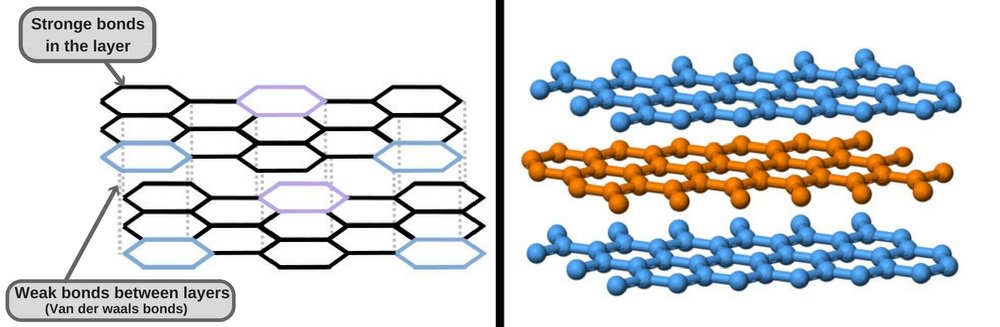
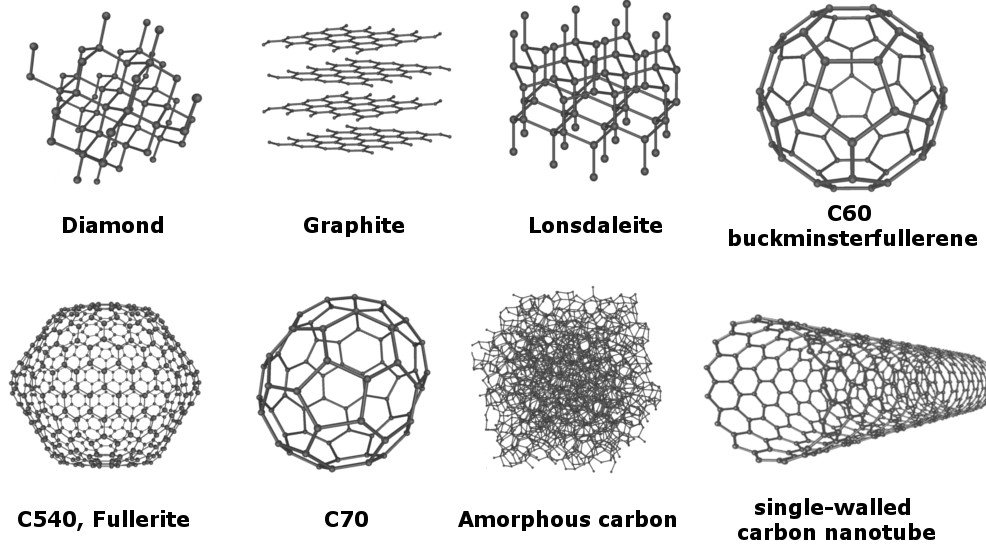
WHY GRAPHITE IS SOFT BUT DIAMOND IS SO HARD - Diamond and graphite are two allotropes of the same element (carbon) and the differences in their properties are a result of the way their crystal structures are arranged. Both diamond and graphite are made of pure carbon, yet they have dramatic differences in their properties. As allotropes of the same element, you might expect them to share many similarities, but that simply isn’t the case. Allotropy (also referred to as ‘allotropism’) of an element is that element’s ability to exist in multiple forms in the same physical state with a different arrangement of its atoms. The different forms are called allotropes of the given chemical element. Allotropes of the same element have different bonding arrangements, which give rise to different chemical and physical properties for the substance. Furthermore, different allotropes can also differ in the occurrence of molecules in the number of atoms. Carbon has the ability to form many allotropes, thanks to its chemical structure. Its atomic number is 6, which means that it has 4 electrons in its valence shell. No less than 8 allotropes of carbon have been identified. Out of all the known allotropes, the most popular ones are diamond and graphite. Although their composition is the same, they exhibit different chemical and physical properties, thanks to the arrangement of carbon atoms within them. It boils down to a single factor: geometry. The arrangement of carbon atoms in diamond follows a tetrahedral fashion. This means that each carbon atom is attached to 4 other carbon atoms, forming strong covalent bonds.

graphite-structure
............................................................................................................................................................
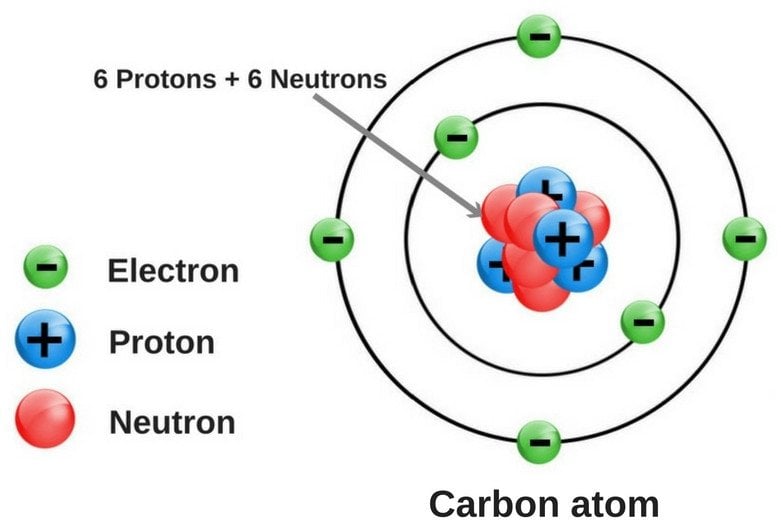
Carbon-atomWhy Is Graphite Soft, But Diamond Is So Hard?
By Ashish


Diamond and graphite are two allotropes of the same element (carbon) and the differences in their properties are a result of the way their crystal structures are arranged.
Both diamond and graphite are made of pure carbon, yet they have dramatic differences in their properties.
As allotropes of the same element, you might expect them to share many similarities, but that simply isn’t the case.
At first, this question might seem odd to many people. Diamond and graphite… doesn’t sound like a particularly sensible combination.
Diamond and gold, or diamond and sapphire would make more sense, right?
So, why is diamond pitted in the same category with graphite – the thing that we find inside our pencils?
Well, if you had paid attention to your Chemistry lessons in high school, you would know that there is, in fact, a very strong structural connection between the two.
What’s the connection between the two? And why are they so different from each other?
What are allotropes?
Allotropy (also referred to as ‘allotropism’) of an element is that element’s ability to exist in multiple forms in the same physical state with a different arrangement of its atoms.
The different forms are called allotropes of the given chemical element.
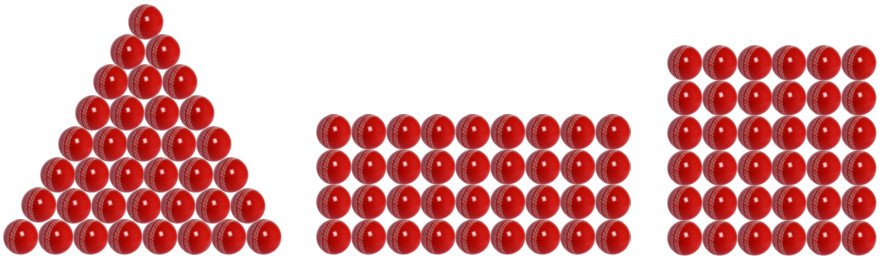
Triangle Rectangle & square shapes 36 ball
Imagine that you have 36 balls that you can arrange in any number of patterns to obtain mutually-visually geometrical shapes.
The constituent pieces of these shapes (balls) represent atoms, and the different shapes they assume (due to their varied arrangements) are the allotropes.
Allotropes of the same element have different bonding arrangements, which give rise to different chemical and physical properties for the substance.
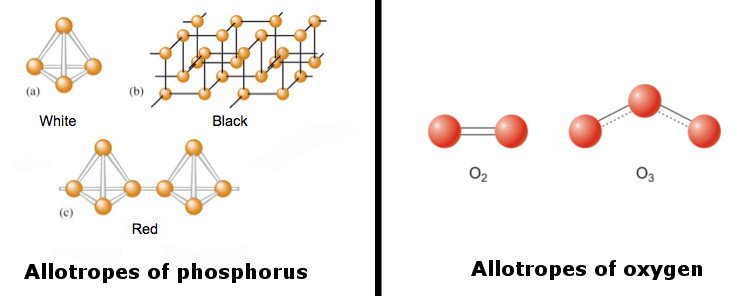
Allotropes of Phosphorus & Allotropes of Oxygen
Furthermore, different allotropes can also differ in the occurrence of molecules in the number of atoms.
The following image features various allotropes of phosphorus and oxygen.
Allotropes of carbon
Carbon-atomIn the world of allotropes, the carbon is nothing less than a rockstar. It has the ability to form many allotropes, thanks to its chemical structure.
Its atomic number is 6, which means that it has 4 electrons in its valence shell.
Eight allotropes of carbon
Different allotropes of carbon
As of now, no less than 8 allotropes of carbon have been identified, and the research for discovering even more allotropes is on.
However, out of all the known allotropes, the most popular ones are diamond and graphite.
These two allotropes, which visually appear incredibly different, are still made of nothing but carbon.
Although their composition is the same, they exhibit different chemical and physical properties, thanks to the arrangement of carbon atoms within them.
Why is diamond hard, but graphite is soft, despite being composed of the same element (carbon)?
It boils down to a single factor: geometry.
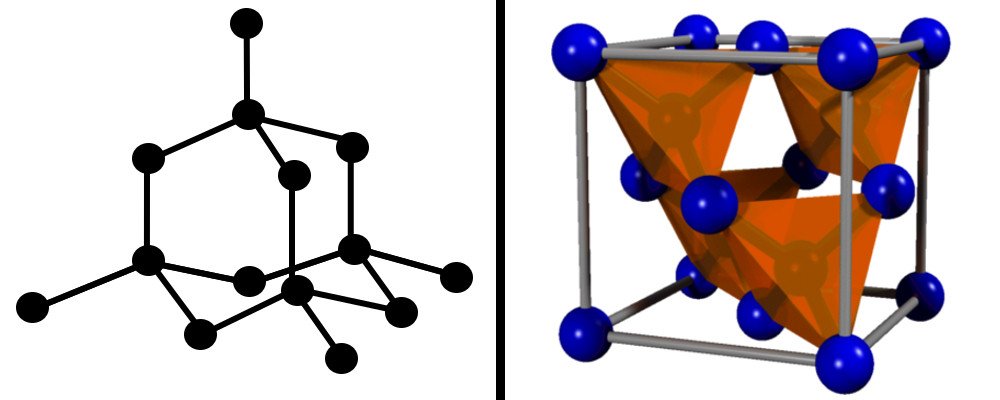
Diamond Structure
Diamond Structure
The arrangement of carbon atoms in diamond follows a tetrahedral fashion. This means that each carbon atom is attached to 4 other carbon atoms, forming strong covalent bonds.
This crystal arrangement is energetically very favorable and imparts that characteristic strength, durability and rigidity to diamond.
To scratch or break it requires a high amount of force, which makes it one of the hardest naturally-occurring materials on the planet.
Graphite, on the other hand, has an entirely different geometric arrangement than diamond.
Its carbon atoms are arranged in 2D sheets, whereas each carbon atom is bonded to three other carbon atoms to form hexagonal rings in an infinite array.
graphite-structure
graphite-structure
Although the bonding of atoms within each individual layer is covalent and therefore quite strong (as strong as is seen in diamond), the bonding between layers is weak (Van der Waals forces).
The result of this is that the layers slide over each and can detach from each other very easily.
These weak bonds between the multiple sheets of carbon atoms make the graphite used in pencils flake off on paper, allowing you to write.
In addition to being soft and slippery, graphite also has a much lower density than diamond.
The one thing about all of this that amazes me most is how a few tweaks in the chemical structure of identical substances make them so massively different in their appearance, toughness and chemical properties!

Ashish is a Science graduate (Bachelor of Science) from Punjabi University (India). He spends a lot of time watching movies, and an awful lot more time discussing them. He likes Harry Potter and the Avengers, and obsesses over how thoroughly Science dictates every aspect of life… in this universe, at least.

Monday, August 17, 2020

CHEMICAL ENGINEERING - Chemical engineering sits at the nexus between science and technology. It's one of the major engineering disciplines. Chemical engineering is applied chemistry. It is the branch of engineering concerned with the design, construction, and operation of machines and plants that perform chemical reactions to solve practical problems or make useful products. It starts in the lab, much like science, yet progresses through the design and implementation of a full-scale process, its maintenance, and methods of testing and improving it. Chemical engineers use math, physics, and economics to solve technical problems. Chemical engineers apply knowledge of chemistry in addition to other engineering disciplines. Chemical engineers sometimes are called 'universal engineers' because their scientific and technical mastery is so broad. You could consider a chemical engineer to be a type of engineer who knows a lot of science. Another perspective is that a chemical engineer is a practical chemist. Some chemical engineers make designs and invent new processes. Some construct instruments and facilities. Some plan and operate facilities. Chemical engineers also make chemicals. Chemical engineers have helped develop atomic science, polymers, paper, dyes, drugs, plastics, fertilizers, foods, petrochemicals, pretty much everything you can imagine. They devise ways to make products from raw materials and ways to convert one material into another useful form.

An engineer by a chemical plant
...................................................................................................................................................................
Chemical Engineering
What Is Chemical Engineering?
By Anne Marie Helmenstine, Ph.D.


Chemical engineering sits at the nexus between science and technology. It's one of the major engineering disciplines.
Take a look at what exactly chemical engineering is, what chemical engineers do, and how to become a chemical engineer.
What Is Chemical Engineering?
Chemical engineering is applied chemistry. It is the branch of engineering concerned with the design, construction, and operation of machines and plants that perform chemical reactions to solve practical problems or make useful products.
It starts in the lab, much like science, yet progresses through the design and implementation of a full-scale process, its maintenance, and methods of testing and improving it.
What Is a Chemical Engineer?
Like all engineers, chemical engineers use math, physics, and economics to solve technical problems.
The difference between chemical engineers and other types of engineers is that they apply knowledge of chemistry in addition to other engineering disciplines.
Chemical engineers sometimes are called 'universal engineers' because their scientific and technical mastery is so broad.
You could consider a chemical engineer to be a type of engineer who knows a lot of science.
Another perspective is that a chemical engineer is a practical chemist.
What Do Chemical Engineers Do?
Some chemical engineers make designs and invent new processes.
Some construct instruments and facilities. Some plan and operate facilities.
Chemical engineers also make chemicals.
Chemical engineers have helped develop atomic science, polymers, paper, dyes, drugs, plastics, fertilizers, foods, petrochemicals, pretty much everything you can imagine.
They devise ways to make products from raw materials and ways to convert one material into another useful form.
Chemical engineers can make processes more cost-effective or more environmentally friendly or more efficient.
Chemical engineers also teach, work with the law, write, create new companies, and perform research.
As you can see, a chemical engineer can find a niche in any scientific or engineering field.
While the engineer often works in a plant or lab, she's also found in the boardroom, office, classroom, and out at field locations.
Chemical engineers are in high demand, so they typically command higher salaries than chemists or other types of engineers.
What Skills Does a Chemical Engineer Need?
Chemical engineers work in teams, so an engineer needs to be able to work and communicate with others.
Chemical engineers study mathematics, energy and mass transfer, thermodynamics, fluid mechanics, separation technology, matter and energy balances, and other topics of engineering, plus they study chemical reaction kinetics, process design, and reactor design.
A chemical engineer needs to be analytical and meticulous.
Someone who is great at chemistry and math and loves solving problems would enjoy the discipline.
Typically, chemical engineering progresses to a masters degree because there's so much to learn.
More About Chemical Engineering
If you'd like to learn more about chemical engineering, start with reasons to study it.
View the chemical engineer job profile and learn how much money an engineer makes. There's also a handy list of types of jobs in chemical engineering.

Anne Marie Helmenstine, Ph.D.
Chemistry Expert
Education
Ph.D., Biomedical Sciences, University of Tennessee at Knoxville
B.A., Physics and Mathematics, Hastings College
Introduction
Ph.D. in biomedical sciences from the University of Tennessee at Knoxville - Oak Ridge National Laboratory.
Science educator with experience teaching chemistry, biology, astronomy, and physics at the high school, college, and graduate levels.
ThoughtCo and About Education chemistry expert since 2001.
Widely-published graphic artist, responsible for printable periodic tables and other illustrations used in science.
Experience
Anne Helmenstine, Ph.D. has covered chemistry for ThoughtCo and About Education since 2001, and other sciences since 2013. She taught chemistry, biology, astronomy, and physics at the high school, college, and graduate levels. She has worked as a research scientist and also abstracting and indexing diverse scientific literature for the Department of Energy.
In addition to her work as a science writer, Dr. Helmenstine currently serves as a scientific consultant, specializing in problems requiring an interdisciplinary approach. Previously, she worked as a research scientist and college professor. 
Education
Dr. Helmenstine holds a Ph.D. in biomedical sciences from the University of Tennessee at Knoxville and a B.A. in physics and mathematics with a minor in chemistry from Hastings College. In her doctoral work, Dr. Helmenstine developed ultra-sensitive chemical detection and medical diagnostic tests.
ThoughtCo and Dotdash
ThoughtCo is a premier reference site focusing on expert-created education content. We are one of the top-10 information sites in the world as rated by comScore, a leading Internet measurement company. Every month, more than 13 million readers seek answers to their questions on ThoughtCo.
For more than 20 years, Dotdash brands have been helping people find answers, solve problems, and get inspired. We are one of the top-20 largest content publishers on the Internet according to comScore, and reach more than 30% of the U.S. population monthly. Our brands collectively have won more than 20 industry awards in the last year alone, and recently Dotdash was named Publisher of the Year by Digiday, a leading industry publication.
..An engineer by a chemical plant

Saturday, September 14, 2019

ENTHALPY DEFINITION IN CHEMISTRY AND PHYSICS - Enthalpy is the sum of the internal energy added to the product of the pressure and volume of the system. It reflects the capacity to do non-mechanical work and the capacity to release heat. Change in enthalpy is calculated rather than enthalpy, in part because total enthalpy of a system cannot be measured. However, it is possible to measure the difference in enthalpy between one state and another. Enthalpy change may be calculated under conditions of constant pressure.

Enthalpy in an Internal Combustion Engine Is Calculated as Internal Energy Plus Pressure Multiplied by Volume.
...........................................................................................................................
Enthalpy
Definition in Chemistry and Physics
by Anne Marie Helmenstine, Ph.D. 


Enthalpy is a thermodynamic property of a system.
It is the sum of the internal energy added to the product of the pressure and volume of the system.
It reflects the capacity to do non-mechanical work and the capacity to release heat.
Enthalpy is denoted as H; specific enthalpy denoted as h. Common units used to express enthalpy are the joule, calorie, or BTU (British Thermal Unit.)
Enthalpy in a throttling process is constant.
Change in enthalpy is calculated rather than enthalpy, in part because total enthalpy of a system cannot be measured.
However, it is possible to measure the difference in enthalpy between one state and another. Enthalpy change may be calculated under conditions of constant pressure.
Enthalpy Formulas
H = E + PV
where H is enthalpy, E is internal energy of the system, P is pressure, and V is volume
d H = T d S + P d V
What Is the Importance of Enthalpy?
·          Measuring the change in enthalpy allows us to determine whether a reaction was endothermic (absorbed heat, positive change in enthalpy) or exothermic (released heat, negative change in enthalpy.)
·         It is used to calculate the heat of reaction of a chemical process.
·          Change in enthalpy is used to measure heat flow in calorimetry.
·          It is measured to evaluate a throttling process or Joule-Thomson expansion.
·          Enthalpy is used to calculate minimum power for a compressor.
·         Enthalpy change occurs during a change in the state of matter.
·          There are many other applications of enthalpy in thermal engineering.
Example Change in Enthalpy Calculation
You can use the heat of fusion of ice and heat of vaporization of water to calculate the enthalpy change when ice melts into a liquid and the liquid turns to a vapor.
The heat of fusion of ice is 333 J/g (meaning 333 J is absorbed when 1 gram of ice melts.) The heat of vaporization of liquid water at 100°C is 2257 J/g.
Part A: Calculate the change in enthalpy, ΔH, for these two processes.
H2O(s) → H2O(l); ΔH = ?
H
2O(l) → H2O(g); ΔH = ?
Part B: Using the values you calculated, find the number of grams of ice you can melt using 0.800 kJ of heat.
Solution
A. The heats of fusion and vaporization are in joules, so the first thing to do is convert to kilojoules. Using the periodic table, we know that 1 mole of water (H2O) is 18.02 g. Therefore:
fusion ΔH = 18.02 g x 333 J / 1 g
fusion ΔH = 6.00 x 10
3 J
fusion ΔH = 6.00 kJ
vaporization ΔH = 18.02 g x 2257 J / 1 g
vaporization ΔH = 4.07 x 10⁴ J
vaporization ΔH = 40.7 kJ
So the completed thermochemical reactions are:
H2O(s) → H2O(l); ΔH = +6.00 kJ
H
2O(l) → H2O(g); ΔH = +40.7 kJ
B. Now we know that:
1 mol H2O(s) = 18.02 g H2O(s) ~ 6.00 kJ
Using this conversion factor:
0.800 kJ x 18.02 g ice / 6.00 kJ = 2.40 g ice melted
Answer
A. H2O(s) → H2O(l); ΔH = +6.00 kJ
H2O(l) → H2O(g); ΔH = +40.7 kJ
B. 2.40 g ice melted

Anne Marie Helmenstine, Ph.D.
Introduction
Ph.D. in biomedical sciences from the University of Tennessee at Knoxville - Oak Ridge National Laboratory.
Science educator with experience teaching chemistry, biology, astronomy, and physics at the high school, college, and graduate levels.
ThoughtCo and About Education chemistry expert since 2001.
Widely-published graphic artist, responsible for printable periodic tables and other illustrations used in science.
Experience
Anne Helmenstine, Ph.D. has covered chemistry for ThoughtCo and About Education since 2001, and other sciences since 2013. She taught chemistry, biology, astronomy, and physics at the high school, college, and graduate levels. She has worked as a research scientist and also abstracting and indexing diverse scientific literature for the Department of Energy.
In addition to her work as a science writer, Dr. Helmenstine currently serves as a scientific consultant, specializing in problems requiring an interdisciplinary approach. Previously, she worked as a research scientist and college professor. 
Education
Dr. Helmenstine holds a Ph.D. in biomedical sciences from the University of Tennessee at Knoxville and a B.A. in physics and mathematics with a minor in chemistry from Hastings College. In her doctoral work, Dr. Helmenstine developed ultra-sensitive chemical detection and medical diagnostic tests.
ThoughtCo and Dotdash
ThoughtCo is a premier reference site focusing on expert-created education content. We are one of the top-10 information sites in the world as rated by comScore, a leading Internet measurement company. Every month, more than 13 million readers seek answers to their questions on ThoughtCo.
For more than 20 years, Dotdash brands have been helping people find answers, solve problems, and get inspired. We are one of the top-20 largest content publishers on the Internet according to comScore, and reach more than 30% of the U.S. population monthly. Our brands collectively have won more than 20 industry awards in the last year alone, and recently Dotdash was named Publisher of the Year by Digiday, a leading industry publication.

Enthalpy in an Internal Combustion Engine Is Calculated as Internal Energy Plus Pressure Multiplied by Volume.