Showing posts with label Bird Strikes. Show all posts

Saturday, January 18, 2020

HOW PILOTS CHOOSE AN EMERGENCY LANDING SPOT - Choosing a place to land in an emergency can be difficult, and pilots may have to take many factors into consideration, including automobile traffic on the ground, surrounding terrain and obstacles, wind direction and speed, the plane's altitude, and the glide distance of the aircraft (the distance the plane can travel without engines). The two best options are usually a field or a road, with other possibilities generally proving more hazardous to the plane's passengers and crew and to people on the ground. Engine failure due to fuel starvation is probably the most common reason, but an off-field landing can be the result of structural failure, an engine or cockpit fire, a bird strike, or any of a number of other emergency situations. A paved or a dirt road that's not in use is an obvious choice for an off-field landing. But pilots need to be on the lookout for obstacles like fence posts and power lines that may not be visible until they're very close.

People at Maho Beach Watching Landing Plane
..............................................................................................................................................................
Emergency Landing Spots
How Pilots Choose an Emergency Landing Spot in an Airplane
BY SARINA HOUSTON


During flight training, student pilots spend many hours practicing emergency or "off-field" landings so they'll be prepared in the event they have to perform one in real life.
There are several reasons why pilots might have to put an airplane down in a field, on a road, or somewhere else outside of an airport.
Engine failure due to fuel starvation is probably the most common reason, but an off-field landing can be the result of structural failure, an engine or cockpit fire, a bird strike, or any of a number of other emergency situations.
Choosing a place to land in an emergency can be difficult, and pilots may have to take many factors into consideration, including automobile traffic on the ground, surrounding terrain and obstacles, wind direction and speed, the plane's altitude, and the glide distance of the aircraft (the distance the plane can travel without engines).
The two best options are usually a field or a road, with other possibilities generally proving more hazardous to the plane's passengers and crew and to people on the ground.
Fields
Fields are usually very good options for forced landings. They're wide open, empty, and unpopulated.
They're often flat and free of obstacles and offer plenty of space for a long landing if the pilot overshoots.
But pilots must be cautious even in fields. They can have hidden obstacles like fence posts and irrigation lines.
And depending on what's growing, the pilot may be in for a bumpy landing. A cornfield, for example, might actually destroy an airplane, while a mowed hayfield might cushion the landing.
And a freshly tilled field might look inviting to a pilot, but if it's wet enough, it will probably cause the airplane to sink into the mud and then cartwheel.
Roads
Roads can be good landing sites, but only if there are no cars or pedestrians on them.
Pilots should always choose a field over a road if there are cars or the possibility of cars on the road because they're responsible for not becoming a hazard to people on the ground.
A paved or a dirt road that's not in use is an obvious choice for an off-field landing.
But as with any other landing site, pilots need to be on the lookout for obstacles like fence posts and power lines that may not be visible until they're very close.
Other Landing Areas
Besides a field or a road, there are a few other suitable landing areas that might help minimize the destruction of the plane and save lives.
Pilots might look for beaches, dried lake beds, shorelines, dirt patches, or any other type of flat terrain.
A beach is a fine option for pilots as long as there aren't any people around.
The sound of the waves could mask the noise of the engine — if it's working — and people might not see the plane coming.
Pilots should avoid hilly or rocky terrain if at all possible. A level surface is crucial for landing.
When There Is Nowhere to Go
If pilots have no good landing spots in sight, they shouldn't panic. Many pilots have landed aircraft on top of trees or in water and lived to talk about it.
If a pilot is over a forested area and a tree landing is inevitable, they should prepare the aircraft for an emergency landing and concentrate on making the approach as slow and as stable as possible.
A slow approach near stall speed with minimal descent rate and minimal forward speed will increase their chances of survival and minimize wreckage.
Ditching on water might be one of the most challenging of all of the potential emergency scenarios.
A water landing requires a bit more finesse in order to not cartwheel or flip over.
With too much speed or in an uncontrolled state, a water impact can be like hitting a wall.
But a nice controlled landing might mean passengers and crew will survive, as long as they can swim to shore or have a life vest and the water isn't too cold.
In all cases, the most important thing for pilots to do is to continue to fly the plane.
No matter where they are, a controlled approach and landing is better than a crash and subsequent fire.

The Balance Careers makes navigating your career easy. It is home to experts who provide clear, practical advice on job searching, resume writing, salary negotiations, and other career planning topics. Whether you're looking to find a new job, advance at your current position, or explore new paths, our 20-year-strong library of more than 10,000 pieces of content will help you take your career to the next level.
The Balance is part of The Balance family of sites, including The Balance and The Balance Small Business, covering personal finance, career, and small business topics. With more than 24 million monthly visitors, The Balance is among the top-10 largest finance properties as measured by comScore, a leading Internet measurement company. Our more than 50 expert writers have extensive qualifications and expertise in their topics, including MBAs, PhDs, CFPs, other advanced degrees and professional certifications.
The Balance family of sites have been honored by multiple awards in the last year, including The Telly AwardsThe Communicator Awards, and Eppy Awards.
People at Maho Beach Watching Landing Plane

Friday, July 12, 2019

BIRD STRIKES ON AIRCRAFTS - Bird strikes usually occur when an airplane is flying at low altitudes. Therefore, the most favorable conditions for a bird strike are during take-offs or landings (or other related phases) of airplanes. The reason for this is obvious; most birds fly at low altitudes, to there is a greater risk of hitting an airborne machine. Birds usually collide with any of the forward-facing edges of an airplane, which include the wings, nose cone, and the most common site – the jet engine. The most dangerous conditions arise when a bird hits the turbine and gets caught in the engine; this event is referred to as a jet engine ingestion (since the bird is ‘ingested’ by the engine). After being ‘stuck’ in the engine, the bird can cause a disruption in the rotatory motion of the fan blades, resulting in a partial or complete failure of that engine.

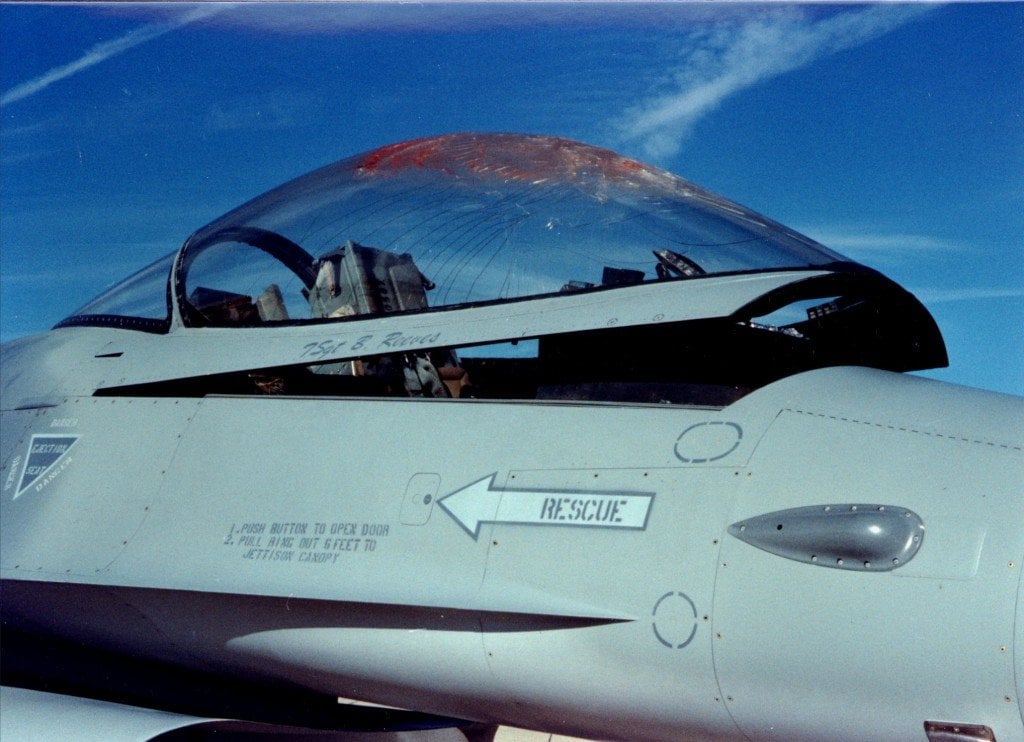
cracked canopy of a F-16 after a bird strike
............................................................................................................................................
Bird Strikes On Aircrafts
What Really Happens When A Bird Hits An Airplane?
Ashish


Bird strikes can sometimes result in loss of thrust in the engine(s) or the cracking of the surface of the canopy or windshield.
These cracks can sometimes disrupt the air pressure inside the cabin and result in altitude loss or other flight-related problems.
Human beings are constantly threatened by a number of potential hazards; and the more we invent, the more we become vulnerable to the failures of our inventions.
Presently, the number of threats that concern us are so great in number that it is foolish to even try to make a complete list.
Let’s narrow this down a bit more and talk about the threats of flying through the air in a giant metal-and-fiber container or, in other words, an airplane.
The threat: bird strikes!
What’s a Bird Strike?
The event of an airborne animal (usually a bird or a bat) hitting an airplane in flight is referred to as a bird strike.
It is known by a few other names as well, like a bird hit, bird ingestion or BASH (for Bird Aircraft Strike Hazard).
Bird strikes also happen to other man-made objects on land, such as cars, power lines and wind turbines, which usually result in death for the birds.
The first ever case of a bird strike was reported by Orville Wright (one of the Wright brothers who are credited with inventing and flying the world’s first successful airplane) in 1905- that’s 114 years ago (from the current year – 2019)!
But interestingly, the strike wasn’t totally accidental.
Orville was flying circles near a cornfield in Ohio; he had apparently been chasing flocks of birds before he hit one. The dead bird lay on the wing of his airplane until he made a sharp turn to dump it off.
Although bird strikes pose a sizable threat to flight safety, the number of major accidents caused due to bird strikes are quite low.
The majority of bird strikes do little damage to the affected airplane, but these collisions are almost always fatal to the birds involved in the accident.
The Most Vulnerable Phase of Flight
Although it’s true that there is no way you can be completely sure of avoiding a bird strike (unless you are flying in a world where there are no aerial animals, which currently is unknown).
Bird strikes usually occur when an airplane is flying at low altitudes.
Therefore, the most favorable conditions for a bird strike are during take-offs or landings (or other related phases) of airplanes.
The reason for this is obvious; most birds fly at low altitudes, to there is a greater risk of hitting an airborne machine.
However, this doesn’t mean that there are no birds flying higher than “normal” altitudes; in fact, bird strikes have also been reported at higher altitudes of around 6000 meters (20,000 feet) to 9000 m (30,000 feet).
The world record for a bird strike at the highest altitude ever is a staggering 11,300 meters (that’s 11.3 kilometers) above the ground!
What Happens During a Bird Strike?
Birds usually collide with any of the forward-facing edges of an airplane, which include the wings, nose cone, and the most common site – the jet engine.
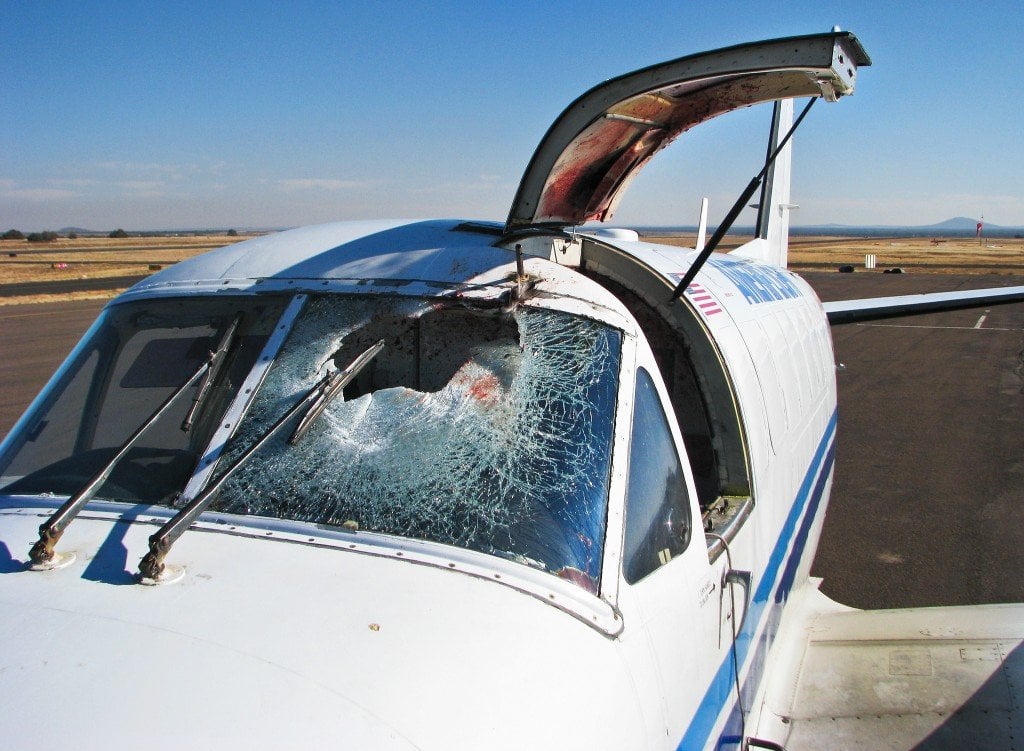
There have been cases of birds hitting the windshield or canopy of airbuses and fighter jets, which can (sometimes) result in the cracking of the surface of the canopy or windshield.
These cracks can sometimes disrupt the air pressure inside the cabin and result in altitude loss or other flight-related problems.
The severity of the damage done by the bird strike depends on a few factors, including speed difference, direction of impact, and the weight and size of the bird.
To put it in perspective, consider a 5-kilogram bird hitting an airplane at a relative velocity of 275 km/h.
Can you figure out how much of an impact this translates into?
That impact is equivalent to the energy of a 100-kg bag being dropped from a height of 15 meters!
Imagine what it would feel like to be hit by a sac weighing 100 kg from that height. Go on, take a few seconds and imagine it for yourself. Not too pleasant!
The most dangerous conditions arise when a bird hits the turbine and gets caught in the engine; this event is referred to as a jet engine ingestion (since the bird is ‘ingested’ by the engine).
After being ‘stuck’ in the engine, the bird can cause a disruption in the rotatory motion of the fan blades, resulting in a partial or complete failure of that engine.
Now, what can a sudden failure of one of the engines do to an airplane, you may ask? Let’s not even talk about it.
Flocks of birds are even more dangerous, as they can have a much nastier impact collectively.
The Miracle on the Hudson
There have been many cases of bird strike incidents, but the one that got a lot of attention was the case of US Airways Flight 1549.
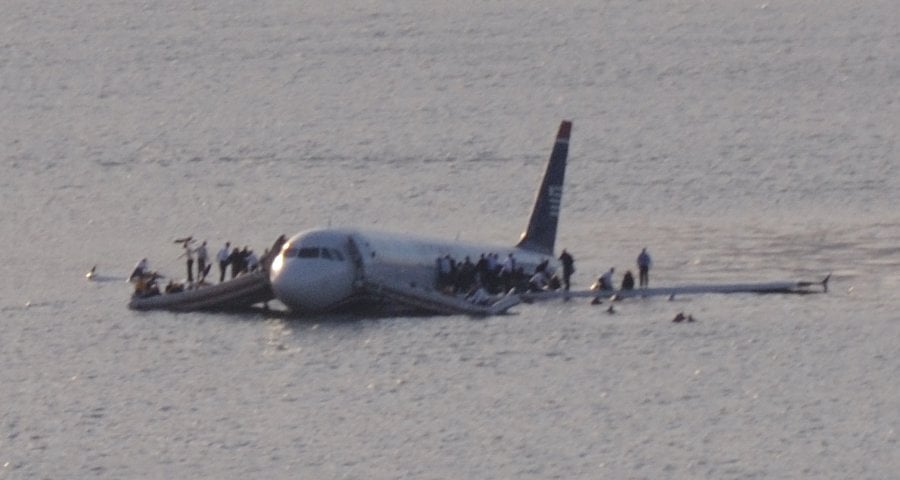
Back on January 15, 2009, an airplane (Airbus 320) made a miraculous unpowered landing in the Hudson River after being hit by a flock of birds shortly after taking off from LaGuardia Airport in New York City.
Quite incredibly, not a single casualty was reported. There is no surprise why this event is known as the “Miracle on the Hudson”.
Although no lives were lost, this event did underline the catastrophic failure that bird strikes can actually cause to an airborne machine, even one as huge as an Airbus!

Ashish is a Science graduate (Bachelor of Science) from Punjabi University (India). He spends a lot of time watching movies, and an awful lot more time discussing them. He likes Harry Potter and the Avengers, and obsesses over how thoroughly Science dictates every aspect of life… in this universe, at least.
The downed Airbus 1549

Damaged windshield due to a bird strike

The downed Airbus 1549

cracked canopy of a F-16 after a bird strike
The cracked canopy of a F-16 after a bird strike