Showing posts with label Scents. Show all posts

Wednesday, February 10, 2021

POTPOURRI - Potpourri is a natural air freshener made from dried flowers, leaves, seeds and cones. Pronounced po-pur-ree, it is used to make rooms and cupboards smell fresh. Anything can be added to potpourri as long as it is dry, to ensure that the contents last longer and do not become moldy. Potpourri can be arranged in bowls or stuffed into small cotton pillows to be hung in cupboards. Cinnamon sticks can be added to give potpourri a spicy scent. Other uses for potpourri include masking the smell of mothballs in cupboards and deterring insects. Sachets can be placed in drawers or in shoes to leave a fresh scent. You can place loose potpourri in ashtrays in cars and in the fillings of soft toys. Scent is also usually added to the dried flowers and can be sprayed on every few days to be absorbed into the flowers. A fixative is necessary to absorb the scent, and the most often used is orrisroot. Other types of fixative include calamus root, dry lavender, tonka bean and sandalwood bark. There are also powdered fixatives, but these are usually used in sachets of potpourri. The powder will not look good on an open decorative arrangement and will not hold the scent as well as the chopped fixatives. Lavender is a popular addition to potpourri. There are many different scents and oils that can be used in a potpourri arrangement. If you have knowledge of aromatherapy, you can select different scents to create a mood or atmosphere in a room.

......................................................................................................................................................................................................................................................................................................................................................................................

Potpourri

What is Potpourri?

Garry Crystal


 Tonka beans, which is sometimes used in potpourri.

Potpourri is a natural air freshener made from dried flowers, leaves, seeds and cones.

Pronounced po-pur-ree, it is used to make rooms and cupboards smell fresh.

Anything can be added to potpourri as long as it is dry, to ensure that the contents last longer and do not become moldy.

Potpourri can be arranged in bowls or stuffed into small cotton pillows to be hung in cupboards.

Other uses for potpourri include masking the smell of mothballs in cupboards and deterring insects.

Cinnamon sticks can be added to give potpourri a spicy scent.

Sachets can be placed in drawers or in shoes to leave a fresh scent.

You can place loose potpourri in ashtrays in cars and in the fillings of soft toys.

Scent is also usually added to the dried flowers and can be sprayed on every few days to be absorbed into the flowers.

A fixative is necessary to absorb the scent, and the most often used is orrisroot.

Other types of fixative include calamus root, dry lavender, tonka bean and sandalwood bark.

There are also powdered fixatives, but these are usually used in sachets of potpourri.

Lavender is a popular addition to potpourri.

The powder will not look good on an open decorative arrangement and will not hold the scent as well as the chopped fixatives.

There are many different scents and oils that can be used in a potpourri arrangement.

If you have knowledge of aromatherapy, you can select different scents to create a mood or atmosphere in a room.

Always be sparing with essential oils, as they can smell quite strongly.

Eucalyptus leaves can be used in potpourri.

Always sprinkle tiny drops of the oil directly onto the chopped fixatives.

With powdered fixative, sprinkle the oil randomly and then mix it in.

The best scents to use are flower scents. These include rose, lavender, violet and carnations. Spices can also be used, including rosemary, cinnamon, sage, thyme and nutmeg.

For citrus scents, try lime, mandarin peel, lemon, dried orange and kumquat.

Mint is often used when making potpourri.

Leaves to use in your arrangement include mint, bayberry, cedar, eucalyptus, balsam and pine needles.

Fillers are used in potpourri to add bulk to the arrangement or when stuffing pillows.

Filler can be anything from small marbles to pine cones. You can also try using extra leaves, seashells or colored wood shavings.

With potpourri flowers, you should go for color rather than scent, as bright colors make the display more eye-catching.

Sunflower petals are good to use for an extra burst of color.

Rose petals are a common ingredient in potpourri.

It is easy to make your own potpourri. Simply collect all the flowers and filler and leave to dry for a few days in a well-ventilated area.

Placing absorbent paper under the mix will help absorb any moisture, but remove the paper after the first day.

The petals will be ready to use when they are crisp and dry. A potpourri arrangement makes an ideal gift and brightens up any room.

Wisegeek provides millions of readers with clear answers to common questions. It’s built for curious people of all ages, backgrounds, and areas of interest.

https://www.wisegeek.com/what-is-potpourri.htm#


You might also like:


Science Of Scent

CLICK HERE . . . to view . . . 

https://puricare.blogspot.com/2020/07/science-of-scent-how-perfumes-work.html

...........................................................................................................................................................................................................................................................................................

Essential Oils

CLICK HERE . . . to view . . . 

https://puricare.blogspot.com/2020/03/essential-oils-essential-oils-are.html

...........................................................................................................................................................................................................................................................................................

A Sweet, Soothing Aroma

CLICK HERE . . . to view . . . 

https://puricarechronicles.blogspot.com/2019/08/a-sweet-soothing-aroma-if-we-want-to-be.html

...........................................................................................................................................................................................................................................................................................

Aroma Compounds and Their Odors

CLICK HERE . . . to view . . . 

https://puricare.blogspot.com/2018/12/odor-chemistry-organisms-that-have.html

...........................................................................................................................................................................................................................................................................................

Perfumes
And Essential Oils

CLICK HERE . . . to view . . . 

https://puricarechronicles.blogspot.com/2018/06/perfumes-and-essential-oils-ancient.html

........................................................................................................................................................................................................................................................................................... 

A Sweet Smell To God

CLICK HERE . . . to view . . . 

https://puricarechronicles.blogspot.com/2019/05/sweet-smell-to-god-sweet-smelling.html

...........................................................................................................................................................................................................................................................................................

A Pleasing Aroma To God

CLICK HERE . . . to view . . . 

https://puricarechronicles.blogspot.com/2019/05/pleasing-aroma-to-god-fragrant-incense.html

 ...........................................................................................................................................................................................................................................................................................

Frankincense

A Costly Gift Fit for a King

CLICK HERE . . . to view . . . 

https://puricarechronicles.blogspot.com/2019/06/frankincense-wise-men-or-magi-visited.html

Saturday, October 24, 2020

SENSITIVE TO FRAGRANCE? - You're not alone – but the science is still out - A survey of people in the US, Australia, UK and Sweden last year reported that as many as 1 in 3 people have 'fragrance sensitivity'. The study found adverse effects were most often caused by fragrance in products worn by others, in cleaning products, and in air fresheners or deodorisers. The smell of scented laundry products can make some people feel sick. Top of the list of adverse effects were respiratory problems (difficulty breathing, coughing, shortness of breath), mucosal symptoms (e.g. watery or red eyes, nasal congestion, sneezing), migraine headaches, skin problems (e.g. rashes, hives, red skin, tingling skin, dermatitis), and asthma attacks. Nine per cent of people found the effects of fragrance 'disabling', causing them to lose workdays or even jobs. Products like air fresheners and cleaning materials have also been linked to a more serious condition called Multiple Chemical Sensitivity. The science is not in yet, says molecular pharmacologist and toxicologist Ian Musgrave of the University of Adelaide. We know that components of fragrances can, in some people, cause contact dermatitis — a condition that makes skin red or inflamed. And there have also been a number of studies that have found that perfume triggers migraines and asthma attacks. But differences in methodologies make it hard to compare findings on the proportion of people affected.

.........................................................................................................................................................................................................................................................................................................

Sensitive to 

fragrance?

Could one persons pleasure be another person's poison?

You're not alone – but the science is still out

By Anna Salleh

ABC Science


Jacqueline Wilkes can't stand the smell of air fresheners, perfume, aftershave and scented laundry powder.

"I find these fragrances highly offensive," she says.

"They make me feel headachy, sick in the stomach and breathless."

Unfortunately, Jacqueline is not the only person in her family with a sensitivity to fragrance. 

Jacqueline and mother Nancy Wilkes are both sensitive to fragrance.

Her mum Nancy has a lung disease and is on oxygen therapy. Her reactions to scented products are even worse than Jacqueline's.

"If she comes in contact with people wearing these fragrances, or products with fragrance in them she can be severely ill," says Jacqueline.

Nancy chokes up, becomes weak and dizzy and gets headaches and sore muscles.

Anxiety about encountering smells keeps Nancy at home a lot, Jacqueline says.

"She's really cut down on her socialising. It's quite isolating for her."

Even the health professionals Nancy sees wear cologne, or use air fresheners and toilet deodorisers.

And because fragrances are naturally volatile, they get around.

At home Nancy can be affected not just by scents on visitors, but by wafts of deodorant or laundry powder used by the neighbours.

One in three affected by fragrance?

A survey of people in the US, Australia, UK and Sweden last year reported that as many as 1 in 3 people have 'fragrance sensitivity'. 

The smell of scented laundry products can make some people feel sick.

The study, by Anne Steinemann from the University of Melbourne, found adverse effects were most often caused by fragrance in products worn by others, in cleaning products, and in air fresheners or deodorisers.

Top of the list of adverse effects were respiratory problems (difficulty breathing, coughing, shortness of breath), mucosal symptoms (e.g. watery or red eyes, nasal congestion, sneezing), migraine headaches, skin problems (e.g. rashes, hives, red skin, tingling skin, dermatitis), and asthma attacks.

And Dr Steinemann found that 9 per cent of people found the effects of fragrance 'disabling', causing them to lose workdays or even jobs.

Products like air fresheners and cleaning materials have also been linked to a more serious condition called Multiple Chemical Sensitivity.

What does the science say?

The science is not in yet, says molecular pharmacologist and toxicologist Ian Musgrave of the University of Adelaide. 

We know that components of fragrances can, in some people, cause contact dermatitis — a condition that makes skin red or inflamed.

And there have also been a number of studies that have found that perfume triggers migraines and asthma attacks.

But differences in methodologies make it hard to compare findings on the proportion of people affected, says Professor Musgrave.

"Steinemann's results are plausible, although they may be overestimated."

And the difficulty is not just in comparing research, but also attributing causality.

That's because most studies are — like Dr Steinemann's — based on self-reports by people, who may be mistaken about the cause of their symptoms.

Dr Musgrave says two other studies that have deliberately exposed people to fragrance under controlled experimental conditions suggest there is no link between fragrance and respiratory problems, although these were small studies.

Could something else be involved?

Other experts have suggested there are neurological and even psychological factors playing a role.

Perhaps people come to associate fragrances used to mask other environmental agents that trigger adverse effects, like mould or cigarette smoke, with the reaction, says Dr Musgrave.

It might make things smell clean but maybe it's masking
other triggers of asthma and migraine?

"They could then become anxious or triggered by the fragrance even when the mould or cigarette smoke is not present."

Dr Musgrave says it's not clear whether the conditions reported in the study by Dr Steinemann were caused by fragrance itself or other possible triggers in the environment.

"Nonetheless, this issue is important to community groups and even if it is not fragrance itself, but other factors (such as triggers concealed by fragrance) more research is needed to ensure that health issues are not being missed," he says

It's also a controversial one, with the idea that perfumes poses health hazards listed among the 2011 Top Ten Unfounded Health Scares by a website supported by the hygiene and cosmetics industry. 

So, what can you do if you're affected by fragrances?

Although the science is not yet conclusive, Jacqueline and her mum are not taking any chances.

"There's no doubt in our minds that fragrance is the culprit," says Jacqueline.

She's not convinced we know the full impact of fragrances on health, so she tries to avoid them altogether.

One way to do this is to use unscented products only, which means avoiding those labelled as containing 'parfum' or 'fragrance'

Even these seemingly-innocent incense sticks may insence some.

Another way is to use simple products like bicarb soda and vinegar.

If fragrance use by others is the issue, having a conversation with them is a good starting point.

However, this can be tricky, as Jacqueline and Nancy found when they complained about fragrant oil sticks used in a physiotherapist's practice.

They were told to go elsewhere!

If you are in the workplace and you can't solve your problem by talking to colleagues, you could ask your boss to deal with it as an occupational health and safety issue.

This could mean putting some distance between you and someone who is wearing a strong scent, or changing the chemicals used in places like bathrooms.

Some countries even advise workplaces on how to have a "scent-free policy" — although Dr Musgrave says this may not solve the problem if the scent is covering up some other environmental trigger.

Natural versus synthetic scents?

Jacqueline says she focuses on avoiding products containing synthetic fragrance and petrochemicals.

But since the exact ingredients of individual fragrances are not required to be on the label, consumers are a bit in the dark.

So, Jacqueline avoids anything labelled 'parfum' or 'fragrance' and opts instead for essential oils like eucalyptus, lavender and peppermint, which she and her mum find aren't a problem for them.

But it is worth noting essential oils can have their own risks.

Anna Salleh is a journalist with the ABC's Science Unit. As well as producing online content, she produces radio output for programs such as Science Friction, All in the Mind, the Science Show, Earshot and The Health Report. Anna has also worked as a TV researcher and producer on Australian Story, Quantum, The Investigators and Insight (SBS TV), and produced articles for Nature News, New Scientist, Australasian Science Magazine, Griffith Review, the Medical Observer, the Sydney Morning Herald, the Canberra Times and Choice Magazine. She has degrees in science and journalism, a PhD in science and technology studies and has a special interest in the intersection between science and society. Anna has also taught journalism at university, contributed to the development of science journalism courses, and to a number of books. She also sings, plays – and produces radio documentaries about - Brazilian jazz.

https://www.abc.net.au/news/science/2020-03-14/fragrance-sensitivity-science/12030608


You might also like:


Perfume Poisoning

CLICK HERE . . . to view . . . 

https://puricare.blogspot.com/2020/04/perfume-poisoning-how-to-know-if-your.html

.....................................................................................................................................................

Science Of Scent

CLICK HERE . . . to view . . . 

https://puricare.blogspot.com/2020/07/science-of-scent-how-perfumes-work.html

 ....................................................................................................................................................

Essential Oils

CLICK HERE . . . to view . . . 

https://puricare.blogspot.com/2019/12/essential-oils-poisonous-when-misused.html

.....................................................................................................................................................

Perfumes And Essential Oils

CLICK HERE . . . to view . . . 

https://puricarechronicles.blogspot.com/2018/06/perfumes-and-essential-oils-ancient.html

.......................................................................................................................

Perfume In The Bible

CLICK HERE . . . to view . . . 

https://puricarechronicles.blogspot.com/2020/03/perfume-in-bible-ointment-and-perfume.html

Friday, July 17, 2020

SCIENCE OF SCENT - How Perfumes Work - Scents are basically made up of specific molecules that we sense through receptors in our nose. These molecules are composed of atoms bonded together by elastic bonds. These molecules, along with their bonds, have the capacity to vibrate at specific frequencies. In order for our olfactory receptors in our noses to sense the specific scent, they must be able to somehow translate this vibration into electrical signals that can be sent to the brain. Our sense of smell is probably the one sense as humans that we so quickly overlook or ignore. This underrated sense shapes our lives in more ways than one and has a far greater influence on our behavior than we realize. Relying on our keen sense of smell, and playing a vital role in cultures all over the world, is scent. Scents are used in perfumes and deodorants, and the various scents tantalizingly play with our complex sense of smell (our “olfactory” sense) to elicit a variety of emotions. Recent research is now shedding light on the precise science behind our perception of different scents. Scents are basically made up of specific molecules that we sense through receptors in our nose. These molecules are composed of atoms bonded together by elastic bonds. These molecules, along with their bonds, have the capacity to vibrate at specific frequencies. The vibration theory attempts to explain how the molecules involved in scents are physically sensed by our noses.

The Science of Scent Marketing • Simple MLM Sponsoring
..............................................................................................................................................
Smelling Flowers
Science Of Scent

How Do Perfumes Work?
.
Science And Research | Scent Marketing | ScentAirScents are basically made up of specific molecules that we sense through receptors in our nose. These molecules are composed of atoms bonded together by elastic bonds. These molecules, along with their bonds, have the capacity to vibrate at specific frequencies. In order for our olfactory receptors in our noses to sense the specific scent, they must be able to somehow translate this vibration into electrical signals that can be sent to the brain.
By Brendan D'mello


Our sense of smell is probably the one sense as humans that we so quickly overlook or ignore.
This underrated sense shapes our lives in more ways than one and has a far greater influence on our behavior than we realize.
Relying on our keen sense of smell, and playing a vital role in cultures all over the world, is scent.
Scents are used in perfumes and deodorants, and the various scents tantalizingly play with our complex sense of smell (our “olfactory” sense) to elicit a variety of emotions.
Recent research is now shedding light on the precise science behind our perception of different scents.
The Vibration Theory
Scents are basically made up of specific molecules that we sense through receptors in our nose.
These molecules are composed of atoms bonded together by elastic bonds. These molecules, along with their bonds, have the capacity to vibrate at specific frequencies.
How do these vibrations result in us sensing the scent?
In order for our noses (more specifically, the olfactory receptors in our noses) to sense the specific scent, they must be able to somehow translate this vibration into electrical signals that can be sent to the brain.
How to remove odors, instead of just hiding them behind nicer ...Basically, the vibrating molecules act as a bridge to help the electrons pass an energy gap.
Therefore, the specific vibrational energies of the different molecules are necessary to activate olfactory pathways that are specific to that scent.
Now, if this vibration theory is correct, molecules that vibrate at similar frequencies should smell the same, right?
This theory was put to the test by biophysicist Luca Turin.
The specific molecule that gives rotten eggs their characteristically awful smell is hydrogen sulfide (sulfur + hydrogen).
It was found that there was one other molecule that vibrated at a similar frequency, which was Borane (boron + hydrogen).
Does this mean that Borane also smells like rotten eggs? The answer is:
Wwe Yes GIF
This sensational discovery gave some serious credibility to the vibration theory, and sent Luca Turin into the commercial world, where a company was created around his theory.
Making Life Easier
The main purpose of research into finding molecules that gave off desired scents was to make an entire set of related molecules and then test them to see how they smelled.
Obviously, this is a very time-consuming way of testing scents, so Luca Turin decided to try his own method.
Since this new method depended on testing the vibrational frequencies of various molecules, the job could easily be done by a computer, which could test thousands of molecules in a relatively short amount of time.
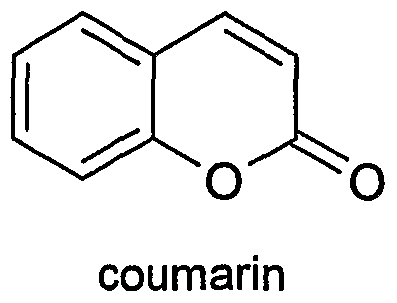
coumarinWhen he was told to come up with an alternative to the molecule coumarin (which gives off a highly desired scent used in men’s perfumes, but which also happens to be carcinogenic), he went in search of other molecules that fit within the same vibrational bracket as coumarin.
What a colleague of Turin found was a molecule that is closely related to coumarin, but which had an additional carbon ring.
Another theory trying to solve the science of scent stated that the scent given off by a particular molecule depends on the shape of that molecule.
If this theory had been correct, it would have meant that the new molecule found by Turin had no chance of smelling the same as coumarin.
luca turin
Luca Turin
Thankfully, Turin was once again correct in his assumptions, and the new molecule, called Tonkene, turned out to smell exactly like coumarin.
That is the main gist of the fascinating vibration theory, which attempts to explain how the molecules involved in scents are physically sensed by our noses.
As you can see, the theory has developed some credibility in the scientific world and the subsequent research done by Turin and his colleagues lends further support to this theory.
That being said, as is so common in the scientific community, there has also been research working against this theory, and the debate on “shape vs. vibration” still rages on.
It will be very interesting to see which one comes out on top.

Brendan has a Bachelors of Science degree in Biotechnology from Mumbai University (India). He likes superheroes, and swears loyalty to members of the Justice League. He likes to take part in discussions regarding the human body, and when he is not doing that, he is generally reading superhero trivia.
https://www.scienceabc.com/innovation/fascinating-theory-explaining-science-scent.html


You might also like:


Rotten Egg Odor In Water
CLICK HERE . . . to view . . . 
https://puricare.blogspot.com/2019/12/rotten-egg-odor-in-water-hydrogen.html
............................................................................................................................................... 

Sweet Scent
Spiritual Aroma
.
CLICK HERE . . . to view . . . 
https://puricarechronicles.blogspot.com/2018/06/sweet-scent-spiritual-aroma-of-christ.html
....................................................................................................................

a sweet-smelling fragrance
CLICK HERE . . . to view . . . 
............................................................................................................................................... 

Fragrance Follows Brokenness
CLICK HERE . . . to view . . . 
....................................................................................................................
 Smelling the Fragrance of God
CLICK HERE . . . to view . . . 
Secret to rose scent surprises scientists | Science News for Students