Showing posts with label Aircraft maintenance. Show all posts

Friday, October 16, 2020

AIRCRAFT VIBRATION - Symptoms and Causes You Need To Know - In 2015, there were 24,142,000 aircraft flight hours logged in total. With so much time spent flying, it’s important to take an active role in maintaining your aircraft to ensure it operates as it should. One of the most common issues pilots have to deal with is aircraft vibration. Vibration can cause a great deal of damage if unaddressed — and depending on the severity of the vibration, performing vibration analysis and correcting the issue should be one of your highest priorities. A couple of ways to tell if your aircraft is experiencing vibrations can include: Failure of instruments in random intervals; Inaccurate compass readings; Fatigue cracking that keeps growing; Numbness in the pilot’s arms and legs; Shaking or vibrating panels. An imbalanced propeller is one of the most common causes of vibration. Aviation equipment designed for propeller balancing can help you monitor the vibration and pinpoint the exact issue. This balance equipment is one of the most important tools in and aircraft mechanics arsenal and is one of the best ways to learn how to fix a standard vibration issue. An imbalanced propeller can be fixed with the addition of weight distributed in the form of screws, nuts, and washers. Aircraft maintenance professionals will be able to discern exactly what is needed via the readout from the balancing aviation equipment.

............................................................................................................................................

Aircraft Vibration

Symptoms and Causes You Need To Know

by Steffan Kasula


In 2015, there were 24,142,000 aircraft flight hours logged in total.

With so much time spent flying, it’s important to take an active role in maintaining your aircraft to ensure it operates as it should.

One of the most common issues pilots have to deal with is aircraft vibration.

Vibration can cause a great deal of damage if unaddressed — and depending on the severity of the vibration, performing vibration analysis and correcting the issue should be one of your highest priorities.

Symptoms of Vibration

A couple of ways to tell if your aircraft is experiencing vibrations can include:

o  Failure of instruments in random intervals

o  Inaccurate compass readings

o  Fatigue cracking that keeps growing

o  Numbness in the pilot’s arms and legs

o  Shaking or vibrating panels

Causes of Vibrations

An imbalanced propeller is one of the most common causes of vibration.

Aviation equipment designed for propeller balancing can help you monitor the vibration and pinpoint the exact issue.

This balance equipment is one of the most important tools in and aircraft mechanics arsenal and is one of the best ways to learn how to fix a standard vibration issue.

An imbalanced propeller can be fixed with the addition of weight distributed in the form of screws, nuts, and washers.

Aircraft maintenance professionals will be able to discern exactly what is needed via the readout from the balancing aviation equipment.

However, if it’s found that the propeller isn’t the cause of the vibration, finding the true cause is imperative before you begin flying again.

Additional Causes For Aircraft Vibration

Complete vibration analysis will be helpful for pinpointing exactly where the vibration is stemming from and allowing you to monitor vibrations as you go.

While propeller imbalance is one of the most common causes, a couple of others can include:

o  A cracked intake hose

o  A faulty alternator

o  A failing cylinder

o  Gearbox issues

o  Belt resonance

o  A wrinkled or buckling spinner

These are only a couple of several additional issues that can cause vibrations.

Depending on the craft you have, causes can be numerous and pinpointing the exact issue can be a process of trial and error.

This is what makes aviation equipment that specializes in vibration analysis invaluable to both pilots and maintenance teams invaluable.

If you are experiencing issues with vibration, don’t wait and let it get worse.

Speak with a service technician before the vibrations go on to cause serious, and potentially grounding issues to your aircraft


About ACES Systems

The Technology for Energy Corp. Headquarters in Knoxville, Tenn. houses ACES Systems, Powermetrix, TEC Materials Testing and Nuclear Products divisions.

The parent company of ACES Systems, Technology for Energy Corporation (TEC-USA), provides simple solutions to complex problems for several critical industries: nuclear power, materials testing, electric power, and aviation.

ACES Systems, a small aviation business purchased in 1990, has become a standard in the aviation industry for providing vibration analysis, balancing, engine performance analysis, and inlet guide vane adjustment systems to customers worldwide.

https://www.acessystems.com/aircraft-vibration-symptoms-and-causes-you-need-to-know/


Monday, May 18, 2020

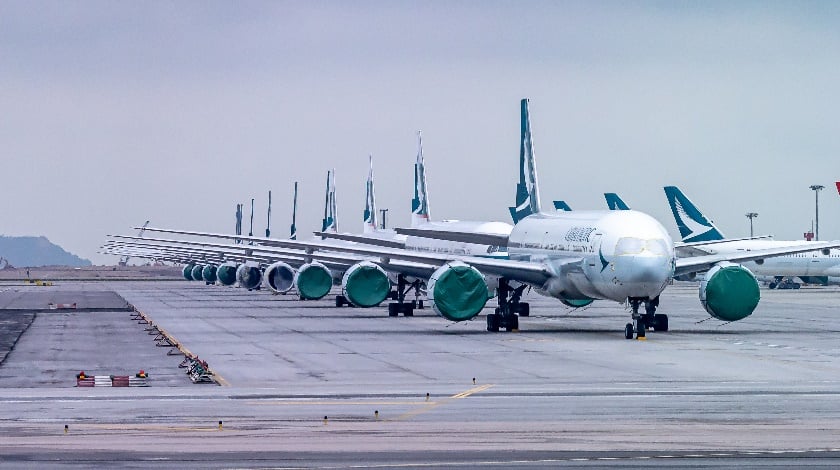
DIFFERENCE BETWEEN AIRCRAFT PARKING AND STORAGE - In light of the coronavirus pandemic, airlines are dealing with not only unprecedented flight limitations on the global scale, but also with major aircraft grounding issues. Some companies say they are parking their planes, some are reporting putting their planes in storage. According to Airbus, the difference really exists. Thus, when using these terms, some details should be taken into account, in order to avoid possible misunderstanding. A parked aircraft is taken out of service for up to six months. Airlines are usually parking their planes to “carry out the regular light maintenance needed to preserve a ‘ready to go’ state which allows a rapid return to service”. The parked aircraft should be flight ready. When parking their planes operators can remove such items as batteries because these can be quickly reinstalled, but in general, they are restricted from removing aircraft parts. Airbus noted that each week more than 100 planes are parked for over 14 days. Nevertheless, it is worth knowing that sometimes parking can take longer when a plane is coming out of a flight-ready condition. The situation with planes in storage is a bit different. Airbus provides that a stored aircraft is not likely to face a rapid or unexpected return to service and could remain on the ground for up to two years. In case with stored planes, major aircraft components such as engines, APUs, flaps and computers could be removed.


..................................................................................................................................................................
Difference Between Aircraft Parking and Storage
What Is the Difference Between Aircraft Parking and Storage?
By Karolina Prokopovič
Aviation Voice 


In light of the crisis provoked by the coronavirus pandemic, airlines are dealing with not only unprecedented flight limitations on the global scale, but also with major aircraft grounding issues.
Some companies are saying they are parking their planes, some are reporting about putting their planes in storage.
What is the difference? Which one suits the current situation better? Let’s find it out!
According to the aircraft manufacturer Airbus, the difference really exists.
Thus, when using these terms, some details should be taken into account, in order to avoid possible misunderstanding.
Aircraft Parking – up to Six Months
The planemaker explains that usually a parked aircraft is taken out of service for up to six months.
Airlines are usually parking their planes to “carry out the regular light maintenance needed to preserve a ‘ready to go’ state which allows a rapid return to service”.
The parked aircraft should be flight ready.
For this reason, when parking their planes operators can, for example, remove such items as batteries because these can be quickly reinstalled, but in general, they are restricted from removing aircraft parts.
Airbus noted that each week more than 100 planes are parked for over 14 days.
Nevertheless, it is worth knowing that sometimes parking can take longer when a plane is coming out of a flight-ready condition.
Aircraft Storing – up to Two Years
The situation with planes in storage is a bit different.
Airbus provides that a stored aircraft is not likely to face a rapid or unexpected return to service and could remain on the ground for up to two years.
“In these cases, airworthiness can be maintained but more preferable is a reduced maintenance schedule combined with preservation activities, such as sealing and greasing”, the airframer explains.
In case with stored planes, major aircraft components such as engines, APUs, flaps and computers could be removed. 
Nevertheless, Airbus says that all these removals and other actions highly depend on the storage time.

Thus, in the current situation it appears that most of the planes are parked. Although not all.

Many are also stored, as airlines are optimising their fleet capabilities before getting back to service by temporarily decommissioning some of the aircraft and putting them into storage.

Aviation Voice is a global aviation news provider echoing with up-to-date news, comprehensive analysis, expert opinions and insights on the most relevant aviation topics giving you a complete view of the market.
Our main goal is to satisfy your curiosity about aviation by ensuring original and quality content delivered to you quickly and in a way that is convenient for you to use.
Either you enjoy following industry’s trends via our website, or prefer getting latest aviation findings straight to your inbox, or monitor news through social channels, a great piece of news is already waiting for you to be explored.
https://aviationvoice.com/what-is-the-difference-between-aircraft-parking-and-storage-202004221143/


You might also like:

How Airlines Prepare Their Fleet for Hibernation
CLICK HERE . . . to view . . . 
https://puricare.blogspot.com/2020/04/how-airlines-prepare-their-fleet-for.html
............................................................................................................
Air traffic controllers in the tower monitor takeoffs, landings and ground traffic with visual and radar tools.
How Air Traffic Control Works
CLICK HERE . . . to view . . .