Showing posts with label Emotions. Show all posts

Saturday, July 25, 2020

BODY LANGUAGE – Many people want to know how to read body language. Body Language is interesting. We’ll show you the basics of body language, how to read other’s body language, and how to improve your own. We look at the subtle cues we send and receive to each other nonverbally. We are very drawn to looking at and observing the face to understand someone’s hidden emotions. They are an essential part of body language. Proxemics is a term for how our body moves in space. We are constantly looking at how someone is moving — are they gesturing? Leaning? Moving towards or away from us? Body movements tell us a lot about preferences and nervousness. They are instrumental body language cues. Clothes, jewelry, sunglasses, hairstyles, are all extensions of our body language. Not only do certain colors and styles send signals to others, how we interact with our ornaments is also telling. Is someone a fidgeter with their watch or ring? Do they constantly self-preen or touch their hair? These are all body language cues. There are actually two sides to reading body language in others. Decoding is your ability to read people’s cues. It is how you interpret hidden emotions, information and personality from someone’s nonverbal. Encoding is your ability to send cues to other people. This is how you control your personal branding, what first impression you give and how you make people feel when they are with you.


.................................................................................................................................................................

Body Language
What is Body Language?
.
BODY LANGUAGE: WHAT IT IS & HOW TO READ IT - Body Language is jam packed with interesting science. In this comprehensive introduction we’ll show you the basics of body language, how to read other’s body language, and how to improve your own
Vanessa Van Edwards


When we talk about body language, we look at the subtle cues we send and receive to each other nonverbally.
Many people want to know how to read body language. To get started, body language can be broken down into a few different channels:
FACIAL EXPRESSIONS
Researcher Dr. Paul Ekman discovered 7 universal microexpressions — or short facial gestures every human makes when they feel an intense emotion.
We are very drawn to looking at and observing the face to understand someone’s hidden emotions. They are an essential part of body language.
BODY PROXEMICS
Proxemics is a term for how our body moves in space.
We are constantly looking at how someone is moving — are they gesturing? Leaning? Moving towards or away from us?
Body movements tell us a lot about preferences and nervousness. They are instrumental body language cues.
ORNAMENTS
Clothes, jewelry, sunglasses, hairstyles, are all extensions of our body language.
Not only do certain colors and styles send signals to others, how we interact with our ornaments is also telling.
Is someone a fidgeter with their watch or ring? Do they constantly self-preen or touch their hair? These are all body language cues.
Body Language Principles
How To Read People’s Body Language
There are actually two sides to reading body language in others.
Decoding is your ability to read people’s cues. It is how you interpret hidden emotions, information and personality from someone’s nonverbal.
Encoding is your ability to send cues to other people. This is how you control your personal branding, what first impression you give and how you make people feel when they are with you.

Vanessa Van Edwards is a national bestselling author and founder of Science of People.
Vanessa is Lead Investigator at Science of People. She is the bestselling author of Captivate: The Science of Succeeding with People. Her book has been translated into 15 different languages and more than 30 million people watch her on YouTube.
Vanessa shares tangible skills to improve interpersonal communication and leadership, including her insights on how people work. She’s developed a science-based framework for understanding different personalities to improve our EQ and help us communicate with colleagues, clients and customers.
Vanessa works with entrepreneurs, growing businesses, and trillion dollar companies; and has been featured on CNN, BBC, CBS, Fast Company, Inc., Entrepreneur Magazine, USA Today, the Today Show and many more.

Friday, July 17, 2020

SCIENCE OF SCENT - How Perfumes Work - Scents are basically made up of specific molecules that we sense through receptors in our nose. These molecules are composed of atoms bonded together by elastic bonds. These molecules, along with their bonds, have the capacity to vibrate at specific frequencies. In order for our olfactory receptors in our noses to sense the specific scent, they must be able to somehow translate this vibration into electrical signals that can be sent to the brain. Our sense of smell is probably the one sense as humans that we so quickly overlook or ignore. This underrated sense shapes our lives in more ways than one and has a far greater influence on our behavior than we realize. Relying on our keen sense of smell, and playing a vital role in cultures all over the world, is scent. Scents are used in perfumes and deodorants, and the various scents tantalizingly play with our complex sense of smell (our “olfactory” sense) to elicit a variety of emotions. Recent research is now shedding light on the precise science behind our perception of different scents. Scents are basically made up of specific molecules that we sense through receptors in our nose. These molecules are composed of atoms bonded together by elastic bonds. These molecules, along with their bonds, have the capacity to vibrate at specific frequencies. The vibration theory attempts to explain how the molecules involved in scents are physically sensed by our noses.

The Science of Scent Marketing • Simple MLM Sponsoring
..............................................................................................................................................
Smelling Flowers
Science Of Scent

How Do Perfumes Work?
.
Science And Research | Scent Marketing | ScentAirScents are basically made up of specific molecules that we sense through receptors in our nose. These molecules are composed of atoms bonded together by elastic bonds. These molecules, along with their bonds, have the capacity to vibrate at specific frequencies. In order for our olfactory receptors in our noses to sense the specific scent, they must be able to somehow translate this vibration into electrical signals that can be sent to the brain.
By Brendan D'mello


Our sense of smell is probably the one sense as humans that we so quickly overlook or ignore.
This underrated sense shapes our lives in more ways than one and has a far greater influence on our behavior than we realize.
Relying on our keen sense of smell, and playing a vital role in cultures all over the world, is scent.
Scents are used in perfumes and deodorants, and the various scents tantalizingly play with our complex sense of smell (our “olfactory” sense) to elicit a variety of emotions.
Recent research is now shedding light on the precise science behind our perception of different scents.
The Vibration Theory
Scents are basically made up of specific molecules that we sense through receptors in our nose.
These molecules are composed of atoms bonded together by elastic bonds. These molecules, along with their bonds, have the capacity to vibrate at specific frequencies.
How do these vibrations result in us sensing the scent?
In order for our noses (more specifically, the olfactory receptors in our noses) to sense the specific scent, they must be able to somehow translate this vibration into electrical signals that can be sent to the brain.
How to remove odors, instead of just hiding them behind nicer ...Basically, the vibrating molecules act as a bridge to help the electrons pass an energy gap.
Therefore, the specific vibrational energies of the different molecules are necessary to activate olfactory pathways that are specific to that scent.
Now, if this vibration theory is correct, molecules that vibrate at similar frequencies should smell the same, right?
This theory was put to the test by biophysicist Luca Turin.
The specific molecule that gives rotten eggs their characteristically awful smell is hydrogen sulfide (sulfur + hydrogen).
It was found that there was one other molecule that vibrated at a similar frequency, which was Borane (boron + hydrogen).
Does this mean that Borane also smells like rotten eggs? The answer is:
Wwe Yes GIF
This sensational discovery gave some serious credibility to the vibration theory, and sent Luca Turin into the commercial world, where a company was created around his theory.
Making Life Easier
The main purpose of research into finding molecules that gave off desired scents was to make an entire set of related molecules and then test them to see how they smelled.
Obviously, this is a very time-consuming way of testing scents, so Luca Turin decided to try his own method.
Since this new method depended on testing the vibrational frequencies of various molecules, the job could easily be done by a computer, which could test thousands of molecules in a relatively short amount of time.
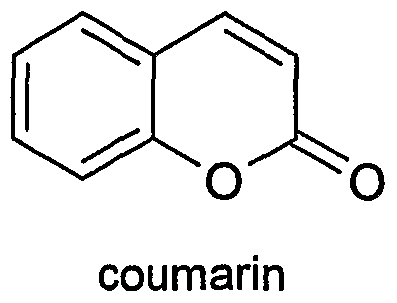
coumarinWhen he was told to come up with an alternative to the molecule coumarin (which gives off a highly desired scent used in men’s perfumes, but which also happens to be carcinogenic), he went in search of other molecules that fit within the same vibrational bracket as coumarin.
What a colleague of Turin found was a molecule that is closely related to coumarin, but which had an additional carbon ring.
Another theory trying to solve the science of scent stated that the scent given off by a particular molecule depends on the shape of that molecule.
If this theory had been correct, it would have meant that the new molecule found by Turin had no chance of smelling the same as coumarin.
luca turin
Luca Turin
Thankfully, Turin was once again correct in his assumptions, and the new molecule, called Tonkene, turned out to smell exactly like coumarin.
That is the main gist of the fascinating vibration theory, which attempts to explain how the molecules involved in scents are physically sensed by our noses.
As you can see, the theory has developed some credibility in the scientific world and the subsequent research done by Turin and his colleagues lends further support to this theory.
That being said, as is so common in the scientific community, there has also been research working against this theory, and the debate on “shape vs. vibration” still rages on.
It will be very interesting to see which one comes out on top.

Brendan has a Bachelors of Science degree in Biotechnology from Mumbai University (India). He likes superheroes, and swears loyalty to members of the Justice League. He likes to take part in discussions regarding the human body, and when he is not doing that, he is generally reading superhero trivia.
https://www.scienceabc.com/innovation/fascinating-theory-explaining-science-scent.html


You might also like:


Rotten Egg Odor In Water
CLICK HERE . . . to view . . . 
https://puricare.blogspot.com/2019/12/rotten-egg-odor-in-water-hydrogen.html
............................................................................................................................................... 

Sweet Scent
Spiritual Aroma
.
CLICK HERE . . . to view . . . 
https://puricarechronicles.blogspot.com/2018/06/sweet-scent-spiritual-aroma-of-christ.html
....................................................................................................................

a sweet-smelling fragrance
CLICK HERE . . . to view . . . 
............................................................................................................................................... 

Fragrance Follows Brokenness
CLICK HERE . . . to view . . . 
....................................................................................................................
 Smelling the Fragrance of God
CLICK HERE . . . to view . . . 
Secret to rose scent surprises scientists | Science News for Students

Monday, January 6, 2020

BODY LANGUAGE - When we talk about body language, we look at the subtle cues we send and receive to each other nonverbally. Many people want to know how to read body language. We are very drawn to looking at and observing the face to understand someone’s hidden emotions. They are an essential part of body language. Proxemics is a term for how our body moves in space. We are constantly looking at how someone is moving — are they gesturing? Leaning? Moving towards or away from us? Body movements tell us a lot about preferences and nervousness. They are instrumental body language cues. Clothes, jewelry, sunglasses, hairstyles, are all extensions of our body language. Not only do certain colors and styles send signals to others, how we interact with our ornaments is also telling. Is someone a fidgeter with their watch or ring? Do they constantly self-preen or touch their hair? These are all body language cues.

865c2f1a8c561516052742-Master-PQ.jpeg
...........................................................................................................................................................
Body Language
What It Is & How To Read It
Vanessa Van Edwards


Body Language is jam packed with interesting science. In this comprehensive introduction we’ll show you the basics of body language, how to read other’s body language, and how to improve your own.
What is Body Language?
When we talk about body language, we look at the subtle cues we send and receive to each other nonverbally.
Many people want to know how to read body language. To get started, body language can be broken down into a few different channels:
Facial Expressions:
Researcher Dr. Paul Ekman discovered 7 universal microexpressions — or short facial gestures every human makes when they feel an intense emotion.
We are very drawn to looking at and observing the face to understand someone’s hidden emotions. They are an essential part of body language.
Body Proxemics:
Proxemics is a term for how our body moves in space. We are constantly looking at how someone is moving — are they gesturing? Leaning? Moving towards or away from us?
Body movements tell us a lot about preferences and nervousness. They are instrumental body language cues.
Ornaments:
Clothes, jewelry, sunglasses, hairstyles, are all extensions of our body language.
Not only do certain colors and styles send signals to others, how we interact with our ornaments is also telling.
Is someone a fidgeter with their watch or ring? Do they constantly self-preen or touch their hair? These are all body language cues.
Body Language Principles
How To Read People’s Body Language
There are actually two sides to reading body language in others.
Decoding is your ability to read people’s cues. It is how you interpret hidden emotions, information and personality from someone’s nonverbal.
Encoding is your ability to send cues to other people. This is how you control your personal branding, what first impression you give and how you make people feel when they are with you.

Vanessa Van Edwards is a national best selling author and behavioral investigator with Science of People.
Vanessa is Lead Investigator at Science of People. She is the bestselling author of Captivate: The Science of Succeeding with People. Her book has been translated into 15 different languages and more than 20 million people watch her on YouTube.
Vanessa shares tangible skills to improve interpersonal communication and leadership, including her insights on how people work. She’s developed a science-based framework for understanding different personalities to improve our EQ and help us communicate with colleagues, clients and customers.
She works with entrepreneurs, growing businesses, and trillion dollar companies; and has been featured on CNN, BBC, CBS, Fast Company, Inc., Entrepreneur Magazine, USA Today, the Today Show and many more.