Showing posts with label Titanium dioxide. Show all posts

Wednesday, April 22, 2020

USING SUNLIGHT TO CLEAN WATER - If the inside of a clear water container is coated in a layer of very fine TiO2, this can enhance the sun’s disinfection process - organic molecules and microorganisms are destroyed because the TiO2 creates very reactive hydroxyl free radicals in the water, which attack the impurities - Titanium dioxide can be used to speed up the process of purifying water, potentially saving billions of lives. Sunlight actually cleans water naturally. When water is left in sunlight for a certain duration – the radiation from the sun kills the microorganisms contaminating the water. Unfortunately, this process is slow, and it only works if the water is clear and not clouded by dirt, so that the light can reach all the microorganisms. However, there is now an emerging solution to speed this process up significantly – photocatalysts, such as titanium dioxide (TiO2). Due to its incredible photocatalytic properties, titanium dioxide can be used to accelerate the process of killing microorganisms in sunlight. This means that clean water can be produced in a fraction of the time it takes naturally. The free radicals dissipate rapidly, making the water safe to consume. The effect of being able to create safe drinking water quickly on a large scale would be world-changing.


..........................................................................................................................................................
Sun and photocatalysts will clean polluted water—cheaply and quicklyUsing sunlight to clean water
Turbidity | HachIf the inside of a clear water container is coated in a layer of very fine TiO2, this can enhance the sun’s disinfection process - organic molecules and microorganisms are destroyed because the TiO2 creates very reactive hydroxyl free radicals in the water, which attack the impurities
The Titanium Dioxide Manufacturers Association (TDMA)


Though in its early stages of development, titanium dioxide can be used to speed up the process of purifying water, potentially saving billions of lives
Three out of ten people worldwide – 2.1 billion people – do not have access to safe and clean drinking water in their homes, according to recent report by the World Health Organisation.
Supplying people with access to clean water when there is a lack of infrastructure can be difficult, but developments in chemistry are helping to pave the way.
Purifying water
The world of titanium dioxide | The University of TokyoIt’s incredible to consider, but sunlight actually cleans water naturally.
When water is left in sunlight for a certain duration – around 24 hours – the radiation from the sun kills the microorganisms contaminating the water.
Unfortunately, this process is slow, and it only works if the water is clear and not clouded by dirt, so that the light can reach all the microorganisms.
However, there is now an emerging solution to speed this process up significantly – photocatalysts, such as titanium dioxide (TiO2).
.
Due to its incredible photocatalytic properties, titanium dioxide can be used to accelerate the process of killing microorganisms in sunlight.
This means that clean water can be produced in a fraction of the time it takes naturally.
5 Modern Technologies Used in Water Treatment – PsymbolicIf the inside of a clear water container is coated in a layer of very fine TiO2, this can enhance the sun’s disinfection process.
Organic molecules and microorganisms are destroyed because the TiO2 creates very reactive hydroxyl free radicals in the water, which attack the impurities.
The free radicals dissipate rapidly, making the water safe to consume.
While the technology is still being tested, a paper in 2012 looked into the different properties of titanium dioxide for purifying water.
The research team from Tomsk Polytechnic University in Russia found that titanium dioxide in a powder form works best for purifying water when it has been created in an alkaline solution.
Disinfecting surfaces
It goes without saying that the effect of being able to create safe drinking water quickly on a large scale would be world-changing, but titanium dioxide’s photocatalytic properties can also be used to tackle another global scourge – poor sanitation and the spread of diseases.
A paper published in 2016 found that when titanium dioxide powder is combined with sunlight, it can be used to destroy harmful bacteria including E. coli and staphylococcus aureus, both of which commonly infect humans and cause potentially fatal sickness.
“These antibacterial surfaces may be applied to hospital, food ceramic, and building industries or to environmental remediation where bacteria inactivation is required to ensure the safety of human health and the environment,” says Changseok Han, from the US Environmental Protection Agency, and part of the team that wrote the paper.
The relatively low energy needed for the process and the non-toxicity of titanium dioxide make it a safe and economic way of disinfecting surfaces, which is particularly important in the poorest and most at-risk communities.
The future
Though a relatively young technology, photocatalysis by titanium dioxide continues to be tested to explore its potential as a water purifier and disinfectant, and there’s no telling what an incredible, life-changing effect this could have on those who need it most.
As Dr Tedros Adhanom Ghebreyesus, WHO Director-General, says: “Safe water, sanitation and hygiene at home should not be a privilege of only those who are rich or live in urban centres. These are some of the most basic requirements for human health, and all countries have a responsibility to ensure that everyone can access them.”
If TiO2’s photocatalytic properties are put to good use, safer drinking water for everyone doesn’t look so far out of reach.

The Titanium Dioxide Manufacturers Association (TDMA) represents the major producers of titanium dioxide (TiO2 ) and has been their voice in Europe since 1974.
Our members develop products and applications that are seen in almost every aspect of daily life. Across the globe, TiO2 is used in everything from paints, plastics and paper to make-up and sunscreen. Find out more about titanium dioxide.
The range of innovative uses for TiO2 keeps on increasing. In recent years, for example, it has been used in the manufacture of cheap and efficient solar cells and building facades that can neutralise air pollution.

Wednesday, December 13, 2017

NANOPARTICLES - Nanoparticles are engineered particles that are 1,000 times smaller than the width of human hair. Scientists particularly concerned about the use of the nanoparticle titanium dioxide. Can be found in anything from make-up to everyday food products, like mayonnaise.

.

Nanoparticles

Scientists call for national standards program to monitor effects on health 

By Sarah Whyte


Scientists are calling for a national standards body to monitor the safety of nanomaterials — the tiny materials found in everything from the icing on a cake to make-up.

Key points:

·       Nanoparticles are engineered particles 1,000 times smaller than the width of human hair
·       Scientists particularly concerned about the use of the nanoparticle titanium dioxide
·       Can be found in anything from make-up to everyday food products, like mayonnaise
Some European countries have banned the use of certain nanoparticles, and a University of Sydney team has said better regulations are needed.
They said there was not a good understanding of how the particles could be affecting people's health and the environment.

What contains nanomaterials?

You might not know it, but you could be carrying nanoparticles around right now.
"Lipstick is a very good example; typically there is a large number of nanoparticles because they produce very nice aesthetic finish to your lips," Sydney University senior lecturer Dr Wojtek Chrzanowski said.
Nanoparticles are engineered particles that are 1,000 times smaller than the width of human hair.
Dr Chrzanowski said the science of nanoparticles has developed much faster than regulators could keep up with.
He said of particular concern was the use of the nanoparticle titanium dioxide (TiO2), which can be found in many foods — from chewing gum to the icing on cakes.
Dr Chrzanowski said a nano safety Australia program needed to be established, which could combine different universities and institutions to monitor the safety of those nanomaterials.
He said there was simply not enough information on how nanoparticles were affecting people, even though some have positive benefits.
"In cancer therapies some of the drugs are actually delivered with nanoparticles and it makes the therapy much more effective," Dr Chrzanowski said.
"But we have to understand how they function, what they do to our body.
"Whether there is actually some negative effect of those particles which we are consuming, not being necessarily really conscious that we are consuming them, and they are very common in food."

How does it impact on health?

Titanium dioxide is a naturally occurring mineral mined from the earth, processed and refined, and added to a variety of food and other consumer products.
It is used as a colour and sheen enhancer in certain foods, as well as being key for food safety applications.
A chicken sandwich for lunch might even contain titanium dioxide — if it has been combined with certain types of mayonnaise.
Dr Laurence Macia, immunologist and senior research fellow at Sydney University, said in terms of the damage that could cause a person, it could potentially change their gut microbiota.
"But again, it's very dynamic. So if it's a one-off, that's OK, but if you ate your mayonnaise every day, that can have a long-term effect," she said.
Dr Macia said adding titanium dioxide to foods was merely aesthetic and had zero nutritional value.
"So we don't add that to our food to increase the power of the food, it's just to make it nicer," she said.
"My question is … how this impacts on our health — so the gut, microbiota and the immune system."
That question could be answered by further research, Dr Macia said.
"We need evidence-based research to know what it's doing, and once we have that we should tell people the maximum they should be eating," she said.
"It's a bit like everything; we know that nothing is good in excess. But this thing, we don't know what it's doing at all."

Human body 'barely absorbs it'

Dr Scott Crerar, from Food Standards Australia New Zealand (FSANZ), said they were very aware of the science behind the use of nanoparticles in food.
"We've strengthened the requirements around manufacturers if they are producing technology-related foods or ingredients. They must apply to FSANZ [for] an assessment of the safety of that food," he said.
Dr Crerar said there have been longstanding studies looking at the adverse effects of titanium dioxide, which he said has been in the food supply for decades.
"It's actually a very inert substance, it doesn't really do much in the body. It's barely absorbed, it would go through the system unchanged essentially," he said.
Sarah Whyte is a reporter for ABC, based in Sydney. Sarah was previously at the 7.30 program and before that worked as immigration reporter in Canberra for Fairfax Media. Sarah has won two joint Walkley awards for her work on Australia’s treatment of asylum seekers and Bangladeshi sweatshops.
Twitter: 
@sarwhyte Facebook: SarahWhyteJournalist
You might also like:

CLICK HERE:


CLICK HERE:


CLICK HERE:


CLICK HERE:


CLICK HERE:


CLICK HERE:


CLICK HERE:


CLICK HERE:


CLICK HERE:
http://puricare.blogspot.com/2016/10/water-contaminants-health-effects-epas.html
.

Multi-Media Filter, Highly-Activated Carbon Filter,
Zeolite-Process Water Softener With Brine Tank,
Fiberglass Ballast-Type Pressure Tank
(fully automatic backwash & regeneration)
.
PURICARE 
INDUSTRIAL 
ENTERPRISES 
Water 
Treatment 
Systems
.
...

Aganan, Pavia, Iloilo, Philippines
...

CLICK HERE . . . to view company profile . . .
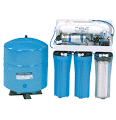
Reverse Osmosis with Steel Tank 
& Cartridge Pre-Filters

Submersible Pumps

Tachmina Solenoid-Driven
Chemical Metering Pump
- ensures regulated dosing
of chlorine into water system
without human intervention