Tuesday, June 4, 2019

MARITIME TRAFFIC LANES – Buoys in coastal areas are known as lateral markers and when found in traffic lanes they are known as channel markers. Both types guide a vessel through an area known to be safe for passage, and provide a traffic separation scheme similar to a road on land. There are only two traffic schemes for ships - IALA A and IALA B. IALA stands for International Association of Lighthouse Authorities. IALA A is used in Europe, some areas of Africa, most of Asia, plus Australia and New Zealand. IALA B is used in North America, South America, Japan, the Philippines, and Korea.

Red buoy on sea against clear sky
.........................................................................................................................................................
Maritime Traffic Lanes
Learn basic maritime traffic schemes and regional variations
by Paul Bruno

Traffic is controlled in coastal waters and inland passages with marker buoys.
Buoys in coastal areas are known as lateral markers and when found in traffic lanes they are known as channel markers.
Both types of markers serve the same purpose. They guide a vessel through an area known to be safe for passage, and provide a traffic separation scheme similar to a road on land.
These “Rules of the Road” are very similar to those you follow while driving an automobile on land, so we will use that as an example when talking about marine traffic.

IALA A and IALA B

If you are driving a car in an overseas country it is sometimes necessary to drive on the opposite side of the road than you usually do.
This is the same for ships, but fortunately there are only two schemes IALA A and IALA B. IALA stands for International Association of Lighthouse Authorities.
IALA A is used in Europe, some areas of Africa, most of Asia, plus Australia and New Zealand. 
IALA B is used in North America, South America, Japan, the Philippines, and Korea.

Traffic Marker Buoys

Marker buoys come in two colors, green and red. Red buoys mark one side of a traffic lane and green marks the other side.
Think of the area in the middle as a road or highway. On land a road has painted stripes marking safe areas for travel; a solid line marks both sides of the road and is meant not to be crossed — think of the red and green buoys as these lines.
A road has a line painted in the middle to divide traffic by direction; in a maritime environment the center divider is invisible. The separation line is exactly in the center of the marked course.

IALA A Rules

In Europe, Australia, New Zealand, plus parts of Africa and Asia, the IALA A rules are in force. This means that when traveling you should keep the green buoy on the right or starboard side of the vessel.
The shape of the marker also gives you traffic information. A triangular or cone-shaped top indicates the marker should be kept on the starboard side of the vessel.

IALA B Rules

The IALA B traffic separation scheme is used in North and South America, Japan, the Philippines, and Korea.
It is the opposite traffic flow of the IALA A scheme. This is like driving on the opposite side of the road while overseas.
In this case, while traveling keep the red buoy on the right or starboard side of the vessel.
The same triangular or cone-shaped top will be present on markers which should be kept on the starboard side of the vessel.
Both traffic patterns have the same rules when it comes to marker shape.
A triangular marker is always kept on the starboard side of the vessel no matter if it is red or green. Markers to the port side of the vessel will be square or flat-topped.

Entering and Exiting Traffic Separation Schemes

When entering a traffic separation area, proceed with caution and be alert. This is like a highway on-ramp for ships and smaller craft.
At busy times many vessels will be trying to enter these lanes. Try to align your vessel in the direction of travel within the lane.
Essentially extending the lane beyond the actual lane markers will help you smoothly transition from open waters to the traffic lane.
The entrance to a traffic separation scheme is subject to rules of Right of Way.
The Right of Way is one of the most important parts of the Rules of the Road and needs to be understood completely for safe operation.
Sometimes automobile traffic in busy areas takes on a special set of rules that is different from standard operation, and is usually only understood by local drivers.
The same thing is true on the water. Local vessels like water taxis or tender boats might not follow these traffic lanes, this is not necessarily breaking the rules because the vessels need to operate outside the lanes to do their job.
Exiting a traffic scheme is similar to entering. If you are traveling out into open water it is best to extend your heading past the end of the final marker.
If your vessel is large or slow moving, traffic behind your vessel might be eager to pass. Wait until traffic clears before changing your course because not all vessels will sound the proper horn signal when attempting to pass.
Be careful, Right of Way is important, but avoiding collision is more important than being right.
You may need to exit a traffic lane before reaching the end of the marked passage to reach your destination.
Buoys are marked with numbers like street numbers. Red buoys always have an even number and green are marked with odd numbers.
Maneuvering between marker buoys is acceptable as long as it can be done safely. Check for traffic outside the lane and for any orange and white buoys marking obstructions.
If the way is clear you may proceed.
If you must cross the oncoming lane of traffic, wait for an appropriate gap in traffic and turn a perpendicular course across the lane.
Keep other vessels in mind when slowing down or turning out of a lane. Ships have limited maneuverability at low speeds and take a long time to stop.
If you cannot turn across a lane without obstructing traffic, exit on the opposite side and wait for traffic to clear then proceed across both lanes to your destination.

Traffic Lane Crossings

Where two traffic lanes cross there is a special marker buoy. It is striped horizontally with red and green bands.
This is similar to an intersection of a primary and secondary road. The top band designates the primary traffic route and the lower band designates the secondary route.
Right of Way rules govern how traffic flows at these crossings — primary and secondary designations do not determine which vessel may cross first.
Paul Bruno
United States Coast Guard licensed Ship Master with Passenger Certification.
A marine contractor familiar with all ship systems who has worked in the industry for more than 20 years.
Has a USCG Master's License and a degree in Creative Nonfiction and Technical Writing, from the University of Wisconsin.
Experience
Paul Bruno is a former writer for ThoughtCo who contributed work for over five years on the maritime industry. He has worked with a variety of vessels throughout his maritime career, including various commercial ships as well as the Great Lakes schooner reproduction "Dennis Sullivan." As a marine contractor, Paul is familiar with all ship systems, and his lifelong passion for electronics has led to a focus on marine hardware and software development. When he is not working, Paul's favorite hobby is knot work, keeping busy with the nearly 4,000 documented knots, splices, and eyes.
Education
USCG Master's License, 1993
Creative Nonfiction and Technical Writing, University of Wisconsin, Milwaukee and University of Waikato, Hamilton NZ
Paul Bruno​
ThoughtCo and Dotdash
ThoughtCo is a premier reference site focusing on expert-created education content. We are one of the top-10 information sites in the world as rated by comScore, a leading Internet measurement company. Every month, more than 13 million readers seek answers to their questions on ThoughtCo.
For more than 20 years, Dotdash brands have been helping people find answers, solve problems, and get inspired. We are one of the top-20 largest content publishers on the Internet according to comScore, and reach more than 30% of the U.S. population monthly. Our brands collectively have won more than 20 industry awards in the last year alone, and recently Dotdash was named Publisher of the Year by Digiday, a leading industry publication.
Red buoy on sea against clear sky

Monday, June 3, 2019

TYPES OF ELECTRIC WELDING - MIG welding, TIG welding and stick welding are three types of electric arc welding. Gas metal arc welding refers to MIG welding; it is a method of welding that is often used when working on steel. The process essentially involves melting a fill-metal onto a workload. Gas tungsten arc welding refers to TIG welding; it is a welding method often employed while working with magnesium, aluminum, titanium, nickel and copper alloys. Stick Welding is ideal for use on bridges, metal art, piping, tractors and other outdoor welding applications because outdoor elements like rain will not compromise the integrity of the weld.

Several types of welding are used in construction.
....................................................................................................................
Types of Electric Welding
By Jay Leone


Welding materials is an effective way to join them together without employing fittings.
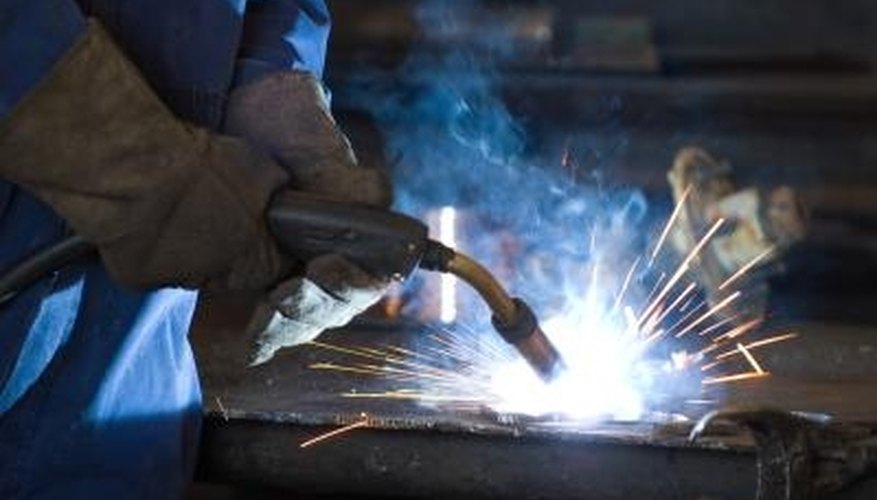
MIG welding, TIG welding and stick welding are three types of electric arc welding.
Arc welding refers to welding that is achieved by streaming an arc of electricity between an electrode and a workload.
Most methods of welding use a shielding gas to promote smoothness at the weld point, prevent contamination at the weld point, improve quality of the weld and stabilize the live arc of electricity between electrode and workload.

MIG Welding

Gas metal arc welding refers to MIG welding; it is a method of welding that is often used when working on steel.
The process essentially involves melting a fill-metal onto a workload.
MIG welding is a relatively clean process; only a little spatter is produced while welding is taking place. Welders can perform longer welds without interruption using this method of welding because few starts and stops are required in the process.
The typical shielding gas employed in this type of welding is either argon or an argon mixture containing oxygen or carbon dioxide.
Perhaps some of the only drawbacks linked with this type of welding are that it can be difficult to create an arc to begin the whole process, and the welds this process creates can be heavily oxidized.

TIG Welding

Gas tungsten arc welding refers to TIG welding; it is a welding method often employed while working with magnesium, aluminum, titanium, nickel and copper alloys.
TIG welds can be made with or without fill-metal.
TIG welds can be created much smaller than MIG welds because heat is better pinpointed in TIG welding systems.
One drawback to this type of welding when compared to MIG welding is that TIG welds take longer to produce than MIG welds.
This type of welding is one of the cleanest methods because no spatter is produced.
Argon alone or in combination with helium or hydrogen is often used as a shielding gas for this type of welding.

Stick Welding

One of the first methods of welding available, shielded metal arc welding is also referred to as stick welding.
This method of welding is ideal for use on bridges, metal art, piping, tractors and other outdoor welding applications because outdoor elements like rain will not compromise the integrity of the weld.
Proper stick welding can be difficult and is only recommended for very experienced welders.

About the Author
This article was written by the Sciencing team, copy edited and fact checked through a multi-point auditing system, in efforts to ensure our readers only receive the best information. To submit your questions or ideas, or to simply learn more about Sciencing, contact us here.

Several types of welding are used in construction.

Sunday, June 2, 2019

CATS AND HUMAN INTELLIGENCE - Animals are more intelligent than we think. They’re also best friends and seem to understand and care about each other. Dogs and cats are the most commons animals when it comes to choose a pet. A study found that dog people are more social and extroverted whereas cat lovers are more sensitive and open-minded. Those who like cats, in general, have a higher intelligence and are more educated. Cats are usually more independent than dogs, which can be a major factor to cat owners having more time available for other things – like studying and working. The question is now what happens if you love both cats and dogs? The study doesn’t cover it, but you can think that you have both social skills and high intelligence!


...............................................................................................................................................
Cats And Human Intelligence
Researchers say that liking cats is a sign of very high intelligence
HomesLuxury.NET 


Pets are an absolute blessing for humans.
They can cheer you up when you’re feeling sad or come home tired from work.
It happens to everyone, but then you open the door and meet that little ball of fur that just emanates love and happiness.
Animals are more intelligent than we think. And I claim that both my dog and my cat realize when I’m happy or sad.
That’s how it feels, at least to me. They’re also best friends and seem to understand and care about each other.
However, the question is what does it says about yourself if you are a pet owner.
I’ve never really thought about that, I’ll admit – but earlier today I encountered research that shows that most people who like cats, in general, are very intelligent.
Dogs and cats are the most commons animals when it comes to choose a pet. But, the question of which of the two animals you prefer is a real classic.
And while most people have an answer to that question, I belong to the few who don’t really know.
At home, we have both a dog and a cat – and I could never choose between them.
However, a recent study conducted by researcher Denise Guastello reveals the differences between the people who like dogs and the people who like cats, according to Unilad.
Psychoanalyst Steve McKeown, who founded both the MindFixers organization and the well-known McKeown Clinic, says:
– The study was conducted on 600 students. It was found that dog people are more social and extroverted whereas cat lovers are more sensitive and open-minded. It also turned out that those who prefer cats are more neurotic.
He continues:
– Furthermore, cat people tend to stand for what they think – no matter what the environment says, which may indicate that they are more independent. The survey also reveals that those who like cats, in general, have a higher intelligence and are more educated. They have a greater chance of completing university studies, says Steve McKeown.
The study states that cats are usually more independent than dogs, which can be a major factor to cat owners having more time available for other things – like studying and working.
Exciting conclusions
The question is now what happens if you love both cats and dogs?
The study doesn’t cover it, but you can think that you have both social skills and high intelligence!
Jokes aside – This study, of course, has to be taken with a grain of salt. There is clearly no definite truth.
At the same time, I think it’s fascinating and exciting to reach these kinds of conclusions – and in any case, I think this was really fun to know!
Do you like cats too? Then press the share button to help spread this important information about our incredibly high intelligence!

HomesLuxury.NET is a place where you find the most beautiful and expensive houses in the world.
https://www.homesluxury.net/researchers-say-that-liking-cats-is-a-sign-of-very-high-intelligence/?fbclid=IwAR1vwPryCpUO1SjAg1GYPv8T9eGtABtZSVKrKqIlVuXpuUw81sdVqsbY_ow

CHEMICAL COMPOSITION OF VINEGAR - Vinegar consists of acetic acid (CH3COOH), water and trace amounts of other chemicals, which may include flavorings. Flavorings may include sweeteners, such as sugar or fruit juices. Infusions of herbs, spices and other flavors may be added, too.

Acetic acid is the primary acid in vinegar.
............................................................................................
Chemical Composition of Vinegar
What Is the Chemical Composition of Vinegar?
Acetic Acid and Other Compounds in Vinegar
by

Vinegar is a liquid that is produced from the fermentation of ethanol into acetic acid. The fermentation is carried out by bacteria.
Vinegar consists of acetic acid (CH3COOH), water and trace amounts of other chemicals, which may include flavorings.
The concentration of the acetic acid is variable.
Distilled vinegar contains 5-8% acetic acid. 
Spirit of vinegar is a stronger form of vinegar that contains 5-20% acetic acid.
Flavorings may include sweeteners, such as sugar or fruit juices. Infusions of herbs, spices and other flavors may be added, too.
Anne Marie Helmenstine, Ph.D.
Ph.D. in biomedical sciences from the University of Tennessee at Knoxville - Oak Ridge National Laboratory.
Science educator with experience teaching chemistry, biology, astronomy, and physics at the high school, college, and graduate levels.
ThoughtCo and About Education chemistry expert since 2001.
Widely-published graphic artist, responsible for printable periodic tables and other illustrations used in science.
Experience
Anne Helmenstine, Ph.D. has covered chemistry for ThoughtCo and About Education since 2001, and other sciences since 2013. She taught chemistry, biology, astronomy, and physics at the high school, college, and graduate levels. She has worked as a research scientist and also abstracting and indexing diverse scientific literature for the Department of Energy.
In addition to her work as a science writer, Dr. Helmenstine currently serves as a scientific consultant, specializing in problems requiring an interdisciplinary approach. Previously, she worked as a research scientist and college professor. 
Education
Dr. Helmenstine holds a Ph.D. in biomedical sciences from the University of Tennessee at Knoxville and a B.A. in physics and mathematics with a minor in chemistry from Hastings College. In her doctoral work, Dr. Helmenstine developed ultra-sensitive chemical detection and medical diagnostic tests.
ThoughtCo and Dotdash
ThoughtCo is a premier reference site focusing on expert-created education content. We are one of the top-10 information sites in the world as rated by comScore, a leading Internet measurement company. Every month, more than 13 million readers seek answers to their questions on ThoughtCo.
For more than 20 years, Dotdash brands have been helping people find answers, solve problems, and get inspired. We are one of the top-20 largest content publishers on the Internet according to comScore, and reach more than 30% of the U.S. population monthly. Our brands collectively have won more than 20 industry awards in the last year alone, and recently Dotdash was named Publisher of the Year by Digiday, a leading industry publication.
Acetic acid is the primary acid in vinegar.

ROCK SALT - Rock salt is also known by the mineral name of halite. Rock salt is that which is sedimentary – that is, it is found in hard layers underground. Pure rock salt is colorless. However, when found underground it is generally not completely pure, so may have yellow, red, gray or brown hues. It is either transparent or translucent and when you shine a light on it, its luster is vitreous, meaning it appears shiny and glassy. Rock salt has hygroscopic properties, meaning it is able to induce or sustain dryness. This is why salt was historically used as desiccant in food preservation. It is also commonly used as an extinguisher to put out kitchen or grease fires.

Rock salt is mined from underground.
................................................................................................
Rock Salt
The Properties of Rock Salt
By Alice Hudson

Rock salt is a form of coarsely ground sodium chloride.
Sodium chloride, or salt, is employed in many industries, as well as used in cooking.
It helps set dyes in fabrics and is used in the process of producing detergent and soap as well as being used as grit on roads.
Rock salt has a crystalline structure, is used as a desiccant and can also be used as an extinguishing agent.

Mineral Classification and Chemical Symbol

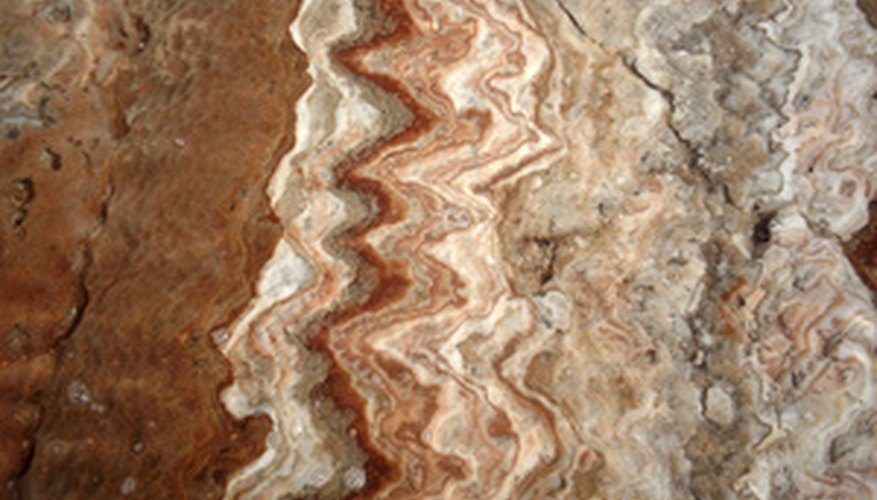
Rock salt is also known by the mineral name of halite. Rock salt is that which is sedimentary – that is, it is found in hard layers underground.
According to ThinkQuestLibrary.org, not all salt is extracted from oceans or evaporated salt lakes. Rather, sedimentary salt is found in locations of former seas. Halite's chemical symbol is NaCI, meaning it contains one molecule each of chlorine and sodium.

Appearance

Pure rock salt is colorless. However, when found underground it is generally not completely pure, so may have yellow, red, gray or brown hues.
It is either transparent or translucent and when you shine a light on it, its luster is vitreous, meaning it appears shiny and glassy.

Structure

Rock salt forms in crystals with a simple cubic symmetry. When it is broken, it will break evenly into cubes and when it shatters, the pieces will be of different sizes and shapes.

Hardness and Weight

Mineralogists rate rock salt at 2 to 2.5 for hardness. This means it is quite soft, its surface able to be scratched with a fingernail. It is rated 2.1 to 2.3 for "specific gravity" meaning it is light in weight.

As a Desiccant and Extinguisher

Rock salt has hygroscopic properties, meaning it is able to induce or sustain dryness. This is why salt was historically used as desiccant in food preservation. It is also commonly used as an extinguisher to put out kitchen or grease fires.

About the Author
From New Zealand and now freelancing in London, Alice Hudson began her writing career in 2004, specializing in health and fitness, lifestyle and personal finance. Her work has appear in the "Hawke's Bay Today" daily newspaper and "The Herald on Sunday." Hudson attained a Bachelor of Arts and diploma in journalism from the University of Canterbury.

Rock salt is mined from underground.

Saturday, June 1, 2019

CITRIC ACID - Why Does Citric Acid Clean Pennies? - Citric acid is commonly found in most citrus fruits such as pineapples and oranges, and is most concentrated in lemons. Citric acid cannot dissolve copper or most other metals. However, it does react with and dissolve copper oxide. As the penny is placed in the citric acid solution, the citric acid cleans it in two ways. First, the citric acid is in a liquid form. This allows the dirt and grime on the penny to loosen from the metal. Second, and most importantly, the acid in the solution reacts with the copper oxide layer that has created the tarnished look of the penny. The citric acid removes the copper oxide from the penny and rinses away the loosened dirt and grime.

Why Does Citric Acid Clean Pennies?
..................................................................................
Citric Acid
Why Does Citric Acid Clean Pennies?
By Chris Sherwood


How Pennies Get Dirty

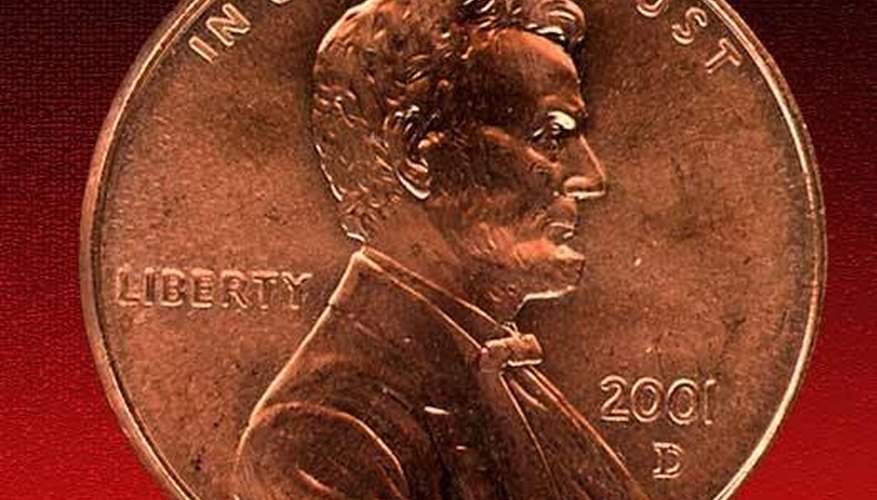
Millions of pennies are circulating at any given time throughout the United States.
As the pennies circulate, they begin to lose their shine. This is largely due to the way metals react with air.
As the metal continues to react with the air, it develops a coat of copper oxide around the outer layer of the coin.
It is important to note that this is not rust, since rust is iron oxide. Pennies do not contain iron, so they can't create iron oxide.
A layer of dirt and grime can also attach itself to the copper oxide layer.

Citric Acid

Citric acid is commonly found in most citrus fruits such as pineapples and oranges, and is most concentrated in lemons.
Citric acid cannot dissolve copper or most other metals. However, it does react with and dissolve copper oxide.

How It Cleans

As the penny is placed in the citric acid solution, the citric acid cleans it in two ways.
First, the citric acid is in a liquid form. This allows the dirt and grime on the penny to loosen from the metal.
Second, and most importantly, the acid in the solution reacts with the copper oxide layer that has created the tarnished look of the penny.
The citric acid removes the copper oxide from the penny and rinses away the loosened dirt and grime.
The acid is not strong enough to dissolve the copper itself, so all that is left is the clean, shiny copper surface.

Strength

You may notice that different citrus fruits require different amounts of time for the cleaning process. This is because each fruit has a different amount of citric acid.
In general, the more sour the fruit tastes, the more citric acid the fruit contains. The more citric acid a fruit contains, the faster its juice will dissolve the copper oxide and clean the penny.

About the Author
Chris Sherwood is a professional journalist who after years in the health administration field and writing health and wellness articles turned towards organic sustainable gardening and food education. He now owns and operates an organic-method small farm focusing his research and writing on both organic gardening methods and hydroponics.

Why Does Citric Acid Clean Pennies?

WROUGHT STEEL PIPE - Steel pipes play a role in the underground moving of water and gas, encasing electrical wires for protection, and the production of vehicles, bicycles, plumbing and heating systems, street lamps and refrigeration units. Welded wrought steel pipe manufacturing involves moving steel strips through rollers that form the material into a tubular shape. Seamless wrought steel pipe starts as a solid piece of heated steel. Forced through a form that shapes the material into a hollow tube, the pipe is then machined into appropriate dimensions.

Steel pipes can be manufactured into numerous specifications.
...............................................................................................
Wrought Steel Pipe
What Is Wrought Steel Pipe?
By Theresa Custodio


The manufacturing process for wrought steel pipe works raw steel into tubes of various lengths and diameters.
Steel pipes play a role in the underground moving of water and gas, encasing electrical wires for protection, and the production of vehicles, bicycles, plumbing and heating systems, street lamps and refrigeration units.

Welded Pipe

The welded wrought steel pipe manufacturing involves moving steel strips through rollers that form the material into a tubular shape. These strips then pass through a welding device that fuses them into a single pipe.

Seamless Pipe

Seamless wrought steel pipe starts as a solid piece of heated steel. Forced through a form that shapes the material into a hollow tube, the pipe is then machined into appropriate dimensions.

Additional Processing

Welded and seamless wrought steel pipes often go through a machine for straightening. Threads machined into the ends of smaller diameter pipes allow them to connect together.
Various protective coatings placed over the steel -- such as oil, paint, zinc or other kinds of material depending on the usage of the pipe -- prevent rusting.

Theresa Custodio is a Michigan-certified nurseryman with over 10 years experience. She has spent over five years working for the State of Michigan's Department of Environmental Quality writing permits and violation notices, which are published for public record. She has a Bachelor of Science degree from Eastern Michigan University with a major in biology and a minor in conservation and resource use.
Steel pipes can be manufactured into numerous specifications.