Monday, June 5, 2017

LIPIDS - Lipids are insoluble organic compounds that consist of fat and oil. The chemical composition of these molecules includes hydrogen, carbon, and oxygen. They provide high energy and perform three important biological functions in the body: to provide structure to cell membranes, to store energy, and to function as signaling molecules.

Lipids
Classification of Lipids
Lipids are fats that have important roles in the body.
Although most people think that fat is harmful to health, the truth is that fat is important to life.
Fat provides energy and depending on the classification of lipids, it plays an important role in metabolism.
What Are Lipids?
Lipids are insoluble organic compounds that consist of fat and oil.
The chemical composition of these molecules includes hydrogen, carbon, and oxygen.
They provide high energy and perform three important biological functions in the body:
- to provide structure to cell membranes,
- to store energy, and
- to function as signaling molecules.
The classification of lipids includes phospholipids, triacylglycerols, and sterols.

What Are the Functions of Lipids in the Body?

Lipids play important roles in the normal function of the body:
·      To serve as structural building materials for cell membranes and organelles
·      To provide energy for the organisms, which is greater than what’s provided by carbohydrates or proteins.
·      To serve as signaling molecules and molecular messengers in the body.
However, lipids also serve as biomarkers of certain diseases and play some role in genetic modification and chronic disease.

What Are the Food Sources of Lipids?

Lipids or fats are macronutrients that are important in human nutrition.
They are found mainly in dairy foods and meats, as well as other foods.
Rich sources of dietary fats include soybeans, nuts and seeds, olives, and avocados, which contain essential fatty acids (EFAs).
Contrary to popular belief, lipids are an important part of our diet, and a minimum intake is necessary.
However, many health problems are linked to excessive dietary fat intake, such as obesity, heart disease, and cancer.

Classification of Lipids

1. Simple Lipids or Homolipids

Simple lipids are esters of fatty acid linked with various alcohols.
·       Fats and oils (triglycerides, triacylglycerols)
These esters of fatty acid have glycerol, a trihydroxy alcohol.
Fat is solid at room temperature, while oil is in liquid form.
Triglycerides are abundant and constitute about 98 percent of all dietary lipids. The rest consists of cholesterol, its esters and phospholipids.
Unlike carbohydrates, which can be stored only for a short time in the body, triglycerides are stored in the body in large amounts as body fat, which can last for years.
An average man weighing about 70 kg, has at least 10 to 20 percent of his body weight in lipid, most of which is triacylglycerol. This is found in adipose (fat) tissue, as well as all other organs of the body. Body fat is a reservoir of chemical energy.
·      Waxes
Waxes are long-chain saturated and unsaturated fatty acid esters with monohydroxy alcohols, which have high molecular weight.
Waxes are produced naturally by skin glands as a protection, to keep it lubricated, pliable, and water-proof. Wax also covers hair, feathers, and wool.

2. Compound Lipids or Heterolipids

Heterolipids are fatty acid esters with alcohol and additional groups.
·       Phospholipids (phosphatids)
Phospholipids contain fatty acids, glycerol, nitrogen bases, phosphoric acid, and other substituents.
They are most abundant in cell membranes and serve as structural components. They are not stored in large quantities.
As their name implies, phospholipids contain phosphorus in the form of phosphoric acid groups.
Their molecular structure is polar, consisting of one hydrophilic head group and two hydrophobic tails.
·      Glycolipids (cerebrosides)
Glycolipids are fatty acids with carbohydrates and nitrogen but without phosphoric acid.
Glycolipids also include some compounds like sulfolipids, gangliosides, and sulfatids which are structurally-related.
These cerebrosides are important constituents of the brain and other tissues. They consist of at least one sugar unit, so they are also called glycosphingosides.
They are like phospholipids because they have a hydrophobic region, with a polar region and two long hydrocarbon tails.
Like phospholipids, glycolipids form lipid bilayers that are self-sealing and form the structure of cellular membranes.
.
3. Derived Lipids
These substances are derived by hydrolysis from compound and simple lipids. These fatty acids include alcohols, mono- and diglycerides, carotenoids, steroids, and terpenes.
·       Steroids
The steroids are biological compounds that are some of the most studied types of fat. They contain no fatty acids and unlike fats, are nonsaponifiable (cannot be hydrolyzed to yield soap).
·       Cholesterol
Cholesterol is a well-studied lipid, because of its strong correlation with the incidence cardiovascular disease.
It is an important component of cell membranes and plasma lipoproteins, and is an important precursor of many biologically important substances like bile acids and steroid hormones.
It is abundant in nerve tissues and is associated with gallstones.
Dietary cholesterol is found in saturated fats of animals (as butter and lard), but vegetable oils do not contain cholesterol.
Only a small portion of your body cholesterol comes from the diet. Most of it is produced in the body.
Eating unsaturated fatty acids from vegetable oil helps lower blood cholesterol levels by reducing cholesterol synthesis in the body.
However, eating saturated fats from animal fat elevates blood cholesterol and triglycerides and reduce the ratio of your good to bad cholesterol.     
RELATED POSTS:
.
Triglycerides
What Are Triglycerides?
CLICK HERE . . .
.
Alcohol and 
Cholesterol
CLICK HERE . . .
.
Is Gluttony 
or Obesity Sin?
.


CLICK HERE . . .
http://puricarefiles.blogspot.com/2016/07/gluttony-and-obesity-why-is-over.html        


Multi-Media Filter, Highly-Activated Carbon Filter,
Zeolite-Process Water Softener With Brine Tank,
Fiberglass Ballast-Type Pressure Tank
(fully automatic backwash & regeneration)
PURICARE 
INDUSTRIAL 
ENTERPRISES 
Water 
Treatment 
Systems
.
...
...
Aganan, Pavia, Iloilo, Philippines
...
CLICK HERE . . . to view company profile . . .


CHANGE WATER pH EASILY - Just ADD Salt - Sodium chloride is table salt and when it is added to water it breaks down into ions of sodium and chloride. Neither of them reacts to water so adding it to water will only change the volume, not the pH.

How To Change 
Water pH
.
Change Water pH Easily - Just ADD Salt!
Water in nature is rarely pure in the “distilled water” sense.
It contains dissolved salts, buffers, nutrients, etc., with exact concentrations dependent on local conditions.
Water also typically has four measurable properties that are commonly used to characterize its chemistry. They are pH, buffering capacity, general hardness and salinity.
In addition, there are several nutrients and trace elements.
What is pH?
pH is the measurement of a liquids level of acidity or alkalinity.
The pH scale runs from 0.0 to 14.0 with 7.0 being neutral. Acids have low pH values with anything lower than a 7 and alkaline solutions have high pH with anything above a 7.
If the solution has an equal amount of acidic and alkaline molecules, the pH is considered neutral.
What are the chemical properties of salt?
Sodium chloride, more commonly known as salt, is one of the most common mineral compounds found in the world.
It is required for the human body to function normally because the sodium-potassium exchange is an integral part in the human heart beat.
Salt absorbs water from its surroundings, hence why it dissolves when you pour it in a glass of water.
There is a general rule in chemistry as to how salts affect solution pH.
If the salt of a strong base and weak acid is dissolved in water it will form an alkaline solution, whereas, the salt of a weak base and strong acid will form an acidic solution.
The salts of a strong acid and strong base or a weak acid and weak base will both form a neutral or near neutral solution.
For example, sodium sulfate (Na2SO4) will form a neutral solution when dissolved in water because it is the salt of a strong base and strong acid.
Whereas, tri-sodium phosphate (Na3PO4) will form an alkaline solution because it is the salt of a strong base and weak acid.
Sodium chloride is table salt and when it is added to water it breaks down into ions of sodium and chloride. Neither of them reacts to water so adding it to water will only change the volume, not the pH.
In order for a type of salt to affect the pH it has to react with water to release or bind the hydrogen atoms from the water.
To determine whether a salt was added to particular water, you simply need to take into account the pH of the water you seek to put the salt in.
While water will not react in the exact nature as solution pH, one could expect similar results as mentioned above.
Acidic salts make water more acidic and basic salts make water more alkaline.
How important is pH?
Changes in the pH can prove harmful or even fatal to aquatic life or even humans.
For example as pH rises it increases the toxicity of chemicals such as ammonia. These changes are particularly harmful to young or sick fish.
In a number of fish, breeding only occurs at a specific pH range. This means that without the proper pH fish populations will decrease over time.
For pet owners it is extremely important to know the pH of your water source so you know beforehand if it is compatible for your pet.
For humans: When your saliva is in between 6.5 to 7.5 it indicates your body is in the healthy alkaline function. 
When that pH falls below 6.5 it is a sign that your body is overwhelmed and acids are not being adequately excreted through the urine.
Your saliva reflects digestive enzymes and your urinary pH indicates your mineral and electrolyte balance.
A healthy range for morning urine is 6.0 to 6.5, and 6.5 to 7.0 for evening urine pH.
A urine pH below a 6.5 is an indication that your body is overwhelmed and is not cleansing as properly as it should.
Urine pH is also a value of the efforts of your kidneys, adrenals and lungs and gonads by the use of the buffering elements and hormones.
When your body is too acidic, the body will rob your organs and bones of the vital minerals of potassium, sodium, calcium, and magnesium to maintain the body’s pH and also to remove acidic waste.
You can help your body neutralize acids in the blood and maintain a balanced pH by taking some simple steps like eating the right foods, exercising, and drinking plenty of water to give your body the proper fluids to excrete any toxins.
Drinking lots of water is essential for cutting down the acidic side effects of coffee, soft drinks, alcohol, and tea, and it also aids in flushing the kidneys.
By maintaining a healthy diet we can help balance our bodies, prevent diseases and live a longer, healthier and more energetic life! 
RELATED POSTS:
.
Acidity and Alkalinity of Water

PH Values Of Water Completely Explained
CLICK HERE . . .
.
Body PH Can Affect Your Energy, Digestion, & Health
CLICK HERE . . .
http://puricare.blogspot.com/2016/10/blood-ph-dehydration-and-fatigue-if.html
..................................................................................................................
.

Multi-Media Filter, Highly-Activated Carbon Filter,
Zeolite-Process Water Softener With Brine Tank,
Fiberglass Ballast-Type Pressure Tank
(fully automatic backwash & regeneration)
PURICARE 
INDUSTRIAL 
ENTERPRISES 
Water 
Treatment 
Systems
.
...
...
Aganan, Pavia, Iloilo, Philippines
...
CLICK HERE . . . to view company profile . . .


Sunday, June 4, 2017

THRILLING SPEED - Why Do We Feel So Thrilled By Speed? - As you ‘floor’ the pedal, there is a sudden spurt of the adrenaline hormone in your body, which in turn has many effects: your blood pressure rises instantly, your heart beat races, your body temperature rises, and you can feel a tingling in your limbs. These effects are seen in both males and females, but are decidedly more pronounced in males. This is why the obsession of speed is commonly associated with testosterone.

speedThrilling Speed

Why Do We Feel So Thrilled By Speed?


Ashish  

This fascination with “fast” all began when prehistoric humans invented the wheel.
Even before that, humans were thrilled by speed, but since there was no external invention or agency that could make humans “go fast”, all they could do was marvel at fast-flying birds and animals, or the speed at which they could throw something through the air.
Furthermore, running would mean expending a lot of energy, which was much more difficult to replace back then.
Humans were not quite as obsessed with speed as we are today, but there was still that curiosity.
So, what is it about speed that makes it so compelling and thrilling?
The Obsession with Speed
We live in a time where everything is expected to be done quickly; we praise the fastest race cars, the fastest airplanes, the fastest swimmer, fastest sprinter… the list can go on and on.
There are countless movies, TV shows and advertisements that try to tap into the human obsession with speed.
If you observe an advertisement of a new vehicle, you’ll find that every advertisement contains some mention of the vehicle’s top speed and the amazing power of the vehicle being promoted.
Why is this such an important aspect? Shouldn’t safety be the top priority?
Quite simply, car manufacturers want to market their product to as many people as possible, and they know that the mere mention of speed fills an individual, especially men (according to researchers) with a sense of excitement that almost resembled joy!
A study in Organizational Behavior and Human Decision Processes, published back in 2009, looked at the testosterone levels of a group of men who were driving a sports car and another group of men driving a sedan.
These two groups were made to drive on two types of streets; streets that were filled with women and number of deserted streets.
The results showed that the men driving the sports car had higher levels of testosterone, but the interesting thing was that the types of street being drive on, either filled with women or entirely empty, had no effect on the testosterone levels.

What Happens When You Go Fast?
As you ‘floor’ the pedal, there is a sudden spurt of the adrenaline hormone in your body, which in turn has many effects: your blood pressure rises instantly, your heart beat races, your body temperature rises, and you can feel a tingling in your limbs.

These effects are seen in both males and females, but are decidedly more pronounced in males. This is why the obsession of speed is commonly associated with testosterone.
This is also the reason why men are generally considered to be more reckless behind the wheel.

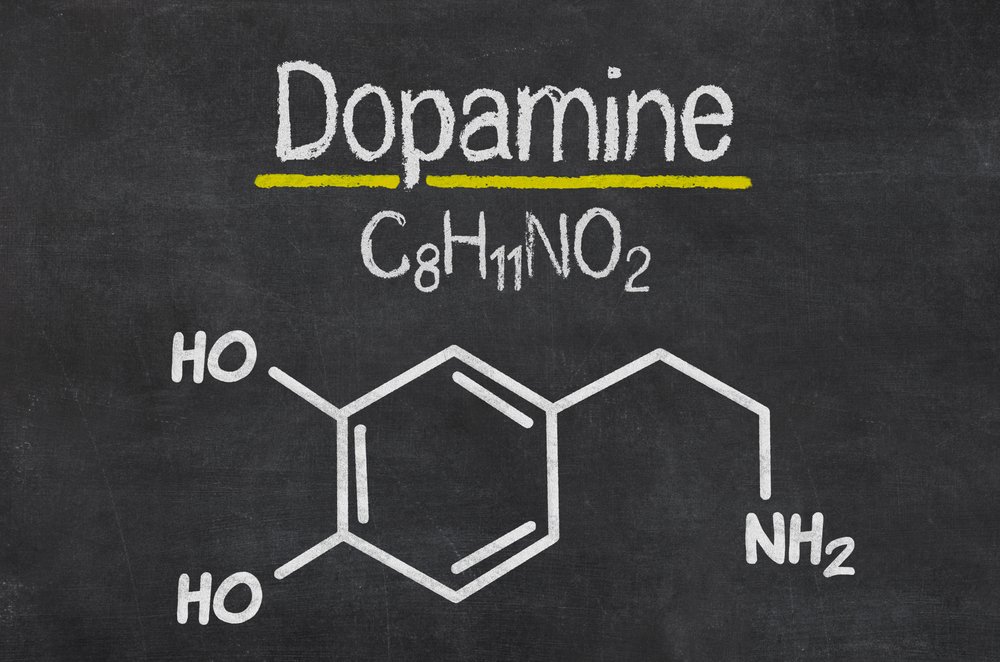
Dopamine and Monoamine Oxidase (MAO)
This is another biological factor that determines your speeding obsession.

dopamine
MAO is a regulator in that brain that is associated with a dopamine (a reward chemical that is strongly related to pleasure-seeking behavior) receptor called dopamine-4.
Therefore, if you have low levels of MAO, there is a good chance that you’re the kind of person who craves thrills and adventures.
Engaging in these activities on a regular basis can lead to the formation of habits, which tends to make people risk their (and potentially others’) lives in order to experience ever-increasing thrills.

A Pinch of Psychology!
Your testosterone isn’t the only factor behind this strange male-oriented phenomenon.

egoYou ego also makes you feel thrilled by speed. As you climb onto a bike or step into a car, there is an immediate change in your psyche.
The vehicle you are driving becomes an extension of your personality, which is why men are more likely to purchase sports cars than women, as they are considered to be a status symbol that traditionally boosts men’s ego and increases their masculine appearance.
Making the vehicle under your control go even faster boosts the ego an immense amount, which can be another habit-forming sensation!
Speed is certainly not a bad thing, but like anything else, an excess of it can have some very serious repercussions that you absolutely don’t want to experience.
Remember, going fast is fun and exciting, but you are also operating a 2-ton piece of metal that can do some serious damage to yourself if handled improperly – not to mention the innocent people all around you!
Check your speed and stay safe!

Multi-Media Filter, Highly-Activated Carbon Filter,
Zeolite-Process Water Softener With Brine Tank,
Fiberglass Ballast-Type Pressure Tank
(fully automatic backwash & regeneration)

PURICARE 
INDUSTRIAL 
ENTERPRISES 
Water 
Treatment 
Systems
.
..

Aganan, Pavia, Iloilo, Philippines