Thursday, July 30, 2020

HOW TO CALCULATE TIRE TURNS PER MILE - The diameter of a tire is the distance across the tire through the center. Since tires are circular, you can find the circumference of the tire from the diameter. The circumference represents the distance the tire travels when it makes one revolution. If you know the number of inches in a mile and the circumference, you can find the number of times the wheel turns per mile. First, measure the diameter of the tire in inches. Secondly, multiply the diameter by pi, which is approximately 3.1416, to find the tire circumference. For example, if the tire has a 20 inch diameter, multiply 20 by 3.1416 to get 62.83 inches. Finally, divide 63,360 inches per mile by the tire circumference to find the revolutions per mile. Finishing the example, you would divide 63,360 by 62.83 to get 1,008.44 revolutions per mile.

Mazda TPMS Functionality and Information
.................................................................................................................................................
 How to Calculate Tire Turns Per Mile
By Mark Kennan


The diameter of a tire is the distance across the tire through the center.
Since tires are circular, you can find the circumference of the tire from the diameter.
The circumference represents the distance the tire travels when it makes one revolution.
If you know the number of inches in a mile and the circumference, you can find the number of times the wheel turns per mile.
First, measure the diameter of the tire in inches.
Secondly, multiply the diameter by pi, which is approximately 3.1416, to find the tire circumference.
For example, if the tire has a 20 inch diameter, multiply 20 by 3.1416 to get 62.83 inches.
Finally, divide 63,360 inches per mile by the tire circumference to find the revolutions per mile.
Finishing the example, you would divide 63,360 by 62.83 to get 1,008.44 revolutions per mile.

Mark Kennan is a writer based in the Kansas City area, specializing in personal finance and business topics. He has been writing since 2009 and has been published by "Quicken," "TurboTax," and "The Motley Fool."
How a Change in Tire Size Affects Speedometer Accuracy | Tires ...

Wednesday, July 29, 2020

AIR CONDITIONING MAY BE SPREADING COVID - As COVID-19 cases rise rapidly some scientists believe there could be an important, but overlooked factor in the spread of the virus in the region -- air conditioning. Just as chilly winter temps create the perfect conditions for passing colds and flu — driving people indoors and into closer proximity for more hours of the day where it’s easy to swap germs, researchers believe broiling heat in the southern U.S. could be having the same effect, sending people indoors where whirring air conditioners are running full blast. Air conditioning is also risky because of the way air handlers work. When outdoor temperatures are extreme, HVAC systems adjust the mix of fresh air they pull in to save energy. That means the hotter it is outside, the more indoor air recirculates, which means, you’re breathing a higher percentage of the same air that other people are exhaling. If someone in the building is shedding the new coronavirus, it can build up in the recirculated air. And this may seem obvious, but air conditioners have fans that blow the air around. That gives the smallest viral particles — aerosols -- extra lift to stay suspended in the air. The air currents that are produced by air conditioners and also fans and other air moving devices can carry particles further than they might otherwise go. Air conditioners also remove moisture from the air, and we know viruses prefer dry air.

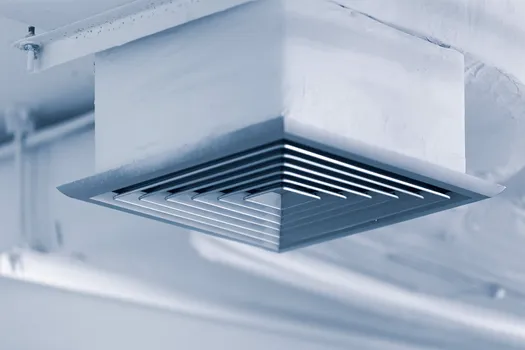
photo of air conditioning vent
..................................................................................................................................................
Air Conditioning May Be Spreading COVID
By Brenda Goodman, MA


As COVID-19 cases rise rapidly throughout the South, some scientists believe there could be an important, but overlooked factor in the spread of the virus in the region -- air conditioning.
Just as chilly winter temps create the perfect conditions for passing colds and flu — driving people indoors and into closer proximity for more hours of the day where it’s easy to swap germs, researchers believe broiling heat in the southern U.S. could be having the same effect, sending people indoors where whirring air conditioners are running full blast.
“You go indoors for the cool, just as in the northeast and other cool places you go in for the warmth in winter, so you’re less socially distanced,” says Edward Nardell, MD, professor of environmental health and immunology and infectious diseases at Harvard’s T.H. Chan School of Public Health.
“You’re more likely to be touching the same surfaces that have been contaminated by people speaking and coughing etc.,” he says.
And that’s not the only problem.
Air conditioning is also risky because of the way air handlers work. When outdoor temperatures are extreme, HVAC systems adjust the mix of fresh air they pull in to save energy.
That means the hotter it is outside, the more indoor air recirculates, which means, “You’re breathing a higher percentage of the same air that other people are exhaling,” Nardell says.
If someone in the building is shedding the new coronavirus, it can build up in the recirculated air.
And this may seem obvious, but air conditioners have fans that blow the air around.
That gives the smallest viral particles — aerosols -- extra lift to say suspended in the air for longer.
“The air currents that are produced by air conditioners and also fans and other air moving devices can carry particles further than they might otherwise go,” he says.
Air conditioners also remove moisture from the air, “and we know viruses prefer dry air,” he says.
In certain situations, that combination of factors may create the perfect conditions for contagion.
Emerging Evidence Points To Airborne Transmission
Studies of air conditioning come as more evidence emerges about airborne spread of COVID-19.
In a commentary published this week in the journal Clinical Infectious Diseases, an international group of 239 scientists have appealed to “national and international bodies” including the World Health Organization, to recognize this potential for airborne spread.
“We’re pushing because we need very clear, consistent messaging to the world,” said Shelly Miller, PhD, a professor of mechanical engineering who studies indoor air quality at the University of Colorado at Boulder.
Miller was one of the chief proponents of the commentary.
This virus is opportunistically airborne, you can get it by inhaling it,” she says.
Miller and others believe that WHO and other public health agencies have a blind spot when it comes to airborne transmission.
“Based on our assessments of outbreaks, air sampling, and animal studies and we have just as much evidence to show that airborne transmission is happening as is surface transmission, so we need clear guidance for how to address this,” Miller says.
In its latest press briefing, WHO experts responded to the communication, and said the agency would be publishing a scientific brief summarizing their view of the science shortly.
“We acknowledge that there is emerging evidence in this field,” said Benedetta Allegranzi, MD, WHO’s technical lead for infection prevention and control.
 “We believe we have to be open to this evidence and understand its implications regarding the modes of transmission and the precautions that need to be taken,” she said.
The Role of Air Conditioning
So far, there are just a few studies pointing to the role of air conditioning in the spread of COVID-19. They indicate more research in the area is needed.
In July, Chinese scientists published a short study detailing the results of their investigation of a cluster of COVID-19 cases linked to the same restaurant.
The 10 diners who fell ill were all sitting at tables on the same side of the room.
The tables were spaced more than 3 feet apart, though, indicating that the virus probably wasn’t being passed through larger droplets, which fall out of the air pretty quickly.
Instead, they think “strong airflow” from a wall mounted air conditioner probably spread aerosols, or “micro-droplets”, from a single infected, but asymptomatic person over the tables, infecting three different families.
In another study, which hasn’t yet been peer reviewed, researchers swabbed three different HVAC units at the Oregon Health and Science University Hospital in Portland.
Then they checked their samples for the presence of genetic material from the SARS-CoV-2 virus. The swabs were positive in 1 out of every 4 samples taken.
“We found it in multiple locations within the air handler,” says study author Kevin Van Den Wymelenberg, PhD, a professor of architecture and director of the Institute for Health in the Built Environment at the University of Oregon in Eugene.
similar study, from the University of Nebraska Medical Center, detected genetic material from the virus in air samples collected from rooms of COVID-19 patients, even air samples collected from more than six feet away.
Van Den Wymelenberg says their study can’t prove that the remnants of the virus they picked up could have actually infected anyone.
To know that, they would have had to try to grow their samples alongside cells in a petri dish and watch to see if those cells were infected.
Those are expensive studies to perform and they require a specialized lab certified to handle highly contagious germs — called a biosafety level 3 lab.
Those are less common, and they’re all currently slammed with projects.
But he says his study does show that genetic material from the virus is making it into the machinery of massive air handlers in hospitals, even ones that are using good filters, and he thinks that should make public health experts closely consider air conditioning as a vehicle for virus spread.
Steps for Safer Indoor Air
Miller says that the easiest thing to keep the virus from building up inside is to bring in more outdoor air.
In homes, that means opening windows and doors regularly to let fresh air in.
That’s harder to do in commercial buildings.
“What we’ve been recommending to minimize risk indoors is to provide 100% outside air, which you can’t do if you’re trying to heat or cool because it just costs way too much money,” she said.
Another strategy to reduce the risk of being indoors is to kill airborne viruses with special wall or ceiling mounted boxes that emit short-range UV radiation.
This kind of UV light doesn’t damage skin the way sunlight does, but still zaps harmful germs.
These so-called upper-room germicidal systems have successfully controlled outbreaks of other airborne pathogens, like tuberculosis, Nardell says.
Finally, you can invest in an air cleaner.
Miller cautions that if you go this route, you need to do a fair amount of homework first, learning about things like a machine’s clean air delivery rate, or CADR.
“I purchased an air cleaner strictly to operate when and if somebody in my household gets sick so we can reduce the viral load in my house air,” she says.
Ionizing cleaners don’t work, she says.
Miller recommends checking the website of the Association of Home Appliance Manufacturers, or AHAM to find a good air cleaner.
“They have a whole website set up to do your research and buy a good air cleaner that will work in your home or office,” she says.

Brenda Goodman, MA, is a staff writer for WebMD.  Her work has appeared in The New York Times, Scientific American, Psychology Today, The Boston Globe, Self, Shape, Parade, U.S. News and World Report, and Atlanta Magazine. She has a master’s degree in science and environmental reporting from New York University.
photo of air conditioning vent

Tuesday, July 28, 2020

ROAD CRACKS - The common causes of pavement deterioration and degradation are overloading, seepage, improper or poor road surface drainage, lack of proper road maintenance, lack of proper design, adverse climatic conditions and some other factors. Road distresses disturb and adversely affect the traffic flow and traffic safety leading to poor performance of the road. They also cause an increase in fuel costs, result in time delay and prove troublesome for every road user. Identification of the road cracks at an early stage is essential as preventive road maintenance and effective remedial measures can be applied before the problem becomes too severe and the pavement fails. Pavement maintenance thus leads to enormous economic benefits in preventing the pavement from failing. Also, the distresses whether of a smaller or larger scale are a nuisance to the road users and may prove hazardous if neglected for a long period as their condition worsens with time. Proper, timely and selective road maintenance thus becomes an important principle which lengthens the life of the pavement and also reduces the cost of maintenance. Fatigue cracks are interconnected cracks that are caused under the influence of repeated traffic loading. Roads that face extreme climates and heavily loaded vehicles undergo severe fatigue cracking. It is also referred to as Alligator cracking as the crack pattern resembles the skin of an alligator.

After railway tracks, Mumbai-Nashik road cracks open
.................................................................................................................................................
Earthquake cracks walls, roads in north Thailand | News ...
Road Cracks
What are Road Cracks?

How they are Formed
By: Haseeb Jamal 


The common causes of pavement deterioration and degradation are overloading, seepage, improper or poor road surface drainage, lack of proper road maintenance, lack of proper design, adverse climatic conditions and some other factors.
Volcano road cracks stock photo ab1aa9ea-b13b-48a2-b85d ...Road distresses disturb and adversely affect the traffic flow and traffic safety leading to poor performance of the road.
They also cause an increase in fuel costs, result in time delay and prove troublesome for every road user.
Identification of the road cracks at an early stage is essential as preventive road maintenance and effective remedial measures can be applied before the problem becomes too severe and the pavement fails.
Video shows skateboarding daredevils use road destroyed by ...Pavement maintenance thus leads to enormous economic benefits in preventing the pavement from failing.
Also, the distresses whether of a smaller or larger scale are a nuisance to the road users and may prove hazardous if neglected for a long period as their condition worsens with time.
Proper, timely and selective road maintenance thus becomes an important principle which lengthens the life of the pavement and also reduces the cost of maintenance.
Common Road Distresses in Flexible Pavements:
The most common road distresses in flexible pavements are Cracking and Rutting.
Type of Road Cracks
Fatigue or Alligator Cracking:
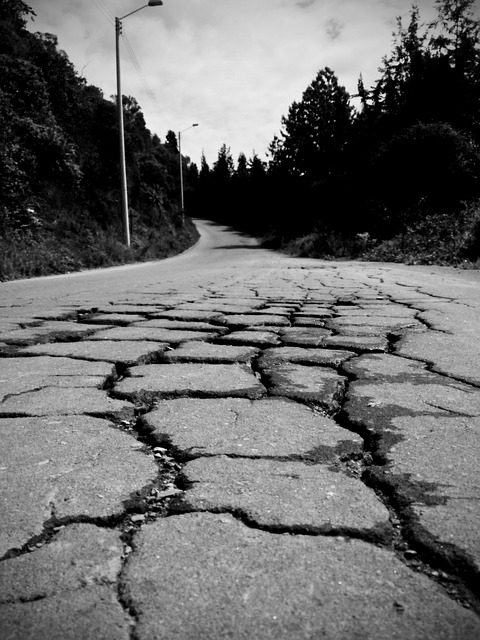
Alligator Cracks in RoadFatigue cracks are interconnected cracks that are caused under the influence of repeated traffic loading.
Roads that face extreme climates and heavily loaded vehicles undergo severe fatigue cracking.
It is also referred to as Alligator cracking as the crack pattern resembles the skin of an alligator.
Fatigue cracking if not attended causes roughness and may lead to structural failure, water seepage through the cracks and can further degrade to form potholes.
Block Cracking in Roads:
Block cracking is in the form of interconnected rectangular cracks. These types of cracks also cause roughness and water seepage through the cracks.
Longitudinal and Transverse cracking:
Cracks formed in the direction of the traffic flow are termed as longitudinal cracks and those that are formed perpendicular to the traffic flow are called transverse cracks.
Corrugation and Shoving:
Largest area Nevada earthquake in 65 years cracks main highway ...It is in the form of a sudden wave in the road surface and is perpendicular to the direction of traffic flow and is mostly located at the points where a vehicle starts or stops in the road.
It causes roughness and discomfort to the driver.
Depression:
Localized road sections with a slight depression, it causes roughness and collects water which may lead to pothole formation
Potholes:
Potholes are bowl-shaped depressions of varying sizes in the pavement surface. They generally have sharp edges. Potholes are most likely to occur on roads with thin surfaces course.
They are usually caused when the severity of cracks increases. They cause roughness and rider discomfort and are a major cause of accidents especially at dark times when there visibility is very low.
Raveling:
The crumbling up of the asphalt layer as a result of the disintegration between the aggregate particles and the asphalt binder.
It causes roughness and skid resistance problem and may lead to pothole formation as the moisture infiltration increases because of the openings.
Rutting:
It is identified as the slight depression along the wheel paths in a pavement. It is classified into two types.
Mix rutting: when the rutting does not affect the subgrade and Subgrade Rutting: When the rutting is prominent in the subgrade.
Water Bleeding:
Water bleeding occurs when water seeps out of joints or cracks or through an excessively porous HMA layer.
Stripping:
The loss of bond between aggregates and asphalt binder that typically begins at the bottom of the asphalt layer and progresses upward.
When stripping begins at the surface and progresses downward it is usually called raveling.

Haseeb Jamal. I am a Civil Engineer, graduated from University of Engineering and Technology, PeshawarPakistan in 2010. I also have a PG-Diploma in Disaster Management and MS in Urban Infrastructure Engineering (In Progress). My expertise include civil related softwares like AutoCAD, SAP2000, MS Project, Primavera, MS Office and GIS. My technical skills include project management, monitoring and evaluation, structural assessment, disaster risk management, Quantity survey, land survey, material testing, site management and technical writing. I am trained in writing project progress reports as well as proposals and concept papers. I have also received advanced training on surveying, proposal writing, Monitoring and Evaluation of projects as well as organizations.
I have worked as Project Engineer at National Research and Development Foundation, Peshawar and CENCON Associates. I also worked with Spectra Engineering Solutions as Senior Civil Engineer in monitoring of World Bank and UNDP funded projects all over Khyber Pakhtunkhwa and FATA. Currently, I am working as Deputy Manager Development at NayaTel, Peshawar.
Massive cracks in new approach road near Arakkonam- The New Indian ...

AIR POLLUTION - The term "air pollution" is used so commonly that you may not think definitions are necessary. Some sources define smog as the presence of unnatural levels of ground-level ozone, while other sources say things like "fog mixed with smoke." A more modern and precise definition is "a photochemical haze caused by the action of solar ultraviolet radiation on atmosphere polluted with hydrocarbons and oxides of nitrogen especially from automobile exhaust." Officially, air pollution can be defined as the presence of harmful substances in the air, either particulates or microscopic biologic molecules, that pose health hazards to living organisms, such as people, animals or plants. Air pollution comes in many forms and may include a number of different pollutants and toxins in various combinations. Air pollution is far more than a nuisance or inconvenience. Air pollution causes the deaths of approximately 4.2 million people annually worldwide. The two most widespread types of air pollution are the ozone and particle pollution (soot), but air pollution also may include serious pollutants such as carbon monoxide, lead, nitrogen oxides, and sulfur dioxide, volatile organic compounds (VOCs) and toxins such as mercury, arsenic, benzene, formaldehyde, and acid gases. Most of these pollutants are man-made, but some air pollution is due to natural causes, such as ash from volcanic eruptions.

shanghai air pollution
..................................................................................................................................................
Air Pollution
What Is Air Pollution?
Definition, Facts, and Environmental Risks
By Larry West


The term "air pollution" is used so commonly that you may not think definitions are necessary. But the issue is more complicated than it first appears. 
Ask most people to define air pollution, and their first response is to describe smog, the smelly stuff that turns the air brown or gray and hovers over urban centers like Los Angeles, Mexico City, and Beijing.
Even here, though, definitions vary.
Some sources define smog as the presence of unnatural levels of ground-level ozone, while other sources say things like "fog mixed with smoke."
A more modern and precise definition is "a photochemical haze caused by the action of solar ultraviolet radiation on atmosphere polluted with hydrocarbons and oxides of nitrogen especially from automobile exhaust."
Officially, air pollution can be defined as the presence of harmful substances in the air, either particulates or microscopic biologic molecules, that pose health hazards to living organisms, such as people, animals or plants.
Air pollution comes in many forms and may include a number of different pollutants and toxins in various combinations.
Air pollution is far more than a nuisance or inconvenience.
According to the World Health Organization, air pollution causes the deaths of approximately 4.2 million people annually worldwide.
What Constitutes Air Pollution?
The two most widespread types of air pollution are the ozone and particle pollution (soot), but air pollution also may include serious pollutants such as carbon monoxide, lead, nitrogen oxides, and sulfur dioxide, volatile organic compounds (VOCs) and toxins such as mercury, arsenic, benzene, formaldehyde, and acid gases.
Most of these pollutants are man-made, but some air pollution is due to natural causes, such as ash from volcanic eruptions. 
The specific composition of air pollution in a particular location depends primarily on the source or sources of pollution.
Automobile exhaust, coal-fired power plants, industrial factories, and other pollution sources all spew different types of pollutants and toxins into the air.
While we think of air pollution as a condition describing outside air, the air quality within your home is equally important.
Cooking vapors, carbon monoxide from heating appliances, off-gassing of formaldehyde and other chemicals from furniture and construction materials, and secondhand tobacco smoke are all potentially dangerous forms of indoor air pollution. 
Air Pollution and Your Health
Air pollution hovers at unhealthy levels in almost every major U.S. city, interfering with people’s ability to breathe, causing or aggravating many serious health conditions, and placing lives at risk.
Many cities worldwide face the same issues, especially in so-called emerging economies such as China and India, where cleaner technologies are not yet in standard usage. 
Breathing ozone, particle pollution or other types of air pollution can seriously damage your health.
Inhaling ozone can irritate your lungs, "resulting in something like a bad sunburn within the lungs," according to the American Lung Association. Breathing particle pollution (soot) can increase your risk of heart attack, stroke and early death, and it may necessitate emergency-room visits for people with asthma, diabetes and cardiovascular disease.
A great many cancers are traced to chemical air pollutants. 
Air pollution is also a problem in developing countries that are not yet fully industrialized.
More than half the world's population still cook their meals with wood, dung, coal or other solid fuels over open fires or on primitive stoves inside their homes, breathing high levels of pollutants such as particulate pollution and carbon monoxide, which results in 1.5 million unnecessary deaths every year.
Who Is Most at Risk?
The health risks of air pollution are greatest among infants and young children, older adults and people with respiratory diseases such as asthma.
People who work or exercise outside also face increased health risks from the effects of air pollution, along with people who live or work near busy highways, factories or power plants.
In addition, minorities and people with low incomes are often disproportionately affected by air pollution because of where they live, which places them at higher risk for illnesses related to air pollution.
Low-income populations often live near industrial or inner-city zones where factories, utilities, and other industrial sources may create unusually high levels of air pollution. 
Air Pollution and the Health of the Planet
If air pollution affects humans, it of course also may also have an impact on animals and plant life.
Many animal species are threatened by high levels of air pollution, and weather conditions created by air pollution affect both animal and plant life.
For example, acid rain caused by the burning of fossil fuels has radically changed the nature of forests in the U.S. Northeast, upper Midwest, and Northwest.
And it is now indisputable that air pollution causes shifts in global weather patterns — the raising of global temperatures, the melting of polar ice sheets and the coming rise in ocean water levels. 
How Can Air Pollution Be Reduced?
The evidence is clear that our personal choices and industrial practices can affect the levels of air pollution.
Cleaner industrial technologies are shown to lower air pollution levels, and it can be demonstrated that anytime more primitive industrial practices increase, so do levels of dangerous air pollution.
Here are some of the obvious ways that humans can, and have reduced air pollution: 
o    Reduction of fossil fuel burning in favor of renewable energy sources. Nations that obtain their electrical power from nuclear, hydroelectric, solar and wind power have lower pollution levels than those that favor the burning of coal or natural gas. 
o    Improved gas mileage in automobiles and the introduction of electric-powered vehicles. California, for example, once plagued with dangerous smog, has greatly improved its air quality through tight controls on automobile emissions standards. Similarly, reduction in the use of other internal combustion engines can reduce air pollution. The shift to battery-operated or electric lawn mowers and lawn equipment, for example, has a demonstrable effect on air quality. 
o    Reduction in agricultural burning — the method of clearing forested areas for agriculture — can reduce the level of smoke and carbon dioxide in the air. This is a particular problem in developing countries. 
o    Reducing wood burning can also reduce levels of smoke in the air. In some communities, wood fireplaces are now outlawed, greatly reducing dangerous levels of smoke in the air. Gas fireplaces are better than wood-burners, and even better are electric fireplaces that burn no fuels at all. 
o    Indoor air quality is improved when tobacco smoking is restricted by ordinance. Citizen pressure to restrict smoking in public places has a real effect on air quality. 
o    Reduction of chemical compounds in paints, adhesives, and solvents has improved the quality of indoor and outdoor air. Always look for low VOC materials for home improvements, and where practical, opt for water-based rather than solvent-based paints and other materials. Look for carpets, fabrics, and furniture that don't off-gas dangerous fumes. 
Controlling pollution is possible, but it requires the individual and political will to do so, and these efforts must constantly be balanced with economic realities, as green technologies are often more expensive, especially when they are first introduced. 
Such choices are in the hands of each individual: for example, do you buy a cheap but dirty automobile or an expensive electric car?
Or are jobs for coal miners more important than clean air? 
These complex questions are not easily answered by individuals or governments, but they are questions that should be considered and debated with eyes open to the real effects of air pollution. 
Larry West
Environmental Journalist
Education
B.A., Journalism and Creative Writing, University of Washington
Introduction
Environmental journalist with 20+ years of experience
Winner, Edward J. Meeman Award for Environmental Reporting
Writer and editor for Go West Strategic Communications since 2002
Experience
Larry West is a former writer for ThoughtCo who contributed articles for five years. He is a principal and professional writer and editor for Go West Strategic Communications. He has written about environmental issues for leading newspapers, magazines, and online publications. 
During his 20-year career in newspapers, Larry was part of an investigative team whose work was a finalist for the Pulitzer Prize. He also received the Meeman Award for national environmental reporting from the Scripps Howard Foundation. Later, Larry served as press secretary and deputy chief of staff for a U.S. Representative and served as communications director for a U.S. Senator. He also managed public affairs for organizations including the Federal Aviation Administration, a global technology company, and one of the largest ports in the United States. In each of those positions, Larry was involved in environmental strategy, policy, and communications. 
Education
Larry studied journalism and creative writing at the University of Washington in Seattle, Washington. He also taught research and writing courses in continuing education programs at the University of Washington and the University of Alaska. 
Awards and Publications
While working as a journalist for "The Seattle Times," Larry's work was awarded the Edward J. Meeman Award for Environmental Reporting by Scripps Howard, and a finalist for the Pulitzer Prize.
ThoughtCo and Dotdash
ThoughtCo is a premier reference site focusing on expert-created education content. We are one of the top-10 information sites in the world as rated by comScore, a leading Internet measurement company. Every month, more than 13 million readers seek answers to their questions on ThoughtCo.
For more than 20 years, Dotdash brands have been helping people find answers, solve problems, and get inspired. We are one of the top-20 largest content publishers on the Internet according to comScore, and reach more than 30% of the U.S. population monthly. Our brands collectively have won more than 20 industry awards in the last year alone, and recently Dotdash was named Publisher of the Year by Digiday, a leading industry publication.
shanghai air pollution