Monday, May 29, 2017

EATING DISORDERS AND DEPRESSION - Twenty million women and 10 million men will suffer from eating disorder, including anorexia nervosa, bulimia nervosa, binge eating, or other eating disorder. Bulimia nervosa begins in adolescence or young adulthood and is characterized by recurrent episodes of binge eating and compensatory behaviors (often referred to as “purging.” Individuals with bulimia nervosa show an increased frequency of both depressive symptoms and depressive disorders. Suicide risk is elevated for individuals with bulimia nervosa, particularly with a co-occurring mood disorder. Symptoms of major depressive disorder increases the risk of suicide.


......................

Eating Disorders And Depression
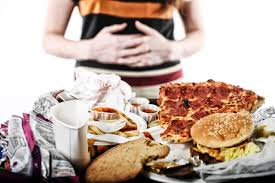
Image result for images Depression and BulimiaDepression and Bulimia

Article by: Katie Hurley. LCSW
Eating disorders are complex, potentially life threatening conditions that negatively impact a person’s physical and emotional health.
According to the National Eating Disorders Association, 20 million women and 10 million men will suffer from a clinically significant eating disorder at some point, including anorexia nervosa, bulimia nervosa, binge eating disorder, or other or unspecified feeding or eating disorder.
Bulimia nervosa commonly begins in adolescence or young adulthood and is characterized by recurrent episodes of binge eating and compensatory behaviors (often referred to as “purging.”
Comorbidity with other mental disorders is common with individuals with bulimia nervosa, with studies indicating that nearly half of bulimia nervosa patients also have a co-existing mood disorder. 
Individuals with bulimia nervosa show an increased frequency of both depressive symptoms (ex: low self-esteem) and depressive disorders.
For many patients, the mood disturbance begins at the same time as or following the eating disorder, but for some the mood disturbance precedes the development of bulimia nervosa. 
Given the overlapping relationship between bulimia nervosa and depressive disorders, it helps to understand both and find effective treatment.

Symptoms of bulimia nervosa

Individuals with bulimia nervosa typically are within normal weight or overweight range, and the binge eating frequently begins during or after an episode of dieting to lose weight.
The essential features of bulimia nervosa are as follows:
1.   Recurrent episodes of binge eating characterized by eating (in a discrete amount of time) an amount of food that is larger than most individuals would eat given the circumstances and a sense of lack of control during the eating episode.
2.   Recurrent compensatory behaviors (“purging”) to prevent weight gain, including: self-induced vomiting, misuse of laxatives, diuretics, or other medications, fasting, or excessive exercise.
3.   The binge eating and purging both occur at least once a week for 3 months.
4.    Self-evaluation is influenced by weight and body shape
5.    The disturbance does not occur during anorexia. Individuals with bulimia nervosa place an excessive emphasis on weight and body shape, and these evaluations of their bodies negatively impact their self-esteem.
Binge eating often occurs in secret and can be triggered by stress, negative feelings related to weight or body shape, boredom, or dietary restraint. Binge eating can result in feelings of shame.
The 12-month prevalence of bulimia nervosa among young females is 1%-1.5%. The disorder peaks in adolescence and young adulthood and has a 10:1 female-to-male ratio. 6

Suicide risk

Suicide risk is elevated for individuals with bulimia nervosa, particularly with a co-occurring mood disorder.
Symptoms of major depressive disorder increases the risk of suicide.
The essential feature of major depressive disorder is a period of two weeks during which there is either depressed mood most of the day nearly every day or loss of interest or pleasure in nearly all activities.
Other potential symptoms include:
·   Significant weight loss when not dieting or weight gain and changes in appetite
·   Insomnia or hypersomnia nearly every day
·   Psychomotor agitation or retardation nearly every day
·   Fatigue or loss of energy nearly every day
·   Feelings of worthlessness or excessive guilt
·   Impaired ability to think or concentrate, and/or indecisiveness
·   Recurrent thoughts of death, recurrent suicidal ideation without a plan, or a suicide attempt or suicide plan. 
The symptoms of major depressive disorder cause significant distress or impairment in social, occupational, or other areas of functioning.
Suicide is always a risk when an individual experiences a major depressive episode.
It is very important that individuals discuss their depressive symptoms with their health care providers when seeking help for bulimia nervosa, as a more than one treatment approach might be necessary.

Treatment of bulimia nervosa and depression

Treatment of bulimia can be complicated.
Effective treatment addresses the underlying emotional issues that contribute to low self-esteem and negative self-perception.
Treatment of bulimia nervosa and depression is most effective with a team approach.
Your treatment team includes you, your family, your primary care doctor or health practitioner, your mental health practitioner, and a dietitian experienced in treating eating disorders.
Treatment can include:
·  Cognitive Behavioral Therapy (CBT) to help you identify unhealthy, negative thought patterns that contribute to disordered eating and replace them with positive ones
·  Family therapy (this is particularly important with adolescents)
·  Interpersonal therapy to help work through issues related to self-esteem, communication, and problem solving
·  Medication management – some antidepressants can be effective for treatment of bulimia nervosa when combined with psychotherapy. 
·  Nutrition education to design a healthy eating plan
·  Hospitalization – if you have significant health complications from bulimia nervosa, hospitalization might be necessary

Finding help for bulimia nervosa and depression

There is no simple answer for treating bulimia nervosa and depression.
The best first step to take is to ask your primary care physician for a referral to an eating disorders specialist.
From there, your specialist can lead your team to help you find the treatment plan that works best for you.

Katie Hurley, LCSW

Katie Hurley, LCSW is the author of  No More Mean Girls and The Happy Kid Handbook.  Katie provides child and adolescent psychotherapy, family therapy, and parent education in her private practice. She is the founder of Girls Can! empowerment workshops for elementary and middle school girls, and has extensive experience working with children and adolescents with learning disabilities, anxiety and low self-esteem.

 Image result for images Depression and Bulimia

Image result for images Depression and BulimiaImage result for images Depression and BulimiaImage result for images Depression and Bulimia

Image result for images Depression and BulimiaImage result for images Depression and BulimiaImage result for images Depression and Bulimia

Image result for images Depression and BulimiaImage result for images Depression and BulimiaImage result for images Depression and Bulimia

Sunday, May 28, 2017

OLD INJURIES AND JOINT ACHES - Why Do Old Injuries And Arthritis Joints Ache At The Start Of The Rainy Season? A drop in the barometric pressure before a storm causes the atmosphere to push less against the body, which allows the tissues around the joints to expand. These expanded tissues may then put excess pressure on the joints, resulting in painful sensation or ache in that particular joint.


.
Old Injuries And 
Joint Aches

Why Do Old Injuries And Arthritis Joints Ache At The Start Of The Rainy Season?

Achish  
You have probably heard the adults in your house, especially your grandparents, complain about the pain of old injuries in certain parts of their body in select climate conditions.
Although people may complain of aggravation from old wounds in practically all climatic conditions, it’s most commonly observed before the onset of rainy seasons.
In fact, the grandfather of a friend of mine can predict the imminent arrival of rain when a particular part of his knee begins to ache. Strangely enough, he is often correct in his rain predictions!
Why do fractured bones hurt so much in certain weather conditions? Is there any real connection between joint pain and weather conditions, or is it purely psychological?
Short answer: Yes, there seems to be a direct relation between joint pains and changes in weather conditions, especially prior to the start of the rainy season.
Although there doesn’t exist a concrete, undebatable theory of how it happens, there are a few hypotheses that blame the fluctuations in barometric pressure for the flaring up of joints.

Pain in bone joints and old injuries due to changes in weather

You may have heard arthritis patients complain about how their affected body parts get tensed and flared when the sky turns cloudy or the air becomes too humid.
Arthritis patients often complain about weather-related bone aches. 
Even in your own case, you may have observed that certain old injury spots start to ache in particular kinds of weather.
As mentioned earlier, the correlation between pain in the joints and weather seems to be so strong that people often predict weather conditions … correctly!
It cannot be denied that there is a definite connection here, and justifying that connection is one very popular hypothesis.

Changes in barometric pressure and joint aches

Barometric pressure is the force exerted by the atmosphere at a given point. It is measured by a device
Barometric pressure is commonly known as the 
atmospheric pressure, and its magnitude at a given 
point is measured with the help of a barometer.
 called a barometer.
In simple words, barometric pressure is the weight of the air that surrounds and pushes down on us. Its magnitude varies with humidity and altitude.
A gradual increase in the barometric pressure is usually seen as a sign of improving weather, while a dip in the barometric pressure may reflect imminent inclement weather.
The barometer “falls” (i.e., there is a drop in the barometric pressure) before the onset of rains or in stormy weather conditions.
During times of stormy weather, the 

barometric pressure tends to be lower. 
A drop in the barometric pressure before a storm causes the atmosphere to push less against the body, which allows the tissues around the joints to expand.
These expanded tissues may then put excess pressure on the joints, resulting in painful sensation or ache in that particular joint.
(Note: this is just a hypothesis as to how dipping barometric pressure can cause joint pains and is not experimentally proven as of now.)
Although changes in the barometric pressure are considered to be the key weather-related variable behind joint pain, there are other factors too, like humidity and temperature, that can cause your bone joints to flare up as well.
Notwithstanding the fact that the relation between weather and joint pain has been under scientific scrutiny since the early 20th century, unfortunately, we haven’t been able to find definitive evidence suggesting that there is a consistent effect from weather conditions on one’s health.
There are several reasons behind this: first, the swelling and discomforting sensation associated with changing weather occurs at too small of a scale to be objectively detected and measured by researchers.
Therefore, they have to count on people’s subjective descriptions of their pain, which cannot be relied upon completely to derive 100% accurate conclusions.
What makes things even more difficult is that people respond differently to the same set of environmental conditions.
While many people complain about their bone joints when the barometric pressure drops, there are plenty of folks who experience pain when the pressure rises.
In other words, there are a lot of mixed and even contradictory responses to the same set of weather conditions, which exacerbates the debate further.
Furthermore, it’s not as if barometric pressure is the only variable in question here; we don’t know for sure which combination of weather conditions is the most discomforting.
Overall, we don’t know the exact reason why changing weather causes joint inflammation, but we do know that it’s experienced by many people, especially arthritis patients.
On a lighter note, people seem to predict changes in weather very accurately based on that!
You might also like:
.
.
Water And Arthritis
CLICK HERE . . .
.

Water And Gout
CLICK HERE . . .
Multi-Media Filter, Highly-Activated Carbon Filter,
Zeolite-Process Water Softener With Brine Tank,
Fiberglass Ballast-Type Pressure Tank
(fully automatic backwash & regeneration)
.
PURICARE 
INDUSTRIAL 
ENTERPRISES 
Water 
Treatment 
Systems
.
...
Aganan, Pavia, Iloilo, Philippines
...

CLICK HERE . . . to view company profile . . .
Reverse Osmosis with Steel Tank 
& Cartridge Pre-Filters

Submersible Pumps

Tachmina Solenoid-Driven
Chemical Metering Pump
- ensures regulated dosing
of chlorine into water system
without human intervention


Saturday, May 27, 2017

HIGHEST BLOOD PRESSURE - What Time of Day Is Blood Pressure Highest? - It is recommended to measure the blood pressure in the morning, before you have your morning coffee and breakfast, and once again before bed. Blood pressure is lower at night while you are sleeping. It starts to rise a couple of hours before you wake up. It continues to rise during the morning, peaking somewhere in the middle of the afternoon.

Highest Blood 
Pressure

What Time of Day Is Blood Pressure Highest?
Normally, the blood pressure is lower at night while you are sleeping.
It starts to rise a couple of hours before you wake up. It continues to rise during the morning, peaking somewhere in the middle of the afternoon.
The blood pressure starts to drop again in the late afternoon and evening. 25%-30% changes of the blood pressure level during the day are considered as normal. 
If, however, the blood pressure levels fluctuate beyond the range or you feel uncomfortable with the fluctuation, you should get a medical help. 
When your blood pressure does not match the answer to "what time of day is blood pressure highest?" such as being higher in the morning or at night, you can have certain health conditions.
Medical conditions associated with abnormal blood pressure pattern include: 
·     Nervous system problems
·     Diabetes
·     Kidney disease
·     Thyroid problems
Factors that increase the risk of having an abnormal blood pressure pattern include:
·     Stress
·     Smoking
·     Working night shifts
·     Anxiety
·     Blood pressure medications that don't last 24 hours
When to Monitor Your Blood Pressure at Home
You may want to closely observe your blood pressure during the day so as to detect any abnormal fluctuations.
The best way is to monitor your blood pressure at home. To track your blood pressure, you should measure it at different times during the day, about 5 to 6 times per day.
Once you understand how your blood pressure works and you get to know your numbers, you can start monitoring your blood pressure once or twice a day.
If you have been diagnosed with high blood pressure, monitor it at the same times every day, in case that it is affected by other factors. 
Often, it is recommended to measure the blood pressure in the morning, before you have your morning coffee and breakfast, and once again before bed. 
When Should You Check Blood Pressure If You Are Taking Medications?
Normally medications do interfere with the levels of your blood pressure.
The best time to monitor your blood pressure is just before you take your regular medicines. At that time you will get real results of your blood pressure. You can also see how well your medicines are working.
Should You Check the Blood Pressure When You Have the Symptoms?
In fact, it is a good time to monitor your blood pressure to see how high it is. Remember to seek immediate assistance when the symptoms are too severe.
Common symptoms of high blood pressure include:
·     Headache
·     Fatigue
·     Vision problems
·     Chest pain
·     A pounding sensation in the chest, neck or ears, etc. 
Tips for Monitoring the Blood Pressure at Home
Here are some great tips when it comes to monitoring the blood pressure correctly at home on your own. 
·      Avoid exercises when you want to measure the blood pressure, at least 30 minutes before the exercises. 
·      You should sit for at least 5 minutes before you start measuring your blood pressure. Being in a comfortable position is very important. Don't talk while monitoring the blood pressure either. 
·     Avoid foods, cigarettes, alcohol and coffee before measuring the blood presser, at least for 30 minutes, as they can all interfere with the normal levels of blood pressure.
·      Don't forget to go to the toilet first, as a full bladder can increase the blood pressure as well. 
·      Avoid measuring the blood pressure in a cold area. Get in a place with a comfortable temperature. 
·       Be careful not to have a tight sleeve around the arm as it can give false results. Instead, slip your arm out of the sleeve for a better reading of your blood pressure. 
·      Position your arm properly. Make sure to rest your arm on a chair, desk or table while measuring the blood pressure. Lift your arm to the level of your heart.
·    Always measure the blood pressure on the same arm. 
·      Repeat the readings. Wait about three minutes from one reading to another if you want to check the accuracy of your first reading. 
There are different types of categories and stages when it comes to high blood pressure.
Refer to the following table when monitoring your blood pressure at home. 
 
.
RELATED POSTS:
.
Water and 
Blood 
Pressure
CLICK HERE . . .
.
Painkillers raise the 
risk of a heart attack
CLICK HERE . . .
..
Multi-Media Filter, Highly-Activated Carbon Filter,
Zeolite-Process Water Softener With Brine Tank,
Fiberglass Ballast-Type Pressure Tank
(fully automatic backwash & regeneration)
.
PURICARE 
INDUSTRIAL 
ENTERPRISES 
Water 
Treatment 
Systems
.
...
Aganan, Pavia, Iloilo, Philippines
...
CLICK HERE . . . to view company profile . . .

Tachmina Laminated
Sand Filter


Reverse Osmosis with Cartridge Pre-Filters
Ultraviolet Bactericidal System
with Cartridge Pre-Filters