Thursday, June 4, 2020

PARASITES IN DRINKING WATER AND HOW TO REMOVE THEM - Every day, people use water to survive. Water is essential not only for survival but it plays an important role in almost part of our lives. However, when water becomes contaminated, it can cause a variety of illnesses. One common contaminant present in water is parasites. A parasite is an organism that lives on, or inside of, another organism. They can enter our body through food, drink, contact with animals, or even infected places. When drinking water is contaminated with parasites, it could lead to serious health problems – severe pain, dysfunctions, and even death. Water-borne diseases are linked to severe health problems. Sometimes parasites are underlying health problems that can cause on-going and long-term diseases. These water-borne disease parasites are present in the untreated water like lakes, rivers, and drinking water sources. Access to filtered drinking water and avoiding contact with contaminated water sources are a few of the safe methods available for preventing water-borne and parasitic infection. What are the potential parasites in the drinking water? How can we eliminate these parasites? To eliminate these parasites, one must understand its mechanisms. This would lead you to know how it could result in infection or lead to illnesses. Eliminating these internal parasites will allow your immune system to regenerate itself and restore your body to a much healthier condition more quickly.


...........................................................................................................................................
Parasites in Drinking Water and How to Remove Them
The Berkey


Every day, people use water to survive. Water is essential not only for survival but it plays an important role in almost part of our lives.
However, when water becomes contaminated, it can cause a variety of illnesses. One common contaminant present in water is parasites.
A parasite is an organism that lives on, or inside of, another organism.
They can enter our body through food, drink, contact with animals, or even infected places.
When drinking water is contaminated with parasites, it could lead to serious health problems – severe pain, dysfunctions, and even death.
Water-borne diseases are linked to severe health problems. Sometimes parasites are underlying health problems that can cause on-going and long-term diseases.
These water-borne disease parasites are present in the untreated water like lakes, rivers, and drinking water sources.
Access to filtered drinking water and avoiding contact with contaminated water sources are a few of the safe methods available for preventing water-borne and parasitic infection.
What are the potential parasites in the drinking water? How can we eliminate these parasites?
Learn about common parasites and its specific types found in the drinking water.
To eliminate these parasites, one must understand its mechanisms. This would lead you to know how it could result in infection or lead to illnesses.
Cryptosporidium is a parasite present in lakes and rivers through sewage and animal waste. This can survive a long time in the water without a host.  
With treatment, this disease usually takes one to two weeks to subside. A cryptosporidium infection can be life-threatening for those with a weak immune system.
For people with the normal immune system, the symptoms typically last for 1-2 weeks, and there is no medication required.
However, for people with the compromised immune system, the infection can last longer and become more serious. The water must undergo filtration to remove Cryptosporidium.
Giardia intestinalis
It is also called giardia, are protozoa that can spread very easily, especially among children. 
Giardia cysts can live in water for several months. It develops into adult protozoa and attaches itself to the wall of the small intestine at the outlet to the stomach.
Then it reproduces more cysts and becomes a parasite. If an infection occurs, it causes gastrointestinal illness. 
Toxoplasma gondii 
This is one of the most common parasitic infections of man and other warm-blooded animals.
It is believed to infect up to one-third of the global population.
This infection may cause symptoms in infants especially with the weakened immune system and less to no indicators in adults.
Toxoplasmosis may develop to patients, which is a serious and sometimes fatal disease.
Infection can spread through contaminated dirt and water, fruits and vegetables, undercooked meat, organ transplant, blood transfusions, and cat feces.
This parasite enters the bloodstream once ingested. When a person has a healthy immune system, it prevents him to acquire further infection.
Dracunculus Medinensis
A kind of parasite that is classified as helminth nematodes, also known as a type of roundworm.
It feeds on a living host to gain nourishment and protection while causing poor nutrient absorption, weakness and causes illness in the host.
These parasites can lead to Guinea worm disease or dracunculiasis.
When people swallow these parasites found in drinking water, larvae move from the intestines to the skin, where they cause sores.
Treatment is required before worms can be removed from the skin. Take note; this can take up to years to get rid of the symptoms.
Entamoeba histolytica 
Entamoeba histolytica, or E. histolytica, can cause amoebiasis, or amebic dysentery.
These amoeba parasites are normally ingested in drinking water contaminated with fecal matter. The fecal matter originally contains the amoeba.
Go for Natural!
The good news is that there are plenty of natural treatments that are effective in helping the body kill and remove various parasites.
Many parasites live in the body with the weak immune system.
Some of these people have taken potent anti-parasitic herbs. But they can only have gradual and limited results.
The best supplements ever will not remove all the parasites if one indulges in an unhealthy diet especially filled with processed foods and lots of sugary contents.
Eliminating these internal parasites will allow your immune system to regenerate itself and restore your body to a much healthier condition more quickly.
Keep reading and find out the top 8 foods you use to eliminate parasites naturally.
1.        Turmeric
Turmeric has several health benefits, and one of them is known for the treatment of parasitic infections.
You can add plenty of turmeric to your food dishes or make tea. You can also take supplements if the taste of turmeric is unpleasing to you.
Just be sure you are getting the natural turmeric because there many modern curry powders contain very little turmeric.
2.        Lemon Seeds
The seeds of lemon are very powerful when crushed can kill parasites. Slice an organic lemon and remove the seeds.
Crush them a bit in your blender, then mix with a glass of water and drink it. If the taste doesn’t bother you, then consider chewing and swallowing it.
3.        Milk and Castor Oil
Take a glass (8 ounces) of warm milk, mix in two teaspoons of castor oil, and drink it right away.
This mixture will kill parasites and get rid of your body through your bowels.
Drink one glass a day for at least a week to kill all the parasites in your body.
4.        Seeds of Papaya
Most people throw out the black seeds of the papaya, but the seeds help get rid of those nasty parasites. By the next time you eat papaya, just swallow the seeds.
5.        Garlic
Garlic has antibacterial and antifungal properties that are a great remedy for killing parasites.
Slightly crushed one or two cloves of fresh, organic garlic and take them every morning.
If you do this as a routine, you can be sure you will be parasite free for as early as a week.
6.        Rice Vinegar
In all kinds, vinegar is good for many ailments, including freeing the body from parasites. The more acidic the vinegar is, the better.
Mix one tablespoon of rice vinegar (or apple cider vinegar) in a glass of water and drink every day to kill parasites. If you are suffering from a severe infestation, drink 3 glasses every day.
7.        Pomegranate Juice
You can eat fresh pomegranates or drink juice. Drinking a glass of pomegranate juice regularly will not only kill parasites, but it will keep your body free from parasites.
8.        Coconut
Coconut water can kill parasites. Chewing on raw and grated coconut will also kill parasites.
If you want a double the intensity of killing the parasite, mix some finely grated raw coconut with the coconut milk and drink them together.
How can you prevent infection? Here are simple ways to avoid infections at home.
·      Cleanse, disinfect, and sanitize
·      Stop consuming animal products
·      Eat adequate raw fruit and vegetables
·      Consider to cleanse your liver or take liver detox
·      Get a good quality of probiotics
·      Include herbs into your diet
·      Cook meat to a safe temperature.
·      Wash fruits and vegetables before eating.
·      Boil your tap or use a water filter if you will use it as a drinking water.
·      Do not let your pets, like cats or dogs, get near your kitchen.
·      Wash your hands with soap and warm water after outdoor activities, especially before you eat or prepare your food.
·      Wear gloves when you garden or do anything outdoors that involves handling soil; cats, for instance, may pass the parasite in their feces and they often use gardens and sandboxes as litter boxes.
·      If you have pets, like cats at home, do not feed them with raw or undercooked meat. It would prevent your cats from acquiring Toxoplasma.
Final Say
A person with a healthy immune system can fight against any parasitic infections.
Having a healthy diet helps the immune system in two ways: the body receives the nutrients it needs to fight a parasitic infection and repair cells, another one, it builds new tissue, and it provides the fiber from a diet.
Drinking tons of water will help your digestive system cleanse and free from the parasite.
Water contamination is inevitable, but there are many ways to prevent your drinking water from being contaminated with disease-causing parasites.
Be cautious and keen on all of your water sources not only at home but wherever you are.
Parasites are a creature that people have to learn to live with.
They are in and around our waters for sure, especially where our animals or pets and perhaps children play.
The best we can do is to keep our children and pets safe by being careful and by treating the water that enters into our homes.
Safeguard your homes with the advanced water treatment methods suitable for your budget.

Welcome to The Berkey.
We strive to provide the clean, fresh and pure, healthy drinking water available because next to air, water is the most important element for our lives. The essence of good health starts with clean air and water.
The Berkey water filters consistently outperform all other water filters in its class at a fraction of the price.
This is all possible because we are determined to improve the quality of your day-to-day drinking water for your family.
Our focus is to provide exceptional products and service through integrity, commitment to our customers, teamwork, the most rigorous testing in the industry and continuous quality improvement.
Should you have any question, please feel free to contact us.

OWNING A HOME WITH A WELL - If you’re considering a move to the country or have recently purchased a house in a rural area, you could be in for a few surprises. One of the most significant differences between city and country living is where your home’s water comes from. In many rural homes, you’ll have a private well rather than water supplied and treated by a municipality. Well water may look, taste, and smell differently than water from a city home. It may also create unwanted effects on bathing, housecleaning, and laundry. It is generally safe to use and consume. However, there are some things you should know about owning a home with a private well that will reduce health and safety risks while making sure your family has quality water that makes life easy and enjoyable. When you own a home with a private well, the safety and quality of the water is your responsibility. Well water almost always requires some softening and filtration to make it ideal for drinking, cooking, and cleaning. Well water is groundwater that is untreated. Well drillers drill down to the aquifer, which is an underground layer of permeable rock containing water. Then, a pump system is installed to carry the water up from the ground and into your home. It isn’t hard to find drinkable groundwater. But, since groundwater is essentially rain that has moved through the soil and into an aquifer, it can absorb a lot of other things along the way.

home with well water
...............................................................................................................................................

Owning A Home With A Well
WHAT YOU NEED TO KNOW ABOUT OWNING A HOME WITH A WELL
Water-Right


A home away from the hustle and bustle of city life is a dream come true for many families.
But, if you’re considering a move to the country or have recently purchased a house in a rural area, you could be in for a few surprises.
One of the most significant differences between city and country living is where your home’s water comes from.
In many rural homes, you’ll have a private well rather than water supplied and treated by a municipality.
Well water may look, taste, and smell differently than water from a city home.
It may also create unwanted effects on bathing, housecleaning, and laundry.
There are more than 15 million homes with well water in the United States, and it is generally safe to use and consume.
However, there are some things you should know about owning a home with a private well that will reduce health and safety risks while making sure your family has quality water that makes life easy and enjoyable.
When you own a home with a private well, the safety and quality of the water is your responsibility.
Well water almost always requires some softening and filtration to make it ideal for drinking, cooking, and cleaning.
Here are several other things you should know …
1. Well Water Comes Straight from the Ground
Well water is groundwater that is untreated.
Well drillers drill down to the aquifer, which is an underground layer of permeable rock containing water.
How a private residence accesses an aquifer
Then, a pump system is installed to carry the water up from the ground and into your home.
It isn’t hard to find drinkable groundwater.
But, since groundwater is essentially rain that has moved through the soil and into an aquifer, it can absorb a lot of other things along the way.
There’s much more in your well water than H2O.
2. Well Water is Usually Hard
Because water is an incredible solvent, groundwater will dissolve organic matter, including minerals found in the soil and rocks beneath the Earth’s surface.
The minerals calcium and magnesium are what make well water hard.
Unless you live in a region where there is naturally less of these minerals, a home with a private well will likely require a water softener.
If you’re building a home in the country without access to municipal water, a softening system should be installed.
If you purchase an existing home, it may already have a water softener.
Keep in mind, the equipment may need to be updated to efficiently and effectively treat your well water.
Discover signs your water softener needs to be replaced, or consider having a free water quality analysis to find out how to fix problems with your well water.
If you’re unfamiliar with water treatment equipment, you can learn more about how water softeners work on our blog.
3. Well Water Can be Smelly and Cause Staining
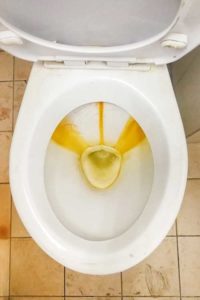
When moving into an old farmhouse, you may notice stains on fixtures and in sinks, tubs, and toilets.
Some of this could be lime scale due to hardness, however, the most frustrating stains from well water come from high iron content.
Iron is not a safety concern, but it can be a major nuisance, changing the taste of your water and causing unsightly orange stains that are difficult to remove.
While there are tips and tricks for removing iron stains, the only way to get rid of them for good is to install special iron filtration systems.
Water-Right offers the Impression Series® Air Filters and Impression Plus Series® Air Filters, which oxidize dissolved iron so it can be filtered out of your water.
This water treatment equipment can also filter out sulfur, which is another common well water problem.
Sulfur is usually to blame for water that smells like rotten eggs.
In some cases, special water treatment media, such as Crystal-Right™, can be used to remove iron and reduce sulfur odor from well water.
This specialized material can also soften water at the same time, reducing the number of treatment equipment systems needed for your home.
You’ll need a local water treatment expert to evaluate your situation and recommend the best solution. Find out about other reasons why your water smells.
4. Well Water Can Become Contaminated
Most common problems with well water are simply aesthetics, but there can also be more serious concerns.
While groundwater found in private wells is less susceptible to pollution than surface water, it is certainly possible for wells to become contaminated.
Naturally occurring contaminants include elements such as uranium, radon, and arsenic, which are dissolved in groundwater as it moves through soil and rock.
These chemicals are found at different levels in different regions of the United States.
Your local water treatment expert can help you understand risks specific to your part of the country.
Contamination from agricultural runoff is one of the most common and problematic health and safety issues.
Septic tanks located too close to a private well can also cause contamination.
One of the biggest concerns is nitrate contamination. At elevated levels, nitrates pose a health risk to pregnant mothers and young children.
The EPA has more about well water contaminants and their potential impact.
The best way to get peace of mind about potential well water contaminants is to have a reverse osmosis (R.O.) drinking water system installed in your home.
An R.O. system is a special form of water filtration that greatly reduces trace elements, heavy metals, and bacteria, producing great-tasting water for drinking and cooking – right from the kitchen sink!
5. Well Water Must be Tested at Least Once a Year
The quality of well water is constantly changing, and the best way to protect your family is to have your well tested.
While it isn’t required by the government, it’s an essential step to keep your family safe.
The EPA recommends that you test your well once a year for E. coli and coliform bacteria at the absolute minimum.
You should also test your water for radon and arsenic, minerals such as iron, manganese, nitrate levels, and any volatile organic compounds to ensure your home’s water is safe.
If you do notice a change in water quality, (appearance, odor, taste, etc.) it’s a good idea to have your well tested, even if it hasn’t been a year since the last test.
There are at-home, out-of-the-box tests you can purchase and perform yourself.
When you go this route, it is important to read what exactly the kit is testing for – not all tests are created equal.
All Water-Right, Evolve, and WaterCare professionals have access to our state-certified Clean Water Testing laboratory.
They can collect samples from your well, send them to our lab, and provide you with reports on water quality.
When your water is examined by Clean Water Testing, you get the peace of mind knowing your water is professionally tested by a state-certified lab.
You’ll also have the added convenience and confidence to review results with a professional water treatment expert.
Buying a Home with a Private Well
Knowing area water concerns can help you take proactive measure towards protecting your well.
Find out if there are known water issues in the area and if there are any contamination concerns due to runoff from agriculture or nearby industrial activity.
Before moving into a house with a well, learn about the well’s history, condition, and capacity by asking the current owner for a history log.
This will help you identify what has been done to the well in the past, how much it holds, and what the flow rate is to see if it will meet your household’s needs.
It’s also a good idea to ask what the home’s seller is currently doing to treat the water.
Read about specific signs of problems with private wells and continue to educate yourself.
Groundwater quality differs greatly and changes frequently. Your home may have completely different water problems than your neighbor’s down the road.
That’s why the advice of a trusted, local water treatment expert can be so valuable.
Having a private well shouldn’t discourage you from moving into that dream house in the country.
You simply need the right partner to help you make sure your home’s water quality is right for your family’s needs.

Constant innovation and no shortcuts. Water-Right is first and foremost a company built on integrity. Since 1963, we’ve done things the right way. Our value set has driven the development of the finest water treatment systems, making it easy for industry professionals to satisfy today’s demand for the highest quality water.
Keeping water clean and safe is an increasingly difficult challenge. That’s why we push to make good products better, create industry-leading technology, and offer a state-certified, independent lab specializing in water testing. It’s about making life better as well as providing “The Right Water for Life.”
home with well water