Showing posts with label Water pollutants. Show all posts

Wednesday, February 3, 2021

ANCIENT MAYAN CITY WATER FILTRATION SYSTEM - The Mayans had to develop a system of reservoirs around the city to meet the city’s water needs. Scientists discovered a quartz and zeolite filter at one end of one of these reservoirs, called Corriental. Quartz acts as a sieve to filter out pollutants in water. Zeolite is a naturally occurring volcanic mineral. Because of its high pore density, Zeolite also absorbs particles in water. The combination of crystalline quartz and zeolite would have effectively purified the water in the Corriental reservoir from harmful blue-green algae, microbes, and other toxins. These toxins threaten water today. - Human societies have made enormous technological leaps, especially in the 21st century. Because of the technological prowess of the modern age, when we think of ancient civilizations, we don’t often marvel at the sophistication of their technology. However, scientists recently discovered that the ancient Maya used a water filtration system so effective that it could still be adopted today. Water is essential to supporting life. In fact, ancient civilizations developed their own methods of coping with the water needs of their communities. Before 500 BC, humans had already begun using natural mineral resources for water purification and had pioneered distillation as a water filtration technique. Scientists have found that in India people crushed seeds from the Moringa tree to reduce the cloudiness of water.

........................................................................................................................................................................................................................................................................................................................................................................................

Ancient Mayan City Water Filtration System

The surprisingly effective water filtration system used by an ancient Mayan city

.

The Mayans had to develop a system of reservoirs around the city to meet the city’s water needs. Scientists discovered a quartz and zeolite filter at one end of one of these reservoirs, called Corriental. Quartz acts as a sieve to filter out pollutants in water. Zeolite is a  naturally occurring volcanic mineral. Because of its high pore density, Zeolite also absorbs particles in water. The combination of crystalline quartz and zeolite would have effectively purified the water in the Corriental reservoir from harmful blue-green algae, microbes, and other toxins. These toxins threaten water today.

By En Qi Teo, Staff Researcher & Writer at Save The Water™


Human societies have made enormous technological leaps, especially in the 21st century.

Because of the technological prowess of the modern age, when we think of ancient civilizations, we don’t often marvel at the sophistication of their technology.

However, scientists recently discovered that the ancient Maya used a water filtration system so effective that it could still be adopted today.

Ancient Water Filtration Systems

Water is essential to supporting life. In fact, ancient civilizations developed their own methods of coping with the water needs of their communities.

Before 500 BC, humans had already begun using natural mineral resources for water purification and had pioneered distillation as a water filtration technique.

Scientists have found that in India people crushed seeds from the Moringa tree to reduce the cloudiness of water.

This method was found to be effective in reducing bacteria in water by over 90 percent.

Why should we be concerned about ancient water filtration systems?

Simply stated, today we need to meet the urgent clean water needs of disadvantaged populations.

In 2019, UNICEF and WHO estimated that 1 in 3 people don’t have access to clean drinking water.

While many cities have advanced water filtration technologies and can use methods like adding chemicals such as chlorine to disinfect water, the developing world may find these technologies prohibitively costly.

Therefore, scientists look to ancient water filtration techniques for guidance as to how water may be purified through more natural and less expensive methods.

As a result of these efforts, clean drinking water may be provided to more people.

The Discovery of a Water Filtration System in Tikal

The ancient city of Tikal is situated in modern-day Guatemala.

Recently, an excavation uncovered how this Mayan city purified water to meet their drinking needs.

Before this, the scientists explain that some people believed that the Mayans didn’t have any formal water filtration systems from a lack of data.

Comparatively, documented evidence showed how societies in Egypt, Greece, and South Asia obtained clean drinking water through using sand, gravel, plant, and cloth filtration systems.

Also, it has been found that ancient societies in North America used distillation to filter contaminants from spring water.

Previously, scientists conducted excavations in single test pits in only a few dozen of the ancient Mayan reservoirs.

Despite this, the excavation in Tikal explored one of the largest storage facilities of Mayan drinking water.

This led to discovering the oldest water filtration system in the Western hemisphere, which is also believed to be the most advanced among ancient civilizations.

How Did the Ancient City of Tikal Filter Water?

Tikal is one of the great cities of the Mayan civilization.

Many frequently refer to Tikal as the capital of ancient Maya.

Although Tikal is not situated near any large water bodies, it contains a large human population of about 60,000 people.

As a result, the Mayans had to develop a system of reservoirs around the city to meet the city’s water needs.

Scientists discovered a quartz and zeolite filter at one end of one of these reservoirs, called Corriental.

Quartz acts as a sieve to filter out pollutants in water.

Zeolite is a  naturally occurring volcanic mineral.

Because of its high pore density, Zeolite also absorbs particles in water.

The combination of crystalline quartz and zeolite would have effectively purified the water in the Corriental reservoir from harmful blue-green algae, microbes, and other toxins.

These toxins threaten water today. 

What are the Next Steps After This Scientific Discovery?

The scientists involved in research on the water filtration system applied in the Corriental reservoir intend to continue to look for evidence that this system was also used in other Maya sites.

As zeolite is not a mineral naturally found in the city of Tikal, the Mayans likely brought it back after they had observed its effectiveness in water filtration.

This may mean that Mayans in other sites had similarly adopted this technology. 

The mission of Save The Water™ is to conduct water research to identify and remove harmful contaminants in water, and to raise public awareness about water contamination and its health impacts.

Although Save The Water™ operates mainly in North America and follows scientific procedures established by the United States Environmental Protection Agency, the impact of our analytical research and water treatment technology is universally applicable.

In the late 1990s, our co-founder Frank Ramos came across information about cancer-causing chemicals in whales and dolphins. Specifically, he learned two facts: (1) whales and dolphins’ fat tissue contains 1,000 times more man-made, highly toxic chemicals (such as those found in rubber and plastics) than our human tissue; and (2) these creatures are collecting these chemicals through the water in which they live. Frank and his dear friend Allan founded Save the Water™ in 1999. Together, they spent ten years researching water contamination in the U.S., its extent, and the critical need to solve the problem. In July 2013, Save the Water suffered a devastating loss when Allan passed away after a long battle with cancer. Studies have shown that many many cancers are linked to environmental factors such as the water that we drink, including in the United States. Losing Allan reinforced the belief that we must take immediate actions to combat water pollution and continue our mission until we have achieved and sustained our vision: contamination-free, healthy water for all. We believe that this future is within our grasp. But we need your help to achieve this goal for our children and future generations.

http://savethewater.org/the-surprisingly-effective-water-filtration-system-used-by-an-ancient-mayan-city/


You might also like:


Moringa Oleifera And Water Treatment

CLICK HERE . . . to view . . . 

https://puricare.blogspot.com/2019/12/moringa-oleifera-seeds-and-water.html

...........................................................................................................................................................................................................................................................................................

Purify Water Using the Sun

CLICK HERE . . . to view . . . 

https://puricare.blogspot.com/2020/03/how-to-purify-water-using-sun-using.html

...........................................................................................................................................................................................................................................................................................

Water supply system

CLICK HERE . . . to view . . . 

https://puricare.blogspot.com/2019/12/water-supply-system-water-was-important.html

...........................................................................................................................................................................................................................................................................................
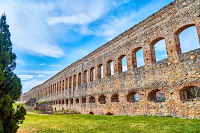
The Water System Of Ancient Rome

CLICK HERE . . . to view . . . 

https://puricare.blogspot.com/2018/07/the-water-system-of-ancient-rome-romans.html

...........................................................................................................................................................................................................................................................................................

History of drinking water treatment

CLICK HERE . . . to view . . . 

https://puricare.blogspot.com/2016/10/water-treatment-history-romans-built.html

...........................................................................................................................................................................................................................................................................................

History Of Water And Health

CLICK HERE . . . to view . . . 

https://puricare.blogspot.com/2019/10/history-of-water-and-health.html

...........................................................................................................................................................................................................................................................................................

In Times of Extreme Drought -- Find Your Treasure

CLICK HERE . . . to view . . . 

https://puricarechronicles.blogspot.com/2020/06/in-times-of-extreme-drought-find-your.html

...........................................................................................................................................................................................................................................................................................

Water Supply

Backbone of Civilization and of Our Future

CLICK HERE . . . to view . . . 

https://puricare.blogspot.com/2017/05/water-supply-backbone-of-civilization.html

...........................................................................................................................................................................................................................................................................................

How Modern Wastewater Treatment Changed our World

CLICK HERE . . . to view . . . 

https://puricare.blogspot.com/2020/08/how-modern-wastewater-treatment-changed.html

Sunday, January 19, 2020

WHAT MICRONS MEAN TO WATER FILTERS - A micron, as defined by dictionary.com is: “Also called micrometer. The millionth part of a meter. Symbol: μ, mu.” One millionth of a meter works out at 0.0001 cm or 0.001 mm. A human hair is around 0.0889 mm. Most filters can have their effectiveness at removing pollutants measured by how low their micron score is. For example, a water filter that protects down to 1 micron, will block any particles larger than this from passing through. Anything smaller than 1 micron may continue through and be part of your drinking water. Water pollutants come in a variety of shapes and sizes, and by knowing exactly what you’re looking for, you stand a much greater chance of stopping it. For a water filter to protect against the smallest virus particles, it would need to have a filter capable of working down to below 0.004 microns. The micron rating is not the only thing to be considered when buying a home water filter.

Image result for images How Big is a Micron
..............................................................................................................................................................
Image result for images How Big is a MicronMicrons
What They Mean to Water Filters
Jon Godfrey


Not all water filters were created equally. Find out what a micron is, and why they are so important to water filters.
Microns and Water Filters
A micron, as defined by dictionary.com is:
“Also called micrometer. The millionth part of a meter. Symbol: μ, mu.”
Image result for images How Big is a MicronIn slightly more understandable terms, one millionth of a meter works out at 0.0001 cm or 0.001 mm.
A human hair is around 0.0889 mm and there are 25,4000 microns in one inch.
You might ask what this little science lesson has to do with water filters?
Well most filters can have their effectiveness at removing pollutants measured by how low their micron score is.
For example, a water filter that protects down to 1 micron, will block any particles larger than this from passing through.
Anything smaller than 1 micron may continue through and be part of your drinking water.
Water pollutants come in a variety of shapes and sizes, and by knowing exactly what you’re looking for, you stand a much greater chance of stopping it.
The table below shows some common water pollutants and their sizes in microns.
Water Pollutant   Particle Size (Microns)
Mold Spores        10 - 30
Asbestos             0.7 - 90
Insecticide          0.5 - 10
Bacteria              0.2 - 10
Lead                   0.1 - 0.7

Viruses               0.004 - 0.1
Note the size of virus particles. These include E-coli, hepatitis, and legionnaires disease.
For a water filter to protect against the smallest virus particles, it would need to have a filter capable of working down to below 0.004 microns.
Actually, to be guaranteed protection then an ultraviolet filter would be needed too.
The only methods of home water filtration that work on this scale are reverse osmosis, and distillation.
Now water distillation cannot be measured in microns, but reverse osmosis can.
An RO membrane can filter down to an amazing 0.0001 microns or 0.00000001 cm.
Compare this with the most effective whole house filter that I am aware of, the Aquasana Rhino, which fights water contaminants down to 0.35 microns, and a typical carbon filter which could work from anywhere between 0.5 – 20 microns.
Each system has it’s positive and negative aspects, and the micron rating is not the only thing to be considered when buying a home water filter.
For example, a problem with chlorine would not require such strict filtration. Be aware though, that just any old water filter will not be a solution to water pollution for every problem.
Certain contaminants will only be removed by certain water filter types.
Make sure you know exactly what is wrong with your water before you commit to buying a home water filter

My name is Jon Godfrey, and I am the creator of Water Filter Answers.
With the advent of fracking and the increasing threat of pollution encroaching further into our lives, it has never been more important to regulate our daily drinking water.
We provide information on the impact that water filters may have on your drinking water. By explaining the science and breaking down the terminology, we hope that we can help you make the most informed decisions for your health.
We recognize that there are many ways to filter drinking water, and we want to show you the best method for each situation and budget. Aside from our extensive reviews of water filter systems, we also regularly publish informative articles on water quality and pollution.
We can counteract the effects of water pollution, but more importantly, we should try to reduce our impact on the environment.
 Image result for images How Big is a Micron

Tuesday, December 10, 2019

DREDGING - Dredging is the removal of sediments and debris from the bottom of lakes, rivers, harbors, and other water bodies. It is a routine necessity in waterways around the world because sedimentation — the natural process of sand and silt washing downstream — gradually fills channels and harbors. As sand and silt washes downstream, sedimentation gradually fill channels and harbors. This material must be periodically removed by dredging. Dredging often is focused on maintaining or increasing the depth of navigation channels, anchorages, or berthing areas to ensure the safe passage of boats and ships. Vessels require a certain amount of water in order to float and not touch bottom. This water depth continues to increase over time as larger and larger ships are deployed. Since massive ships carry the bulk of the goods imported into the country, dredging plays a vital role in the nation's economy.

As sand and silt washes downstream, sedimentation gradually fill channels and harbors. This material must be periodically removed by dredging. (Image credit: U.S. Environmental Protection Agency)
.............................................................................................................................................................
Dredging
What is dredging?
The National Ocean Service


Dredging is the act of removing silt and other material from the bottom of bodies of water
As sand and silt washes downstream, sedimentation gradually fill channels and harbors. This material must be periodically removed by dredging.
Dredging is the removal of sediments and debris from the bottom of lakes, rivers, harbors, and other water bodies.
It is a routine necessity in waterways around the world because sedimentation — the natural process of sand and silt washing downstream — gradually fills channels and harbors.
Dredging often is focused on maintaining or increasing the depth of navigation channels, anchorages, or berthing areas to ensure the safe passage of boats and ships.
Vessels require a certain amount of water in order to float and not touch bottom. This water depth continues to increase over time as larger and larger ships are deployed.
Since massive ships carry the bulk of the goods imported into the country, dredging plays a vital role in the nation's economy.
Dredging is also performed to reduce the exposure of fish, wildlife, and people to contaminants and to prevent the spread of contaminants to other areas of the water body.
This environmental dredging is often necessary because sediments in and around cities and industrial areas are frequently contaminated with a variety of pollutants.
These pollutants are introduced to waterways from point sources such as sewer overflows, municipal and industrial discharges, and spills; or may be introduced from nonpoint sources such as surface runoff and atmospheric deposition.
NOAA's Office of Response and Restoration plays a major role in protecting and restoring marine natural resources when environmental damage occurs.
The disposal of dredged material is managed and carried out by federal, state, and local governments, as well as by private entities such as port authorities.
The U.S. Army Corps of Engineers issues permits for the disposal of dredged material; the U.S. Environmental Protection Agency provides oversight and authorization for the disposal of dredged materials.

The National Ocean Service provides data, tools, and services that support coastal economies and their contribution to the national economy. NOS is dedicated to advancing the following priorities:
Our mission is to provide science-based solutions through collaborative partnerships to address evolving economic, environmental, and social pressures on our ocean and coasts.

As sand and silt washes downstream, sedimentation gradually fill channels and harbors. This material must be periodically removed by dredging. (Image credit: U.S. Environmental Protection Agency)

Wednesday, October 31, 2018

STREAMS AND RIVERS WATER QUALITY - A stream is impaired when it cannot fulfill its functions like fish protection & propagation, recreation, and public water supply. Coliform bacteria inhabit the gut of animals, and are a good indicator of fecal contamination. When there is a high count of coliform bacteria the water also contains microorganism that can make us sick. Silt and clay may occur naturally in the environment but when they enter streams in large quantity, they become a serious pollution problem. Nutrient pollution occurs when excess nitrogen and phosphorus make their way into a stream or river. These elements are then picked up by algae, allowing them to grow rapidly to the detriment of the aquatic ecosystem.

JavaSea_Mangiwau_MomentOpen_Getty.jpg
..............................
Streams And Rivers Water Quality
Water Pollution in Streams and Rivers
by Frederic Beaudry


About one third of the nation’s rivers and streams are routinely assessed for water quality by the Environmental Protection Agency (EPA).
Out of the 1 million miles of streams examined, over half had waters considered impaired.
A stream is categorized as impaired when it cannot fulfill at least one of its uses, which include a variety of functions like fish protection & propagation, recreation, and public water supply.
Here are the 3 most significant causes of stream and river pollution, in order of importance:
1. Bacteria. Contamination of water by certain types of bacteria is certainly a human health issue, as we are particularly susceptible to disease-causing gut bacteria. 
Beach safety is routinely monitored through coliform bacteria counts. Coliform bacteria inhabit the gut of animals, and are a good indicator of fecal contamination.
When there is a high count of coliform bacteria, the odds are high that the water also contains microorganism that can make us sick.
Gut bacteria contamination can come from municipal sewage treatment plants that overflow during heavy rain events, or from leaky septic tank systems. Abundant animals near the water, for example ducks, geese, gulls, or cattle, can also result in bacteria contamination.
2. Sediment.  Fine-grained particles like silt and clay may occur naturally in the environment but when they enter streams in large quantity, they become a serious pollution problem.
Sediments come from the many ways soil can be eroded on land and carried into streams. Common causes of erosion are road construction, building construction, deforestation, and agricultural activities.
Anytime there is a significant removal of the natural vegetation, the potential for erosion exists. In the United States, vast farm fields are left barren much of the year, and as a result rain and melting snow wash away soil into streams and rivers.
In streams, sediments block sunlight and thus impede the growth of aquatic plants. Silt can smother the gravel beds necessary for fish to lay eggs.
Sediments that remain suspended in the water are eventually carried off into coastal zones, where they affect marine life.
3. Nutrients. Nutrient pollution occurs when excess nitrogen and phosphorus make their way into a stream or river. These elements are then picked up by algae, allowing them to grow rapidly to the detriment of the aquatic ecosystem.
Overabundant algae blooms can lead to toxin build-up, oxygen level drops, fish kills, and poor conditions for recreation.
Nutrient pollution and the subsequent algae blooms are to blame for Toledo’s drinking water shortage in the summer of 2014.
Nitrogen and phosphorus pollution comes from inefficient sewage treatment systems, and from a common practice in large-scale farms: synthetic fertilizers are often applied in fields at greater concentrations than the crops can use, and the excess winds up in streams.
Concentrated livestock operations (for example, dairy farms or cattle feedlots) lead to large accumulations of manure, with nutrient runoff difficult to manage.
Not surprisingly, the most widespread source of stream pollution is reported by the EPA to be agriculture.
Other important sources of problems are atmospheric deposition (usually air pollution that is brought into streams with rainfall), and the presence of dams, reservoirs, stream channels, and other engineered structures.

Frederic Beaudry
·   Associate professor of environmental science
·   Wildlife biologist
·   Holds a Ph.D. Wildlife Ecology and a Master's degree in Natural Resources
Experience
Dr. Frederic Beaudry is a former writer for ThoughtCo and contributed work for three years. He is an associate professor of environmental science at Alfred University in New York. Prior to teaching, he worked as a wildlife biologist focusing on the ecology and conservation of birds and turtles. Dr. Beaudry has authored several scientific papers on land use and conservation and has conducted research examining land use changes and their effects on bird and amphibian communities.
Education
·   Ph.D., Wildlife Ecology, University of Maine
·   M.A., Natural Resources, Humboldt State University
·   B.S., Biology, Université du Québec à Rimouski
·   Postdoctoral research at the University of Wisconsin-Madison
ThoughtCo and Dotdash
ThoughtCo is a premier reference site focusing on expert-created education content. We are one of the top-10 information sites in the world as rated by comScore, a leading Internet measurement company. Every month, more than 13 million readers seek answers to their questions on ThoughtCo.
For more than 20 years, Dotdash brands have been helping people find answers, solve problems, and get inspired. We are one of the top-20 largest content publishers on the Internet according to comScore, and reach more than 30% of the U.S. population monthly. Our brands collectively have won more than 20 industry awards in the last year alone, and recently Dotdash was named Publisher of the Year by Digiday, a leading industry publication.


JavaSea_Mangiwau_MomentOpen_Getty.jpg