Showing posts with label Geometry. Show all posts

Tuesday, September 1, 2020

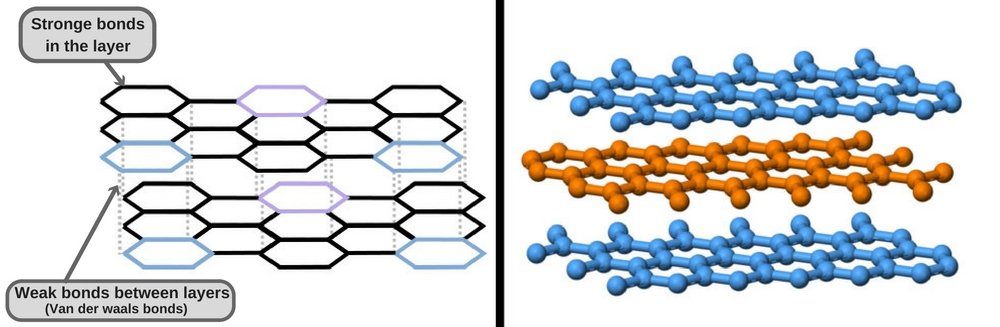
WHY GRAPHITE IS SOFT BUT DIAMOND IS SO HARD - Diamond and graphite are two allotropes of the same element (carbon) and the differences in their properties are a result of the way their crystal structures are arranged. Both diamond and graphite are made of pure carbon, yet they have dramatic differences in their properties. As allotropes of the same element, you might expect them to share many similarities, but that simply isn’t the case. Allotropy (also referred to as ‘allotropism’) of an element is that element’s ability to exist in multiple forms in the same physical state with a different arrangement of its atoms. The different forms are called allotropes of the given chemical element. Allotropes of the same element have different bonding arrangements, which give rise to different chemical and physical properties for the substance. Furthermore, different allotropes can also differ in the occurrence of molecules in the number of atoms. Carbon has the ability to form many allotropes, thanks to its chemical structure. Its atomic number is 6, which means that it has 4 electrons in its valence shell. No less than 8 allotropes of carbon have been identified. Out of all the known allotropes, the most popular ones are diamond and graphite. Although their composition is the same, they exhibit different chemical and physical properties, thanks to the arrangement of carbon atoms within them. It boils down to a single factor: geometry. The arrangement of carbon atoms in diamond follows a tetrahedral fashion. This means that each carbon atom is attached to 4 other carbon atoms, forming strong covalent bonds.

graphite-structure
............................................................................................................................................................
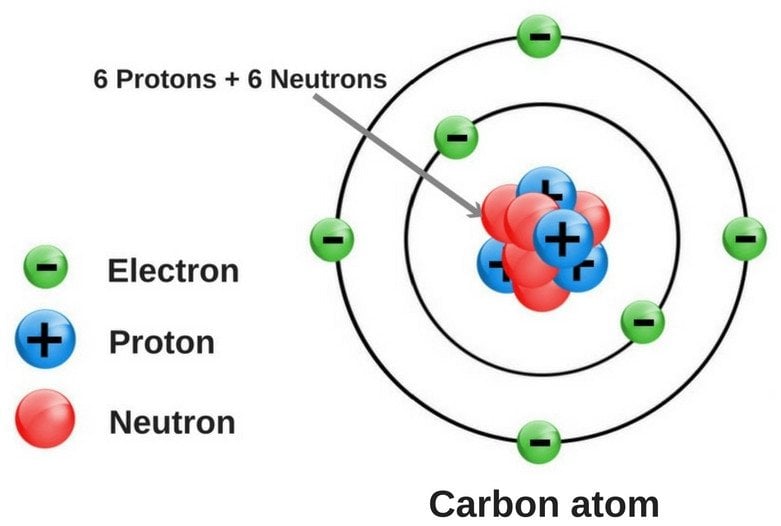
Carbon-atomWhy Is Graphite Soft, But Diamond Is So Hard?
By Ashish


Diamond and graphite are two allotropes of the same element (carbon) and the differences in their properties are a result of the way their crystal structures are arranged.
Both diamond and graphite are made of pure carbon, yet they have dramatic differences in their properties.
As allotropes of the same element, you might expect them to share many similarities, but that simply isn’t the case.
At first, this question might seem odd to many people. Diamond and graphite… doesn’t sound like a particularly sensible combination.
Diamond and gold, or diamond and sapphire would make more sense, right?
So, why is diamond pitted in the same category with graphite – the thing that we find inside our pencils?
Well, if you had paid attention to your Chemistry lessons in high school, you would know that there is, in fact, a very strong structural connection between the two.
What’s the connection between the two? And why are they so different from each other?
What are allotropes?
Allotropy (also referred to as ‘allotropism’) of an element is that element’s ability to exist in multiple forms in the same physical state with a different arrangement of its atoms.
The different forms are called allotropes of the given chemical element.
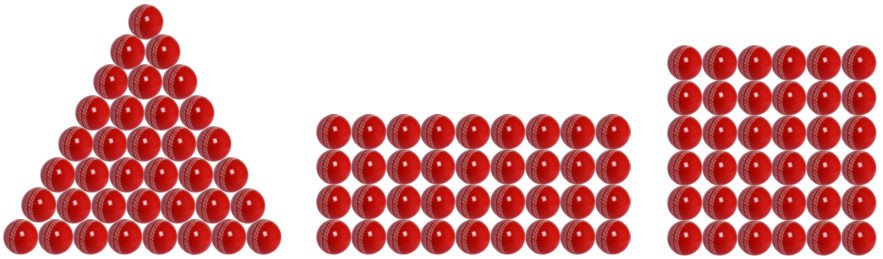
Triangle Rectangle & square shapes 36 ball
Imagine that you have 36 balls that you can arrange in any number of patterns to obtain mutually-visually geometrical shapes.
The constituent pieces of these shapes (balls) represent atoms, and the different shapes they assume (due to their varied arrangements) are the allotropes.
Allotropes of the same element have different bonding arrangements, which give rise to different chemical and physical properties for the substance.
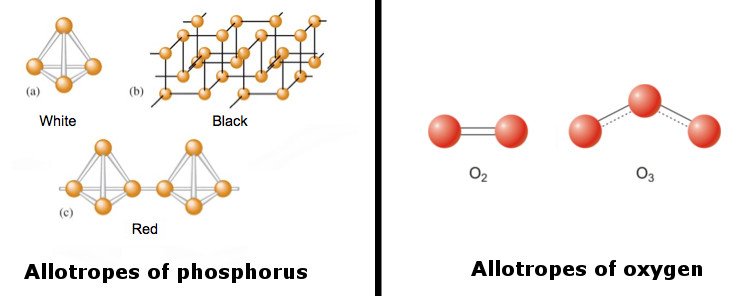
Allotropes of Phosphorus & Allotropes of Oxygen
Furthermore, different allotropes can also differ in the occurrence of molecules in the number of atoms.
The following image features various allotropes of phosphorus and oxygen.
Allotropes of carbon
Carbon-atomIn the world of allotropes, the carbon is nothing less than a rockstar. It has the ability to form many allotropes, thanks to its chemical structure.
Its atomic number is 6, which means that it has 4 electrons in its valence shell.
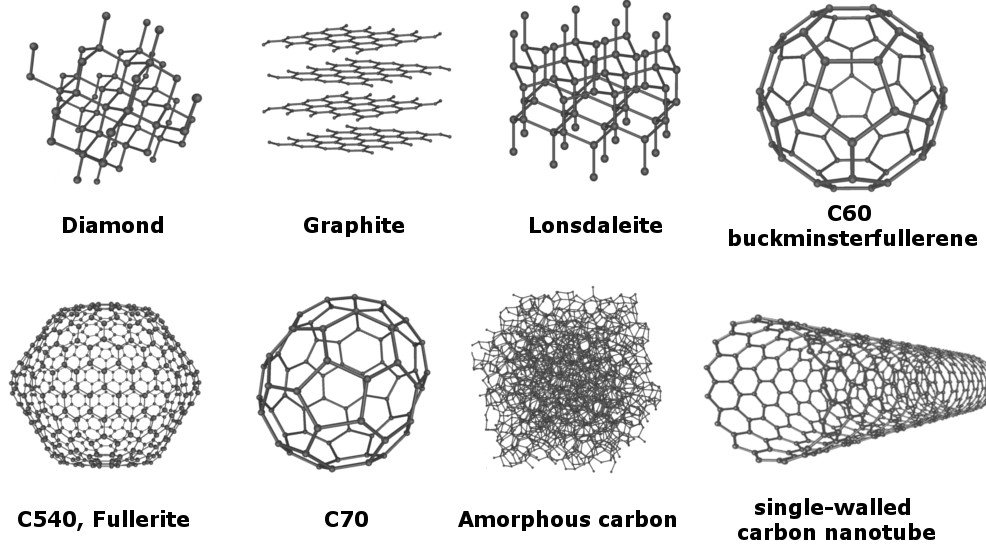
Eight allotropes of carbon
Different allotropes of carbon
As of now, no less than 8 allotropes of carbon have been identified, and the research for discovering even more allotropes is on.
However, out of all the known allotropes, the most popular ones are diamond and graphite.
These two allotropes, which visually appear incredibly different, are still made of nothing but carbon.
Although their composition is the same, they exhibit different chemical and physical properties, thanks to the arrangement of carbon atoms within them.
Why is diamond hard, but graphite is soft, despite being composed of the same element (carbon)?
It boils down to a single factor: geometry.
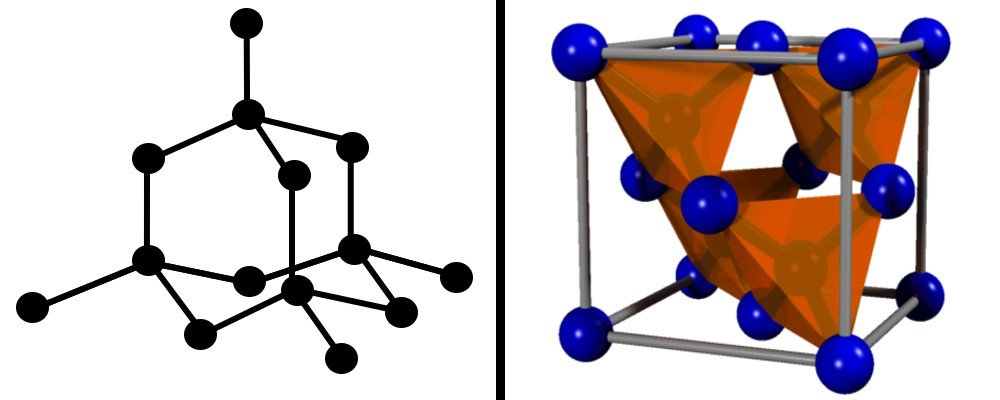
Diamond Structure
Diamond Structure
The arrangement of carbon atoms in diamond follows a tetrahedral fashion. This means that each carbon atom is attached to 4 other carbon atoms, forming strong covalent bonds.
This crystal arrangement is energetically very favorable and imparts that characteristic strength, durability and rigidity to diamond.
To scratch or break it requires a high amount of force, which makes it one of the hardest naturally-occurring materials on the planet.
Graphite, on the other hand, has an entirely different geometric arrangement than diamond.
Its carbon atoms are arranged in 2D sheets, whereas each carbon atom is bonded to three other carbon atoms to form hexagonal rings in an infinite array.
graphite-structure
graphite-structure
Although the bonding of atoms within each individual layer is covalent and therefore quite strong (as strong as is seen in diamond), the bonding between layers is weak (Van der Waals forces).
The result of this is that the layers slide over each and can detach from each other very easily.
These weak bonds between the multiple sheets of carbon atoms make the graphite used in pencils flake off on paper, allowing you to write.
In addition to being soft and slippery, graphite also has a much lower density than diamond.
The one thing about all of this that amazes me most is how a few tweaks in the chemical structure of identical substances make them so massively different in their appearance, toughness and chemical properties!

Ashish is a Science graduate (Bachelor of Science) from Punjabi University (India). He spends a lot of time watching movies, and an awful lot more time discussing them. He likes Harry Potter and the Avengers, and obsesses over how thoroughly Science dictates every aspect of life… in this universe, at least.

Sunday, May 12, 2019

BRIDGES AND GEOMETRY - Geometric design is important in bridge design. roperly used, geometric figures can create extremely strong bridges. Though some bridges may use more geometric concepts than others, all bridge designs evenly distribute weight for proper bearing. Truss bridges rely heavily on triangles. Used properly, triangles evenly distribute weight throughout the bridge. Instead of pushing straight down, the weight of an arch bridge is carried outward along the curve of the arch to the supports at each end. Connector plates are used to help strengthen connecting points on bridges. Symmetry is important in bridge design because the entire length of the bridge must be able to bear weight. An asymmetrical bridge can cause the bridge to collapse.

Arches are used for this particular bridge design.
.................................................................................................
Bridges And Geometry
Geometric Concepts Found in Bridges
By Jennifer Elrod


Different bridge designs can be found throughout the world. You can find truss, arch, cable, beam, suspension and cantilever bridges in different areas.
The type of bridge used largely depends on the distance it must cover and the amount of load it must bear.
Geometric design is important in bridge design. Properly used, geometric figures can create extremely strong bridges.
Though some bridges may use more geometric concepts than others, all bridge designs evenly distribute weight for proper bearing.

Triangles

Truss bridges rely heavily on triangles. Used properly, triangles evenly distribute weight throughout the bridge.
Triangles are used on the sides and sometimes even the top of the bridge.
The top of a truss bridge may have an "x" design, where four triangles create enough support to bear a great deal of weight.
Students can use simple wooden craft sticks to create a truss bridge strong enough for the teacher to stand on.
A well-designed bridge is less about the materials and more about the design.

Arches

Arches are used to create arch bridges.
According to PBS.org, "Arch bridges are one of the oldest types of bridges and have great natural strength. Instead of pushing straight down, the weight of an arch bridge is carried outward along the curve of the arch to the supports at each end."
It may be a one-arch bridge, or there may be several arches side by side to create the support needed.

Connector Plates

Connector plates are used to help strengthen connecting points on bridges.
A connector plate is most commonly shaped as either a square or a triangle. They are made of steel and bolted onto intersecting points on a bridge.
The shape of the plate adds strength to these areas of the bridge. When pressure is added to the point of intersecting, the connector plate distributes the pressure.
There are different-sized plates and most have a galvanized coating to help prevent rust corrosion.

Symmetry

Symmetry is a geometric concept that is used in bridge design. Symmetry is where one half of a figure is the mirror image of its other half.
Symmetry is important in bridge design because the entire length of the bridge must be able to bear weight. An asymmetrical bridge can cause the bridge to collapse.
Each arch on an arch bridge must be symmetrical. The triangles on a truss bridge must be symmetrical. Even the spacing on cable and suspension bridges must be even and symmetrical.

About the Author
I'm an experienced teacher with a degree in Multidisciplinary Studies-Human Learning. I've worked with various grade levels at different educational facilities. My expertise includes: lesson planning, curriculum development, child development, educational practices and parent involvement.
Arches are used for this particular bridge design.

Tuesday, May 7, 2019

TRIANGLES USED IN ARCHITECTURE - The two most common triangular forms used in architecture are equilateral and isosceles. Triangles are effective tools for architecture and are used in the design of buildings and other structures as they provide strength and stability. When building materials are used to form a triangle, the design has a heavy base and the pinnacle on the top is capable of handling weight because of how the energy is distributed throughout the triangle. This is why many residential homes have A-frames; it provides a sturdy structure. The most sturdy of the triangles are equilateral and isosceles; their symmetry aids in distributing weight.

Triangles Used in Architecture
......................................................................................
Triangles Used in Architecture
By Nicholas Ramos

Geometry and architecture are two disciplines that are fundamentally linked.
One of the most recognized geometric shapes is the triangle.
Triangles are identified by the three angles that are linked through line segments to form a three-sided shape.
The two most common triangular forms used in architecture are equilateral and isosceles.

Triangles and Architecture

Triangles are effective tools for architecture and are used in the design of buildings and other structures as they provide strength and stability.
When building materials are used to form a triangle, the design has a heavy base and the pinnacle on the top is capable of handling weight because of how the energy is distributed throughout the triangle.
This is why many residential homes have A-frames; it provides a sturdy structure.
The most sturdy of the triangles are equilateral and isosceles; their symmetry aids in distributing weight.

Equilateral Triangle

The equilateral triangle is by far the most common triangle used in architecture.
An equilateral triangle features three congruent sides and angles measuring 60 degrees on each corner. The lengths of the sides vary.
A common example of equilateral triangles used in architecture is the Pyramid Complex of Giza in Egypt.
Each of the four triangular sides that form the pyramids are equilateral triangles.
These are examples of the strength of the triangle in architecture as the pyramids have been standing for over 4,000 years.
Isosceles Triangle
Isosceles triangles, which have two equal sides, are also found in architecture throughout the world, especially in modern pyramidal architecture.
Isosceles triangles were used in the architecture of the East Building in the National Gallery of Art in Washington, D.C.
The building was designed by the famous architect I.M. Pei.
His architectural style featured the use of isosceles triangles and other geometric shapes.
The East Building was plotted on an oddly shaped piece of land.
Pei used an isosceles triangle also as the base of the building to accommodate the shape of the plot.
The Flatiron Building in New York City is one of the world’s groundbreaking skyscrapers.
This building is built on a triangular block in Manhattan, giving it a triangular shape, specifically, an isosceles. It has stood over 100 years, illustrating the strength of triangular architecture.

Scalene and Right Angle Triangles

A scalene triangle is one in which all sides are incongruent. Scalene triangles are not commonly found in architecture.
There is no symmetry in these triangles, causing an uneven distribution in weight. This is hazardous as one angle will have more weight and pressure placed on it than another.
Right angle triangles have one angle that is a perfect 90 degrees. These special triangles are not traditionally used in the structural characteristics of a building.
They are, however, vital to the construction and design of the building.
Right triangles are used to create perfect corners and straight lines. If the walls and corners of a building are crooked, the building also will be crooked.

Additional Information

Triangles are also used as adornments in architecture, not just in the foundational design.
In churches, triangular windows are often featured as window frames or in the stained glass, possibly representing the Holy Trinity.
The Hearst Tower in Manhattan uses triangular framing to add extra support for the tower and to frame the all-glass window structure; both equilateral and isosceles triangles are used.


About the Author

Nicholas Ramos was born in Washington, D.C. He is currently a journalism major in Georgia and plans to specialize in law. Ramos has been writing since 2009, specializing in fashion, travel and health.
Triangles Used in Architecture