Showing posts with label Indoor air. Show all posts

Tuesday, August 18, 2020

OZONE GENERATORS AND INDOOR AIR - Reasons You Should NEVER Use An Ozone Generator to Clean Your Indoor Air - The Dangers of Ozone - There is a growing amount of written material regarding the use of ozone generators to improve indoor air quality. Unfortunately, much of the material makes claims and draws conclusions without substantiation or sound science. There are even some vendors which suggest that their devices have been approved by the federal government, despite the fact that there is not one agency within the federal government which has approved ozone generators for use in occupied spaces. The EPA published several documents which highlight the risks and dangers of ozone and why ozone generators should be avoided. Ozone is a tiny molecule which is composed of three oxygen atoms. It is highly reactive which makes it an unstable and potentially toxic gas. Ground-level ozone is considered to be a major component of smog which plagues larger cities during the summertime and has been tied to a variety of potential health risks. The EPA has reported there is a variety of health effects associated with high levels of ozone. This may include decreased lung function, throat irritation, severe asthma symptoms, cough, chest pain, shortness of breath, irritation of lung tissue, and the higher sensitivity to respiratory infection. There were additional risk factors which can perpetuate the side effects of ozone.

The Dangers of Ozone
............................................................................................................................................................
Ozone MoleculeOzone Generators And Indoor Air
Reasons You Should NEVER Use An Ozone Generator to Clean Your Indoor Air
Jeff Flowers


The Dangers of Ozone
There is a growing amount of written material regarding the use of ozone generators to improve indoor air quality.
Unfortunately, much of the material makes claims and draws conclusions without substantiation or sound science.
There are even some vendors which suggest that their devices have been approved by the federal government, despite the fact that there is not one agency within the federal government which has approved ozone generators for use in occupied spaces.
The EPA published several documents which highlight the risks and dangers of ozone and why ozone generators should be avoided.
Let’s take a look at why you should never use an ozone generator to help improve your indoor air quality.
Why is Ozone Dangerous?
Ozone is a tiny molecule which is composed of three oxygen atoms. It is highly reactive which makes it an unstable and potentially toxic gas.
Ground-level ozone is considered to be a major component of smog which plagues larger cities during the summertime and has been tied to a variety of potential health risks.
Health Effects of Ozone
The EPA has reported there is a variety of health effects associated with high levels of ozone.
This may include decreased lung function, throat irritation, severe asthma symptoms, cough, chest pain, shortness of breath, irritation of lung tissue, and the higher sensitivity to respiratory infection.
They went on to note that there were additional risk factors which can perpetuate the side effects of ozone such as undertaking activities which raise breathing rates (such as exercising indoors), certain pre-existing lung diseases, and greater duration of exposure.
4 Reasons Why You Should Avoid Air Purifiers that Produce Ozone
Not only is ozone potentially dangerous to your health, it may not even work at all.
Below are four reasons why you should never use an air purifier that produces ozone.
1. Ozone Generators May Not Work at All
Some manufacturers suggest that ozone will render nearly every chemical contaminant in the home harmless by producing a chemical reaction.
This is incredibly misleading because a thorough review of scientific research has shown that in order for many of the dangerous chemicals found indoors to be eliminated the chemical reaction process may take months or even years.
Other studies have also (PDF) noted that ozone cannot effectively remove carbon monoxide or from outside.
If used at concentrations that do not exceed public health standards, ozone applied to indoor air pollution does not effectively remove viruses, mold, bacteria, or other biological pollutants.
2. The Chemical Reaction Can Be Dangerous
Even if ozone generators were proven to be effective at eliminating these chemicals, there are certain side effects everyone must be aware of.
Many of the chemicals ozone reacts to results in a variety of harmful by-products.
For example, when ozone was mixed with chemicals from new carpet in a laboratory setting, the ozone reduced many of the chemicals but created a variety of dangerous organic chemicals in the air.
While the target chemicals were reduced, the dangerous byproducts rendered the process moved.
3. Ozone Generators Do Not Remove Particulates
A third factor to consider when looking at ozone generators is that they do not remove particulates such as dust or pollen from the air.
This includes the particles which are primarily responsible for allergic reactions.
To combat this, some ozone generators include an ionizer which disperses negatively charged ions into the air.
In recent analysis’s, this process was found to be less competent in the removal of air-borne molecules of dust, smoke, pollen, and mold spores than HEPA filters and electrostatic precipitators.
4. It Is Impossible to Predict Exposure Levels
The EPA notes that it is increasingly difficult to determine the actual concentration of ozone produced by an ozone generator because so many different factors come into play.
Concentrations will be higher if more powerful devices used in smaller spaces.
Whether or not the interior doors are closed rather than open will affect concentrations as well.
Additional factors which affect concentration levels include how many materials and furnishings are in the room to react with ozone, the level of outdoor air ventilation, and the proximity of a person to the ozone generating device.
HEPA Filters: The Safer & More Effective Solution
Choosing a HEPA filter is a significantly safer and effective solution than an ozone generator.
HEPA Air PurifierInstead of releasing dangerous ozone, a HEPA filter traps indoor air pollutants rather than trying to create a chemical reaction with them.
HEPA filters are the only type of air cleaners which meet specific EPA standards for efficacy.
This means when you purchase an air purifier which relies on this type of technology, you can rest easy knowing exactly what the level of effectiveness will be.
In many cases, this type of filter is often combined with other technologies, such as activated carbon, to provide even better results.
Utilizing a pre-filter and activated carbon, air purifiers can remove solid, chemical, and gaseous pollutants from the air and dramatically improve indoor air quality.

Jeff Flowers. Plagued by a chronic case of curiosity, Jeff Flowers is just a dude that annoys everyone around him with his loquacious goofiness. From beer to home living, Jeff is just trying to hack his way through life and write a few notes about it along the way. You can follow his ramblings here, or listen to him complain about Austin traffic on Twitter at @Bukowsky.
The Dangers of Ozone

Wednesday, July 29, 2020

AIR CONDITIONING MAY BE SPREADING COVID - As COVID-19 cases rise rapidly some scientists believe there could be an important, but overlooked factor in the spread of the virus in the region -- air conditioning. Just as chilly winter temps create the perfect conditions for passing colds and flu — driving people indoors and into closer proximity for more hours of the day where it’s easy to swap germs, researchers believe broiling heat in the southern U.S. could be having the same effect, sending people indoors where whirring air conditioners are running full blast. Air conditioning is also risky because of the way air handlers work. When outdoor temperatures are extreme, HVAC systems adjust the mix of fresh air they pull in to save energy. That means the hotter it is outside, the more indoor air recirculates, which means, you’re breathing a higher percentage of the same air that other people are exhaling. If someone in the building is shedding the new coronavirus, it can build up in the recirculated air. And this may seem obvious, but air conditioners have fans that blow the air around. That gives the smallest viral particles — aerosols -- extra lift to stay suspended in the air. The air currents that are produced by air conditioners and also fans and other air moving devices can carry particles further than they might otherwise go. Air conditioners also remove moisture from the air, and we know viruses prefer dry air.

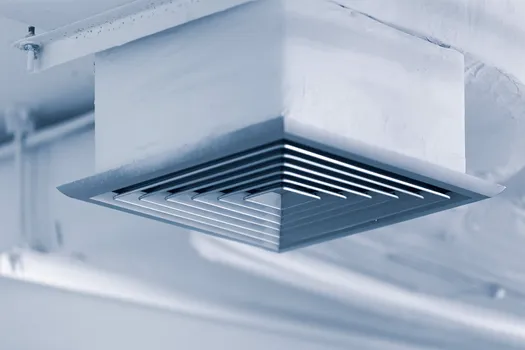
photo of air conditioning vent
..................................................................................................................................................
Air Conditioning May Be Spreading COVID
By Brenda Goodman, MA


As COVID-19 cases rise rapidly throughout the South, some scientists believe there could be an important, but overlooked factor in the spread of the virus in the region -- air conditioning.
Just as chilly winter temps create the perfect conditions for passing colds and flu — driving people indoors and into closer proximity for more hours of the day where it’s easy to swap germs, researchers believe broiling heat in the southern U.S. could be having the same effect, sending people indoors where whirring air conditioners are running full blast.
“You go indoors for the cool, just as in the northeast and other cool places you go in for the warmth in winter, so you’re less socially distanced,” says Edward Nardell, MD, professor of environmental health and immunology and infectious diseases at Harvard’s T.H. Chan School of Public Health.
“You’re more likely to be touching the same surfaces that have been contaminated by people speaking and coughing etc.,” he says.
And that’s not the only problem.
Air conditioning is also risky because of the way air handlers work. When outdoor temperatures are extreme, HVAC systems adjust the mix of fresh air they pull in to save energy.
That means the hotter it is outside, the more indoor air recirculates, which means, “You’re breathing a higher percentage of the same air that other people are exhaling,” Nardell says.
If someone in the building is shedding the new coronavirus, it can build up in the recirculated air.
And this may seem obvious, but air conditioners have fans that blow the air around.
That gives the smallest viral particles — aerosols -- extra lift to say suspended in the air for longer.
“The air currents that are produced by air conditioners and also fans and other air moving devices can carry particles further than they might otherwise go,” he says.
Air conditioners also remove moisture from the air, “and we know viruses prefer dry air,” he says.
In certain situations, that combination of factors may create the perfect conditions for contagion.
Emerging Evidence Points To Airborne Transmission
Studies of air conditioning come as more evidence emerges about airborne spread of COVID-19.
In a commentary published this week in the journal Clinical Infectious Diseases, an international group of 239 scientists have appealed to “national and international bodies” including the World Health Organization, to recognize this potential for airborne spread.
“We’re pushing because we need very clear, consistent messaging to the world,” said Shelly Miller, PhD, a professor of mechanical engineering who studies indoor air quality at the University of Colorado at Boulder.
Miller was one of the chief proponents of the commentary.
This virus is opportunistically airborne, you can get it by inhaling it,” she says.
Miller and others believe that WHO and other public health agencies have a blind spot when it comes to airborne transmission.
“Based on our assessments of outbreaks, air sampling, and animal studies and we have just as much evidence to show that airborne transmission is happening as is surface transmission, so we need clear guidance for how to address this,” Miller says.
In its latest press briefing, WHO experts responded to the communication, and said the agency would be publishing a scientific brief summarizing their view of the science shortly.
“We acknowledge that there is emerging evidence in this field,” said Benedetta Allegranzi, MD, WHO’s technical lead for infection prevention and control.
 “We believe we have to be open to this evidence and understand its implications regarding the modes of transmission and the precautions that need to be taken,” she said.
The Role of Air Conditioning
So far, there are just a few studies pointing to the role of air conditioning in the spread of COVID-19. They indicate more research in the area is needed.
In July, Chinese scientists published a short study detailing the results of their investigation of a cluster of COVID-19 cases linked to the same restaurant.
The 10 diners who fell ill were all sitting at tables on the same side of the room.
The tables were spaced more than 3 feet apart, though, indicating that the virus probably wasn’t being passed through larger droplets, which fall out of the air pretty quickly.
Instead, they think “strong airflow” from a wall mounted air conditioner probably spread aerosols, or “micro-droplets”, from a single infected, but asymptomatic person over the tables, infecting three different families.
In another study, which hasn’t yet been peer reviewed, researchers swabbed three different HVAC units at the Oregon Health and Science University Hospital in Portland.
Then they checked their samples for the presence of genetic material from the SARS-CoV-2 virus. The swabs were positive in 1 out of every 4 samples taken.
“We found it in multiple locations within the air handler,” says study author Kevin Van Den Wymelenberg, PhD, a professor of architecture and director of the Institute for Health in the Built Environment at the University of Oregon in Eugene.
similar study, from the University of Nebraska Medical Center, detected genetic material from the virus in air samples collected from rooms of COVID-19 patients, even air samples collected from more than six feet away.
Van Den Wymelenberg says their study can’t prove that the remnants of the virus they picked up could have actually infected anyone.
To know that, they would have had to try to grow their samples alongside cells in a petri dish and watch to see if those cells were infected.
Those are expensive studies to perform and they require a specialized lab certified to handle highly contagious germs — called a biosafety level 3 lab.
Those are less common, and they’re all currently slammed with projects.
But he says his study does show that genetic material from the virus is making it into the machinery of massive air handlers in hospitals, even ones that are using good filters, and he thinks that should make public health experts closely consider air conditioning as a vehicle for virus spread.
Steps for Safer Indoor Air
Miller says that the easiest thing to keep the virus from building up inside is to bring in more outdoor air.
In homes, that means opening windows and doors regularly to let fresh air in.
That’s harder to do in commercial buildings.
“What we’ve been recommending to minimize risk indoors is to provide 100% outside air, which you can’t do if you’re trying to heat or cool because it just costs way too much money,” she said.
Another strategy to reduce the risk of being indoors is to kill airborne viruses with special wall or ceiling mounted boxes that emit short-range UV radiation.
This kind of UV light doesn’t damage skin the way sunlight does, but still zaps harmful germs.
These so-called upper-room germicidal systems have successfully controlled outbreaks of other airborne pathogens, like tuberculosis, Nardell says.
Finally, you can invest in an air cleaner.
Miller cautions that if you go this route, you need to do a fair amount of homework first, learning about things like a machine’s clean air delivery rate, or CADR.
“I purchased an air cleaner strictly to operate when and if somebody in my household gets sick so we can reduce the viral load in my house air,” she says.
Ionizing cleaners don’t work, she says.
Miller recommends checking the website of the Association of Home Appliance Manufacturers, or AHAM to find a good air cleaner.
“They have a whole website set up to do your research and buy a good air cleaner that will work in your home or office,” she says.

Brenda Goodman, MA, is a staff writer for WebMD.  Her work has appeared in The New York Times, Scientific American, Psychology Today, The Boston Globe, Self, Shape, Parade, U.S. News and World Report, and Atlanta Magazine. She has a master’s degree in science and environmental reporting from New York University.
photo of air conditioning vent

Thursday, December 5, 2019

AIR CONDITIONING MAY BE SPREADING COVID - As COVID-19 cases rise rapidly some scientists believe there could be an important, but overlooked factor in the spread of the virus in the region -- air conditioning. Just as chilly winter temps create the perfect conditions for passing colds and flu — driving people indoors and into closer proximity for more hours of the day where it’s easy to swap germs, researchers believe broiling heat in the southern U.S. could be having the same effect, sending people indoors where whirring air conditioners are running full blast. Air conditioning is also risky because of the way air handlers work. When outdoor temperatures are extreme, HVAC systems adjust the mix of fresh air they pull in to save energy. That means the hotter it is outside, the more indoor air recirculates, which means, you’re breathing a higher percentage of the same air that other people are exhaling. If someone in the building is shedding the new coronavirus, it can build up in the recirculated air. And this may seem obvious, but air conditioners have fans that blow the air around. That gives the smallest viral particles — aerosols -- extra lift to stay suspended in the air. The air currents that are produced by air conditioners and also fans and other air moving devices can carry particles further than they might otherwise go. Air conditioners also remove moisture from the air, and we know viruses prefer dry air.

photo of air conditioning vent
..................................................................................................................................................
Air Conditioning May Be Spreading COVID
By Brenda Goodman, MA


As COVID-19 cases rise rapidly throughout the South, some scientists believe there could be an important, but overlooked factor in the spread of the virus in the region -- air conditioning.
Just as chilly winter temps create the perfect conditions for passing colds and flu — driving people indoors and into closer proximity for more hours of the day where it’s easy to swap germs, researchers believe broiling heat in the southern U.S. could be having the same effect, sending people indoors where whirring air conditioners are running full blast.
“You go indoors for the cool, just as in the northeast and other cool places you go in for the warmth in winter, so you’re less socially distanced,” says Edward Nardell, MD, professor of environmental health and immunology and infectious diseases at Harvard’s T.H. Chan School of Public Health.
“You’re more likely to be touching the same surfaces that have been contaminated by people speaking and coughing etc.,” he says.
And that’s not the only problem.
Air conditioning is also risky because of the way air handlers work. When outdoor temperatures are extreme, HVAC systems adjust the mix of fresh air they pull in to save energy.
That means the hotter it is outside, the more indoor air recirculates, which means, “You’re breathing a higher percentage of the same air that other people are exhaling,” Nardell says.
If someone in the building is shedding the new coronavirus, it can build up in the recirculated air.
And this may seem obvious, but air conditioners have fans that blow the air around.
That gives the smallest viral particles — aerosols -- extra lift to say suspended in the air for longer.
“The air currents that are produced by air conditioners and also fans and other air moving devices can carry particles further than they might otherwise go,” he says.
Air conditioners also remove moisture from the air, “and we know viruses prefer dry air,” he says.
In certain situations, that combination of factors may create the perfect conditions for contagion.
Emerging Evidence Points To Airborne Transmission
Studies of air conditioning come as more evidence emerges about airborne spread of COVID-19.
In a commentary published this week in the journal Clinical Infectious Diseases, an international group of 239 scientists have appealed to “national and international bodies” including the World Health Organization, to recognize this potential for airborne spread.
“We’re pushing because we need very clear, consistent messaging to the world,” said Shelly Miller, PhD, a professor of mechanical engineering who studies indoor air quality at the University of Colorado at Boulder.
Miller was one of the chief proponents of the commentary.
This virus is opportunistically airborne, you can get it by inhaling it,” she says.
Miller and others believe that WHO and other public health agencies have a blind spot when it comes to airborne transmission.
“Based on our assessments of outbreaks, air sampling, and animal studies and we have just as much evidence to show that airborne transmission is happening as is surface transmission, so we need clear guidance for how to address this,” Miller says.
In its latest press briefing, WHO experts responded to the communication, and said the agency would be publishing a scientific brief summarizing their view of the science shortly.
“We acknowledge that there is emerging evidence in this field,” said Benedetta Allegranzi, MD, WHO’s technical lead for infection prevention and control.
 “We believe we have to be open to this evidence and understand its implications regarding the modes of transmission and the precautions that need to be taken,” she said.
The Role of Air Conditioning
So far, there are just a few studies pointing to the role of air conditioning in the spread of COVID-19. They indicate more research in the area is needed.
In July, Chinese scientists published a short study detailing the results of their investigation of a cluster of COVID-19 cases linked to the same restaurant.
The 10 diners who fell ill were all sitting at tables on the same side of the room.
The tables were spaced more than 3 feet apart, though, indicating that the virus probably wasn’t being passed through larger droplets, which fall out of the air pretty quickly.
Instead, they think “strong airflow” from a wall mounted air conditioner probably spread aerosols, or “micro-droplets”, from a single infected, but asymptomatic person over the tables, infecting three different families.
In another study, which hasn’t yet been peer reviewed, researchers swabbed three different HVAC units at the Oregon Health and Science University Hospital in Portland. 
Then they checked their samples for the presence of genetic material from the SARS-CoV-2 virus. The swabs were positive in 1 out of every 4 samples taken.
“We found it in multiple locations within the air handler,” says study author Kevin Van Den Wymelenberg, PhD, a professor of architecture and director of the Institute for Health in the Built Environment at the University of Oregon in Eugene.
similar study, from the University of Nebraska Medical Center, detected genetic material from the virus in air samples collected from rooms of COVID-19 patients, even air samples collected from more than six feet away.
Van Den Wymelenberg says their study can’t prove that the remnants of the virus they picked up could have actually infected anyone.
To know that, they would have had to try to grow their samples alongside cells in a petri dish and watch to see if those cells were infected.
Those are expensive studies to perform and they require a specialized lab certified to handle highly contagious germs — called a biosafety level 3 lab.
Those are less common, and they’re all currently slammed with projects.
But he says his study does show that genetic material from the virus is making it into the machinery of massive air handlers in hospitals, even ones that are using good filters, and he thinks that should make public health experts closely consider air conditioning as a vehicle for virus spread.
Steps for Safer Indoor Air
Miller says that the easiest thing to keep the virus from building up inside is to bring in more outdoor air.
In homes, that means opening windows and doors regularly to let fresh air in.
That’s harder to do in commercial buildings.
“What we’ve been recommending to minimize risk indoors is to provide 100% outside air, which you can’t do if you’re trying to heat or cool because it just costs way too much money,” she said.
Another strategy to reduce the risk of being indoors is to kill airborne viruses with special wall or ceiling mounted boxes that emit short-range UV radiation.
This kind of UV light doesn’t damage skin the way sunlight does, but still zaps harmful germs.
These so-called upper-room germicidal systems have successfully controlled outbreaks of other airborne pathogens, like tuberculosis, Nardell says.
Finally, you can invest in an air cleaner.
Miller cautions that if you go this route, you need to do a fair amount of homework first, learning about things like a machine’s clean air delivery rate, or CADR.
“I purchased an air cleaner strictly to operate when and if somebody in my household gets sick so we can reduce the viral load in my house air,” she says.
Ionizing cleaners don’t work, she says.
Miller recommends checking the website of the Association of Home Appliance Manufacturers, or AHAM to find a good air cleaner.
“They have a whole website set up to do your research and buy a good air cleaner that will work in your home or office,” she says.

Brenda Goodman, MA, is a staff writer for WebMD.  Her work has appeared in The New York Times, Scientific American, Psychology Today, The Boston Globe, Self, Shape, Parade, U.S. News and World Report, and Atlanta Magazine. She has a master’s degree in science and environmental reporting from New York University.