Showing posts with label Rainwater. Show all posts

Friday, March 19, 2021

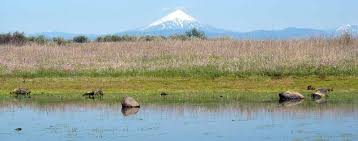
VERNAL POOLS - April showers bring May flowers – and vernal pools, if you live in California or Southern Oregon. Vernal pools are seasonal depressional wetlands that fill up with rainwater during winter and spring, but may be dry for part of the year. They are typically found on the West Coast, especially in California and Southern Oregon, but can also be found in parts of the Northeast and Midwest. Western vernal pools often occur within “vernal pool landscapes” where swales connect vernal pools to each other and to seasonal streams. Vernal pools vary in size from 1 square meter to more than 2 acres. Western vernal pools can connect to other pools and streams that flow seasonally or only after rain. Multiple studies show that California vernal pools fill with water and flow into these channels, sending water downstream during many days of the year. These connections can impact the base flow of downstream waters, altering their physical characteristics. Western vernal pools are also hot spots of biodiversity, with native plant and animal species some of which can only be found in vernal pool habitats. In a study of vernal pools, 17 out of 67 species were only found in one of the surveyed ponds. In turn, these plants and animals provide food and habitat for shorebirds and waterfowl. Vernal pools, like other depressional wetlands, can also help to store and slow floodwaters.

.....................................................................................................................................................................................................................................................................................................................................................................................

Vernal Pools

What Are Vernal Pools and How Do They Help Clean Water

American Rivers


April showers bring May flowers – and vernal pools, if you live in California or Southern Oregon.

Vernal pools are seasonal depressional wetlands that fill up with rainwater during winter and spring, but may be dry for part of the year.

They are typically found on the West Coast, especially in California and Southern Oregon, but can also be found in parts of the Northeast and Midwest.

Western vernal pools often occur within “vernal pool landscapes” where swales connect vernal pools to each other and to seasonal streams.

Vernal pools vary in size from 1 square meter to more than 2 acres.

Why Care About Western Vernal Pools?

Western vernal pools can connect to other pools and streams that flow seasonally or only after rain.

Multiple studies [PDF] show that California vernal pools fill with water and flow into these channels [PDF], sending water downstream during many days of the year.

These connections can impact the base flow of downstream waters, altering their physical characteristics.

Western vernal pools are also hot spots of biodiversity, with native plant and animal species some of which can only be found in vernal pool habitats.

In a study of vernal pools, 17 out of 67 species [PDF] were only found in one of the surveyed ponds.

In turn, these plants and animals provide food and habitat for shorebirds and waterfowl.

Vernal pools, like other depressional wetlands, can also help to store and slow floodwaters.

Are They Protected Under The Clean Water Act?

Right now, it’s unlikely that vernal pools would currently be protected under the Clean Water Act.

The proposed Clean Water Rule acknowledges these connections and sets up a process where similar “other waters” that lie outside of the floodplain can be protected under the Clean Water Act.

These waters collectively with other similar waters must demonstrate a significant connection to downstream waters, meaning that those waters have a more than speculative impact on the chemical, physical, and biological integrity of downstream protected waters.

Although playa lakes aren’t categorically protected right now under the draft rule, the EPA and the Army Corps are looking for input about whether they should be.

Life needs rivers.

It’s not just that rivers make our lives better. We can’t survive without them.

American Rivers works to create a future of clean water and healthy rivers everywhere, for everyone.

American Rivers believes a future of clean water and healthy rivers everywhere, for everyone is essential. Since 1973, we have protected wild rivers, restored damaged rivers and conserved clean water for people and nature. With headquarters in Washington, D.C. and 300,000 supporters, members and volunteers across the country, we are the most trusted and influential river conservation organization in the United States, delivering solutions for a better future.

https://www.americanrivers.org/rivers/discover-your-river/vernal-pools/

Friday, December 25, 2020

THE CALM AFTER THE STORM - Stormwater Runoff Management Tips - Storms occur naturally everyday across the planet producing stormwater runoff; it is simply fact of life. Stormwater runoff occurs when rain or snowmelt flows over the ground which can pick up pollutants like pesticides, oils chemicals and dirt. As cities grew, the land was increasingly covered with impervious surfaces like concrete and asphalt roadways, blocking the stormwater runoff from naturally soaking into the soil. Many people don’t realize that this untreated and polluted runoff flows directly into our streams, rivers, lakes and oceans endangering our most precious resource – water. Interestingly, a phenomenon called urban heat island (UHI) can impact the amount of rainwater produced in our cities and other populated regions. The pollution from our car exhaust and other sources can lead to cloud production, thus increasing the chance of rain. While our desire for water conservation is high, we can’t reasonably assume that we can stop modernization, so we need to identify ways to manage stormwater runoff effectively. By implementing the following stormwater pollution prevention tips you can reduce your impact on the environment and help ensure our water resources remain clean. Fertilizers and pesticides that are used on lawns and gardens wash away and pollute the stormwater. Do not fertilize if excessive rain is expected and don’t exceed the recommended amounts of the products.

.............................................................................................................................................................................................................................................................................................. ......................................................

The Calm after the Storm

Stormwater Runoff Management Tips

Water Conservation by Matthew Speer


Storms occur naturally everyday across the planet producing stormwater runoff; it is simply fact of life. 

Stormwater runoff occurs when rain or snowmelt flows over the ground which can pick up pollutants like pesticides, oils chemicals and dirt. 

As cities grew, the land was increasingly covered with impervious surfaces like concrete and asphalt roadways, blocking the stormwater runoff from naturally soaking into the soil.

Many people don’t realize that this untreated and polluted runoff flows directly into our streams, rivers, lakes and oceans endangering our most precious resource – water.

Water Conservation & Prevention Can Solve the Problem

Interestingly, a phenomenon called urban heat island (UHI) can impact the amount of rainwater produced in our cities and other populated regions. 

The pollution from our car exhaust and other sources can lead to cloud production, thus increasing the chance of rain. 

While our desire for water conservation is high, we can’t reasonably assume that we can stop modernization, so we need to identify ways to manage stormwater runoff effectively.

By implementing the following stormwater pollution prevention tips you can reduce your impact on the environment and help ensure our water resources remain clean.

Fertilizers and pesticides that are used on lawns and gardens wash away and pollute the stormwater.

Do not fertilize if excessive rain is expected and don’t exceed the recommended amounts of the products.

There are organic and low impact fertilizer and pesticide products available, be sure to check with your local store to compare products. Find organic fertilizer and green garden supplies now.

Our furry friends are also a major source of excess nutrients and bacterial pollution in stormwater. Picking up after your pets is not only polite but will help the environment at the same time.

According to the EPA, flushing pet waste is the most environmentally friendly of disposal.

Direct your downspouts and gutters into your lawn, garden or other containment methods.

It is best to allow the stormwater to naturally soak into the soil as opposed to going down the storm drain. Consider using xeriscaping to further enhance your water conservation techniques.

Washing your car in your yard while using a biodegradable soap allows the water to filter back into the soil.

You can also use a commercial car wash that recycles or treats the wastewater before releasing into the drains. Shop for green car care products on Amazon.com.

Using mulch, bricks, gravel or other porous materials for driveways and walkways will allow water to flow through the surface and seep back into the soil.

Storms can help rejuvenate the air and soil helping keep Earth healthy, though if we are not aware of the impact of our choices, we can’t lead a sustainable lifestyle. 

Protect our most precious resource by reducing the impact stormwater runoff has on Earth’s water supply.

Matthew Speer is a Marketing and Advertising Executive that has worked with companies like AOL and U.S. News University Connection. He also has a passion for sustainability and keeping the Earth a beautiful place for our future generations which is why he helped create iSustainableEarth.com. Inspired by his own family and taking strides to go green he strives to live a sustainable lifestyle through research and action.

http://www.isustainableearth.com/water-conservation/the-calm-after-the-storm-%e2%80%93-stormwater-runoff-management-tips


You might also like:


Monsoons Bring Rain and More Rain

https://puricare.blogspot.com/2019/12/monsoons-bring-rain-and-more-rain.html

...........................................................................................................................................................................................................................................................................................

Rain Clouds 

CLICK HERE . . . to view . . . 

https://puricarechronicles.blogspot.com/2020/11/rain-clouds-science-in-bible-clouds-are.html

...........................................................................................................................................................................................................................................................................................

All About Clouds

https://puricare.blogspot.com/2020/05/all-about-clouds-clouds-are-visible.html

.......................................................................................................................................................................................................

In the storm 

CLICK HERE . . . to view . . . 

https://puricarechronicles.blogspot.com/2019/08/in-storm-we-expect-to-find-jesus-in.html

Facing The Storms Of Life

https://puricarechronicles.blogspot.com/2019/11/facing-storms-of-life-when-storms-of.html

.............................................................................................................................................................................................................................................................................................

Weathering the Storms of Life 

CLICK HERE . . . to view . . . 

https://puricarechronicles.blogspot.com/2020/07/weathering-storms-of-life-when.html

Thursday, May 14, 2020

WHAT YOU NEED TO KNOW ABOUT ACID RAIN - Acid rain is made up of water droplets that are unusually acidic because of atmospheric pollution, most notably the excessive amounts of sulfur and nitrogen released by cars and industrial processes. Acid rain is also called acid deposition because this term includes other forms of acidic precipitation (such as snow). Acidic deposition occurs in two ways: wet and dry. Wet deposition is any form of precipitation that removes acids from the atmosphere and deposits them on Earth’s surface. Dry deposition polluting particles and gases stick to the ground via dust and smoke in the absence of precipitation. Even though dry, this form of deposition is dangerous as well, because precipitation can eventually wash pollutants into streams, lakes, and rivers. Acid deposition can be caused by natural sources such as volcanoes, but it is mainly caused by the release of sulfur dioxide and nitrogen oxide during fossil fuel combustion. When these gases are discharged into the atmosphere, they react with the water, oxygen, and other gases already present there to form sulfuric acid, ammonium nitrate, and nitric acid. These acids then disperse over large areas because of wind patterns and fall back to the ground as acid rain or other forms of precipitation. The gases most responsible for acid deposition are a byproduct of electric power generation and the burning of coal.

Large stand of trees killed by acid rain under a gray sky.
..................................................................................................................................................................
What You Need to Know About Acid Rain
The Causes, History, and Effects of Acid Rain
By Amanda Briney


Acid rain is made up of water droplets that are unusually acidic because of atmospheric pollution, most notably the excessive amounts of sulfur and nitrogen released by cars and industrial processes.
Acid rain is also called acid deposition because this term includes other forms of acidic precipitation (such as snow).
Acidic deposition occurs in two ways: wet and dry.
Wet deposition is any form of precipitation that removes acids from the atmosphere and deposits them on Earth’s surface.
Dry deposition polluting particles and gases stick to the ground via dust and smoke in the absence of precipitation.
Even though dry, this form of deposition is dangerous as well, because precipitation can eventually wash pollutants into streams, lakes, and rivers.
Acidity itself is determined based on the pH level (the amount of acidity or alkalinity) of the water droplets.
The pH scale ranges from 0 to 14, with a lower pH being more acidic, while a high pH is alkaline, and seven is neutral.
Normal rainwater is slightly acidic, with a pH range of 5.3-6.0.
Acid deposition is anything below that range. It is also important to note that the pH scale is logarithmic, and each whole number on the scale represents a 10-fold change.
Today, acid deposition is present in the northeastern United States, southeastern Canada, and much of Europe, including portions of Sweden, Norway, and Germany.
In addition, parts of South Asia (particularly China, Sri Lanka, and southern India) and South Africa are all in danger of being affected by acid deposition in the future.
What Causes Acid Rain?
Acid deposition can be caused by natural sources such as volcanoes, but it is mainly caused by the release of sulfur dioxide and nitrogen oxide during fossil fuel combustion.
When these gases are discharged into the atmosphere, they react with the water, oxygen, and other gases already present there to form sulfuric acid, ammonium nitrate, and nitric acid.
These acids then disperse over large areas because of wind patterns and fall back to the ground as acid rain or other forms of precipitation.
The gases most responsible for acid deposition are a byproduct of electric power generation and the burning of coal.
As such, man-made acid deposition began becoming a significant issue during the Industrial Revolution and was first discovered by a Scottish chemist Robert Angus Smith in 1852.
In that year, he discovered the relationship between acid rain and atmospheric pollution in Manchester, England.
Although it was discovered in the 1800s, acid deposition did not gain significant public attention until the 1960s, and the term "acid rain" was coined in 1972.
Public attention further increased in the 1970s when the "New York Times" published reports about problems occurring in the Hubbard Brook Experimental Forest in New Hampshire.
Effects of Acid Rain
After studying the Hubbard Brook Forest and other areas, researchers found several important effects of acid deposition on both natural and man-made environments.
Aquatic settings are the most clearly affected by acid deposition, however, because acidic precipitation falls directly into them.
Both dry and wet deposition also runs off from forests, fields, and roads and flows into lakes, rivers, and streams.
As this acidic liquid flow into larger bodies of water, it is diluted.
However, over time, acids can accrue and lower the overall pH of the body of water.
Acid deposition also causes clay soils to release aluminum and magnesium, further lowering the pH in some areas.
If the pH of a lake drops below 4.8, its plants and animals risk death.
It is estimated that around 50,000 lakes in the United States and Canada have a pH below normal (about 5.3 for water).
Several hundred of these have a pH too low to support any aquatic life.
Aside from aquatic bodies, acid deposition can significantly affect forests.
As acid rain falls on trees, it can make them lose their leaves, damage their bark, and stunt their growth.
By damaging these parts of the tree, it makes them vulnerable to disease, extreme weather, and insects.
Acid falling on a forest’s soil is also harmful because it disrupts soil nutrients, kills microorganisms in the soil, and can sometimes cause a calcium deficiency.
Trees at high altitudes are also susceptible to problems induced by acidic cloud cover as the moisture in the clouds blankets them.
Damage to forests by acid rain is seen all over the world, but the most advanced cases are in Eastern Europe.
It’s estimated that in Germany and Poland, half of the forests are damaged, while 30 percent in Switzerland have been affected.
Finally, acid deposition also has an effect on architecture and art because of its ability to corrode certain materials.
As acid lands on buildings (especially those constructed with limestone), it reacts with minerals in the stones, sometimes causing them to disintegrate and wash away.
Acid deposition can also cause concrete to deteriorate, and it can corrode modern buildings, cars, railroad tracks, airplanes, steel bridges, and pipes above and below ground.
What's Being Done?
Because of these problems and the adverse effects of air pollution has on human health, a number of steps are being taken to reduce sulfur and nitrogen emissions.
Most notably, many governments are now requiring energy producers to clean smokestacks with scrubbers that trap pollutants before they are released into the atmosphere and to reduce car emissions with catalytic converters.
Additionally, alternative energy sources are gaining more prominence and funding is being put toward the restoration of ecosystems damaged by acid rain worldwide.

Amanda Briney
Geography Expert
Education
M.A., Geography, California State University - East Bay
B.A., English and Geography, California State University - Sacramento
Introduction
Professional geographer, writer, and scholar
Certificate of Advanced Study in Geographic Information Systems (GIS) 
More than 10 years of experience writing about a broad array of geographical topics
Experience
Amanda Briney is a professional geographer and writer who contributed to ThoughtCo for more than 10 years. She wrote countless articles on a wide range of topics such as an introduction to the subject of geography, reviews of ecotourism, discussions about environmental determinism, and the structure of Latin American cities. The scope of her work also includes other formats such as histories, guides, and fact sheets about many parts of the world. An ultimate scholar, Amanda also contributes work to academic venues and the GIS Lounge, an informational portal about geography.
Amanda enjoys all aspects of geography and mapping but is especially interested in examining natural landscapes through spatial analysis. As such, she holds a certificate in Geographic Information Systems (GIS) from California State University. She also attended Diablo Valley College where she studied air photo interpretation and the formation of the Earth's landscapes.
Education
Amanda Briney received a Master Arts (M.A.) in Geography from California State University–East Bay. She also holds a Bachelor Arts (B.A.) in English and Geography from California State University–Sacramento and earned a Certificate of Advanced Study in Geographic Information Systems (GIS) from California State University.
ThoughtCo and Dotdash
ThoughtCo is a premier reference site focusing on expert-created education content. We are one of the top-10 information sites in the world as rated by comScore, a leading Internet measurement company. Every month, more than 13 million readers seek answers to their questions on ThoughtCo.
For more than 20 years, Dotdash brands have been helping people find answers, solve problems, and get inspired. We are one of the top-20 largest content publishers on the Internet according to comScore, and reach more than 30% of the U.S. population monthly. Our brands collectively have won more than 20 industry awards in the last year alone, and recently Dotdash was named Publisher of the Year by Digiday, a leading industry publication.
https://www.thoughtco.com/acid-rain-definition-1434936


You might also like:

Image result for images acid rain effectsHow Acid Rain Works
CLICK HERE . . . to view . . . 
..............................................................................................................
Image result for images Negative Effects of Acid Rain
Negative Effects of Acid Rain
CLICK HERE . . . to view . . . 
..............................................................................................................
Acid Rain Effects
CLICK HERE . . . to view . . . 
https://puricare.blogspot.com/2016/10/studies-show-increase-of-chronic.html
..............................................................................................................
Oxidation turns this peridotite to different tones of red
Chemical Weathering
CLICK HERE . . . to view . . . 
..............................................................................................................
Dramatic limestone sceneryTypes of Weathering and Their Results
CLICK HERE . . . to view . . . 

Large stand of trees killed by acid rain under a gray sky.