Showing posts with label Corona discharge. Show all posts

Sunday, April 7, 2019

ST. ELMO'S FIRE - St. Elmo's Fire is a weather phenomenon involving a gap in electrical charge. It's like lightning, but not quite. Early observers of the phenomenon, mostly sailors on high seas during thunderstorms, seem to have understood they weren't looking at actual fire, because instead of abandoning ship, they took comfort in the sudden glow atop the masts. Like lightning, St. Elmo's Fire is plasma, or ionized air that emits a glow. But while lightning is the movement of electricity from a charged cloud to the ground, St. Elmo's Fire is simply sparking, something like a shot of electrons into the air. It's a corona discharge, and it occurs when there is a significant imbalance in electrical charge, causing molecules to tear apart, sometimes resulting in a slight hissing sound.

Image result for images St. Elmo's Fire
..............................................................................

St. Elmo's torchlike flames shoot off the mast of a ship at sea.St. Elmo's Fire

What is St. Elmo's Fire?

BY JULIA LAYTON


If you were to look outside your home during a thu­nderstorm and see a tall streetlamp glowing with­ blue flames, you might be tempted to call the fire department.
Then you might notice that the streetlamp is on fire but isn't actually burning -- and the water from the fire hose isn't putting out the flames.
At this point, you might be about ready to call a priest, but that, like the call to the fire department, would be unnecessary.
The phenomenon you're witnessing is actually St. Elmo's Fire. (Which has nothing to do with a 1980s coming-of-age film starring a young Emilio Estevez.)
St. Elmo's Fire is a weather phenomenon involving a gap in electrical charge.
It's like lightning, but not quite.
And while it has been mistaken for ball lightning, it's not that, either -- and it's definitely not fire.
Early observers of the phenomenon, mostly sailors on high seas during thunderstorms, seem to have understood they weren't looking at actual fire, because instead of abandoning ship, they took comfort in the sudden glow atop the masts.
Such famous figures as Magellan, Caesar and Columbus experienced St. Elmo's Fire on their journeys.
And Pliny the Elder, who seems to have documented absolutely every natural phenomenon back in the 1st century A.D., beat everyone else to the punch when he described blue flames appearing out of nowhere during thunderstorms.
Sailors tended to attribute the glow to "St. Elmo," a mispronunciation of St. Ermo or St. Erasmus, the patron saint of Mediterranean sailors.
They believed the fire was a sign of salvation from the saint, since the phenomenon occurs most often toward the end of a storm.
Benjamin Franklin and Charles Darwin viewed the weather event through a decidedly more scientific perspective. But regardless of interpretation, it's clear they were all observing the same phenomenon. And contrary to popular belief, St. Elmo's Fire doesn't only occur at sea.
As with all electrical phenomena, St. Elmo's Fire is about electrons. So, what is St. Elmo's Fire if it's not a form of lightning? Find out in the next section.
Causes of St. Elmo's Fire: The Fire That's Not a Fire
Like lightning, St. Elmo's Fire is plasma, or ionized air that emits a glow.
But while lightning is the movement of electricity from a charged cloud to the ground, St. Elmo's Fire is simply sparking, something like a shot of electrons into the air.
It's a corona discharge, and it occurs when there is a significant imbalance in electrical charge, causing molecules to tear apart, sometimes resulting in a slight hissing sound.
The first step in generating St. Elmo's Fire is a thunderstorm.
As you can learn in How Lightning Works, a thunderstorm creates an electrically charged atmosphere.
There is a charge difference between the storm clouds and the ground, and this difference creates voltage, or electrical pressure.
In between the clouds and the ground, the atoms in the air undergo changes; most important to our discussion, electrons move farther away from protons, creating an environment that allows electrons to move around freely. In other words, the air becomes a good conductor.
Once the air is conducive to the movement of electrons, those electrons continue to increase the distance between their positively charged counterpart, protons.
This is ionization, and plasma is simply ionized air.
The phenomenon that causes St. Elmo's Fire is a dramatic difference in charge between the air and a charged object, like the mast of a ship, the tip of an airplane wing or the 30-foot steeple of a church -- things we often think of as potential lightning rods.
When the voltage gets high enough, usually around 30,000 volts per centimeter of space, the charged object will discharge its electrical energy [source: Scientific American].
The reason why St. Elmo's Fire occurs most often on pointed objects is that a tapered surface will discharge at a lower voltage level. The tip of a steeple, mast or airplane wing presents something like a condensed surface charge.
When the air molecules tear apart, they emit light.
In the case of St. Elmo's Fire, the discharge is continuous -- sometimes lasting several minutes -- and creates a constant glow.
The glow is blue because different gasses glow different colors when they become plasmas. 
Earth’s atmosphere has nitrogen and oxygen in it, and this particular combination happens to glow blue.
St. Elmo's Fire is exactly what's happening in neon tubes -- essentially a continuous spark.
If Earth's atmosphere were made up of neon, St. Elmo's Fire would glow orange instead of blue.
A neon tube is simply St. Elmo's Fire contained in glass.
St. Elmo's Fire also behaves something like a plasma globe.
One pilot described the phenomenon occurring on the windshield of her small plane while flying through a storm cloud; when she touched the inside of the windshield, blue streaks reached toward the tips of her fingers [source: USA Today].
BALL LIGHTNING
St. Elmo's Fire and "ball lightning" are two different things.
The scientific community can't agree on what ball lightning is, but it's definitely not St. Elmo's Fire.
Ball lightning can float around the air, while St. Elmo's Fire stays put.

Image result for images St. Elmo's Fire


Image result for imagesSt. Elmo's FireImage result for imagesSt. Elmo's FireImage result for imagesSt. Elmo's Fire


Image result for images St. Elmo's Fire

Image result for images St. Elmo's Fire

Saturday, June 10, 2017

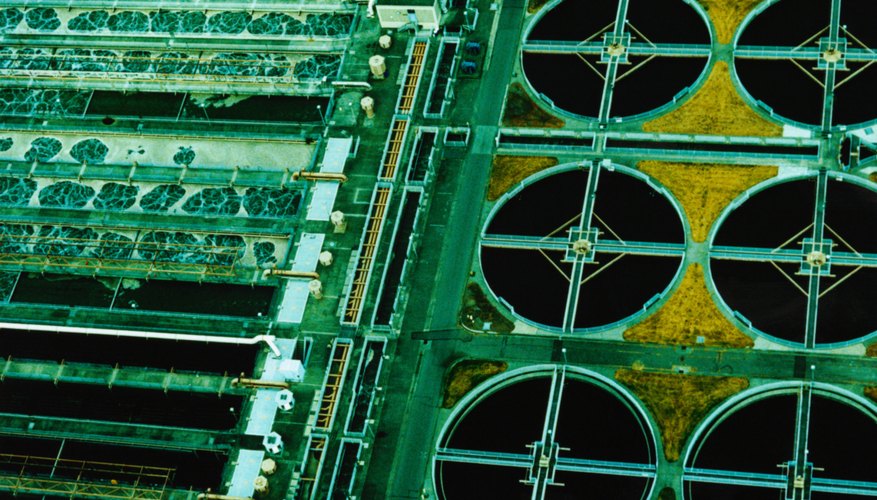
WASTEWATER TREATMENT AND OZONE - Removing germs and organic compounds is a critical part of wastewater treatment, and ozone is one of the chemicals often employed to do the job. If the dose of ozone is too low, some of the germs and especially those that can form cysts may survive. Consequently, higher ozone concentrations are beneficial. These are difficult to maintain, however, because ozone is 12 times less soluble in water than chlorine, so the maximum disinfectant concentrations you can reach are much lower when you use ozone. Moreover, ozone breaks down very rapidly, and the higher the temperature or the pH, the more rapidly it decays.

Ozone is an agent for wastewater disinfection.
..........................................................................................
Wastewater Treatment And Ozone
Ozone Water Treatment Disadvantages
By John Brennan


Often wastewater and sewage contain a bewildering array of germs and carbon-based or organic chemicals and pollutants.
Removing germs and organic compounds is a critical part of wastewater treatment, and ozone is one of the chemicals often employed to do the job.
While it's more effective than chlorine at destroying germs, it does have some important disadvantages.

Solubility and Activity

If the dose of ozone is too low, some of the germs and especially those that can form cysts may survive.
Consequently, higher ozone concentrations are beneficial.
These are difficult to maintain, however, because ozone is 12 times less soluble in water than chlorine, so the maximum disinfectant concentrations you can reach are much lower when you use ozone.
Moreover, ozone breaks down very rapidly, and the higher the temperature or the pH, the more rapidly it decays.
If the water is rich in organic compounds or suspended solids, a lot of the ozone may be consumed through reactions with these other contaminants, leaving an insufficient amount available to destroy germs.
That's why ozone is not an economical option for wastewater with very high amounts of suspended solids or total organic compounds.

Reactivity

Ozone's reactivity is what makes it such a great disinfectant. That same strength, however, comes with some accompanying disadvantages.
Ozone can react with many metals, including those used to line wastewater treatment containers, so operators must use corrosion-resistant materials like stainless steel, which makes plant construction more expensive.
Moreover, ozone's reactivity makes it a toxic chemical, so operators must design plants in such a way that workers don't come into contact with ozone gas escaping from the water.
This too increases the expense of ozone wastewater treatment.

Expense

Ozone is more challenging to produce and deliver than chlorine.
Typically, plant operators generate ozone by running an electric current through air passing between two electrodes, a technique called corona discharge.
About 85 percent of the energy input to a corona discharge system is wasted in the form of heat.
This method is extremely energy-intensive and the equipment required is more complicated than chlorination systems, meaning that ozone generation is typically more expensive than the alternatives.

Residuals and Byproducts

When ozone reacts with organic compounds, it creates a variety of byproducts.
If the water contains bromide ions, ozone treatment can form brominated compounds like the bromate ion, which is a possible human carcinogen.
Consequently, operators must either control the pH or avoid use of ozone if the water is rich in bromide salts.
Finally, ozone is unlike chlorine in that there is no residual or remaining disinfectant once the process is over; any ozone that doesn't react with contaminants breaks down completely.
This makes it more difficult for plant operators to keep tabs on how well disinfection is working since there is no residual level of ozone in the water that they can monitor.

About the Author
Based in San Diego, John Brennan has been writing about science and the environment since 2006. His articles have appeared in "Plenty," "San Diego Reader," "Santa Barbara Independent" and "East Bay Monthly." Brennan holds a Bachelor of Science in biology from the University of California, San Diego.
https://sciencing.com/ozone-water-treatment-disadvantages-22555.htmlOzone is an agent for wastewater disinfection.