Showing posts with label Smoking. Show all posts

Saturday, March 14, 2020

CIGARETTE SMOKE INDOORS - Secondhand smoke is the combined effect of the smoke that comes off the actual end of a cigarette and the smoke that a smoker exhales. While people who smoke don’t necessarily intend to harm those around them, this is what they are doing when they smoke. Secondhand smoke can contribute to lung cancer, emphysema, and a variety of other illnesses. This is because secondhand smoke contains nearly 4,000 chemical compounds, many of which are known to cause these diseases, clog a person’s airways, and even trigger asthma attacks. It is essential that you are diligent about controlling the amount of smoke in your home. One of the easiest ways to control secondhand smoke in your home is to open up your windows and let in some fresh air. While this cannot get rid of all the smoke in your home completely, it will certainly help. It’s a great start to clearing the smoke from the air. If you smoke or someone that you live with is a smoker, it would be wise to get an air purifier designed to mitigate the smell and effects of secondhand smoke in your home. Secondhand smoke can stick to the walls of your home, the carpets and your curtains.

Indoor Cigarette Smoke Pollution
...................................................................................................................................................................
CigaretteCigarette Smoke Indoors
How to Remove Cigarette Smoke From Your Indoor Air
Jeff Flowers


At this point, we all know that smoking isn’t good for your health.
You also probably know that breathing in the smoke that comes off of cigarettes, whether or not you’re the one smoking, can be just as dangerous.
If you are concerned about the impact of lingering cigarette smoke in your home, or just tired of your home smelling like an ashtray, there are many things you can do to get rid of the smoke and odor.
Cigarette
Let’s take a look at the dangers of secondhand smoke, as well as a few methods you can follow to remove smoke from your indoor air. It’s time to clear the air and start breathing easier once again.
The Dangers of Secondhand Smoke
Secondhand smoke is the combined effect of the smoke that comes off the actual end of a cigarette and the smoke that a smoker exhales.
While people who smoke don’t necessarily intend to harm those around them, this is what they are doing when they smoke, especially indoors.
Secondhand smoke can contribute to lung cancer, emphysema, and a variety of other illnesses.
This is because secondhand smoke contains nearly 4,000 chemical compounds, many of which are known to cause these diseases, clog a person’s airways, and even trigger asthma attacks.
Because of these effects, it is essential that you are diligent about controlling the amount of smoke in your home.
Open the Windows
One of the easiest ways to control secondhand smoke in your home is to open up your windows and let in some fresh air.
While this cannot get rid of all the smoke in your home completely, it will certainly help. It’s a great start to clearing the smoke from the air, not to mention will immediately remove the noxious odors of cigarette smoke.
If it’s too cold or hot outside to open your windows, then we’d suggest opening a door or window in intervals.
This will allow the smoke to clear out, albiet at a much slower rate, but not make as big of an impact on your energy bills.
It would also be wise to sit by an open window and blow the smoke outside. This will prevent the vast majority of the smoke from accumulating in your home in the first place.
It won’t prevent your home from smelling like smoke, but it will certainly help out.
Use an Air Purifier
Keep in mind that just opening up your doors and windows on a regular basis won’t completely get rid of indoor cigarette smoke.
If you smoke or someone that you live with is a smoker, it would be wise to get an air purifier designed to mitigate the smell and effects of secondhand smoke in your home.
These purification systems work by pulling indoor air into their them, cleaning it, and then circulating it back into the room.
When the air is pulled into the purifier, the harmful particles contained in secondhand smoke are eliminated from the air.
Not only can an air purifier minimize the effects of secondhand smoke in your household, but it can also help control the odors that are often pervasive in the homes of smokers.
This is by far the most effective way to cleanse your indoor air of cigarette smoke, as well as many other airborne toxins.
Getting Rid of the Smell
While an air purifier is the most effective way to improve your indoor air quality, there are still other things you can do to get rid of that smokey smell.
Secondhand smoke can stick to the walls of your home, the carpets and your curtains. It can and will trap the smell inside of your house. Here are four tips to help you rid of these odors in your home:
Remove all of the curtains, sheets, towels and other linens from your home. Wash them thoroughly before putting them back.
You can also use a deodorizing product, such as Febreeze, to help mask the smells.
Steam clean all of your carpets, as well as add a deodorizing product to the cleansing solution.
Sanitize your ceilings, floors, countertops, and other fixtures in your home with a solution of water and bleach.
Consider repainting your walls and doors. A fresh coat of paint will help alleviate the lingering odors.
In addition to these strategies, adopt a daily, weekly, and monthly routine to minimize the strong and unique odor of cigarette smoke.
This should include things like opening up the doors and windows for a few hours, adding a small amount of vinegar to your washing machine whenever you wash your clothes and linens, regularly vacuuming and steam cleaning your carpets, and spraying all of your furniture down with a deodorizing product.
If you are worried about the impact secondhand smoke is having on your household, not just because of the way it smells but because of the harmful health consequences, using an air purifier, opening up the windows and doors and following these guidelines for eliminating the smell can successfully control the impact of secondhand smoke in your home.

Plagued by a chronic case of curiosity, Jeff Flowers is just a dude that annoys everyone around him with his loquacious goofiness. From beer to home living, Jeff is just trying to hack his way through life and write a few notes about it along the way. You can follow his ramblings here, or listen to him complain about Austin traffic on Twitter at @Bukowsky.
Indoor Cigarette Smoke Pollution

Wednesday, October 2, 2019

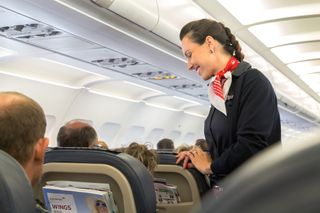
FLIGHT ATTENDANTS AND CANCER - Women and men on U.S. cabin crews have higher rates of many types of cancer, compared with the general population. This includes cancers of the breast, cervix, skin, thyroid and uterus, as well as gastrointestinal system cancers, which include colon, stomach, esophageal, liver and pancreatic cancers. One possible explanation for these increased rates is that flight attendants are exposed to a lot of known and potential carcinogens, or cancer-causing agents, within their work environment. One of those carcinogens is cosmic ionizing radiation, which is elevated at higher altitudes.

flight attendant
..................................................................................................................................
Flight Attendants And Cancer
Why Cancer Rates Are Higher in Flight Attendants
By Cari Nierenberg 


This type of radiation is particularly damaging to DNA and is a known cause of breast cancer and nonmelanoma skin cancer, she said.
Air cabin crews receive the highest yearly dose of ionizing radiation on the job of all U.S. workers, she added.
In the new study, the researchers looked at data from more than 5,300 flight attendants from different airlines who completed an online survey as part of the Harvard Flight Attendant Health Study.
The analysis looked at the cancer rates in these flight attendants compared to a group of about 2,700 people who had a similar income and educational status but were not flight attendants.
The researchers found that in female flight attendants, the rates of breast cancer were about 50 percent higher than in women from the general population.
In addition, melanoma rates were more than two times higher and nonmelanoma skin cancer rates were about four times higher in female flight attendants compared with women from the general population. (Nonmelanoma skin cancers include basal cell and squamous cell carcinomas.)
These elevated cancer rates were observed despite indications of good-health behaviors, such as low levels of smoking and obesity, in the flight-attendant group as a whole, the study authors said.
Cancer rates in male flight attendants were nearly 50 percent higher for melanoma and about 10 percent higher for nonmelanoma skin cancers compared with men from the general population group, according to the findings.
Risks of very frequent flying
The potential cancer risks for flight attendants are not limited to cosmic ionizing radiation.
Cabin crew members are also regularly exposed to more UV radiation than the general population, which can make these workers more vulnerable to skin cancers, Mordukhovich said.
In addition, some studies have found that circadian rhythm disruptions, such as jet lag, might be linked with an increased risk of cancer, she said.
These disruptions could lead to changes in immune function and cell metabolism, which can reduce the suppression of tumors.
Another possible threat to the health of cabin crew members is chemical exposure, according to the study.
The women and men who worked as flight attendants prior to 1988, when smoking was first banned on some U.S. flights, were routinely exposed to secondhand smoke while on board the aircraft. 
Other chemical contaminants found in the cabin may include engine leakages, pesticides and flame retardants, which contain compounds that may act as hormone disruptors and increase the risk of some cancers, Mordukhovich said.
Further complicating matters is that flight attendants in the U.S. don't have the same occupational protections as their counterparts in the European Union.
There, exposure levels to radiation as well as work schedules are routinely monitored and adjusted to make sure flight attendants don't exceed certain guidelines for carcinogen exposure, Mordukhovich said.
There has been only limited research on the health of flight attendants, but they may not be the only air travelers to experience higher rates of cancer.
The rates may also be higher for pilots and people who fly often as passengers, Mordukhovich said.
Studies of pilots have generally shown higher rates of skin and prostate cancers, she noted, adding that pilots also have been found to have circadian rhythm disruption, but these workers have somewhat more built-in protections around their scheduling and rest times than flight attendants do.
Although the cancer risks for frequent flyers have not yet been studied, there is no reason to suspect these people would not have similar risks as those faced by cabin crews, Mordukhovich said.
Some limitations of the study are that researchers were not able to take into consideration individual UV exposures, such as sunbathing habits or leisure-time activities, which could influence skin cancer risk.
In addition, cancer rates were self-reported by study participants, and these diagnoses were not confirmed by a check of their medical records by the researchers, according to the study.
flight attendant