Showing posts with label Air pressure. Show all posts

Monday, March 8, 2021

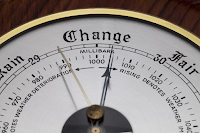
BAROMETRIC PRESSURE - Barometric pressure is the weight of the overlying air pressing down on the earth. It is also known as air pressure. Low barometric pressure means the overlying air is rising, whereas high pressure means the overlying air is sinking. Barometric pressure has important effects on water chemistry and weather conditions. It affects the amount of gas that can dissolve in water. More gas, such as oxygen, can dissolve in water under higher pressure when compared to lower air pressure. For instance, more oxygen is dissolved in water at sea level than at high altitudes. The pressure of the overlying air forces more gas into solution. As the overlying pressure decreases, gas is released from solution. A common example of this is when someone opens a carbonated beverage. High barometric pressure supports sunny, clear, and favorable weather conditions, but lower levels promotes rainy and cloudy weather conditions. This atmospheric parameter has been used for hundreds of years to forecast weather conditions. Differences in barometric pressure over large inland lakes can produce seiches, which affect water levels in the lake and adjoining estuaries. Millibars are a more direct measure of barometric pressure and are the units used in SWMP. Traditionally, a barometer was used for measuring barometric pressure. SWMP uses a more modern and accurate device called a capacitative pressure sensor.

.................................................................................................................................................................................................................................................................................................................................................................................

Barometric Pressure

What is Barometric Pressure?

By Fondriest Staff


Barometric pressure is the weight of the overlying air pressing down on the earth.

It is also known as air pressure.

Low barometric pressure means the overlying air is rising, whereas high pressure means the overlying air is sinking.

Why is Barometric Pressure Important?

Barometric pressure has important effects on water chemistry and weather conditions. 

It affects the amount of gas that can dissolve in water. More gas, such as oxygen, can dissolve in water under higher pressure when compared to lower air pressure.

For instance, more oxygen is dissolved in water at sea level than at high altitudes.

The pressure of the overlying air forces more gas into solution.

As the overlying pressure decreases, gas is released from solution. A common example of this is when someone opens a carbonated beverage.

High barometric pressure supports sunny, clear, and favorable weather conditions, but lower levels promotes rainy and cloudy weather conditions.

This atmospheric parameter has been used for hundreds of years to forecast weather conditions.

Differences in barometric pressure over large inland lakes can produce seiches, which affect water levels in the lake and adjoining estuaries.

How is Barometric Pressure measured?

Barometric pressure is typically reported in inches of mercury or in millibars. 1 inch of mercury equals about 33.9 millibars,

Inches of mercury is the traditional way of reporting air pressure. Greater air pressure pushes a column of mercury higher in a barometer.

Millibars are a more direct measure of barometric pressure and are the units used in SWMP.

Barometric Pressure Technology

Traditionally, a barometer was used for measuring barometric pressure.

SWMP uses a more modern and accurate device called a capacitative pressure sensor.

The barometer was first devised in 1644. It consists of a glass tube that is closed at one end and open at the other.

The tube sits vertically, with the open end sitting in a pool of mercury.

Changes in pressure will change the level of mercury in the tube.

Increased air pressure pushes the mercury higher into the tube, whereas decreased air pressure allows the mercury in the tube to drop.

https://www.fondriest.com/news/barometricpressure.htm


You might also like:


High or Low Reading in Barometric Pressure

CLICK HERE . . . to view . . . 

https://puricare.blogspot.com/2020/02/high-or-low-reading-in-barometric.html

.............................................................................................................................................................................................................................................................................................

The Basics of Air Pressure

CLICK HERE . . . to view . . . 

https://puricare.blogspot.com/2018/11/air-pressure-air-has-mass-because-it-is.html

............................................................................................................................................................................................................................................................................................

https://puricare.blogspot.com/2021/01/weather-and-arthritis-pain-does-weather.html

https://puricare.blogspot.com/2020/10/weather-signs-of-incoming-storm-how-to.html

https://puricare.blogspot.com/2019/09/gauge-pressure-and-absolute-pressure.html

https://puricarechronicles.blogspot.com/2019/11/when-pressure-is-on-lord-is-listening.html


https://puricarechronicles.blogspot.com/2019/11/anxious-no-more-as-believer-you-have.html


Wednesday, January 13, 2021

WEATHER AND ARTHRITIS PAIN - Does weather affect arthritis pain? - Medical myths die hard. Maybe that’s because there’s no agreement on whether a common belief is indeed a myth. For example, there’s the longstanding belief that weather affects arthritis pain. Many of my patients notice a clear connection; some are so convinced of the link, they believe they can predict the weather better than the TV meteorologists. And maybe that’s true. But that’s not what the science says. A recent study finds no connection between rainy weather and symptoms of back or joint pain. This conclusion was based on a staggering amount of data: more than 11 million medical visits occurring on more than two million rainy days and nine million dry days. Not only was there no clear pattern linking rainy days and more aches and pains, but there were slightly more visits on dry days. Still not convinced? That’s understandable. Maybe it’s not rain or shine that matters — maybe it’s barometric pressure, changes in weather, or humidity that matters most. Or maybe the study missed some key information, such as when symptoms began or got worse — after all, it can take days or even weeks after symptoms begin to see a doctor. What does past research say about weather and arthritis pain? The question of whether there’s a link between weather and aches and pains has been studied extensively. While a definitive answer is nearly impossible to provide — because it’s hard to “prove a negative” (prove that something doesn’t exist) — researchers have been unable to make a strong case for a strong connection. For example, a 2014 study in Australia found no link between back pain and rain, temperature, humidity, or air pressure.

.........................................................................................................................................................................................................................................................................................................................................................

Weather and Arthritis Pain

Does weather affect arthritis pain?

Robert H. Shmerling, MD

Senior Faculty Editor, Harvard Health Publishing


Medical myths die hard. Maybe that’s because there’s no agreement on whether a common belief is indeed a myth.

For example, there’s the longstanding belief that weather affects arthritis pain.

Many of my patients notice a clear connection; some are so convinced of the link, they believe they can predict the weather better than the TV meteorologists. And maybe that’s true.

But that’s not what the science says.

A recent study finds no connection between rainy weather and symptoms of back or joint pain. This conclusion was based on a staggering amount of data: more than 11 million medical visits occurring on more than two million rainy days and nine million dry days.

Not only was there no clear pattern linking rainy days and more aches and pains, but there were slightly more visits on dry days.

Still not convinced? That’s understandable.

Maybe it’s not rain or shine that matters — maybe it’s barometric pressure, changes in weather, or humidity that matters most.

Or maybe the study missed some key information, such as when symptoms began or got worse — after all, it can take days or even weeks after symptoms begin to see a doctor.

What does past research say about weather and arthritis pain?

The question of whether there’s a link between weather and aches and pains has been studied extensively.

While a definitive answer is nearly impossible to provide — because it’s hard to “prove a negative” (prove that something doesn’t exist) — researchers have been unable to make a strong case for a strong connection.

For example, a 2014 study in Australia found no link between back pain and rain, temperature, humidity, or air pressure.

This study collected data regarding features of the weather at the time of first symptoms, and compared it to the weather a week and a month before.

But, an earlier study found that among 200 patients followed for three months, knee pain increased modestly when temperature fell or barometric pressure rose.

Does research matter when you have personal experience?

That’s a fair question. And it’s something I’ve even heard in TV commercials about headache medicines: “I don’t care about the research. I just know what works for me.”

But it’s worth remembering that humans have a remarkable tendency to remember when two things occur or change together (such as wet, gloomy weather and joint pain), but remember less when things do not occur together.

That rainy day when you felt no better or worse is unlikely to be so notable that you remember it.

If you rely solely on memory rather than on more rigorous, data-based evidence, it’s easy to conclude a link exists where, in fact, none does.

In conclusion…

It’s true: medical myths die hard.

In fact, some seem immortal. One could argue that’s as it should be.

After all, yesterday’s medical myth is only one discovery away from becoming tomorrow’s medical fact.

Still, when the evidence is compelling, I think we’d be better off letting go of what’s been disproven, give more credence to evidence than folklore, and keep an open mind — just in case the evidence changes.

When my patients tell me they can predict the weather by how their joints feel, I believe them.

It’s hard to discount it when so many people notice a connection. They could represent an exception to what the studies show.

But I also believe the science. Until I see evidence that’s even more compelling, I remain a skeptic about the weather/arthritis connection.

Robert H. Shmerling, MD

Senior Faculty Editor, Harvard Health Publishing

Robert H. Shmerling, MD, is the former clinical chief of the division of rheumatology at Beth Israel Deaconess Medical Center (BIDMC) and an associate professor of medicine at Harvard Medical School in Boston. He served for more than two decades as the Robinson Firm Chief in the teaching program of the BIDMC internal medicine residency. As a practicing rheumatologist for over 30 years, Dr. Shmerling engaged in a mix of patient care, teaching, and research. His practice included challenging patients, both in the clinic and the inpatient consultation service. His research interests center on diagnostic studies in patients with musculoskeletal symptoms, rheumatic, and autoimmune diseases. He has published research regarding infectious arthritis and how well diagnostic tests perform in patients with suspected rheumatic disease. Having retired from patient care in 2019, Dr. Shmerling now works as a Senior Faculty Editor for Harvard Health Publishing.

https://www.health.harvard.edu/blog/does-weather-affect-arthritis-pain-2019011715789


You might also like:


Injuries Hurt More In Cold Weather

CLICK HERE . . . to view . . . 

https://puricare.blogspot.com/2019/06/injuries-hurt-more-in-cold-weather-in.html

.........................................................................................................................................................................................................................................................................................

Old Injuries And Joint Aches 

CLICK HERE . . . to view . . . 

https://puricare.blogspot.com/2017/05/old-injuries-and-joint-aches-why-do-old.html

Tuesday, October 13, 2020

THE HONEYCOMB - New Bulletproof & Airless Tires - The most vulnerable part of a military vehicle is its tires. When flat, the entire vehicle, its advanced technology, and its occupants are at risk. Airless tires, or non-pneumatic tires (NPT), are tires that are not supported by air pressure. They are used on some small vehicles such as riding lawn mowers and motorized golf carts. They are also used on heavy equipment such as backhoes, which are required to operate on sites such as building demolition, where risk of tire punctures is high. Tires composed of closed-cell polyurethane foam are also made for bicycles and wheelchairs. According to soldiers who have driven vehicles fitted with them, the tires are capable of towing 1,000 gallons of water up a mountain or three pallets of ammo and batteries up a steep incline, while handling like normal rubber tires. Humvees have “run flat” tires that continue to roll despite very low air pressure, but “airless tires” are even better. The technology, “Non-Pneumatic Tire” (NPT), is made of a polymeric web. NPTs keep vehicles moving in any terrain while not being slowed or stopped by punctures, increasing the possibility of escaping from dangerous situations. NPT was originally developed at the University of Wisconsin for the U.S. Army. The company claims its airless tyres provide a smoother ride over bumps than conventional tyres, and they’re quieter. The main advantage of airless tires is that they cannot go flat.

The Honeycomb 

New Bulletproof & Airless Tires

Vikas Shukla


The most vulnerable part of a military vehicle is its tires. When flat, the entire vehicle, its advanced technology, and its occupants are at risk.

No Air, No Problem

Airless tires, or non-pneumatic tires (NPT), are tires that are not supported by air pressure.

They are used on some small vehicles such as riding lawn mowers and motorized golf carts.

They are also used on heavy equipment such as backhoes, which are required to operate on sites such as building demolition, where risk of tire punctures is high.

Tires composed of closed-cell polyurethane foam are also made for bicycles and wheelchairs.

According to soldiers who have driven vehicles fitted with them, the tires are capable of towing 1,000 gallons of water up a mountain or three pallets of ammo and batteries up a steep incline, while handling like normal rubber tires.

Humvees have “run flat” tires that continue to roll despite very low air pressure, but “airless tires” are even better.

The technology, “Non-Pneumatic Tire” (NPT), is made of a polymeric web.

NPTs keep vehicles moving in any terrain while not being slowed or stopped by punctures, increasing the possibility of escaping from dangerous situations.

NPT was originally developed at the University of Wisconsin for the U.S. Army.

The company claims its airless tyres provide a smoother ride over bumps than conventional tyres, and they’re quieter.

“There is nowhere for the sound to pool, so there’s no humming or drumming like there is with a standard pneumatic tyre,” Polaris business development representative Joaquin Salas told Fox News in the US.

Advantages

The main advantage of airless tires is that they cannot go flat.

Other advantages are that airless tires will need to be replaced less often resulting in savings.

Heavy equipment outfitted with airless tires will be able to carry more weight and engage in more rugged activities.

Airless bicycle tires can be easy to install. 

Airless lawn mower tires come in several varieties.

Disadvantages

Airless tires generally have higher rolling resistance and provide somewhat less suspension than similarly shaped and sized pneumatic tires.

Other problems for airless heavy equipment tires include dissipating the heat buildup that occurs when they are driven.

Airless tires are often filled with compressed polymers (plastic), rather than air or can be a solid molded product.

Airless tires are attractive to cyclists, as bicycle tires are much more vulnerable to punctures than motor vehicle tires.

The drawbacks to airless tires depend on the use.

Heavy equipment operators who use machinery with solid tires will complain of fatigue whereas lawn mowers that use solid or airless tires have no drawbacks.

Bicycle riders who use airless tires may complain that the tire is harder than a comparable pneumatic tire.

Only anecdotal evidence exists that airless tires may cause broken spokes on a bicycle wheel.

Any airless tire will be heavier than the rubber tire it is meant to replace; however, many rubber pneumatic tires are also heavy.

Rubber tires vary in rolling resistance and an airless tire or solid insert may only marginally increase rolling resistance if at all.

Installation of airless tires depends on the use.

Heavy equipment will need special equipment to mount but an airless bicycle tire can be mounted with little or no effort.

Solid airless lawnmower tires come pre-installed on the wheel allowing quick installation.

https://youtu.be/2wAvxQfusWU

https://engineeringinsider.org/honeycomb-new-airless-tires/

Sunday, April 29, 2018

AIRPLANES - The Dynamics of Airplane Flight - Airplane wings are curved on the top which makes air move faster over the top of the wing. The air moves faster over the top of a wing. It moves slower underneath the wing. The slow air pushes up from below while the faster air pushes down from the top. This forces the wing to lift up into the air.


 .
How Airplanes Fly
The Dynamics of Airplane Flight
How Planes Fly and How Pilots Control Them

How does an airplane fly?
How do pilots control the flight of an airplane?
Here are the principles and elements of the aircraft that are involved in flying and controlling flight.

Using Air to Create Flight

Air is a physical substance which has weight. It has molecules which are constantly moving.
Air pressure is created by the molecules moving around. Moving air has a force that will lift kites and balloons up and down.
Air is a mixture of different gasses; oxygen, carbon dioxide and nitrogen. All things that fly need air.
Air has the power to push and pull on the birds, balloons, kites and planes.
In 1640, Evangelista Torricelli discovered that air has weight.
When experimenting with measuring mercury, he discovered that air put pressure on the mercury.
Francesco Lana used this discovery to begin to plan for an airship in the late 1600s.
He drew an airship on paper that used the idea that air has weight.
The ship was a hollow sphere which would have the air taken out of it. Once the air was removed, the sphere would have less weight and would be able to float up into the air.
Each of four spheres would be attached to a boat-like structure, and then the whole machine would float. The actual design was never tried.
Hot air expands and spreads out, and it becomes lighter than cool air.
When a balloon is full of hot air it rises because the hot air expands inside the balloon.
When the hot air cools and is let out of the balloon, the balloon comes back down.

How Wings Lift the Plane

Airplane wings are curved on the top which makes air move faster over the top of the wing.
The air moves faster over the top of a wing. It moves slower underneath the wing.
The slow air pushes up from below while the faster air pushes down from the top. This forces the wing to lift up into the air.

Newton's Three Laws of Motion

Sir Isaac Newton proposed three laws of motion in 1665. These laws help to explain how a plane flies.
1.    If an object is not moving, it will not start moving by itself. If an object is moving, it will not stop or change direction unless something pushes it.
2.    Objects will move farther and faster when they are pushed harder.
3.    When an object is pushed in one direction, there is always a resistance of the same size in the opposite direction.

Four Forces of Flight

The four forces of flight are:
·             Lift - upward
·             Drag - down and backward
·             Weight - downward
·             Thrust - forward 

Controlling the Flight of a Plane

How does a plane fly?
Let's pretend that our arms are wings. If we place one wing down and one wing up we can use the roll to change the direction of the plane.
We are helping to turn the plane by yawing toward one side.
If we raise our nose, like a pilot can raise the nose of the plane, we are raising the pitch of the plane.
All these dimensions together combine to control the flight of the plane.
A pilot of a plane has special controls that can be used to fly the plane.
There are levers and buttons that the pilot can push to change the yaw, pitch and roll of the plane.
·             To roll the plane to the right or left, the ailerons are raised on one wing and lowered on the other. The wing with the lowered aileron rises while the wing with the raised aileron drops.
·             Pitch is to make a plane descend or climb. The pilot adjusts the elevators on the tail to make a plane descend or climb. Lowering the elevators caused the airplane's nose to drop, sending the plane into a down. Raising the elevators causes the airplane to climb.
·             Yaw is the turning of a plane. When the rudder is turned to one side, the airplane moves left or right. The airplane's nose is pointed in the same direction as the direction of the rudder. The rudder and the ailerons are used together to make a turn

How Does a Pilot Control the Plane?

The pilot uses several instruments to control the plane. 
The pilot controls the engine power using the throttle
.
Pushing the throttle increases power, and pulling it decreases power.

Ailerons - The ailerons raise and lower the wings. The pilot controls the roll of the plane by raising one aileron or the other with a control wheel. Turning the control wheel clockwise raises the right aileron and lowers the left aileron, which rolls the aircraft to the right.

Rudder - The rudder works to control the yaw of the plane. The pilot moves rudder left and right, with left and right pedals.

Pressing the right rudder pedal moves the rudder to the right. This yaws the aircraft to the right. Used together, the rudder and the ailerons are used to turn the plane.

The pilot of the plane pushes the top of the rudder pedals to use the brakes. The brakes are used when the plane is on the ground to slow down the plane and get ready for stopping it. The top of the left rudder controls the left brake and the top of the right pedal controls the right brake.

Elevators - The elevators which are on the tail section are used to control the pitch of the plane. A pilot uses a control wheel to raise and lower the elevators, by moving it forward to backward.

Lowering the elevators makes the plane nose go down and allows the plane to go down. By raising the elevators the pilot can make the plane go up.

If you look at these motions you can see that each type of motion helps control the direction and level of the plane when it is flying.

Sound Barrier

Sound is made up of molecules of air that move. They push together and gather together to form sound waves. 
Sound waves travel at the speed of about 750 mph at sea level.
When a plane travels the speed of sound the air waves gather together and compress the air in front of the plane to keep it from moving forward.
This compression causes a shock wave to form in front of the plane.
In order to travel faster than the speed of sound the plane needs to be able to break through the shock wave.
When the airplane moves through the waves, it makes the sound waves spread out and this creates a loud noise or sonic boom.
The sonic boom is caused by a sudden change in the air pressure. When the plane travels faster than sound it is traveling at supersonic speed.
A plane traveling at the speed of sound is traveling at Mach 1 or about 760 MPH. Mach 2 is twice the speed of sound.

Regimes of Flight

Sometimes called speeds of flight, each regime is a different level of flight speed.
General Aviation (100-350 MPH). General aviation is the lowest speed. Most of the early planes were only able to fly at this speed level.
Early engines were not as powerful as they are today. However, this regime is still used today by smaller planes.
Examples of this regime are the small crop dusters used by farmers for their fields, two and four-seater passenger planes, and seaplanes that can land on water.
Subsonic (350-750 MPH). This category contains most of the commercial jets that are used today to move passengers and cargo.
The speed is just below the speed of sound. Engines today are lighter and more powerful and can travel quickly with large loads of people or goods.
Supersonic (760-3500 MPH - Mach 1 - Mach 5). The speed of sound is 760 MPH. It is also called MACH 1.
These planes can fly up to 5 times the speed of sound.
Planes in this regime have specially designed high-performance engines. They are also designed with lightweight materials to provide less drag.
The Concorde is an example of this regime of flight.
Hypersonic (3500-7000 MPH - Mach 5 to Mach 10). Rockets travel at speeds 5 to 10 times the speed of sound as they go into orbit.
An example of a hypersonic vehicle is the X-15, which is rocket powered. The space shuttle is also an example of this regime.
New materials and very powerful engines were developed to handle this rate of speed. 

Mary Bellis has been writing about inventors since 1997. She also loves to tinker (invent) and spends too much time in her workshop developing her ideas.
Experience
Forbes Best of the Web credits Mary for creating the number one online destination for information about inventors and inventions. Her writing has been reprinted and referenced to in numerous educational books and articles. Her opinion and advice is requested by media outlets on a constant basis. In addition, she has produced and directed a number of films, including a documentary on Alexander Graham Bell, the inventor of the telephone, and has worked as a curator specializing in computer generated art.
Education
Mary has two degrees in film and animation from the San Francisco Art Institute. She is a big fan of both history and technology and an avid reader of books and periodicals on those topics.
Mary Bellis
I have a passion for inventing and a deep respect for all inventors. I know firsthand the difficulties that inventors face and I want to help by making the path from idea to marketplace a clearer process.
https://www.thoughtco.com/dynamics-of-airplane-flight-4075424


You might also like:
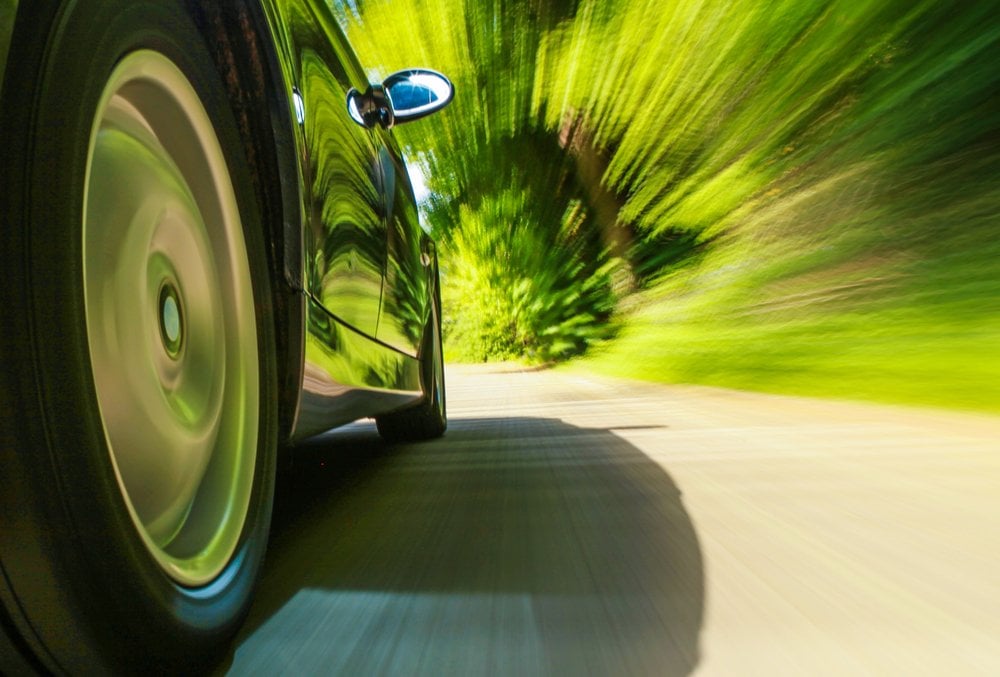
speedThrilling Speed

Why Do We Feel So Thrilled By Speed?

.
.
.
Multi-Media Filter, Highly-Activated Carbon Filter,
Zeolite-Process Water Softener With Brine Tank,
Fiberglass Ballast-Type Pressure Tank
(fully automatic backwash & regeneration)
.
PURICARE 
INDUSTRIAL 
ENTERPRISES 
Water 
Treatment 
Systems
.
...

Aganan, Pavia, Iloilo, Philippines
...

CLICK HERE . . . to view company profile . . .
Reverse Osmosis with Steel Tank 
& Cartridge Pre-Filters

Submersible Pumps

Tachmina Solenoid-Driven
Chemical Metering Pump
- ensures regulated dosing
of chlorine into water system
without human intervention