Showing posts with label Air Travel. Show all posts

Saturday, November 21, 2020

HOW AIRLINES CLEAN PLANES SO QUICKLY - The precise steps in cleaning an airline cabin depend upon many factors, such as the time the plane will be on the ground and whether the flight is domestic or international. If you're a passenger on one of the more than 10 million scheduled passenger flights that depart from U.S. airports each year, you may barely even notice the crew of cleaning workers who hurry onto the airliner after your flight, in order to get the cabin ready for the next group of passengers who'll soon be boarding. Nevertheless, cleaning airliners is a crucial part of air travel, and not just because it makes it more pleasant for passengers to spend several hours in a relatively crowded, confined space. It's also important for passengers' health to remove refuse and clean dirty surfaces that might harbor germs that could make people sick. Airlines work continuously – both between flights and overnight – to provide a clean and comfortable cabin area for their passengers. It's a job that has to be accomplished in a matter of minutes, given the quick turnaround times that airlines have to meet, and it takes a systematic, highly-organized effort to get it done. The cleanliness of an airline cabin is about both function — health and safety — as well as the overall passenger. These days, cleaning companies use sophisticated software and wireless devices to track when planes arrive and determine what sort of cleaning they need.

The precise steps in cleaning an airline cabin depend upon many factors, such as the time the plane will be on the ground and whether the flight is domestic or international. 

..........................................................................................................................................................................................................................................................................................................

How Airlines Clean Planes So Quickly

BY PATRICK J. KIGER


If you're a passenger on one of the more than 10 million scheduled passenger flights that depart from U.S. airports each year, you may barely even notice the crew of cleaning workers who hurry onto the airliner after your flight, in order to get the cabin ready for the next group of passengers who'll soon be boarding.

Nevertheless, cleaning airliners is a crucial part of air travel, and not just because it makes it more pleasant for passengers to spend several hours in a relatively crowded, confined space.

It's also important for passengers' health to remove refuse and clean dirty surfaces that might harbor germs that could make people sick.

"Airlines work continuously – both between flights and overnight – to provide a clean and comfortable cabin area for their passengers," Vaughn Jennings, a spokesperson for Airlines for America, an industry group, says via email.

It's a job that has to be accomplished in a matter of minutes, given the quick turnaround times that airlines have to meet, and it takes a systematic, highly-organized effort to get it done.

"The cleanliness of an airline cabin is about both function — health and safety — as well as the overall passenger experience," John Alford, vice-president of cabin appearance for ABM Aviation, which cleans close to one million airplane cabins each year for airlines in the U.S. and Europe, explains in an email.

"A great deal of attention is placed on disinfection of food prep areas, lavatory high usage areas, seat eating areas – tray tables – and the aircraft's overall appearance."

These days, cleaning companies use sophisticated software and wireless devices to track when planes arrive and determine what sort of cleaning they need, and to dispatch crews and follow their progress, as this 2015 BBC story details.

ABM's team leaders, for example, each carry a hand-held device that gives them all the pertinent information on the particular plane they're about to clean.

"Our technology allows us to look deeper into just-in-time manpower allocation," Alford explains.

"We can dispatch employees as the plane gets there."

The precise steps in cleaning an airline cabin depend upon many factors, such as the time the plane will be on the ground and whether the flight is domestic or international.

"Short-haul or domestic flights typically return to the skies quickly, so there's less time to clean these planes than those used for international flights," Alford says.

To deal with that variation, ABM has three different types of cleaning operations, according to Alford.

·      Turn clean: "This clean is designed to accommodate an aircraft that will 'turn' and leave again quickly," Alford says.

"These cleans are generally light cleans with a focus on galley areas, lavatory cleanliness and trash removal from the cabin and passenger areas."

·      Overnight Clean: "This clean is performed on aircraft that have flown all their routes for the day and are to remain overnight, generally between 8 to 10 hours," Alford says.

"This clean is enhanced with a larger focus on the customer areas in and around seats, while continuing to also clean the galley and lavatory areas."

·      Deep Clean: "This clean is a detail clean, much like you would see performed on a car," Alford says.

"The seat areas and many surfaces are removed to expose the inner workings of the seat, compartments, cabinets and storage areas. Some airlines have specialized equipment that helps with a deep clean."

Depending upon the clean type and the particular airline's specifications, it may take between five and 12 people equipped with cordless vacuums and disinfectants to get the job done.

They move through the plane in a systematic fashion.

"Each team member is assigned a task to complete, per our internal process flows," Alford explains.

The toughest jobs are the turn cleans, because the amount of time it takes for passengers to get off the plane can vary, and planes sometimes arrive behind schedule, putting the cleaning crews under even more time pressure.

"When planes are late, we look to increase the manpower onboard, which allows us to complete the required functions, without affecting the passenger experience," Alford says.

Another challenge for cleaning crews is dealing with the possessions that travelers sometimes inadvertently leave behind on planes.

"Any found items go through a specific chain of custody process, which engages the individual who finds the items, the crew leader and the airline partner," Alford explains.

"Items are logged, contents recorded if needed — e.g. everything within a found purse. A photo is taken of the item, and then the item is signed for and taken over by the airline. From electronics to personal items, the cleaning team finds items that go to the airlines' lost and found every day."

NOW THAT'S INTERESTING

Airlines are taking extra precautions to clean their planes during the coronavirus pandemic. Delta Airlines says its cleaning crews are required to complete a 19-point checklist, which includes disinfecting cabin surfaces, seats, seatback pockets, tray tables and floors. The airline also began fogging all plane interiors with an EPA-registered disinfectant and virucide that is effective against many communicable diseases on all transoceanic flights.

Patrick J. Kiger has written for HowStuffWorks since 2008 covering a wide array of topics, from history and politics to pop culture and technology. He worked as a newspaper reporter for the Pittsburgh Press, and the Orange County Register in California, where he covered one of the biggest serial murder cases in U.S. history, and also as a staff writer at Baltimore Magazine. As a freelancer, Patrick has written for print publications such as GQ, Mother Jones and the Los Angeles Times, and on the web for National Geographic Channel, Discovery News, Science Channel and Fast Company, among others. In recent years, he's become increasingly interested in how technological advances are altering urban life and the design of cities, and has written extensively on that subject for Urban Land magazine. In his spare time, Patrick is a longtime martial arts student and a fan of crime fiction, punk rock and classic Hollywood films.

https://science.howstuffworks.com/transport/flight/modern/airlines-clean-planes-quickly.htm


Sunday, July 26, 2020

PUT YOUR OXYGEN MASK ON FIRST - You Should Always Put Your Oxygen Mask on First – Here's Why - If you have ridden in a plane during your lifetime, you know the long drawn out safety speech where the flight attendants tell you to always put your mask on before helping others. While you may be thinking this sounds a little selfish, there is a very good reason that you should listen to them. At a cruising altitude of 30,000 feet, it takes only seconds to become disoriented and pass out due to lack of oxygen. This means if you help a child first, it may be too late before you can help yourself. Smarter Every Day went to extreme limits to make it clear why you should always put your mask on first, check it out below. The condition developed from lack of oxygen when depressurization in a plane occurs is called dysphoria. On commercial airliners, if the cabin were to rapidly depressurize, your body's O2 saturation would fall to dangerous levels in under 10 seconds. So, when the masks come down, you should always put yours on first before helping a child. Once you are safe, you can put the mask on the child. Even if the child is passed out, putting a mask on them will still render them okay in the long run. Once your O2 saturation gets below 60%, death can occur at any moment, which makes the action of putting your mask on first even more relevant. Remember, in the event of an air danger, you need to worry about yourself before you help others. There may be hidden risks, and you can't help others if you are passed out, can you?

070208-N-8268B-001 Keyport, Wash. (Feb. 8, 2007) - Navy Diver 1st class Mike Barnett and Navy Diver 1st Class Chad Christensen test built-in breathing masks inside a recompression chamber located in the dive locker at Naval Undersea Warfare Center, Keyport. The recompression chamber is used to treat diving related disorders and other medical conditions with hyperbaric oxygen therapy (HBOT). U.S. Navy photo by Mass Communication Specialist Seaman Andrew Breese (RELEASED)
................................................................................................................................................
Put Your Oxygen Mask on First
You Should Always Put Your Oxygen Mask on First – Here's Why
By Trevor English


If you have ridden in a plane during your lifetime, you know the long drawn out safety speech where the flight attendants tell you to always put your mask on before helping others.
While you may be thinking this sounds a little selfish, there is a very good reason that you should listen to them.
At a cruising altitude of 30,000 feet, it takes only seconds to become disoriented and pass out due to lack of oxygen.
This means if you help a child first, it may be too late before you can help yourself.
Smarter Every Day went to extreme limits to make it clear why you should always put your mask on first, check it out below.
The condition developed from lack of oxygen when depressurization in a plane occurs is called dysphoria. 
On commercial airliners, if the cabin were to rapidly depressurize, your body's O2 saturation would fall to dangerous levels in under 10 seconds.
So, when the masks come down, you should always put yours on first before helping a child.
Once you are safe, you can put the mask on the child.
Even if the child is passed out, putting a mask on them will still render them okay in the long run.
Once your O2 saturation gets below 60%, death can occur at any moment, which makes the action of putting your mask on first even more relevant.
Remember, in the event of an air danger, you need to worry about yourself before you help others.
There may be hidden risks, and you can't help others if you are passed out, can you?

Trevor English
Author
Trevor is a civil engineer (B.S.) by trade and an accomplished writer with a passion for inspiring everyone with new and exciting technologies. He is also a published children’s book author and the producer for the YouTube channel Concerning Reality.

You Should Always Put Your Oxygen Mask on First – Here's Why

Tuesday, July 7, 2020

PHILIPPINE AIRLINES LAUNCHES DESIGNER CABIN CREW UNIFORMS WITH PPE - Philippine Airlines (PAL) has launched specially designed uniforms that have protective gear incorporated in them for its cabin crew as the airline carries out repatriation flights in the wake of the coronavirus crisis. Designed by Filipino couturier Edwin Tan, PAL says the new protective suits are “fit” but also functional which will allow cabin crew to perform their duties. The new uniforms also feature the colours of the airline. The red, yellow, and blue stripes are a nod to the flag of the Philippines. The carrier said in a statement on Facebook that the cabin crew uniform for the coronavirus “season” will showcase various looks, designs and colours, before PAL decides on a “single, branded look” for its flights “this season”. The uniform made its debut on a Philippine Airlines repatriation flight to Auckland from Manila. The carrier said it is planning to resume some international and domestic flights. A few carriers have started to equip cabin crew with protective gear to minimise exposure to the virus on flights. Emirates said recently that all of its cabin crew, boarding agents and ground staff who have direct contact with passengers are now wearing personal protective equipment (PPE) which includes a protective disposable gown over their uniforms, and a safety visor, in addition to masks and gloves.


Philippine Airlines launches designer cabin crew uniforms with PPE

by Seher Asaf

Business Traveller 


Philippine Airlines (PAL) has launched specially designed uniforms that have protective gear incorporated in them for its cabin crew as the airline carries out repatriation flights in the wake of the coronavirus crisis.

Designed by Filipino couturier Edwin Tan, PAL says the new protective suits are “fit” but also functional which will allow cabin crew to perform their duties.

The new uniforms also feature the colours of the airline. The red, yellow, and blue stripes are a nod to the flag of the Philippines.

“The detail is a subtle branding for PAL. We didn’t have time to print or embroider so we came up with the idea of mimicking or reworking the ‘flag’ logo of PAL,” said Tan.

“We used a non-porous material for the PPEs [personal protective equipment]. A material with substantial weight to give it a better fall than generic PPEs,” he added.

The carrier said in a statement on Facebook that the cabin crew uniform for the coronavirus “season” will showcase various looks, designs and colours, before PAL decides on a “single, branded look” for its flights “this season”.

The uniform made its debut on a Philippine Airlines repatriation flight to Auckland from Manila on Monday.

There were 184 Kiwi passport holders or permanent residents onboard, according to New Zealand-based news website Newshub.

Philippine Airlines has cancelled all domestic and international flights until May, but the airline is operating repatriation flights.

The carrier said it is planning to resume some international and domestic flights on select routes in May.

A few carriers have started to equip cabin crew with protective gear to minimise exposure to the virus on flights. 

Emirates said recently that all of its cabin crew, boarding agents and ground staff who have direct contact with passengers are now wearing personal protective equipment (PPE) which includes a protective disposable gown over their uniforms, and a safety visor, in addition to masks and gloves.

philippineairlines.com

Business Traveller is the leading magazine for the frequent business traveller , with 14 editions worldwide — in the UK, US, Asia-Pacific, Middle East, China, France, Germany, Denmark, Hungary, Africa, Russia, Poland, Israel and India, as well as a number of websites (click here for more details).

Launched in the UK in 1976, Business Traveller has become the leading magazine around the world for the frequent corporate traveller. A consumer publication, it is aimed at entertaining business travellers, saving them money and making their travelling life easier. Each edition is packed with editorial on the latest news about airlines, airports, hotels and car rental.

We review travel products, including the latest gadgets, technology and accessories designed to make the traveller’s life easier and more efficient. And we look at destinations — where to stay, what to eat, what to see, and how to behave, all delivered by our own writers and journalists around the world.

In addition, the many loyalty programmes are examined, deals and promotions are collected and feature stories cover a wide range of issues such as health, security, technology, golf, automotive, financial and buying property.

Lastly, we don’t forget that frequent corporate travellers are often the most frequent leisure travellers, so we examine where to escape on your next break and what to do if you are lucky enough to get time off when travelling on business .

With editorial staff based in our offices around the globe, Business Traveller is uniquely placed to ensure that each edition reflects the needs of our readers locally. We can also use this expertise to produce first-class editorial insights wherever we need to report.

https://www.businesstraveller.com/business-travel/2020/04/24/philippine-airlines-launches-designer-cabin-crew-uniforms-with-ppe/


https://www.businesstraveller.com/business-travel/2020/04/24/philippine-airlines-launches-designer-cabin-crew-uniforms-with-ppe/


https://www.google.com/search?sxsrf=ALeKk00RAtNtBIjdOaXpRwIoWgLI8GBFzg:1605337972610&source=univ&tbm=isch&q=Philippine+Airlines+launches+designer+cabin+crew+uniforms+with+PPE+images&sa=X&ved=2ahUKEwiB9-f8vYHtAhVOy4sBHZOOAH8QjJkEegQIChAB&biw=1517&bih=724


Saturday, June 27, 2020

POOPING ON AN AIRPLANE - Pooping on an Airplane Can Be Dangerous, Research Says - According to a new study, airplane bathrooms contain a lot of antibiotic-resistant microbes. There's no other option to use the bathroom on an airplane when you need to use it, what are you going to do, pee your pants? Maybe it's better to do it. According to recent research published in the journal Environmental Science and Technology, scientists tested airplane sewage from five different German airports. The sewage tested turned out to contain many different antibiotic-resistant microbes, which is much more than the number of microbes in the sewages of nearby wastewater plants and hospitals, which were also tested.Microbiologist Stefanie Hess of Technische Universität Dresden in Germany told Science News, "This study clearly shows that the antibiotic-resistance problem is a global problem, and a global effort is necessary to tackle this severe threat for human and animal health." Around 90 percent of the 187 E. coli were tested, and according to the study, they were resistant to at least one antibiotic. This is actually a serious problem since infections that can be caused by antibiotic-resistant microbes can be difficult to treat and deadly. At the same time, the number of antibiotic-resistant bacteria was around 45 to 60 percent in the samples from the waste treatment facilities.

Everything You (Never) Wanted to Know About Airplane Toilets
................................................................................................................................................
 Pooping on an Airplane
Pooping on an Airplane Can Be Dangerous, Research SaysPooping on an Airplane Can Be Dangerous, Research Says
Pooping on an Airplane Can Be Dangerous, Research SaysAccording to a new study, airplane bathrooms contain a lot of antibiotic-resistant microbes
By Nursah Ergü
Interesting Engineering


There's no other option to use the bathroom on an airplane when you need to use it, what are you going to do, pee your pants?
Maybe it's better to do it.
What happens to the poop/pee collected in airplanes while they are ...
According to recent research published in the journal Environmental Science and Technology, scientists tested airplane sewage from five different German airports.
The sewage tested turned out to contain many different antibiotic-resistant microbes, which is much more than the number of microbes in the sewages of nearby wastewater plants and hospitals, which were also tested.
Microbiologist Stefanie Hess of Technische Universität Dresden in Germany told Science News"This study clearly shows that the antibiotic-resistance problem is a global problem, and a global effort is necessary to tackle this severe threat for human and animal health."
Around 90 percent of the 187 E. coli were tested, and according to the study, they were resistant to at least one antibiotic.
This is actually a serious problem since infections that can be caused by antibiotic-resistant microbes can be difficult to treat and deadly.
At the same time, the number of antibiotic-resistant bacteria was around 45 to 60 percent in the samples from the waste treatment facilities.
25 People Discuss Their Shocking, WTF Experiences While On A ...According to a research done by the Centers for Disease Control and Prevention in 2019, more than 2.8 million antibiotic-resistant infections occur every year in the U.S.A. and it causes the death of more than 35,000 people.
Some infections such as strep throat, pneumonia, gonorrhea, and foodborne illnesses can get worse and they can be more difficult to treat due to antibiotic resistance.
Microbes become resistant to antibiotics and treatments because of small changes in their DNA and they can transfer this resistance to the other microbes they encounter.
According to the scientists of the research, airplane sewage should be managed and treated more carefully by public health officials.

Founded on the core mission of connecting likeminded engineers around the globe, Interesting Engineering is now a leading community with more than 15 million+ minds. Every day we share a new idea, a new thought, an upcoming technology OR an engineering breakthrough that will change the way you think about technology and engineering in today’s world and in the near future. Whether it’s a device that can charge your mobile in seconds or it’s the latest model of Boeing that has launched moments ago, we will bring everything up on your screen to view, to share and to grant you the power to comment. We believe that sharing information is the only way that can enrich and empower humans on this earth and we follow this as our core mission and responsibility. If you have got something that could entice the world, then Interesting Engineering is a perfect platform to show off your work to the outside world.
What happens when you flush the toilet on an airplane? Is the ...

Tuesday, February 4, 2020

WHY IT IS SO COSTLY FLYING SHORT DISTANCES - There is such a wide variation in fares between short haul and long haul flights. Aircraft are designed for very specific missions, from short haul to long haul, with flight times varying from about one hour to 18 hours. Short haul aircraft, which may perform eight flights a day, are heavier and thus more costly to operate per passenger because the structure must withstand many landing and takeoffs. Short haul aircraft tend to be smaller in size at about 180-seats and are thus less efficient than a 500-seat jumbo. The biggest impact is the basic costs of a flight which often are the same regardless of how far you fly. These include landing charges, security screening charges and many of an airline’s operational costs. Boeing once estimated that over 50% of the costs of an airline ticket was simply having the aircraft sitting on the tarmac waiting for passengers. The amount of fuel burnt to reach cruising altitude is very high compared to the amount used for the entire flight.

Image result for images Vibration in Aircraft
...................................................................................................................................................................
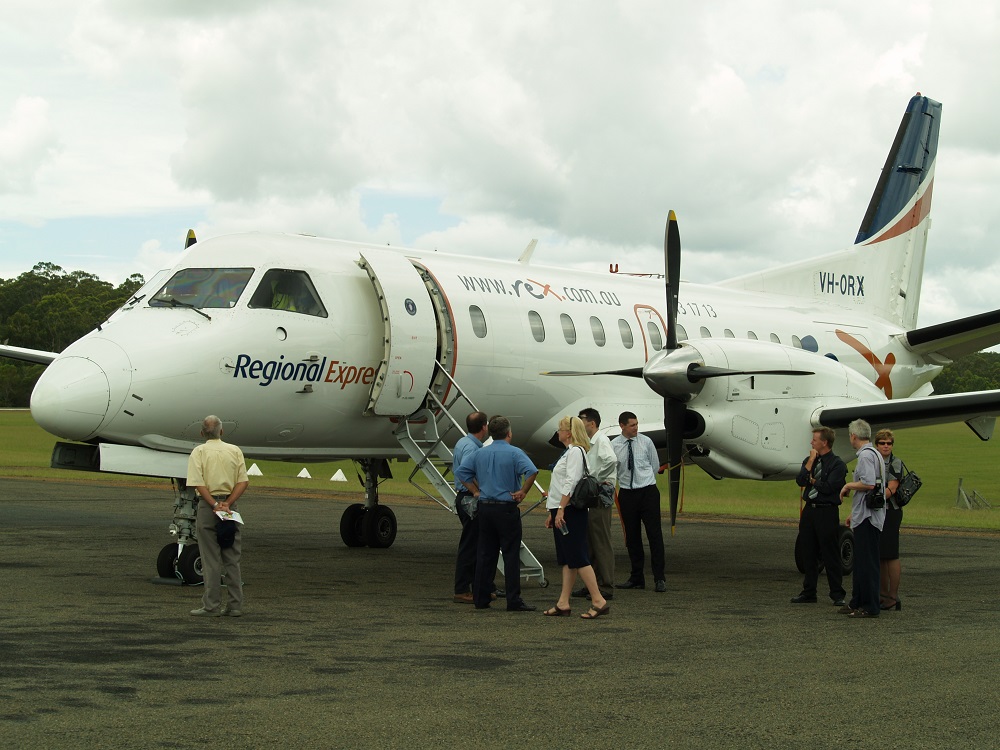
Regional Express profit double digitFlying Short Distances
WHY IS IT SO COSTLY TO FLY SHORT DISTANCES
By Airline Ratings


Aircraft weight and size
There is significant misunderstanding on why there is such a wide variation in fares between short haul and long haul flights.
Aircraft are designed for very specific missions, from short haul to long haul, with flight times varying from about one hour to 18 hours.
Short haul aircraft, which may perform eight flights a day, are heavier and thus more costly to operate per passenger because the structure must withstand many landing and takeoffs. 
Short haul aircraft tend to be smaller in size at about 180-seats and are thus less efficient than a 500-seat jumbo.
Basic costs
However, the biggest impact is the basic costs of a flight which often are the same regardless of how far you fly.
These include landing charges, security screening charges and many of an airline’s operational costs.
Boeing once estimated that over 50% of the costs of an airline ticket was simply having the aircraft sitting on the tarmac waiting for passengers.
Fuel cost
Finally, the amount of fuel burnt to reach cruising altitude is very high compared to the amount used for the entire flight.
For instance, on a four-hour flight of a 180-seat jet aircraft up to ¼ of the flight’s fuel is used in the first 20 minutes just getting to cruise altitude.

Airlineratings.com – The world’s best one-stop airline safety and product rating review website.
Have you ever wondered how safe the airline you are about to board is? Perhaps you have had niggling doubts, strong feelings or extreme anxiety about what lies ahead? In a world-first, www.airlineratings.com delivers expert safety ratings for more than 435 airlines around the world.
Airlineratings.com is packed with information about air travel and answers questions that many of us may have thought of, but didn’t know who to ask. Well now you do!
Airlineratings.com was developed to provide everyone in the world a one-stop-shop for everything related to airlines, formed by a team of aviation editors, who have forensically researched nearly every airline in the world.
Image result for images Vibration in Aircraft

Friday, January 31, 2020

WORST SEAT ON THE PLANE - At the very back of the plane, you're almost certainly near a lavatory. That means a line of frantic people will queue up next to you. Then, you'll be subjected to the constant sounds of toilet flushing and the accompanying smells that waft through the cabin. On most planes, the galley is located at the rear. That means you're dealing with flight attendants milling about, chatting, and often warming up various varieties of airline gruel, the odors of which may revoltingly mingle with scents from the lavatory. Turbulence often feels more violent at the back of the plane. If you have to make a tight connection once you're on the ground you may need to ask the flight attendants to see if they can escort you quickly to the front of the plane, or you'll lose vital minutes scrambling your way out. Another seat that most people seem to agree is the worst? The middle seat in just about any row. And you have neither the ease of movement of an aisle seat nor the view of a window seat.

crowded airplane
Although it might seem like almost any seat in economy is bad, some are actually worse than others. 
..................................................................................................................................................................
Worst Seat On The Plane
What's the Worst Seat on the Plane?
BY NATHAN CHANDLER 


What's the worst seat on a commercial airliner?
If you're flying in economy class, your gut answer might be, "All of them."
As airlines continually cram more seats onto their planes in an effort to maximize profits, customers literally feel the pinch.
Seat space is limited, knees are crunched, elbows become inconveniences, and reclining your seat may get you into trouble with the person behind you.
But in this hellish scenario, some seats really are worse than others.
For instance, the unfortunate travelers at the very rear of the craft are probably swirling through several of Dante's circles of hell.
Why the rear seats? Let us count the ways.
Experts point out that in the very last row, the seats don't fully recline (if they recline at all).
There's also a very good chance that you won't even have a window, meaning you can't stare at the clouds while you ponder your poor life choices.
But that's not all.
At the very back of the plane, you're almost certainly near a lavatory. That means a line of frantic people will queue up next to you.
Then, you'll be subjected to the constant sounds of toilet flushing and the accompanying smells that waft through the cabin.
On most planes, the galley is located at the rear.
That means you're dealing with flight attendants milling about, chatting, and often warming up various varieties of airline gruel, the odors of which may revoltingly mingle with scents from the lavatory.
If that isn't enough, turbulence often feels more violent at the back of the plane.
And if you have to make a tight connection once you're on the ground?
You may need to ask the flight attendants to see if they can escort you quickly to the front of the plane, or you'll lose vital minutes scrambling your way out.
Another seat that most people seem to agree is the worst? The middle seat in just about any row.
That's because you're two impolite seatmates away from spending the entire flight dreaming of death – yours or theirs.
And you have neither the ease of movement of an aisle seat nor the view of a window seat.
Put all this together and it seems that the middle seat in the last row of the plane is the very worst seat of all.
But there's still room to play devil's advocate for the last row.
Travel writer John Burfitt points out that no one can spend the entire flight kicking you in the back.
And if you get the "window" seat, you might well be able to tuck your head against the corner for naps.
It's also much less likely that you'll get bumped by the infernal drink cart.
Better yet? With many people actively avoiding the very back of the plane, you just may have the row all to yourself, so you might be able to stretch out.
Of course, airline executives already know which seats are better, and they may charge extra fees for seat selection.
Sometimes, the airlines will even disguise the fact that you're paying for preferred seating unless you opt out, meaning you have to be very careful when booking your ticket.
If you want to be extra-vigilant, before you select a seat, consult a website like SeatGuru that has seating maps for planes on every major airline and has the worst seats highlighted in red.
NOW THAT'S INTERESTING
Comfort is one thing, safety is another.
Some research shows that in plane crashes, rear middle seats tend to offer the best chance for survival.
However, before you rush to book that back seat, realize that other studies dispute those findings.
But one fact is inarguable – booking direct flights minimizes the number of times you'll take off and land, and those are the moments when most crashes occur.

Nathan Chandler, Contributing Writer
Nathan Chandler is a freelance writer and photographer based in Lincoln, Nebraska. He earned his B.A. from the University of Northern Iowa, and has researched and written about consumer tech for more than 10 years.
crowded airplane