Showing posts with label Soft water. Show all posts

Monday, August 31, 2020

RINSING OFF SOAP WITH SOFT WATER - Why Is It Harder to Rinse Off Soap With Soft Water? - Rinsing in soft water may leave you feeling a little slippery and soapy, even after a thorough rinsing. Why? The answer lies in understanding the chemistry of soft water and soap. Hard water contains calcium and magnesium ions. Water softeners remove those ions by exchanging them for sodium or potassium ions. Two factors contribute to that slippery-when-wet feeling you get after soaping up with soft water. First, soap lathers better in soft water than in hard water, so it's easy to use too much. The more dissolved soap there is, the more water you need to rinse it away. Second, the ions in softened water lessen its ability to stick to the soap molecules, making it more difficult to rinse the cleanser off your body. The reaction between a triglyceride molecule (fat) and sodium hydroxide (lye) to make soap yields a molecule of glycerol with three ionically bonded molecules of sodium stearate (the soap part of soap). This sodium salt will give up the sodium ion to water, while the stearate ion will precipitate out of solution if it comes into contact with an ion that binds it more strongly than sodium (such as the magnesium or calcium in hard water). The magnesium stearate or calcium stearate is a waxy solid that you know as soap scum. It can form a ring in your tub, but it rinses off your body. Soap would rather stick to you than get rinsed away in soft water.

Washing Hands with Soap and Water
..................................................................................................................................................................
Rinsing Off Soap With Soft Water
Why Is It Harder to Rinse Off Soap With Soft Water?
By Anne Marie Helmenstine, Ph.D.


Do you have hard water?
If you do, you may have a water softener to help protect your plumbing from scale buildup, prevent soap scum, and lessen the amount of soap and detergent needed for cleaning.
You've probably heard that cleaners work better in soft water than in hard water, but does that mean you will feel cleaner if you bathe in soft water?
Actually, no.
Rinsing in soft water may leave you feeling a little slippery and soapy, even after a thorough rinsing.
Why? The answer lies in understanding the chemistry of soft water and soap.
The Hard Facts of Hard Water
Hard water contains calcium and magnesium ions. Water softeners remove those ions by exchanging them for sodium or potassium ions.
Two factors contribute to that slippery-when-wet feeling you get after soaping up with soft water.
First, soap lathers better in soft water than in hard water, so it's easy to use too much.
The more dissolved soap there is, the more water you need to rinse it away.
Second, the ions in softened water lessen its ability to stick to the soap molecules, making it more difficult to rinse the cleanser off your body.
Chemical Reaction
The reaction between a triglyceride molecule (fat) and sodium hydroxide (lye) to make soap yields a molecule of glycerol with three ionically bonded molecules of sodium stearate (the soap part of soap). 
This sodium salt will give up the sodium ion to water, while the stearate ion will precipitate out of solution if it comes into contact with an ion that binds it more strongly than sodium (such as the magnesium or calcium in hard water).
The magnesium stearate or calcium stearate is a waxy solid that you know as soap scum.
It can form a ring in your tub, but it rinses off your body.
The sodium or potassium in soft water makes it much more unfavorable for the sodium stearate to give up its sodium ion so that it can form an insoluble compound and get rinsed away.
Instead, the stearate clings to the slightly charged surface of your skin.
Essentially, soap would rather stick to you than get rinsed away in soft water.
Addressing the Problem
There are a few ways you can address the problem:
You can use less soap, try a synthetic liquid body wash (synthetic detergent or syndet), or rinse with naturally soft water or rainwater, which probably won't contain elevated levels of sodium or potassium.

Anne Marie Helmenstine, Ph.D.
Chemistry Expert
Education
Ph.D., Biomedical Sciences, University of Tennessee at Knoxville
B.A., Physics and Mathematics, Hastings College
Introduction
Ph.D. in biomedical sciences from the University of Tennessee at Knoxville - Oak Ridge National Laboratory.
Science educator with experience teaching chemistry, biology, astronomy, and physics at the high school, college, and graduate levels.
ThoughtCo and About Education chemistry expert since 2001.
Widely-published graphic artist, responsible for printable periodic tables and other illustrations used in science.
Experience
Anne Helmenstine, Ph.D. has covered chemistry for ThoughtCo and About Education since 2001, and other sciences since 2013. She taught chemistry, biology, astronomy, and physics at the high school, college, and graduate levels. She has worked as a research scientist and also abstracting and indexing diverse scientific literature for the Department of Energy.
In addition to her work as a science writer, Dr. Helmenstine currently serves as a scientific consultant, specializing in problems requiring an interdisciplinary approach. Previously, she worked as a research scientist and college professor. 
Education
Dr. Helmenstine holds a Ph.D. in biomedical sciences from the University of Tennessee at Knoxville and a B.A. in physics and mathematics with a minor in chemistry from Hastings College. In her doctoral work, Dr. Helmenstine developed ultra-sensitive chemical detection and medical diagnostic tests.
ThoughtCo and Dotdash
ThoughtCo is a premier reference site focusing on expert-created education content. We are one of the top-10 information sites in the world as rated by comScore, a leading Internet measurement company. Every month, more than 13 million readers seek answers to their questions on ThoughtCo.
For more than 20 years, Dotdash brands have been helping people find answers, solve problems, and get inspired. We are one of the top-20 largest content publishers on the Internet according to comScore, and reach more than 30% of the U.S. population monthly. Our brands collectively have won more than 20 industry awards in the last year alone, and recently Dotdash was named Publisher of the Year by Digiday, a leading industry publication.
Washing Hands with Soap and Water

Sunday, March 15, 2020

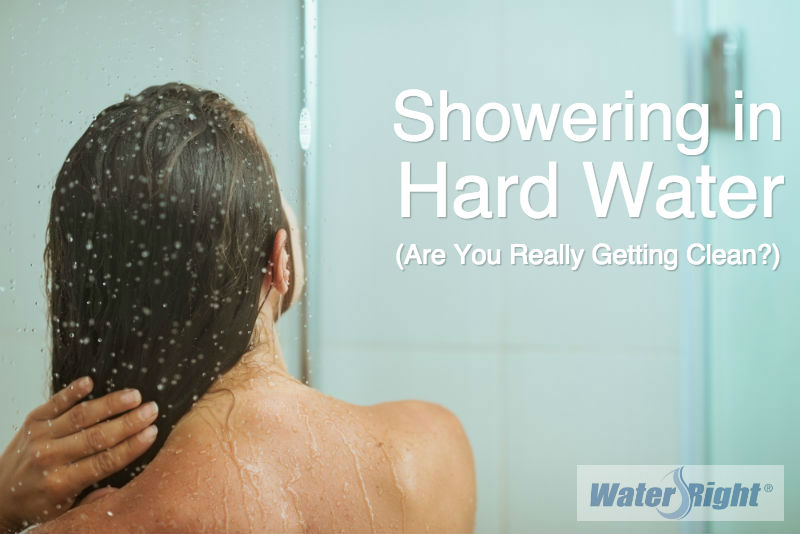
SHOWERING IN HARD WATER - When you bathe or shower in hard water, you may not be getting as clean as you should. Here’s why… Dissolved minerals like calcium and magnesium are what make the water in your home hard. Those minerals also create an undesirable chemical reaction with your soap, shampoo, and body wash as well as shaving cream. What happens is the calcium and magnesium ions in hard water react with fatty acids in soap to form insoluble lime soaps, which are ineffective at cleaning. If you have hard water, the same disgusting soap scum you’re always scrubbing in the tub is on your body too. The best way to know if you’re dealing with hard water problems in the shower is to look at how well you’re lathering up. Hard water prevents you from getting a nice soapy lather in the shower. When you have soft water, it’s much easier to produce a foamy lather from your soap and shampoo. After installing a water softener in their home, some people notice their skin feels slick and even slippery after bathing. Part of this may be due to the fact you aren’t accustomed to how truly-clean skin feels. What you feel might simply be the real you. But you may also be in the habit of using too much soap. You won’t need to use as much with soft water.


................................................................................................................................................................
hard-water-hairShowering in hard water
Are you really getting clean?
Water-Right


For many of us, taking a shower is priceless personal time. You’re alone with your thoughts getting ready for the day, winding down from a workout or hectic daily schedule.
You are supposed to get out feeling clean and refreshed. But if you’re showering in hard water, your showering experience could definitely be better.
In fact, when you bathe or shower in hard water, you may not be getting as clean as you should. Here’s why…
How Minerals in Hard Water Keep You from Getting Clean
Dissolved minerals like calcium and magnesium are what make the water in your home hard.
Those minerals also create an undesirable chemical reaction with your soap, shampoo, and body wash as well as shaving cream.
What happens is the calcium and magnesium ions in hard water react with fatty acids in soap to form insoluble lime soaps, which are ineffective at cleaning.
If you were paying attention during Chemistry class, here’s the chemical equation:
2 C17H35COO−Na+ + Ca2+ (C17H35COO)2Ca + 2 Na+
In this chemical reaction, positively-charged calcium ions replace sodium ions in your shampoo or soap leaving scum and lime scale deposits on your skin and in your hair.
That’s right. If you have hard water, the same disgusting soap scum you’re always scrubbing in the tub is on your body too.
The best way to know if you’re dealing with hard water problems in the shower is to look at how well you’re lathering up.
Hard water prevents you from getting a nice soapy lather in the shower. When you have soft water, it’s much easier to produce a foamy lather from your soap and shampoo.
After installing a water softener in their home, some people notice their skin feels slick and even slippery after bathing.
Part of this may be due to the fact you aren’t accustomed to how truly-clean skin feels. What you feel might simply be the real you.
But you may also be in the habit of using too much soap. You won’t need to use as much with soft water.
How Hard Water Affects Your Hair
Have you ever noticed how your hair can look and feel different when you shower in different places?
Your hair behaves one way after showering at the gym, turns out another way when you’re vacationing or staying in a hotel, and looks completely different when you wash your hair at home.
That’s most likely because the hardness of the water varies from location to location.
A writer for the beauty website xoVain experienced some hard water showering issues when she vacationed in rural Wisconsin.
She provides some great advice for showering in different types of water.
If you have hard water at home, your hair may feel dry all the time and become frizzy making it tangled and difficult to manage.
It may also have a dull, lifeless appearance. That’s because those minerals and deposits build up in your hair.
With a water softener in your home, those hard water issues are eliminated. You will find that your hair has a more-attractive shine when you shower in softened water.
And soft water will make your hair more manageable, so it’s easier for you to style it the way you want.
Sometimes people with finer hair complain that soft water can make their hair feel flat or even greasy.
This is probably because you’re using too much soap and not rinsing it out of the hair completely. Rinsing your hair in the shower for a little longer may solve that problem.
Of all the hard water hair issues, the scariest has to be hair loss. Calcium build up can form around the base of hair follicles causing hair to break off and potentially hindering growth of new hair.
How Hard Water Affects Your Skin
Hard water can give you skin troubles too. Let’s start with the scalp.
The calcium salts that build up in your scalp can cause dryness and flaking, AKA dandruff.
You might assume it’s the shampoo you buy causing dandruff. But hard water may be the real culprit.
Hard water can make the rest of your skin feel dry and itchy as well. That’s thanks to the soapy residue left on your body, which clogs pores.
Plus, the minerals in hard water can suck moisture right out of your skin leaving it even more dry and irritated.
In fact, certain studies indicate hard water may cause additional aggravation in people with skin conditions like eczema and dermatitis.
According to the dermatology site DermaHarmony.com:
“While hard water itself doesn’t cause dermatitis, it can irritate the condition or even initiate a flare-up. The combination of hard water with a co-existing dermatitis condition can lead to more frequent and severe outbreaks.”
Even washing clothes in hard water can be problematic to those with sensitive skin. Hard water leaves soap residue on your laundry too, and that residue is in contact with your skin all day long.
If you have sensitive skin, the soft water a high-quality water softener provides could help you avoid much of the dehydration that occurs.
As the American Cleaning Institute explains, soap’s “effectiveness is reduced when used in hard water.”
That means not only will you fail to get clean in the shower, it will be tougher to keep your house clean as well.
With hard water, you’ll end up using more soap to keep your body clean and more product to clean your home too. Softer water could mean you save significant money and time in the long run.
What Can You Do?
If you have a private well, you’re definitely dealing with hard water. But the majority of municipal water sources have levels of hardness as well.
According to the USGS, in the United States, 85% of the water is considered hard.
There are certainly little tips and tricks you can use to try and improve your showering experience. However, there’s really only one permanent solution… that’s a water softener.
Water softeners remove those dissolved minerals from the water in your home. They are an investment that will make life for you and your family more convenient and more enjoyable.
Want to learn more about water conditioning options and what kind of water softener would be ideal for your home? Water-Right’s product lines are among the best residential water treatment options in the industry.

Constant innovation and no shortcuts. Water-Right is first and foremost a company built on integrity. Since 1963, we’ve done things the right way. Our value set has driven the development of the finest water treatment systems, making it easy for industry professionals to satisfy today’s demand for the highest quality water.
Keeping water clean and safe is an increasingly difficult challenge. That’s why we push to make good products better, create industry-leading technology, and offer a state-certified, independent lab specializing in water testing. It’s about making life better as well as providing “The Right Water for Life.”
hard-water-skin

Tuesday, October 29, 2019

MYTHS AND TRUTHS ABOUT WATER SOFTENERS - Using a water softener within your home is a viable and cost-effective solution. One of the common myths is that by removing hard water minerals, you will be depriving your body of healthy nutrients such as calcium and magnesium. Calcium and magnesium found in hard water is inorganic. A water softener doesn’t take anything out of the water that would be beneficial to you. If your body needs more calcium or magnesium, you could consider taking a dietary supplement or a vitamin. Another myth is that water is the same everywhere and if the city or county is treating the water, you don’t have to worry about treating it yourself. Check with your local municipality to see how your water is being treated.

Home water softener system
.....................................................................................................................................................
Water Softeners
Myths and truths about water softeners
Hydro Solutions Water Treatment Services


If your home is subject to hard water, then you are familiar with the effects. The build-up on glass shower doors and cutlery, for example, are some of the most common effects of hard water within a home.
Using a water softener within your home is a viable and cost-effective solution.
There are, however, a number of myths surrounding hard water softeners and what they can do for your household.
Soft water is less healthy than hard water
One of the common myths is that by removing hard water minerals, you will be depriving your body of healthy nutrients such as calcium and magnesium.
The problem with this argument is that the calcium and magnesium found in hard water is inorganic.
A water softener doesn’t take anything out of the water that would be beneficial to you.
If you feel that your body needs more calcium or magnesium, you could consider taking a dietary supplement or a vitamin.
Water is the same everywhere
Another myth is that water is the same everywhere and if the city or county is treating the water, you don’t have to worry about treating it yourself.
America is a unique place and a person’s water supply on one point of the country can differ greatly to the water supply of a person living in another part of the country.
We recommend that you check with your local municipality to see how your water is being treated. You can also contact the water specialists at Hydro Solutions so that they can come and test your water for you.
Soft water leaves a film on your skin
Some people mistakenly believe that soft water will leave a film on your skin because something has been added to the water.
It’s true that your skin will feel softer or even more oily after a shower in soft water, but this is because your body’s natural oils will be able to reach and stay on your skin’s surface.
You will be using less soaps and shampoos because it will be able to lather more quickly.
Need more information about water softeners or water treatment solutions in Florida? Then contact Hydro Solutions today.

Hydro Solutions has provided professional installation, repair and maintenance services for wells and water treatment systems to South Florida residents of Palm Beach County and Martin County for over 20 years. Our talented technical team at Hydro Solutions is backed by a management team with decades of collective experience in providing the highest level of quality customer service. Our friendly staff was handpicked for his or her training, experience, skills and abilities to communicate effectively with our residential and business clients.
Home water softener system