Saturday, April 27, 2019

THE POWER OF ZERO - The modern symbol “0” may have arisen from the use of sand tables that were used to calculate things, whereby pebbles would be placed in and moved back and forth for addition or subtraction. When a pebble would be removed, there would be an indentation or a dimple in the sand, which reflects the “0” that we see today. In fact, calculations performed on the sand tables may have actually led to the development of the place-based number systems. Ptolemy used the Greek letter omicron, which looks like an “O,” in fact, to denote “nothing.” Ptolemy did not view this as a number, but merely as the idea of nothing. The Indian astronomer Bhramagupta offered a treatment of negative numbers and actually understood zero as a number, not just as a placeholder.


...............................................................................
Zero
image of Ptolemy, the Greek mathematician and scientist who popularized the concept of zero
Ptolemy, the Greek mathematician and scientist

The Power of Zero
TRANSCRIPT FROM A LECTURE SERIES BY PROFESSOR EDWARD B. BURGER, SOUTHWESTERN UNIVERSITY


How do you multiply using Roman numerals? How would you write the number 10,030 without using zero?

A compact, place-based (or positional) number system with a symbol for zero opens the floodgates for arithmetic calculations and the discovery of new numbers.

With only 10 symbols, we have the machinery to describe new numbers that grow beyond our imagination.
Here, we’ll explore the origins of zero and the development of our modern decimal system.
With a powerful positional number system in place, humankind was finally equipped with the tools necessary to begin the development of modern mathematics.
Let’s begin with the downside of the ancient additive systems. Most of the systems required the repetition of symbols.
For example, the Roman numerals XXIII equal 23, and they’d add up the two Xs (10 each) and then the three Is, and get 23.
The Babylonians used dovetails and nails, which they would add up.
Although computation with the additive systems was fast using tools such as the abacus, those systems required a very long list of symbols to denote larger and larger numbers, and this was a problem in practice.

Slow Progress for Heaps of Numbers

Additive systems made it difficult to look at more arithmetically complicated questions and thus slowed the progress of the study of numbers.
In order to move to what we call a positional system, they needed a new number.
This inspired a philosophical question: How many items do you see in an empty box? Is your answer a number? This is the question about zero.
In the Rhind Papyrus from 1650 B.C.E., the scribe Ahmes referred to numbers as “heaps.”
This tradition actually continued through the Pythagoreans, who in the 6th century B.C.E. viewed numbers as “a combination or heaping of units.”
Even Aristotle defined number as an accumulation or heap. Also, the word “three” derived from the Anglo-Saxon word throp, again meaning “pile” or “heap.”
Well, because we can’t have a heap of zero objects—with zero objects, there would be no heaping at all—zero was not viewed as a number.
So this notion of having zero be a quantity didn’t make any sense at all because they were thinking in terms of heaps. This lack of zero caused many challenges.
A careless Sumerian scribe could cause ambiguities because, in cuneiform, different spacing between symbols can actually represent different numbers.
Egyptian system, on the other hand, did not require a placeholder like zero, but their additive notation was cumbersome. Again, they had all the symbols together, and they had to add them all up.
As a result, in the 2,000 years of the Egyptian numeral system, they made very little progress in arithmetic or, more generally, in mathematics.
It’s interesting to see how the notation really drives our understanding, our intuition, and our further quest to consider number.

An Empty Placeholder Appears

Zero first appeared as an empty placeholder rather than a number.
The Babylonians had a symbol for zero by 300 B.C.E. It was a placeholder rather than a number because, again, they were thinking heapings, but they needed to distinguish between numbers.
The Mayans also had an eye-shaped symbol for zero that they also used only as a placeholder. The evolution of the symbol for zero is actually very difficult to chart.
The modern symbol “0” may have arisen from the use of sand tables that were used to calculate things, whereby pebbles would be placed in and moved back and forth for addition or subtraction.
When a pebble would be removed, there would be an indentation or a dimple in the sand, which reflects the “0” that we see today.
In fact, calculations performed on the sand tables may have actually led to the development of the place-based number systems.

The Birth of the Zero

Later, in the 2nd century C.E., Ptolemy used the Greek letter omicron, which looks like an “O,” in fact, to denote “nothing.”
So this is the symbol for zero, the “0” that we see — the circle. But I want to make it very clear that Ptolemy did not view this as a number, but merely as the idea of nothing.
But you can see, again, that these things were slowly coming together. Zero as a number really occurred in India, most likely.
By the 7th century, the Indian astronomer Bhramagupta offered a treatment of negative numbers and actually understood zero as a number, not just as a placeholder.
In fact, he actually studied 0 divided by 0, and 1 divided by 0, and he decided erroneously that 0 divided by 0 equals 0 but just didn’t know what to conclude about 1 divided by 0.
Here again we see a couple of things. First of all, we know today that we can’t divide by 0.
If we divide by 0, it does not yield a number, so we leave the realm of number. So we can’t do that — no dividing by 0 — and we learn that in school. But we also see a wonderful thing.
Bhramagupta, this very important, great mind, was making a mistake, again — something that is to be celebrated rather than to feel embarrassed about.
He didn’t get it quite right. That’s okay; his contributions were enormous.
So finally, humankind expanded its view of number to actually include and embrace zero.

From Empty to Nothing to Zero

A few words about this “nothing” number in terms of language: from the 6th to the 8th centuries, in Sanskrit there was “sun-yah,” which meant “empty,” to represent zero as we think of it.
By the 9th century, in Arabic there was “sigh-fr.”
By 13th-century Latin, there was “zef-ear-e-um.”
From 14th-century Italian there was “zef-ear-row.”
By 15th-century English, we have “zero.” So we can see the evolution of just that word.
Because of zero’s power in computation, some viewed it as mysterious and nearly magical.
As a result, the word zero has the same origins as another word that means “a hidden or mysterious code,” and that word, of course, is “cipher.”
We can see that “cipher” actually came from the mysterious qualities that zero possessed in the eyes of our ancestors.
From the lecture series Zero to Infinity: A History of Numbers
Taught by Professor Edward B. Burger, Southwestern Universityhttps://www.thegreatcoursesdaily.com/zero/ 
photograph of the Rhind Papyrus
The Rhind Papyrus


image of Bhramagupta, the Indian astronomer who actually understood zero as a number
Bhramagupta, the Indian astronomer

MIST AND FOG - Fog and mist are two terms that describe different degrees of the same phenomenon: condensation. Condensation is the process by which gas is turned into liquid. This happens when gas molecules lose energy and slow down. Said molecules then bond together, forming a liquid. Fog is created when cold and warm air meet at or near ground level. There are many ways for this to occur, and therefore, several different types of fog exist. The sole difference between mist and fog is visibility. If you can see another object on the same, horizontal plane that's further than 1 kilometer (0.62 miles) away from you, then the murk you're experiencing would technically be classified as mist.


................................................................
Mist And Fog

Are Mist and Fog the Same?

MARK MANCINI


On Dec. 31, 1988, the Philadelphia Eagles met the Chicago Bears at Soldier Field. The matchup promised a lot of drama.
Not only was this a playoff game, but the two teams had publicly-feuding coaches: Buddy Ryan and Mike Ditka.
So yeah, NFL fans expected to see bad blood that day. However, for a good portion of the game, people in the stands couldn't see anything.
Late in the second quarter, a bank of fog rolled in from Lake Michigan and smothered the field. And refused to budge.
After halftime, coaches on the sidelines actually lost sight of their own players at critical moments.
And as The New York Times later reported, live TV footage of the showdown "had the grainy quality of a Western movie from the 1930s."
This infamous game is now remembered as the "Fog Bowl." But was it truly fog that descended upon Chi-Town that day, or just a thick layer of mist?
Well, "fog" and "mist" are two terms that describe different degrees of the same phenomenon: condensation.
The science here is pretty interesting. 
Condensation is the process by which gas is turned into liquid. This happens when gas molecules lose energy and slow down. Said molecules then bond together, forming a liquid.
Now let's backtrack for a second. The gas molecules lose energy when they make contact with other, cooler molecules. Condensation is therefore linked to differences in temperature. .
Most people associate the process with water vapor — and this is where fog comes into play.
Fog is created when cold and warm air meet at or near ground level. There are many ways for this to occur, and therefore, several different types of fog exist.

Types of Fog

One well-known variety is called advection fog. It's caused by warm, moist air passing over a colder surface.
The interaction cools the warm air down, and in the process, condensation sets in and little droplets of water begin to form around dust particles in the atmosphere.
Then, those droplets remain airborne. Floating beads of water reflect light in all directions, impairing human visibility.
And that's why it's so difficult to see through a thick fog.
The 1988 Eagles vs. Bears game is a perfect example of advection fog at work. That day, a current of warm, humid air blew over Soldier Field.
Because the air around the stadium was much cooler by comparison, conditions were ripe for advection fog. Ergo, Chicago fans were treated to an eerie, murky NFL football game.
Sometimes, a sun-warmed ground is responsible for foggy days.
If heat trapped in the ground radiates into cool air, you'll get what meteorologists call "radiation fog." This is most commonly seen at night when there is little to no wind.
Also, just in case you feel like taking a little field trip, the best places to find radiation fog are in valleys and around still bodies of water.
Now just to mix things up a bit, both of these processes we've just described can also produce mist. The sole difference between mist and fog is visibility.
Want to know which one you're dealing with? Take a good hard look through the gloom.
Let's assume you're standing on a flat surface when a ground-level cloud of suspended water droplets appears.
If you can see another object on the same, horizontal plane that's further than 1 kilometer (0.62 miles) away from you, then the murk you're experiencing would technically be classified as mist.
On the other hand, if you can't see beyond 1 kilometer (0.62 meters), it's considered fog.
Mark Mancini
CONTRIBUTING WRITER
Mark Mancini is a freelance writer currently based in Texas. Over the years, he’s covered every subject from classic horror movies to Abe Lincoln’s favorite jokes. He is particularly fond of paleontology and has been reporting on new developments in this field since 2013. When Mark’s not at his writing desk, you can usually find him on stage somewhere because he loves to get involved with community theatre. And if you ever feel like trading puns for a few hours, he’s your guy.
The now-infamous 1988 NFC Divisional Playoff game between the Philadelphia Eagles and the Chicago Bears is known as the Fog Bowl because of the bank of thick fog that covered Soldier Field.

TAKE A CAUTIOUS APPROACH TO STOP LIGHTS - Most drivers have never been taught the proper way to approach the solid green amber-red traffic light. All too many try to make an instant split-second choice to stop or go through the intersection, often with tragic results. When you approach an intersection, the decision to go or stop at that intersection should be made on the green solid traffic light. By repeating to yourself the intention to stop as you approach the intersection, you are actually making a decision to stop if the traffic light should change from green to amber when you have ample time to brake to a smooth stop. Once you have reached the point of no return, that being the distance so close to the intersection as to make a safe stop impossible, it is safe to proceed through the intersection. When the point of no return is reached, a driver should move the foot back to the accelerator and proceed through the intersection.

Image result for images Take a cautious approach to stop lights
.............................................................................................................................................................
Image result for images Take a cautious approach to stop lights
Take a cautious approach to stop lights
By Steve Wallace, Times Colonist


Image result for images Take a cautious approach to stop lightsNever make the decision to stop or go on a solid amber traffic light. If you choose to do so, it is already too late to make a good decision.
Most drivers have never been taught the proper way to approach the solid green amber-red traffic light.
All too many try to make an instant split-second choice to stop or go through the intersection, often with tragic results.
Here is the safest way to drive through the typical signalized intersections, which most of us see every day.
When you approach an intersection, the decision to go or stop at that intersection should be made on the green solid traffic light.
By repeating to yourself the intention to stop as you approach the intersection, you are actually making a decision to stop if the traffic light should change from green to amber when you have ample time to brake to a smooth stop.
Once you have reached the point of no return, that being the distance so close to the intersection as to make a safe stop impossible, it is safe to proceed through the intersection.
Every driver should lift the foot off the accelerator and cover the brake prior to most every intersection approach.
When the point of no return is reached, a driver should move the foot back to the accelerator and proceed through the intersection.
In this way the driver will be anticipating a signal change and not be surprised into making a snap decision.
If the traffic light should change to amber after the driver has moved the foot back to the accelerator, there will be ample time and space to clear the intersection.
It is important to not increase speed through the intersection upon an amber traffic light change.
Drivers who have to do this are seen to be in violation for two reasons.
The first reason is simple. They are over committing at the intersection and will not be able to stop for unforeseen circumstances.
The second reason is more about enforcement than anything else.
Veteran police officers will tell you they are much more likely to issue a traffic ticket to a driver who speeds through the intersection, than one who coasts through.
Logic tells the enforcement officer whether the driver had to increase speed in order to get through the intersection in time or whether the driver had ample time to safely stop.
Every student, who is learning to drive from a professional instructor practices the above-mentioned approach technique.
In fact, most are asked to verbalize their response when approaching a stale green traffic light. (A stale green light is one which has been green for a long time and is likely to change at any moment).
Driving students will often repeat the words, “I am going to stop if the light changes”, several times as they approach an intersection.
When they get too close for a safe stop, they will announce their intention to proceed.
Drivers should always check the rearview mirror prior to the intersection approach. It may have a direct bearing on whether the driver should proceed or not.
Drivers should also pay particular attention to the pedestrian signals when approaching intersections.
The display of the white walking stickman, is a good indication that the traffic light will not change in the near term.
The solid or flashing red hand means that the change is imminent. Lately there have been advances in pedestrian warning lights.
Some actually count down the second before a sequence change. This makes it much easier for everyone to estimate the sequence change, pedestrians and drivers alike.
More people are killed and seriously injured at intersections than anywhere else. For this reason alone, all drivers should have a plan of approach.

stevedwallace@shaw.ca
We Teach Driving Like Your Life Depends On It
We are a customer driven company suited to your needs.
Since 1976, Wallace Driving School has been teaching students of all ages  to drive The Wallace Way, with individualized lessons and hands-on training.
Wallace Driving School incorporates the latest technologies as well as patience and personal attention to help get you, and keep you, in the driver’s seat.
Our experienced driving instructors will assess your needs and abilities and then adapt your training sessions to your specific learning style.
Image result for images Take a cautious approach to stop lights

CONDUCTIVITY OF METALS - Conduction occurs when a substance is heated, particles will gain more energy, and vibrate more. These molecules then bump into nearby particles and transfer some of their energy to them. This then continues and passes the energy from the hot end down to the colder end of the substance. The electrons in metal are delocalised electrons and are free moving electrons so when they gain energy (heat) they vibrate more quickly and can move around, this means that they can pass on the energy more quickly. Silver is a better conductor than gold, but gold is more desirable because it doesn't corrode. (Copper is the most common because it is the most cost effective)

r
.............................................................................................
Conductivity Of Metals
atomic configuration for goldWhy do metals conduct heat and electricity so well? What metals conduct the best?


Structure of Metals
The structures of pure metals are simple to describe since the atoms that form these metals can be thought of as identical perfect spheres.
More specifically the metallic structure consists of 'aligned positive ions' (cations) in a "sea" of delocalized electrons.
This means that the electrons are free to move throughout the structure, and gives rise to properties such as conductivity. 
What are different types of bonds?
Covalent Bonds
A covalent bond is a bond that is formed when two atoms share electrons. Examples of compounds with covalent bonds are water, sugar and carbon dioxide.
Ionic Bonds
Ionic bonding is the complete transfer of valence electron(s) between a metal and non-metal. This results in two oppositely charged ions which attract each other.
In ionic bonds, the metal loses electrons to become a positively charged cation, whereas the nonmetal accepts those electrons to become a negatively charged anion. An example of an Ionic bond would be salt (NaCl).
Metallic bonds
Metallic bonding is the result the electrostatic attractive force that occurs between conduction electrons (in the form of an electron cloud of delocalized electrons) and positively charged metal ions.
It may be described as the sharing of free electrons among a lattice of positively charged ions (cations).
Metallic bonding accounts for many physical properties of metals, such as strength, ductility, thermal and electrical resistivity and conductivity, opacity, and luster.
Delocalized Moving electrons in Metals --
It is the free movement of electrons in metals that give them their conductivity. 
Electrical conductivity
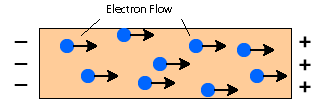
Metals contain free moving delocalized electrons.
When electric voltage is applied, an electric field within the metal triggers the movement of the electrons, making them shift from one end to another end of the conductor.
Electrons will move toward the positive side.
Heat Conduction
Metal is a good conduction of heat.
Conduction occurs when a substance is heated, particles will gain more energy, and vibrate more.
These molecules then bump into nearby particles and transfer some of their energy to them.
This then continues and passes the energy from the hot end down to the colder end of the substance.
Why do metals conduct heat so well?
The electrons in metal are delocalised electrons and are free moving electrons so when they gain energy (heat) they vibrate more quickly and can move around, this means that they can pass on the energy more quickly.
Which metals conduct the best?
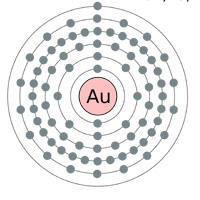
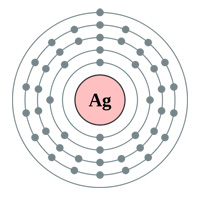
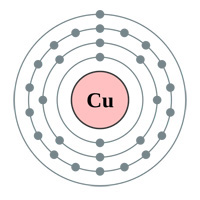
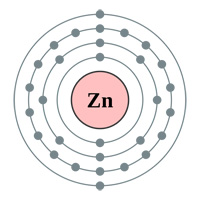
Above: Electron shells Gold (au), Silver (Ag), Copper(Cu) and Zinc (Zn).
Logic would have one think that Gold is the best conductor having a single s-orbital electron in the last shell (above chart) ... so why are Silver and Copper actually better (see table below).
Conductivity of Metals
>S/m
Silver
6.30×10  7
Copper
5.96×10 7
Gold
4.10×10 7
Aluminum
3.50×10 7
Zinc
1.69×10 7
Silver has a larger atomic radius (160 pm) than gold (135 pm), despite the fact that gold has more electrons that silver!
For a reason for this see the comment below.
Note: Silver is a better conductor than gold, but gold is more desirable because it doesn't corrode.
(Copper is the most common because it is the most cost effective)
The answer is a bit complicated and we site here one of the best answers we have seen for those familiar with the material..
"Silver sits in the middle of the transistion metals approximately 1/2 way between the noble gasses and the alkali metals.
In column 11 of the periodic table, all of these elements (copper, silver, and gold) have a single s-orbital electron outer shell electron (platinum does also, in column 10). 
The orbital structure of the electrons of these elements neither has a particular affinity to gain an electron or lose an electron toward the noble gasses that are heavier or lighter, because they sit 1/2 way in between.
In general this means that it doesn't take much energy to knock an electron off temporarily, or add one temporarily.
The specific electron affinities and ionization potentials are varied, and concerning conduction, having relative low energies for these two criteria is somewhat important. 
If those were the only criteria, than gold would be a better conductor than silver, but gold has an extra 14 f-orbital electrons underneath the 10 d-orbital electrons and the single s-orbital electron.
The 14 f electrons are due to the extra atoms in the Actinide series.
With 14 extra electrons apparently pushing out on the d and s electrons you'd think that s-electron was just sitting out there 'ripe' for conduction (hardly any energy was necessary to bump it off), but NOOO. 
The f-orbital electrons are packed in, in such a manner, that it causes the atomic radius of gold to be actually SMALLER than the atomic radius of silver -- not by much, but it is smaller.
A smaller radius, means more force from the nucleus on the outer electrons, so silver wins in the conductivity 'contest'.
Remember, force due to electric charge is inversely proportional to the square of the distance. The closer 2 charges are together., the higher the force between them. 
Both copper and platinum have even smaller diameters; hence more pull from the nucleus, hence more energy to knock off that lone s-electron, hence lower conductivity. 
Other elements with a single s-orbital electron sitting out there "ripe for the conduction picker to come along", also have lower atomic radii (molybdenum, niobium, chromium, ruthenium, rhodium) than silver. 
So, it is mainly where it sits -- where 'mother nature' put silver in the periodic table, that dictates its excellent conductivity."


r

atomic configuration for silveratomic configuration for copperatomic configuration forzinc